Connect with us

News

North Korean remote IT staffer worked for US government agency, says FBI

info

Published

on

Kim jong un north korea tv.jpg

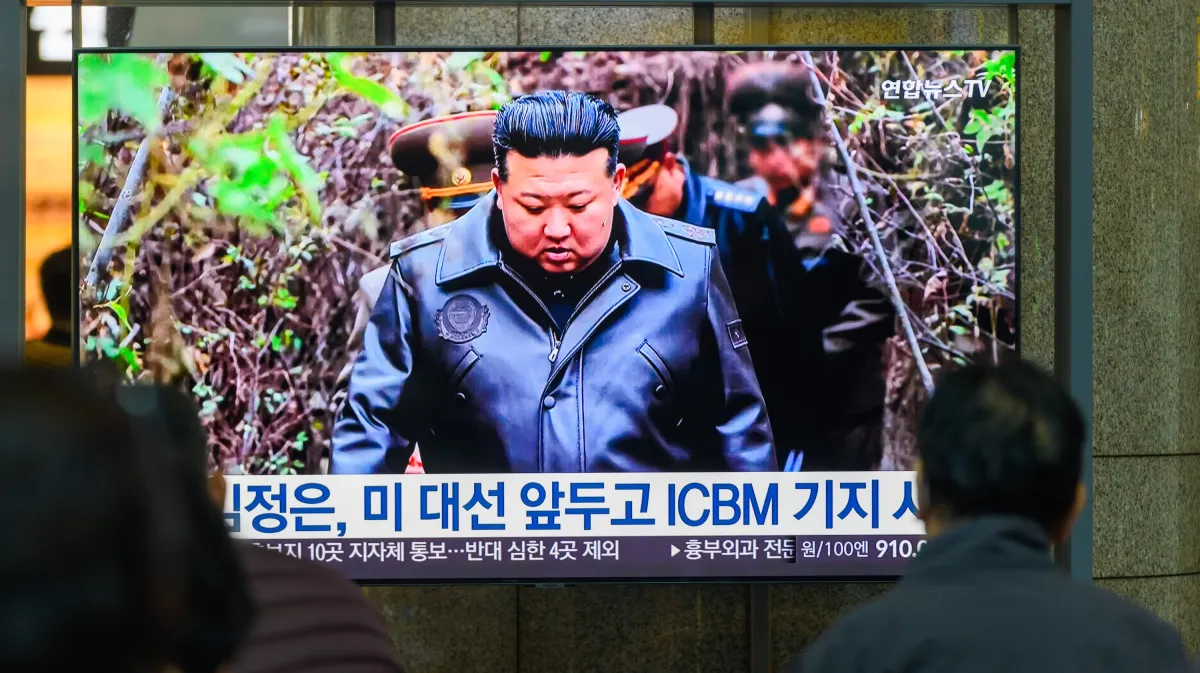
The FBI is reportedly investigating how a North Korean was hired to work for a U.S. federal government agency.

News of the investigation was first reported by Federal News Network, citing a senior FBI official speaking at a conference on July 28 in Washington, D.C.. The official confirmed to Federal News Network that the FBI is investigating a North Korean working for an unnamed federal agency.

It’s unclear how the North Korean was hired, but the regime is known for its coordinated and long-running campaigns aimed at fraudulently obtaining employment at private organizations and multinationals. The case marks a rare confirmed instance of a sanctioned North Korean working for a government agency.

There are thought to be thousands of North Korean IT workers who have gained employment with U.S. and European organizations in recent years by exploiting weaknesses in the hiring process. The goal is to use fraudulent identities to gain employment with remote positions and to earn a wage that gets funneled back to the regime, all the while stealing intellectual property and other data, then using that information to extort the companies when they are inevitably caught.

But strict vetting and security clearance practices have largely kept the regime’s hackers out of government — though, not without incident. The Justice Department brought charges in 2024 against a Maryland man who assisted a North Korean hacker to pose as an American to get a remote job as a contractor for the Federal Aviation Administration.

The FBI did not respond to TechCrunch’s request for comment on Tuesday, and it’s unclear which federal agency was affected, and if any data or funds were stolen during the incident.

The U.S. has long warned about the risks posed by North Korean IT workers’ schemes. U.S. authorities have taken several enforcement actions and sanctions to stymie both the networks that operate from Pyongyang, as well as neighboring Russia and China, as well as the American facilitators who set up fleets of laptops that allow the North Koreans to work remotely as if they were in the United States.

North Korea operates more like a transnational criminal gang than a government, and relies on hacks, including thefts of cryptocurrency, to fund its globally sanctioned nuclear weapons program. The Kim Jong Un regime is reportedly responsible for 76% of cryptocurrency thefts, per blockchain forensic firms, netting the regime at least $2 billion during 2025 despite being banned from the global financial system.

When you purchase through links in our articles, we may earn a small commission. This doesn’t affect our editorial independence.

Continue Reading
Click to comment

Leave a Reply

Your email address will not be published. Required fields are marked *

News

LG funds will go directly to council accounts if I’m President – Atiku

info

Published

on

By

Atiku Abubakar.jpg

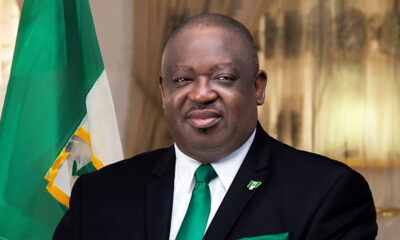
Former Vice-President Atiku Abubakar, the African Democratic Congress (ADC) presidential candidate for the 2027 election, has promised to implement the Supreme Court ruling granting financial autonomy to Nigeria’s 774 local government areas if he becomes president.

Atiku said his government would ensure that money meant for local governments from the Federation Account was paid directly to the councils instead of passing through state governments.

His position was contained in a statement issued on Tuesday by his spokesperson, Kenneth Okonkwo.

The Supreme Court ruled on July 11, 2024, that funds meant for local government councils should be paid directly to them. The decision followed a case brought by the Federal Government against the 36 state governors over the control and funding of local governments.

Recommended

However, some states have not fully implemented the judgment.

Atiku said he would ensure that the ruling was strictly followed and make local government autonomy a major part of his administration’s efforts to improve development at the grassroots.

“My administration will respect court judgments, protect local government autonomy, ensure that public funds reach the people for whom they are meant, and restore true federalism,” he said.

He said direct access to funds would give local governments more capacity to provide basic services and carry out development projects.

According to him, stronger local governments could also improve security at the grassroots by helping to tackle crime and terrorism while reducing poverty.

Atiku also accused President Bola Tinubu’s administration of failing to enforce the Supreme Court ruling.

He claimed that the government had avoided confronting some state governors over the issue because local government funds were allegedly being used as an enticement to secure their support for Tinubu’s 2027 re-election bid.

“Atiku acknowledges that the Supreme Court had ruled on July 2024 that local government funds should be paid directly to local governments,” the statement said.

“Yet, the current administration of President Tinubu has failed to enforce this judgment, seemingly to avoid confronting the gluttonous APC state governors who previously controlled these funds, as an enticement to them to use the local government funds to buy votes for Tinubu in the 2027 presidential election.”

Atiku said giving local governments control of their statutory allocations would improve accountability and ensure that money meant for grassroots development was used for its intended purpose.

Continue Reading

Health

Rising tobacco farming exposes African workers to health risks – WHO

info

Published

on

By

Tobacco 640x480.jpg

MTN ADVERT

A new analysis by the World Health Organisation (WHO) has revealed that tobacco-leaf production in Africa increased by almost nine per cent between 2012 and 2024, despite a nearly 19 per cent decline in global production.

The increase, according to the findings, is raising concerns about the health risks faced by tobacco farmers and workers, as well as the wider environmental and social consequences of tobacco cultivation.

Africa produced more than 639,000 tonnes of tobacco leaf in 2024, representing about 11 per cent of global tobacco-leaf production, the analysis noted.

The findings showed that tobacco production is highly concentrated in five countries: Zimbabwe, Malawi, Tanzania, Mozambique and Uganda.

East Africa alone accounts for nearly 90 per cent of tobacco-leaf production on the continent.

PT WHATSAPP CHANNEL

Health risks

Vinayak Prasad, head of the Tobacco Free Initiative at WHO, said tobacco farming exposes workers and their families to serious health risks, while also damaging the environment and potentially trapping farmers in cycles of debt.

Mr Prasad said the issue extends beyond tobacco control and should also be viewed through the lens of health, trade, development and environmental sustainability.

“This is not just a tobacco-control issue. It is a health, trade, development and environmental issue,” he said.

The analysis identified green tobacco sickness as one of the direct health risks faced by tobacco farmers.

The condition occurs when nicotine from wet tobacco leaves is absorbed through the skin during handling.

Farmers and other workers may also be exposed to pesticides and tobacco dust during cultivation and processing, the report noted.

Beyond direct exposure, tobacco farming also consumes large amounts of land, water and other natural resources that could otherwise support food production and sustainable livelihoods.

The practice is also associated with soil degradation, deforestation and greenhouse gas emissions from the curing of tobacco leaves.

Children at risk

WHO also raised concerns about children from poor households being involved in tobacco farming.

According to the organisation, children in some low and middle-income countries miss school to work on tobacco farms and supplement their family income.

The report said this could further expose children to the health and social risks associated with tobacco cultivation while affecting their education.

Tobacco’s economic burden

The health concerns come alongside an increase in Africa’s cigarette imports.

According to the analysis, the continent’s cigarette import bill more than doubled between 2012 and 2024, rising from $833 million to $1.77 billion.

The findings also challenged the argument that tobacco is economically indispensable to most countries.

Tobacco-leaf exports account for more than one per cent of gross domestic product in only a small number of economies, including Malawi and Zimbabwe.

For most countries, the economic contribution of tobacco production and trade is limited, while the health, social and environmental costs remain substantial, WHO said.

Mr Prasad said countries needed support to move away from economic dependence on tobacco and provide alternative livelihoods for farmers and workers.

“Countries need support to move away from economic dependence on a product that harms health, farmers and the environment,” he said.

He said the findings showed why trade and development policies needed to be aligned with public health and sustainable development goals.

READ ALSO: FG begins nationwide distribution of ambulances to strengthen emergency care

Alternative livelihoods

Under Articles 17 and 18 of the WHO Framework Convention on Tobacco Control, countries are encouraged to promote economically viable alternatives for tobacco workers and growers.

The provisions also call on countries to protect the environment and human health from the effects of tobacco cultivation.

WHO called for stronger support for countries seeking to diversify away from tobacco production, protect farming communities and strengthen tobacco-control policies.

The organisation also urged countries to reduce the economic burden associated with tobacco use and trade.


Discover more from Premium Times Nigeria

Subscribe to get the latest posts sent to your email.

Continue Reading

Trending