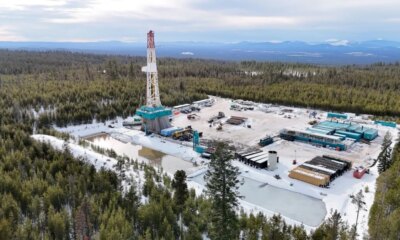
BY NKECHI NAECHE-ESEZOBOR—Seplat Energy Plc, a leading Nigerian independent energy producer listed on both the Nigerian Exchange and London Stock Exchange, has delivered a stellar financial performance for the half-year ended June 30, 2026. Driven by higher output and a favorable pricing environment, the energy giant posted a massive 498 percent year-on-year surge in Profit After Tax (PAT), reaching $164 million, compared to $4.0 cents per share in the corresponding period of 2025.
Gross revenue rose 30 percent to $1.82 billion from $1.398 billion in H1 2025, supported by an average realized oil price of $94.13 per barrel, representing a $7.47 premium to Brent crude. Strong operational execution expanded gross profits by 68 percent to $815.9 million, while cash generated from operations expanded 29 percent to $985.9 million.
In line with its strong balance sheet, Seplat declared a total second-quarter dividend of USD 12.0 cents per share ($72 million), comprising a USD 5.0 cents core payout and a USD 7.0 cents special dividend. Following robust performance and a newly reached agreement to sell a 10 percent interest in the NNPCL-SEPNU Joint Venture to NNPC Limited for $281.6 million, the company plans to raise its full-year 2026 dividend projection to USD 68.3 cents per share ($410 million)—a 173 percent growth year-on-year.
Operationally, group production averaged 139,509 barrels of oil equivalent per day (boepd) in the first half of 2026, marking a 4 percent growth year-on-year and remaining comfortably within full-year target guidance. Second-quarter output surged to 149,070 boepd, up 15 percent from the first quarter, boosted by onshore production improvements and an active idle well restoration program that restored 26,000 barrels per day of gross capacity across 24 wells. The firm also achieved 18.8 million man-hours across operated assets without any Lost Time Injury (LTI), while lowering carbon emissions intensity by 18 percent.
Financially, Seplat significantly deleveraged its balance sheet, making an early repayment and cancellation of $200 million under its Advanced Payment Facility. Consequently, Net Debt dropped 45 percent to $370.7 million by the end of June, pushing the Net Debt/EBITDA leverage ratio down to 0.25x and prompting S&P to upgrade the company’s credit rating to ‘B+’.
The strong half-year earnings coincide with scheduled executive leadership transitions. Engr. Effiong Okon took over as Chief Executive Officer from Mr. Roger Brown on August 1, 2026, while Mr. Tony O. Elumelu, CFR, is slated to succeed Senator Udoma Udo Udoma as Board Chairman on January 1, 2027.
Commenting on the results, outgoing CEO Roger Brown remarked that the company is handing over leadership from a position of unprecedented financial and operational resilience, backed by expanding cash flows, accelerated debt repayment, and historic returns for shareholders.
Nigeria’s crude oil and condensate production rose by 0.4 per cent to 1,677,777 barrels per day (bpd) in August 2026.
The Nigeria Upstream Petroleum Regulatory Commission (NUPRC) disclosed this in its crude oil and condensate statistics report released on Sunday.
The commission said crude oil production, excluding condensate, averaged 1,500,190 bpd during the month under review.
It added that Nigeria met its Organisation of Petroleum Exporting Countries (OPEC) crude oil quota for the fourth consecutive month.
According to the report, combined crude oil and condensate production fluctuated between a daily low of 1.64 million barrels and a high of 1.71 million barrels.
The report showed that Bonny Terminal recorded the highest average production at 320.04 thousand barrels per day (kbpd).
Forcados Terminal followed closely, recording an average daily production of 317.40 kbpd during the month.
“Qua Iboe Terminal recorded an average production of 171.72kbpd of crude oil and condensates,” the report said.
It added that Escravos Oil Terminal recorded a daily average production of 131.71 kbpd during the period.
Bonga ranked fifth among the highest-producing terminals, with an average output of 92.50 kbpd of crude oil.
Factors behind the increase in production
Nigeria’s oil output rises 0.4% in August
The NUPRC attributed the modest increase in August production largely to the resolution of operational challenges involving the Single Buoy Mooring (SBM) at the Erha field.
The commission said the challenges had adversely affected production performance in the preceding month.
It explained that restoring normal evacuation and production operations at the Erha field contributed positively to overall production volumes in August.
“Production activities across most other producing assets remained relatively stable,” the report said.
It said operators continued implementing measures to optimise production efficiency, maintain asset integrity and minimise operational disruptions.
The commission added that routine production and crude evacuation operations were generally sustained across the industry during the period.
“These supported the observed improvement in output,” it said.
The report described the August increase as modest but said it reflected continuing industry efforts to address operational bottlenecks.
It said stakeholders were also working to restore affected production capacity and support sustained growth in the coming months.
The commission said operators remained focused on improving asset reliability and operational resilience across Nigeria’s upstream petroleum sector.
Cornerstone Insurance PLC has unveiled key elements of its transformation agenda, “Cornerstone 3.0,” aimed at strengthening its operations, enhancing customer experience and positioning the company for sustainable growth.
The agenda was a major focus at the company’s 2026 Brokers’ Business Lunch, recently heldat the Metropolitan Club, Lagos, with brokers, stakeholders and members of Cornerstone’s management team.
The gatheringprovided an opportunity to share the company’s broader strategic direction with the market, backed by the support of its majority shareholder, Chapel Hill Denham. The partnership with Chapel Hill Denham forms part of Cornerstone’s broader growth and transformation journey, as the company strengthens its business, enhances its market position and prepares for its next phase of growth.
The event was led by Stephen Alangbo, Managing Director/CEO, Cornerstone Insurance PLC; Kola Adekoya, Acting Managing Director, FIN Insurance Company LTD and Abdur Rasheed Babalola, Managing Director, Hilal Takaful Insurance.
Speaking at the event, Mr. Alangbo, outlined Cornerstone’s vision for its next phase of growth, highlighting the significant changes taking place across the business. At the heart of this journey is Cornerstone 3.0, a transformation programme focused on building a more agile, technology-driven and customer-centric insurance business. A key component of the transformation is the planned restructuring into Cornerstone Life and Cornerstone General, alongside the continued development of Hilal Takaful Insurance to expand the company’s Takaful offerings, subject to final approval by NAICOM.
Technology also remains a key component of the agenda, with the evolution of CiCi, Cornerstone’s AI-powered customer service platform, including its voicebot capability, aimed at making services such as enquiries, complaints, claims, policy renewals and insurance purchases more accessible.
Mr. Alangbo further reaffirmed their commitment to fast and efficient claims processing, recognising responsive claims service as central to delivering value and building customer trust.
The Brokers’ Lunch also provided an opportunity for Cornerstone to engage directly with the brokers, receive feedback and identify areas for improved collaboration. Stephen Alangbo acknowledged brokers as key drivers of the business and encouraged them to continue to consider Cornerstone as a first-choice partner for their clients’ corporate, individual and Takaful insurance needs.
The engagement reflects Cornerstone’s commitment to working closely with its broker network, as it advances its transformation agenda and builds a more agile, innovative and customer-focused insurance business.