News
China Mobile makes local traffic debut in Nigeria as world’s largest mobile operator connects IXPN

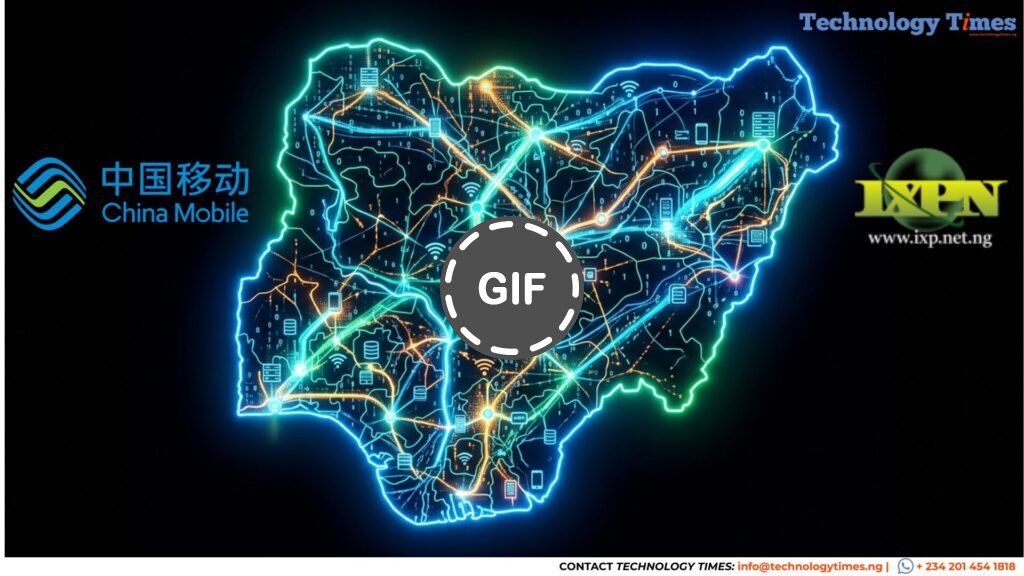
Nigeria’s internet ecosystem has received a major international boost as the Internet Exchange Point of Nigeria (IXPN) announces that China Mobile International Limited (CMI) has officially joined its peering fabric, a move expected to strengthen Nigeria’s position as a regional hub for global data traffic and digital interconnection in West Africa.
The development integrates CMI, the international subsidiary of China Mobile Limited, widely regarded as the world’s largest mobile operator by subscriber base, into Nigeria’s growing local interconnection ecosystem.
By connecting directly to the IXPN network, CMI will now be able to exchange internet traffic locally with Nigerian networks, reducing reliance on costly international transit routes and improving the efficiency of data exchange within the country.


IXPN describes the onboarding of CMI as a “landmark moment” for Nigeria’s internet ecosystem, noting that the partnership is expected to improve connectivity performance for enterprises, service providers and internet users nationwide.
IXPN: China Mobile International debut is “landmark moment” for Nigeria’s internet ecosystem
The announcement comes as IXPN continues its rapid expansion across Africa’s digital infrastructure landscape. Recent industry data shows that the exchange point recorded a peak traffic milestone of two terabits per second (Tbps) in late 2025, reinforcing its position as Africa’s leading community-driven Internet Exchange Point (IXP).
Industry stakeholders say the addition of global carriers like CMI could encourage more international telecoms operators, hyperscalers and content delivery networks to establish local peering arrangements in Nigeria, further accelerating the country’s digital economy ambitions.
IXPN describes the onboarding of CMI as a “landmark moment” for Nigeria’s internet ecosystem, noting that the partnership is expected to improve connectivity performance for enterprises, service providers and internet users nationwide.
“CMI’s presence on the IXPN fabric means that Nigerian businesses, enterprises, and internet users stand to benefit from enhanced connectivity, faster traffic exchange, and access to a truly global telecommunications network, right here, locally,” the exchange says in a statement seen by Technology Times.
The exchange point says localising internet traffic remains critical to improving Nigeria’s digital sovereignty by ensuring that more locally-generated data stays within the country. The model also helps reduce operational costs for internet service providers while improving the performance of latency-sensitive services such as cloud computing, video conferencing, streaming platforms and AI-driven applications.
The move also sends a strong signal about Nigeria’s growing attractiveness as a destination for global digital infrastructure investment.
“This is a powerful statement about the growing global relevance of IXPN as a world-class interconnection platform,” the exchange said, adding that it looks forward to a “long, impactful, and mutually rewarding partnership” with CMI.
With CMI joining the more than 130 networks already connected to IXPN, including global technology players such as Google, Meta and Microsoft, Nigeria’s internet landscape is becoming increasingly interconnected and capacity-rich.
For internet users, the deeper interconnection ecosystem is expected to translate into faster access to digital services, improved network performance and more resilient internet connectivity.
Headquartered in Hong Kong, CMI operates extensive international telecommunications and Internet Data Centre (IDC) infrastructure across more than 37 countries and regions. Its portfolio spans voice, data, roaming, cloud computing and enterprise connectivity services.
The company recently activated additional resources on submarine cable systems serving Africa, a move aimed at strengthening international bandwidth capacity and supporting rising demand for digital services across the continent.






News
‘Africa Deserved Better’ — Engr. Samuel Jackson Laments Heartbreaking Exit of Egypt, Senegal, as Continent Wins Global Respect

The President of the Nigeria Armwrestling Federation, Engr. Samuel Jackson, has expressed deep disappointment over the elimination of Africa’s leading representatives at the ongoing FIFA World Cup, describing the exits of Egypt, Senegal, South Africa, Ghana, DR Congo, Ivory Coast, Algeria and Cape Verde as heartbreaking despite their outstanding performances.
Jackson said the tournament has proved beyond doubt that African football has reached a new level, with the continent producing some of the most exciting performances of the competition.
His biggest praise went to Egypt, who came within minutes of eliminating defending champions Argentina before suffering a dramatic 3-2 defeat after leading 2-0 late in the game. He described the result as cruel, insisting the Pharaohs deserved more for their courage and quality.
“My heart goes out to Egypt. They showed the world that African football has matured. To push the world champions to the edge of elimination is no small achievement. They may be out, but they have won the admiration of millions.”
He also commended South Africa, whose return to the World Cup after years away ended with a narrow defeat to Canada, describing Bafana Bafana’s campaign as one that has restored belief in Southern African football.
Jackson reserved special praise for Senegal, saying the Teranga Lions once again demonstrated why they remain one of Africa’s football giants despite their narrow knockout defeat to Belgium.
He equally applauded Cape Verde, making its World Cup debut, for taking Argentina into extra time before bowing out in one of the tournament’s most thrilling encounters, while Ghana, Ivory Coast, DR Congo and Algeria were praised for reaching the knockout rounds and competing fearlessly against some of the world’s biggest football nations.
“Africa may not have reached the quarter-finals in the numbers we hoped for, but this World Cup belongs to Africa as much as anyone. Our teams have changed the narrative. The world now respects African football because our players competed with courage, discipline and confidence.”
Jackson added that the performances should encourage African governments, corporate organisations and sports administrators to invest more in grassroots sports, noting that with sustained support, African nations can soon produce a FIFA World Cup champion.
“Africa’s future is bright. Today’s disappointment will become tomorrow’s triumph if we continue to invest in our athletes and believe in their potential.”
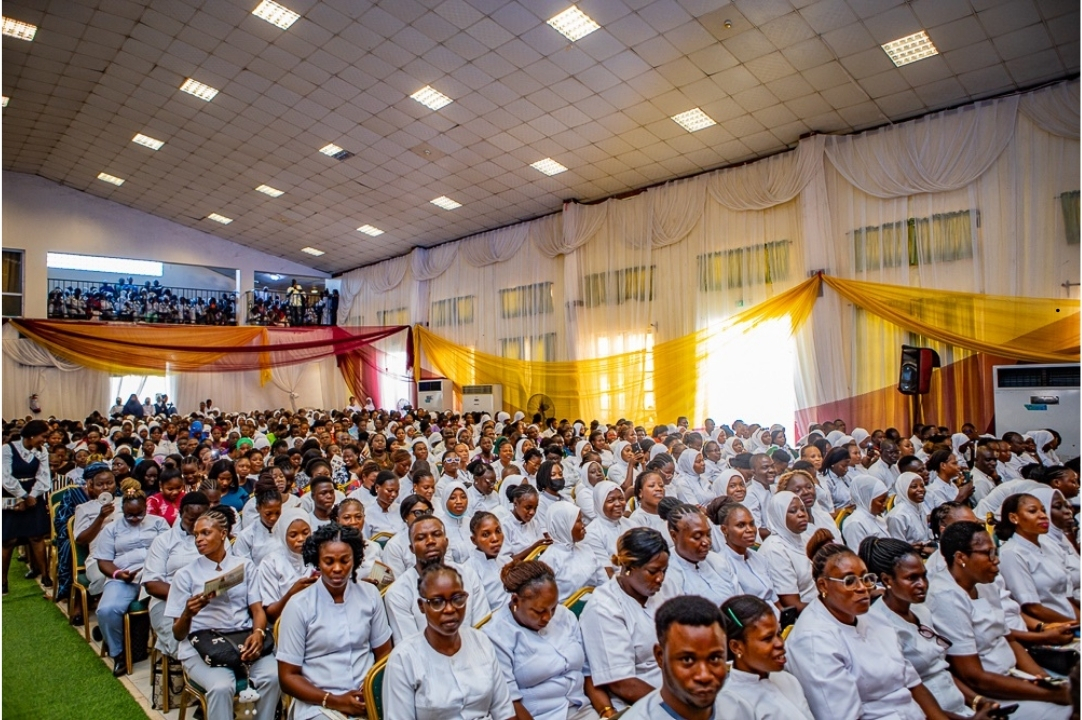
The Nigerian Association of Medical and Dental Academics (NAMDA) has given the federal government 21 days to address outstanding salary and welfare issues or face a nationwide indefinite strike.
The association’s President, Nosa Orhue, announced the ultimatum on Tuesday in Abuja after a meeting of the union’s National Executive Council (NEC).
Mr Orhue said the government must conclude negotiations within the next 21 days, warning that the union would reconvene after the deadline to decide its next course of action if there was no meaningful progress.
According to him, the association had engaged government through dialogue for more than 24 months without meaningful progress.
Mr Orhue said the association was dissatisfied that negotiations on the renegotiation of the 2009 agreement had remained stalled since 9 April, in spite of repeated engagements.

He alleged that while improved welfare packages had been implemented for other university unions, NAMDA members remained excluded, resulting in non-payment of earned academic and professorial allowances and worsening brain drain among medical academics.
The NAMDA president attributed the dispute largely to salary disparities between university-based medical lecturers and hospital consultants performing identical professional duties.
He explained that medical academics combine teaching, research and clinical responsibilities, including patient care, surgeries and hospital administration.
According to him, they earn less than their counterparts in the hospital system despite maintaining the same professional qualifications and practising licences.
Mr Orhue said the federal government had previously recognised the unique status of medical academics through their placement on the Consolidated Medical Salary Structure (CONMESS). He added that the Minister of Education, Tunji Alausa, had supported salary parity and communicated the position to the National Salaries, Incomes and Wages Commission.
He, however, alleged that some government agencies were frustrating implementation of the agreement.
Mr Orhue reaffirmed that CONMESS remained the only acceptable salary framework for medical and dental academics.
He warned that any attempt to replace it with another structure could trigger industrial action.
He also rejected what he described as the forced migration of members above 65 years from CONMESS to the Consolidated University Academic Salary Structure (CONUASS).
READ ALSO: NARD backs LAUTECH doctors, warns of indefinite strike
According to him, the move amounts to a demotion and results in financial losses for affected academics.
He said the association was also demanding implementation of special pension benefits for retired hospital-based academics and opposed the National Universities Commission’s requirement for medical academics to obtain PhD qualifications.
In spite of the dispute, Mr Orhue commended President Bola Tinubu’s administration for efforts to improve university education and hailed the Minister of Education for supporting salary parity for medical academics.
He also lauded the federal government’s preparedness for a possible Ebola outbreak and pledged the association’s support toward strengthening the country’s public health response.
(NAN)
-

 News4 days ago
The only AI glossary you’ll need this year
-
News3 days ago
Sports commission reaffirms commitment to hockey revival
-
Business17 hours ago
Plateau Govt Procures 500 Truckloads of Fertilizer, Subsidises 50kg Bags at ₦20,000
-
Business4 days ago
PZ Cussons’ annual profit quickens by 298% as asset disposal boosts earnings