
News
Bloggers Leverage Digital Economy While Upholding Ethics at PLABOMA Workshop


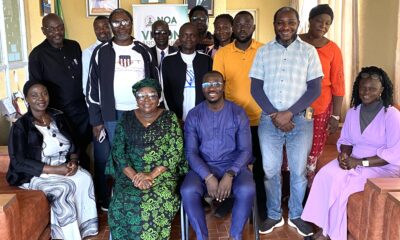
Bloggers and social media influencers have been encouraged to harness the opportunities of digital economy while upholding ethical and professional standards. This call was made by the Director-General of the Plateau State Microfinance Development Agency (PLASMIDA), Bomkam Ali Wuyep, during a two-day workshop held in partnership with the Plateau Bloggers Online Media Association (PLABOMA) on March 17 and 18, 2025.
With the theme “Ethical Blogging, Digitalj Media Strategies, and Entrepreneurship,” the event brought together PLABOMA members, conventional media practitioners, PLASMIDA officials, social media influencers, and online journalists to discuss best practices in digital media and entrepreneurship.
Director-General Bomkam Ali Wuyep highlighted the growing influence of bloggers in the digital economy. He stressed the need for financial literacy and entrepreneurial skills, reaffirming the Plateau State Government’s commitment to small business development through Governor Caleb Mutfwang’s Seven-Pillar Policy.
“Bloggers are not just information disseminators; you are catalysts for change, influencers of opinions, and key drivers of economic transformation,” Wuyep said.

He noted that PLASMIDA is expanding training opportunities beyond business owners to include youths, women, and professional associations, all aimed at poverty reduction.
“The Plateau Job Center is bridging the skills gap, linking job seekers with employers, and fostering entrepreneurship with support from international donor partners.”
He also urged bloggers to counter misinformation and uphold journalistic ethics.
“In an era where misinformation spreads like wildfire, I urge you to uphold ethics, fairness, and objectivity in your reportage.”

In his opening remarks, PLABOMA Chairman Matthew Tegha emphasized the crucial role of bloggers in shaping narratives and fostering responsible digital journalism. He underscored the importance of truth, accuracy, and sustainability in media practice.
“We are not just storytellers; we are influencers, educators, and agents of change. However, with this influence comes great responsibility,” Tegha stated.
“This training is an opportunity to reaffirm our commitment to ethical journalism, explore digital media strategies, and build sustainability in our work. Let’s use this platform to network, collaborate, and chart a new course for impactful digital media practice in Plateau State and beyond.”
The Director-General of the Small and Medium Enterprises Development Agency of Nigeria (SMEDAN), Charles Odii, encouraged bloggers to leverage their platforms to support MSME growth while maintaining accuracy and integrity.
“As digital journalists, your responsibility goes beyond reporting news; you are the bridge between the government and the people, shaping public perception and holding institutions accountable,” Odii noted.

Gyang Bere, Director of Press to the Plateau State Governor, represented by Chief Information Officer Hana Paul Gindiri, acknowledged the evolving perception of online journalism.
“In the past, online journalism was often associated with fake news. But with trainings like this, the narrative is changing. Let your story angles reflect the Governor’s efforts in security, economic development, and creating a business-friendly environment. Changing the narrative is crucial—bloggers should not be swayed by little stepends.”

Dalog Da Yakubu Tadi, Chairman of the Plateau State Traditional Council and a PLABOMA Trustee, stressed the importance of fact-checking and ethical journalism.
“Entrepreneurship now goes beyond physical businesses; people rely on online platforms to assess what a state or country has to offer,” he said.
He also urged politicians to prioritize tangible actions over press statements and called for signed press reports to enhance credibility.
“There should be personified stories for credibility—every press report should be properly signed and attributed, not just to a body but also to a person.”

Major Samson Zhakom, representing Maj. Gen. EF Oyinlola of Operation Safe Heaven (OPSH) commended PLABOMA for fostering responsible reporting, highlighting the impact of online media on security, investment, and tourism.
“Information online can bring or discourage foreign investment, tourism, and film productions. So let’s be careful about the image we are building,” he cautioned.
Participants engaged in sessions on business planning and strategy led by Mr. Jacks of PLASMIDA, ethical blogging and digital media strategies led by Matthew Tegha of PLABOMA, and SWOT analysis presented by Mrs Jennifer and other key topics designed to help participants build credibility, prevent misinformation, avoid legal risks, and enhance professionalism.

A key highlight was the presentation of certificates to participants and a guided tour of the Plateau Job Center. The center, a government initiative to tackle unemployment, has successfully matched over 40 job seekers with employers.


Representing the Nigeria Union of Journalists (NUJ), Vice Chairman Pam Musa commended PLABOMA’s professionalism and revealed plans to integrate the association into the NUJ structure.
“Based on the new NUJ constitution, we are looking to make PLABOMA associate members while ensuring they maintain and improve their professionalism.”


Chairman of the Correspondent Chapel, Polycarp Auta commended bloggers for their efforts in shaping journalistic narrative in Plateau State.
“Journalism is ever changing which comes with various challenges especially for online media practitioners who have to balance speed and credibility. Digital platforms have made information more accessible, placing a responsibility on bloggers to maintain ethical standards. Trust in online media relies on accuracy and thorough verification.”

Prince Daniel John Bok, Interim Chairman of the Plateau State Publishers Association, commended PLABOMA’s efforts in expanding the role of digital journalism beyond traditional reporting.
“I commend PLABOMA for tapping into improving the economy of the state beyond limiting their role to conventional news reporting. This initiative pushes the media industry to broaden its scope, highlighting digital platforms as tools not only for storytelling but also for economic and professional advancement.”
The workshop reinforced the importance of ethical blogging, digital media innovation, and entrepreneurship, equipping participants with the skills to enhance professionalism and contribute to economic development.









The Publicity Secretary of the African Democratic Congress, ADC, in Kwara State, Abubakar Kabir Basambo, has resigned from the party, accusing some of its leaders of hypocrisy, dishonesty and double standards.
Basambo announced his decision in a resignation letter dated October 23, 2026, addressed to the state party chairman through the Magaji Are 1 ward chairman and the chairman of Ilorin East Local Government Area.
He said his decision followed careful consideration of the party’s direction in the state ahead of the 2027 general elections.
In the letter, Basambo criticised some party leaders and members of the state executive committee, accusing them of failing to practise the values they publicly claim to uphold.
“This decision was not taken lightly. After deep reflection, I can no longer cope with the direction the party is going in the state.
“There is so much hypocrisy, lies, and double standards amongst some party leaders and State Excos who parade themselves as loyal leaders,” he stated.
The former spokesman also criticised the party’s governorship candidate, Zakari Mohammed, alleging that his arrogance, alongside the conduct of some members, had contributed to his decision to leave.
He warned that the alleged behaviour of some party leaders could prevent the ADC from growing if it was not addressed.
“If this situation does not change, it will surely bring the party down. This party cannot grow with hungry and hypocritical people parading themselves as leaders,” he wrote.
Despite his departure, Basambo said he had no regrets about leaving the party, describing the decision as the end of his political journey with the ADC.
He also expressed disappointment that he would no longer be working with his political leader, Abubakar Kannike, whom he said he had grown to respect over the past year.
Basambo described Kannike as a man of honour and sincerity, adding that his regard for him would remain unchanged despite his resignation.
He also wished the state chairman, secretary and woman leader success in their respective positions.
While thanking those who supported him during his time in the party, he said he had no apology to offer to those who disliked him.
Basambo further clarified his meeting with the governorship candidate of the Peoples Democratic Party, PDP, Bolakale Kawu, insisting that it was not intended to work against the ADC.
“For the purpose of clarity and to exonerate myself from any anti-party allegation, my meeting with Mallam Bolakale Kawu was purely an act of brotherhood and that of a committed member trying to canvas for the party,” he stated.
He added that some ADC leaders had also been involved in similar activities privately.
News
From Super-Sub to World Cup Superstar! Kanyinsola Yusuf Wins FIFA Player of the Match as Flamingos Stun North Korea 3-1


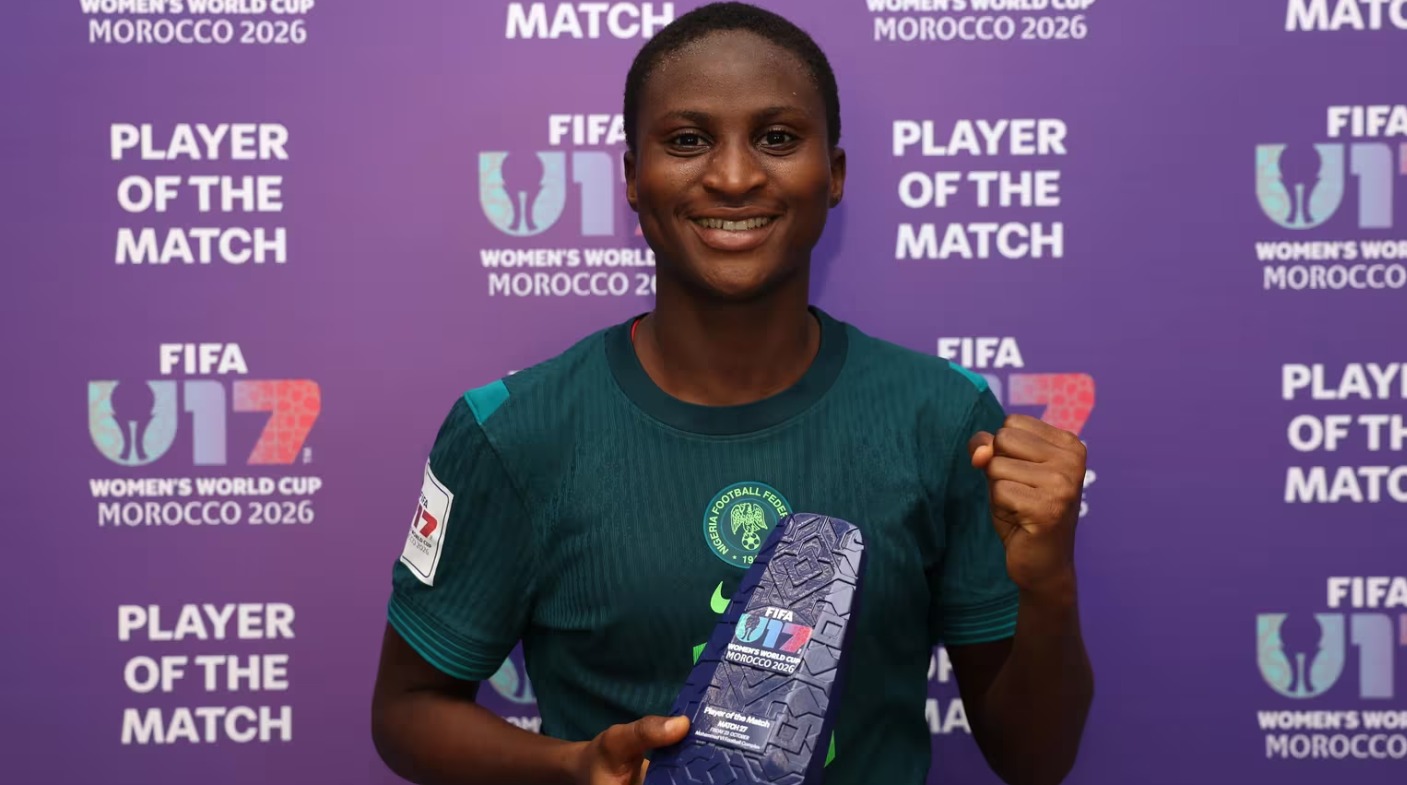
Nigeria’s teenage sensation Kanyinsola Yusuf has emerged as one of the standout performers at the 2026 FIFA U-17 Women’s World Cup in Morocco after winning the Player of the Match award in the Flamingos’ sensational 3-1 victory over defending champions North Korea on Friday.
The prestigious individual recognition crowned an unforgettable afternoon for Yusuf, whose second-half goal helped Nigeria dismantle the tournament favourites and secure a place in the Round of 16.
Yusuf struck in the 56th minute to give Nigeria a commanding three-goal advantage, completing a remarkable attacking display against opponents who had scored 12 goals in their opening two group matches.
Oluwakemi Adegbuyi had opened the scoring in the 15th minute before Oluebube Umejiaku doubled Nigeria’s lead in the 38th minute, leaving the defending champions stunned at half-time.
North Korea pulled a goal back through Yu Jong Hyang’s 82nd-minute penalty, but the Flamingos held firm to record a famous victory.
For Yusuf, the individual honour represents another significant moment in a rapidly developing World Cup campaign.
The youngster had already made an impact in Nigeria’s opening 2-1 defeat to Poland, coming off the bench and helping spark a late fightback, before playing her part in the team’s recovery.
Her emergence adds another exciting dimension to coach Akeem Busari’s squad, which has transformed its fortunes after beginning the tournament with defeat.
Nigeria followed that setback with a 2-0 victory over Puerto Rico before producing Friday’s stunning performance against the reigning champions.
Yusuf’s award also means Nigerian players have claimed the Player of the Match prize in consecutive victories, following Adegbuyi’s recognition against Puerto Rico.
With the Flamingos now through to the knockout stage, Yusuf’s growing influence could prove crucial as Nigeria chase a historic first title.
From an impact substitute against Poland to a match-winning star against North Korea, Yusuf is rapidly making her name on the world stage.
-

 News4 days ago
Mamdani says feds have abdicated on AI, urges New Yorkers to push back
-
News13 hours ago
Obi, Kwankwaso to hold Middle Belt Youth, Village Hall Meeting in Jos
-
News3 days ago
Meta’s Muse hits 10M U.S. downloads in 40 days, a milestone reached by only 11 other apps
-
Business3 days ago
How Your Side Hustle Income Ends Up in Your RSA


