Events
“Storytelling is the Heart of Blogging,” Says Tegha as PLABOMA Holds In-House Training


The Plateau Bloggers and Online Media Association (PLABOMA) on Saturday, October 25, 2025, held an in-house training session at its secretariat to enhance members’ productivity and strengthen the association’s overall organizational capacity.
The one-day session featured intensive discussions on ethics, monetization, storytelling, and professional branding in the digital media space.

Speaking on “Ethics and Conducts of the Association,” the immediate past Chairman, Mr. Friday Bako, emphasized that honesty, fairness, and respect remain the foundation of PLABOMA’s reputation and sustainability.
“We built this association on integrity. Our principles and values are important because they build trust and credibility. Ethics promote accountability, and that’s why transparency in leadership is key,” Bako stated.
He further noted that professional ethics form the bedrock of any credible organization, urging members to uphold standards outlined in the association’s constitution and bylaws.

On his part, the association’s Secretary, Mr. Ibrahim Kallamu, who facilitated the session on “Blogging and Monetization,” urged members to adopt modern digital tools to boost visibility and income.
“Blogging goes beyond attending events. We must identify our niche, maintain consistency, and optimize our websites through Google tools such as My Business, Search Console, and Analytics. These platforms improve visibility and ranking on search engines,” Kallamu explained.
He also encouraged bloggers to approach their platforms professionally by developing unique content strategies and building audiences through engagement and storytelling.

Chairman of the Association, Mr. Matthew Tegha, in his presentation on “Content Creation and Storytelling,” stressed that storytelling remains central to impactful blogging.
“Storytelling is at the heart of blogging. It’s not just about sharing information; it’s about creating emotional connections that inspire action and shape perceptions,” Tegha said.
He added that compelling stories should evoke empathy and meaning, connecting audiences through shared human experiences.
“People remember how your story makes them feel. As bloggers, our stories have the power to heal, teach, unite, and promote peace,” he added.
The training also featured an interactive session where members shared experiences, discussed challenges, and explored collaborative solutions.
In his closing remarks, Mr. Tegha encouraged members to leverage the knowledge gained, collaborate more closely, and seek support from one another in learning new skills and using digital tools effectively.

“We grow stronger when we learn together. Don’t hesitate to reach out to any member whenever you face a challenge,” he urged.
The in-house training marks another step in PLABOMA’s ongoing commitment to capacity building and professionalism within Plateau State’s digital media community.







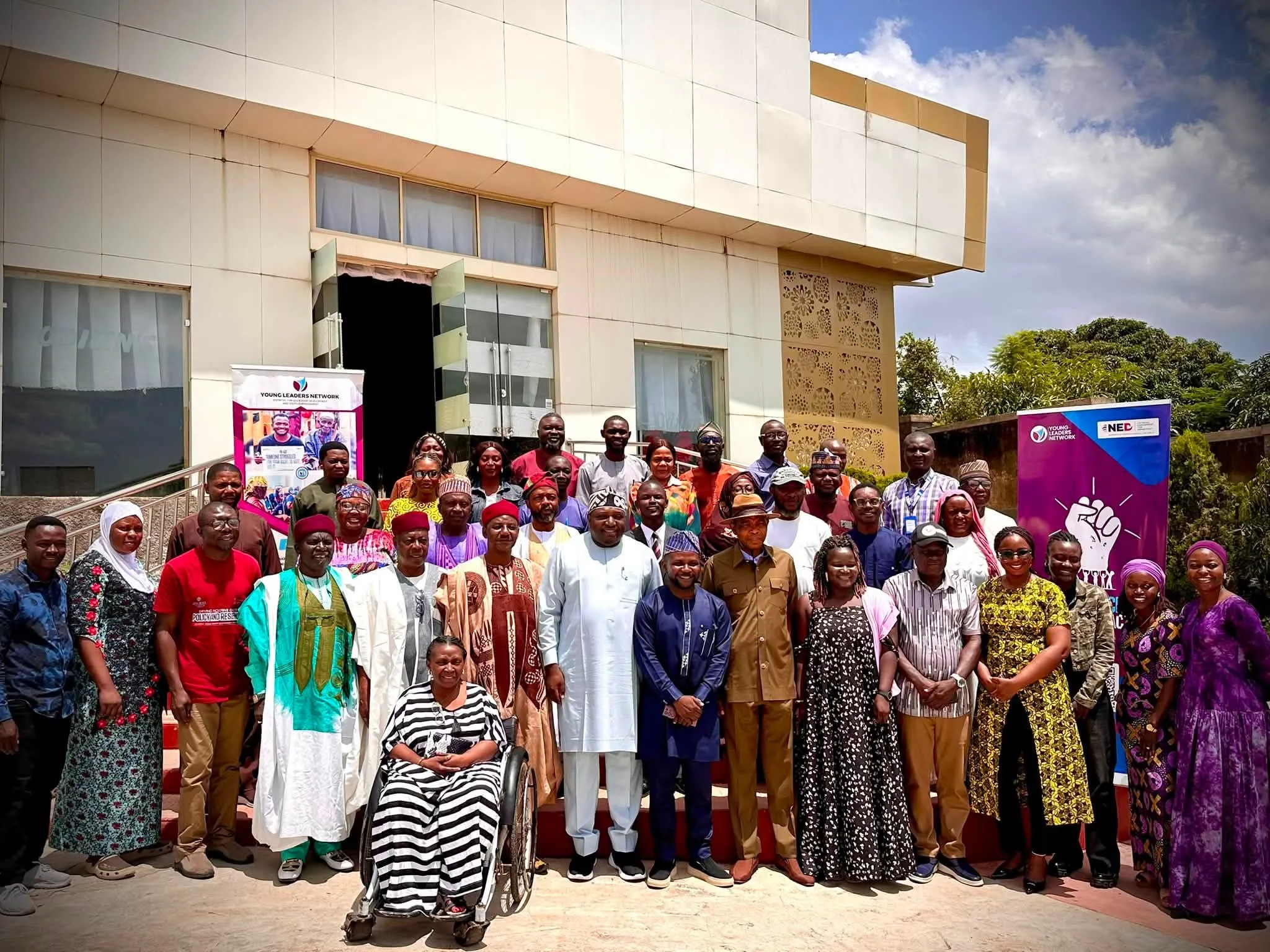
The Young Leaders Network (YLN) has called for stronger citizen participation in the budget and development planning process in Plateau State, urging communities to clearly identify, document and communicate their priority needs to government.

The call was made on Tuesday, September 1, 2026, during a stakeholders’ roundtable on strengthening the integration of Community Charters of Demands (CCDs) into planning and budgeting in the state.
The engagement, organised by YLN with support from the National Endowment for Democracy (NED), was aimed at promoting greater citizen participation in the state budget process and ensuring that community priorities are reflected in government plans and budgets.
Speaking at the event, Plateau State Commissioner for Budget and Economic Planning, Ishaku Maren, reaffirmed the government’s commitment to incorporating citizens’ needs into the budgeting process.

Maren disclosed that the state had already commenced consultations ahead of the 2027 budget, with community leaders being engaged to identify and communicate the needs of their communities.
“The first thing we start with is citizens’ engagement. There is a point in time where citizens, most especially community leaders, will be invited to interact with us so that we get to know their felt needs,” he said.
According to the Commissioner, the integration of Community Charters of Demands would promote ownership, accountability and informed decision-making in the allocation of public resources.
Also speaking, YLN Executive Director, Seun Onarinde, said the roundtable was designed to equip citizens with the knowledge and tools required to effectively present their priorities to government at both state and local government levels.
Onarinde advised communities to identify their three most pressing development needs, document them through Community Charters of Demands and submit them to the relevant government agencies.
“It ensures that government is able to budget for the needs of the communities and able to meet those needs,” he said.
He noted that YLN had continued to promote citizen participation through initiatives including citizens’ budgets, the MyGovWatch platform and joint monitoring missions.
Onarinde urged citizens not to withdraw from the civic space, stressing that sustained engagement was necessary to make the budget process more open and responsive.
“The more we engage, the more the budget process becomes open. So I will not encourage citizens to pull back but rather to engage further so that the civic space can open up for engagement,” he added.
The OGP Secretariat in Abuja, represented by Uche Arisuku, also highlighted practical entry points for integrating Community Charters of Demands into state and local government development planning, sectoral planning, budget preparation, public consultations and implementation monitoring.
Arisuku stressed the importance of creating effective links between community priorities and government planning processes to ensure that citizens’ demands translate into measurable development outcomes.
The District Head of Nabor Gwong, Bala Haruna, commended YLN and its partners for organising the engagement, describing citizen participation as critical to achieving responsive and accountable governance.
The roundtable ended with stakeholders resolving to strengthen citizens’ engagement in the budget process and promote the wider adoption of Community Charters of Demands as a tool for ensuring that government plans and budgets reflect the actual needs of communities across Plateau State.


Related
Events
Nigeria’s Christian Leaders to Unite in Abuja for First Lausanne Congress in Over 10 Years (Register Now)


The Lausanne Nigeria Christian Missions has announced plans to convene about 5,000 church leaders, missionaries, theological educators, young Christian leaders and marketplace professionals at the first national Lausanne gathering in Nigeria in more than a decade.
The Lausanne Nigeria Congress 2026 is scheduled to hold from October 27 to 30 at the National Ecumenical Centre, Abuja, under the theme, “Let the Church Declare and Display Christ Together.”
According to the organisers, registration for the four-day congress is now open, with delegates expected from major Christian denominations and all six geopolitical zones of Nigeria.
The congress represents Nigeria’s national expression of the Fourth Lausanne Congress on World Evangelisation, which brought together more than 5,000 Christian leaders from over 200 countries in Incheon, South Korea, in September 2024.
The organisers said the Abuja gathering would provide a platform for church leaders and mission practitioners to strengthen collaboration and develop strategies for advancing Christian mission in Nigeria and beyond.
The four-day programme will feature plenary teaching, issue network deliberations, intercessory prayer, intergenerational dialogue and a public commissioning.
Discussions will focus on a range of issues, including frontier missions and unreached peoples, theological education, faith in the public square, business as mission, media and digital innovation, diaspora and migration, as well as student and youth ministry.
Speaking on the significance of the congress, National Chairman of Lausanne Nigeria and General Secretary of the Evangelical Church Winning All (ECWA), Rev. Dr. Yunusa Sabo Nmadu Jnr, described Nigeria as both a mission field and an emerging mission force.
“Nigeria is no longer merely a mission field. She is a mission force. More than fifteen thousand Nigerian missionaries are already serving in over fifty countries, while within our own borders more than forty peoples still wait for the gospel,” he said.
Nmadu stressed that the congress was designed to bring together the wider Nigerian Church rather than a select group of Christian leaders.
“This Congress is not for a select few. It is for the whole Church, the whole gospel, the whole world,” he added.
Also speaking, the Primate of the Church of Nigeria, Anglican Communion, and Chairman of the Board of Trustees of Lausanne Nigeria Christian Missions, Most Rev. Dr. Henry Chukwudum Ndukuba, called for greater unity and collaboration among Christian denominations, mission agencies and generations of leaders.
“For too long we have laboured in parallel. Denominations building alone. Agencies running alone. Generations praying alone. This is our God-given moment to come together as one body, one gospel and one mission force for the nations,” Ndukuba said.
The Lausanne Movement traces its roots to the 1974 International Congress on World Evangelization in Lausanne, Switzerland, convened by renowned evangelist Billy Graham.
The gathering brought together about 2,400 Christian leaders from 150 nations and resulted in the Lausanne Covenant, which was drafted under the chairmanship of British theologian and pastor John R. W. Stott.
The organisers said the partnership between Graham and Stott helped shape the global mission movement for decades, with subsequent milestones including the Manila Manifesto of 1989, the Cape Town Commitment of 2010 and the Seoul Statement of 2024.
The Lausanne Nigeria Congress follows a series of activities aimed at strengthening collaboration among Nigerian church, mission and marketplace leaders.
In March 2026, Lausanne Nigeria hosted the Global Executive Director of the Lausanne Movement, Dr. Michael Oh, in Abuja for a Global Mission Conversation focused on strategic collaboration for global impact.
The October congress is expected to build on that engagement by bringing the conversation to a wider national platform.
Registration Opens
Delegate registration for the congress is currently open and will close on September 30, 2026.
Nigerian delegates are required to pay ₦50,000, while international delegates will pay US$200.
The organisers said group registration is available for denominations, mission agencies, seminaries and professional fellowships sending multiple delegates.
They also announced that sponsorship opportunities are available to support participation by frontier missionaries, younger leaders and delegates from under-resourced regions.
Institutions interested in deeper involvement can also apply to serve as Hosting Organisations for the congress.
Further information and registration details are available through the Lausanne Nigeria platform.
The Lausanne Nigeria Christian Missions said it is the national expression of the global Lausanne Movement in Nigeria and operates as a registered Incorporated Trustee based in Abuja.
Its Board of Trustees is chaired by Most Rev. Dr. Henry Chukwudum Ndukuba, while Rev. Dr. Yunusa Sabo Nmadu Jnr chairs the National Leadership. Dr. Joshua Utele chairs the Central Planning Committee for the 2026 congress.
The global Lausanne Movement is a fellowship of Christian leaders committed to advancing the gospel of Jesus Christ in every nation and sphere of society. It is led by Global Executive Director, Dr. Michael Oh.
For Enquiry call: +234 803 960 8804 or +234 803 973 2643.

-

 Business4 days ago
FG settles severance benefits for 2,100 former Nigeria Airways workers after two decades
-
Health4 days ago
PT Health Watch: How laboratory tests can help detect colorectal cancer early
-
News4 days ago
Revolut confirms customer data breach through fake government requests
-
News3 days ago
Automattic confirms Mullenweg has returned as CEO after attempted ouster by board