
News
Bandits will be reintegrated under my government: Gov Bala Mohammed

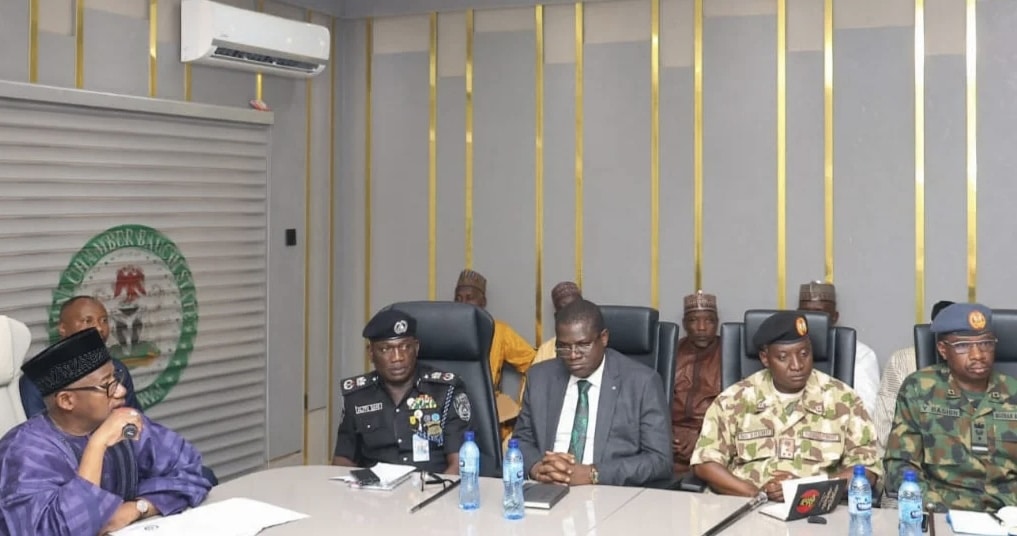
Troops of the Nigerian Army have neutralised many bandits and destroyed their camps in coordinated operations in Bauchi, Governor Bala Mohammed has confirmed.
Mr Mohammed, while briefing journalists at the end of a closed-door security meeting on Monday in Bauchi, said the military conducted successful operations in synergy with the Police, other security agencies and vigilantes.
“The operations routed bandits’ enclaves in Dajin Malam Forest linking Bauchi, Plateau and Taraba. The troops neutralised thousands of bandits, destroyed camps and motorcycles. They also disrupted their supply routes, forcing many of them to flee.
“The troops dismantled several bandit camps. Four warplanes bombed the bandits and successfully cleared several camps, disrupting criminal activities within the forests. Several bandits were neutralised while others fled under sustained military pressure.
“Several motorcycles used by the criminals were destroyed, limiting their mobility and operational capability,” he said.
Mr Mohammed said the state government had provided a temporary surrender window to the bandits and urged them to lay down their arms to consolidate recent security gains.
“We are calling on those still hiding to surrender within this period. This is not amnesty, but a chance to return and reintegrate under the government supervision,” the Bauchi governor said.
He said that arrangements were being made to relocate surrendered bandits and their families, adding that most of them were not indigenes of Bauchi.
The governor announced plans to conduct a biometric data capture of residents in the affected communities as part of broader security reforms to end banditry and ensure peace and stability.
Mr Mohammed said the government would adopt strict surveillance mechanisms, intelligence-led monitoring and verification of activities in markets, motor parks and public spaces.
He said his government would also strengthen community-based security systems by recruiting and supporting vigilantes to complement security agencies.
The governor said the biometric data profiling would be conducted in collaboration with the National Identity Management Commission and other relevant agencies to ensure proper documentation and monitoring of population movements in high-risk areas.
According to Mr Mohammed, the measures aim to prevent the existence of ungoverned spaces that could serve as safe havens for criminal elements.
“We are taking these measures to ensure that no space is left ungoverned or unmonitored, so that criminal elements cannot regroup or threaten our communities again,” the governor said.
(NAN)


Former presidential aide Laolu Akande has criticised the African Democratic Congress, ADC, presidential candidate Atiku Abubakar's reported position on power returning to the North, describing the argument as an insult to Nigerians from the region.
Akande, a former Senior Special Assistant to the President on Media and Publicity in the Office of the Vice President, made the remarks while speaking on Symfoni TV on Friday.
Speaking on the readiness and viability of presidential candidates ahead of the coming election, Akande argued that the country must maintain the principle of rotational presidency to promote a sense of belonging among its various regions.
“Atiku is just basically saying that, okay, the North is angry; we want power back. And that idea, with due respect to our brothers in the North, is an insult. It’s an insult. This country, we must maintain rotational presidency for purposes of building a sense of belonging,” he said.
Speaking on the ADC's choice of presidential candidate, he said, “If they were serious, they should have picked Amaechi, or they should have prevented Obi from leaving, and then Atiku would have been a star.”
‘Atiku’s push for return of power to North is insult’ — Laolu Akande
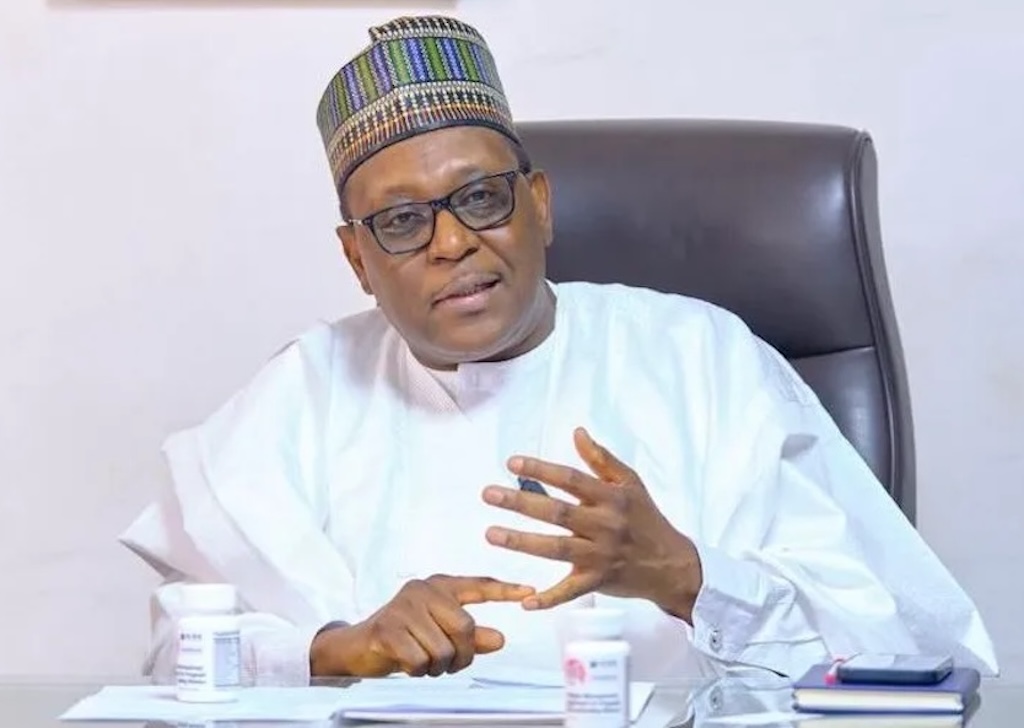
The Coordinating Minister of Health and Social Welfare, Muhammad Pate, has confirmed that the Ebola virus detected in Nigeria is highly similar to the virus identified in Kenya’s first imported case.
Mr Pate disclosed this on Friday during a briefing at the Federal Ministry of Health in Abuja, saying genomic sequencing showed that the viruses differed by only one mutation.
He said the analysis was conducted by sequencing teams at the Nigeria Centre for Disease Control and Prevention (NCDC) and the Institute of Genomics and Global Health at Redeemer’s University, Ede, Osun State, with the team led by virologist Christian Happi.
However, he cautioned that the finding does not establish how the Nigerian first case acquired the infection.
“Based on the genomic analysis, there is no evidence of travel of that index case in Kenya that links it to Nigeria, but the viruses are appearing to be related,” he said.
He added that the finding could change the understanding of the route of transmission as further investigations and testing continue.


Kenya has so far recorded nine confirmed Ebola cases caused by Bundibugyo virus, including one death, according to the European Centre for Disease Prevention and Control (ECDC). Eight of the cases were linked to the country’s first imported case from the Democratic Republic of the Congo (DRC), including four healthcare workers.
Africa CDC probes link
The genomic finding came on the same day the Africa Centres for Disease Control and Prevention (Africa CDC) said it is investigating a possible connection between Nigeria’s case and Kenya’s first imported case.
The agency said both patients had travelled through Entebbe International Airport in Uganda on 3 October, prompting investigations into whether they had shared equipment or had other contact. Africa CDC, however, stressed that no connection had been established between the infections.
The Kenyan patient travelled from the DRC through Uganda before arriving in Nairobi. He later died, becoming the first recorded Ebola death in Kenya’s current outbreak.
The Nigerian patient also passed through Uganda, but Ugandan authorities had earlier rejected suggestions that this established the country as the source of her infection.
Uganda denies active case
On 21 October, Uganda’s Ministry of Health said it had no confirmed active Ebola case and that the Nigerian patient’s transit through the country did not establish that she contracted the virus there.
The ministry said preliminary information indicated that the Nigerian woman had travelled to eastern DRC for business and passed through Uganda in early October without showing symptoms. It said the location of her exposure remained under investigation.
The new genomic finding now provides evidence of similarity between the Nigerian and Kenyan infections, although Nigerian authorities have not established that the patient was infected in Kenya.
One confirmed case
Mr Pate said Nigeria still has only one confirmed Ebola case and that authorities were continuing contact tracing, quarantine and additional testing of contacts.
Some tests have returned negative results, while others are pending, he said.
He urged Nigerians to remain vigilant but calm, saying there is no need for panic.
“We will continue to work diligently to ensure that we contain this virus as much as possible, and that we avoid a situation that spills over to the communities,” he said.
READ ALSO: Ebola: Atiku demands details of FG’s N10bn emergency fund
The minister said the government is also strengthening infection prevention and control measures in health facilities and would train health workers on how to identify and manage suspected cases.
He urged hospitals to notify public health authorities of suspected cases and encouraged Nigerians to observe basic preventive measures, including regular handwashing and hygiene.
Mr Pate also said Ebola is not currently known to be transmitted through the air but through close contact with infected body fluids.
He urged Nigerians to rely on information from public health authorities, including the NCDC, Federal Ministry of Health, World Health Organisation and Africa CDC, rather than unverified information on social media.
Discover more from Premium Times Nigeria
Subscribe to get the latest posts sent to your email.
-

 News16 hours ago
Obi, Kwankwaso to hold Middle Belt Youth, Village Hall Meeting in Jos
-
News4 days ago
Mamdani says feds have abdicated on AI, urges New Yorkers to push back
-
News3 days ago
Meta’s Muse hits 10M U.S. downloads in 40 days, a milestone reached by only 11 other apps
-
Business3 days ago
How Your Side Hustle Income Ends Up in Your RSA


