
News
Who is John Ternus, the incoming Apple CEO?

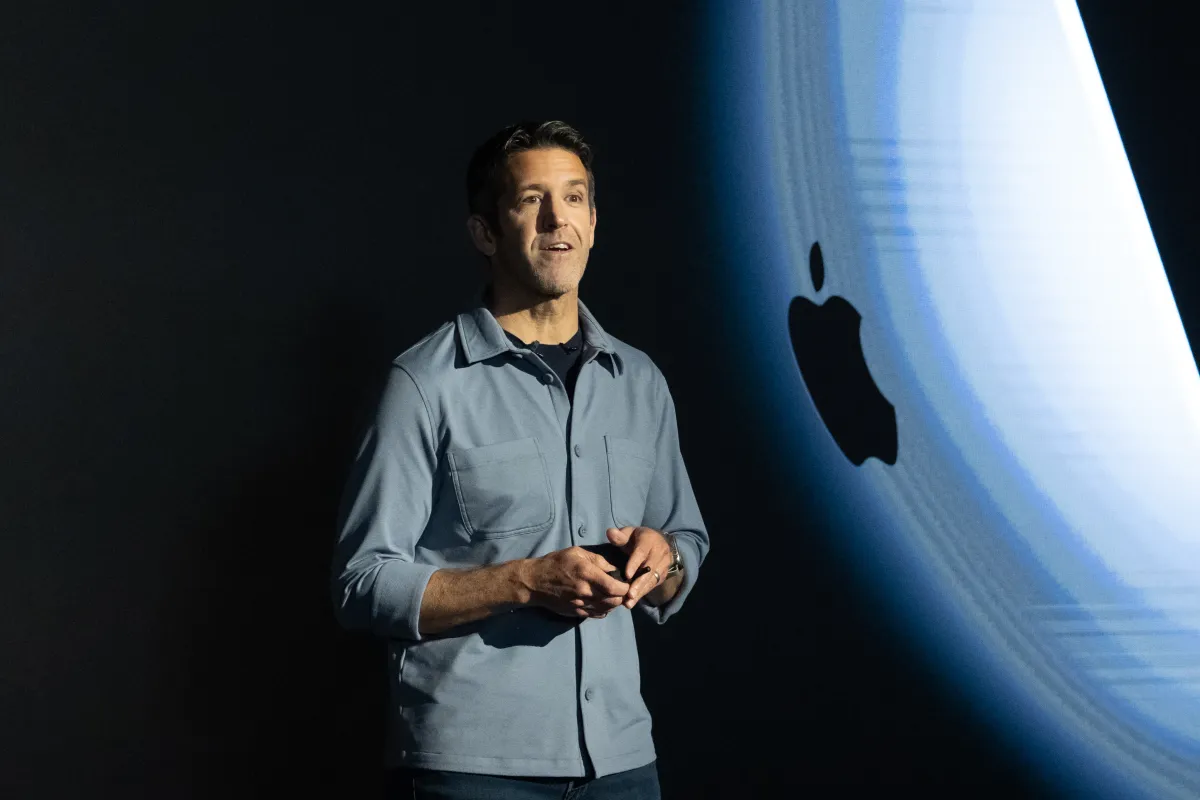
After 15 years, Tim Cook will hand off the Apple CEO role to John Ternus, the company’s senior vice president of hardware engineering. Starting on September 1, Ternus will lead one of the world’s most valuable companies, but if you’re not a dedicated Apple enthusiast, you’ve probably never heard of this man, who has largely remained out of the spotlight until now.
How long has John Ternus worked at Apple?
Ternus has worked at Apple for nearly half of his life — now 51 years old, he has been with the company for 25 years.
He joined Apple’s product design team in 2001 as only his second job out of college (his first was at a small maker of virtual reality devices called Virtual Research Systems). By 2013, Ternus was a VP of hardware engineering, and was promoted to the SVP role in 2021. Ternus — who is 15 years younger than Cook — was among the youngest of top Apple executives who had been rumored as a possible successor, implying that Apple could be looking for someone to lead the company for a long time. After all, Apple has only had two CEOs in this millennium, so it seems that leadership continuity is important to the company.
Ternus reports to Cook, whom he considers a mentor, and leads all of hardware engineering at Apple. That’s a pretty big deal for a company that’s known for ubiquitous hardware like the iPhone and the MacBook.
In his 2024 commencement speech at his alma mater, the University of Pennsylvania’s engineering school, Ternus reflected on the lessons he learned at Apple, which perhaps can tell us a bit about his character — or at least a sanitized version of it.
“Always assume you’re as smart as anyone else in the room, but never assume that you know as much as they do,” Ternus said in the speech. “With this mindset, you’ll find the confidence you need to push forward, but more importantly, the humility to ask questions.”
In a tech ecosystem populated with abrasive egos, it’s refreshing to hear Ternus utter the word “humility.” Better yet, he doesn’t appear to have an X account.
Techcrunch event
San Francisco, CA
|
October 13-15, 2026

What projects did John Ternus lead at Apple?
Ternus’s earliest project at Apple involved scrutinizing parts for the Apple Cinema Display, an early desktop monitor.
“At some point in my first year, I found myself at a supplier facility. I was far away from home. Well past midnight, I was using a magnifying glass to count the number of grooves on the head of a screw […] and I was arguing with the supplier because these parts had 35 grooves. They were supposed to have 25,” Ternus recalled in his commencement speech. “I distinctly remember stepping back for a minute and thinking, ‘What the hell am I doing? Is this normal?’”
As Ternus climbed the corporate ladder, his responsibilities grew. He may no longer spend as much time analyzing screws, but he still seems to take pride in getting the little details right. In a recent interview, when Ternus was asked about his favorite memory of Steve Jobs, he mentioned the former Apple co-founder’s attention to craftsmanship.
“[Jobs] was moving a piece of furniture, a chest of drawers, and pulled it away from the wall and looked at the back and was just reflecting on, you know, that the carpenter who made it had made it beautiful,” Ternus said. “It finished the back as beautifully as the rest of it, even though nobody was going to see it, right? And I think about that all the time because I think that perfectly exemplifies what we do here.”
From there, he went on to lead the hardware development behind products across the Apple ecosystem, overseeing launches like AirPods, Apple Watch, and the Vision Pro. He also had a hand in major technical upgrades at Apple, like Apple’s transition from Intel chips to its own proprietary Apple silicon.
Most recently, Ternus was involved in the production of the MacBook Neo, Apple’s new, more affordable laptop model that lowers costs through some clever tradeoffs in hardware design, like using an iPhone chip to power the device.
“We never want to ship junk. We want to ship great products that have that Apple experience, that Apple quality. To do that with the Neo required building something completely new from the ground up […] leveraging both the technologies we’d been developing like Apple silicon, but also the kind of expertise that we’ve developed over many, many years of building Macs, and building phones, and building iPads, and all of these things,” Ternus told Tom’s Guide.
As CEO, Ternus will have to steer Apple through its challenge to catch up in the AI race and figure out what to do with the underlying tech behind the Vision Pro.
What else do we know about John Ternus?
Ternus was on the swimming team at Penn. For his senior project, he built a feeding arm that people with quadriplegia could control with head movements.
According to public records of political donations, Ternus donated $2,900 to Senator Chuck Schumer (D-NY) in 2021.
Otherwise, Ternus has maintained a relatively low profile.

The Publicity Secretary of the African Democratic Congress, ADC, in Kwara State, Abubakar Kabir Basambo, has resigned from the party, accusing some of its leaders of hypocrisy, dishonesty and double standards.
Basambo announced his decision in a resignation letter dated October 23, 2026, addressed to the state party chairman through the Magaji Are 1 ward chairman and the chairman of Ilorin East Local Government Area.
He said his decision followed careful consideration of the party’s direction in the state ahead of the 2027 general elections.
In the letter, Basambo criticised some party leaders and members of the state executive committee, accusing them of failing to practise the values they publicly claim to uphold.
“This decision was not taken lightly. After deep reflection, I can no longer cope with the direction the party is going in the state.
“There is so much hypocrisy, lies, and double standards amongst some party leaders and State Excos who parade themselves as loyal leaders,” he stated.
The former spokesman also criticised the party’s governorship candidate, Zakari Mohammed, alleging that his arrogance, alongside the conduct of some members, had contributed to his decision to leave.
He warned that the alleged behaviour of some party leaders could prevent the ADC from growing if it was not addressed.
“If this situation does not change, it will surely bring the party down. This party cannot grow with hungry and hypocritical people parading themselves as leaders,” he wrote.
Despite his departure, Basambo said he had no regrets about leaving the party, describing the decision as the end of his political journey with the ADC.
He also expressed disappointment that he would no longer be working with his political leader, Abubakar Kannike, whom he said he had grown to respect over the past year.
Basambo described Kannike as a man of honour and sincerity, adding that his regard for him would remain unchanged despite his resignation.
He also wished the state chairman, secretary and woman leader success in their respective positions.
While thanking those who supported him during his time in the party, he said he had no apology to offer to those who disliked him.
Basambo further clarified his meeting with the governorship candidate of the Peoples Democratic Party, PDP, Bolakale Kawu, insisting that it was not intended to work against the ADC.
“For the purpose of clarity and to exonerate myself from any anti-party allegation, my meeting with Mallam Bolakale Kawu was purely an act of brotherhood and that of a committed member trying to canvas for the party,” he stated.
He added that some ADC leaders had also been involved in similar activities privately.
News
From Super-Sub to World Cup Superstar! Kanyinsola Yusuf Wins FIFA Player of the Match as Flamingos Stun North Korea 3-1

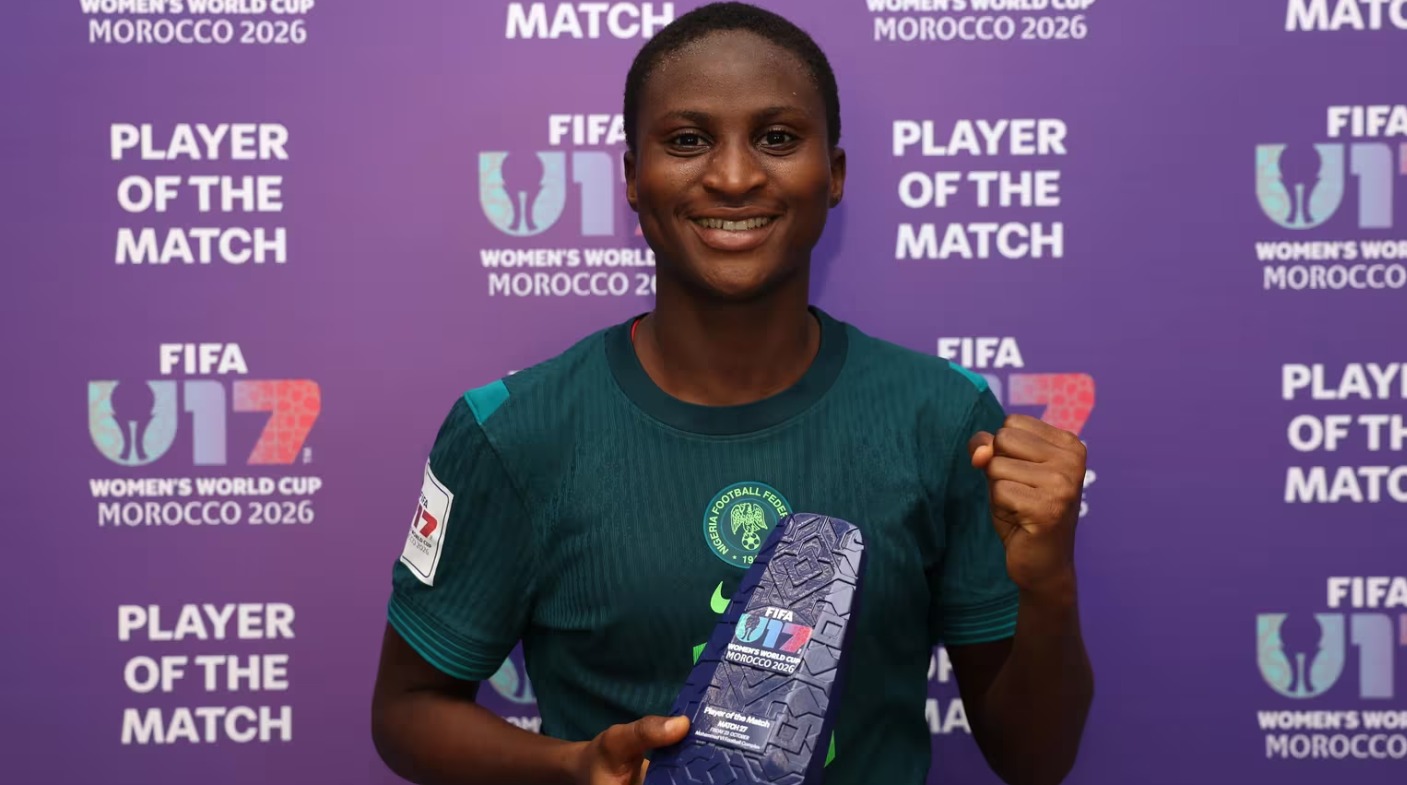
Nigeria’s teenage sensation Kanyinsola Yusuf has emerged as one of the standout performers at the 2026 FIFA U-17 Women’s World Cup in Morocco after winning the Player of the Match award in the Flamingos’ sensational 3-1 victory over defending champions North Korea on Friday.
The prestigious individual recognition crowned an unforgettable afternoon for Yusuf, whose second-half goal helped Nigeria dismantle the tournament favourites and secure a place in the Round of 16.
Yusuf struck in the 56th minute to give Nigeria a commanding three-goal advantage, completing a remarkable attacking display against opponents who had scored 12 goals in their opening two group matches.
Oluwakemi Adegbuyi had opened the scoring in the 15th minute before Oluebube Umejiaku doubled Nigeria’s lead in the 38th minute, leaving the defending champions stunned at half-time.
North Korea pulled a goal back through Yu Jong Hyang’s 82nd-minute penalty, but the Flamingos held firm to record a famous victory.
For Yusuf, the individual honour represents another significant moment in a rapidly developing World Cup campaign.
The youngster had already made an impact in Nigeria’s opening 2-1 defeat to Poland, coming off the bench and helping spark a late fightback, before playing her part in the team’s recovery.
Her emergence adds another exciting dimension to coach Akeem Busari’s squad, which has transformed its fortunes after beginning the tournament with defeat.
Nigeria followed that setback with a 2-0 victory over Puerto Rico before producing Friday’s stunning performance against the reigning champions.
Yusuf’s award also means Nigerian players have claimed the Player of the Match prize in consecutive victories, following Adegbuyi’s recognition against Puerto Rico.
With the Flamingos now through to the knockout stage, Yusuf’s growing influence could prove crucial as Nigeria chase a historic first title.
From an impact substitute against Poland to a match-winning star against North Korea, Yusuf is rapidly making her name on the world stage.
-

 News15 hours ago
Obi, Kwankwaso to hold Middle Belt Youth, Village Hall Meeting in Jos
-
News4 days ago
Mamdani says feds have abdicated on AI, urges New Yorkers to push back
-
News3 days ago
Meta’s Muse hits 10M U.S. downloads in 40 days, a milestone reached by only 11 other apps
-
Business3 days ago
How Your Side Hustle Income Ends Up in Your RSA


