Connect with us

News

2027: INEC faces credible question as Amupitan confirms dead persons’ names on register 

info

Published

on

Joash Amupitan.jpg

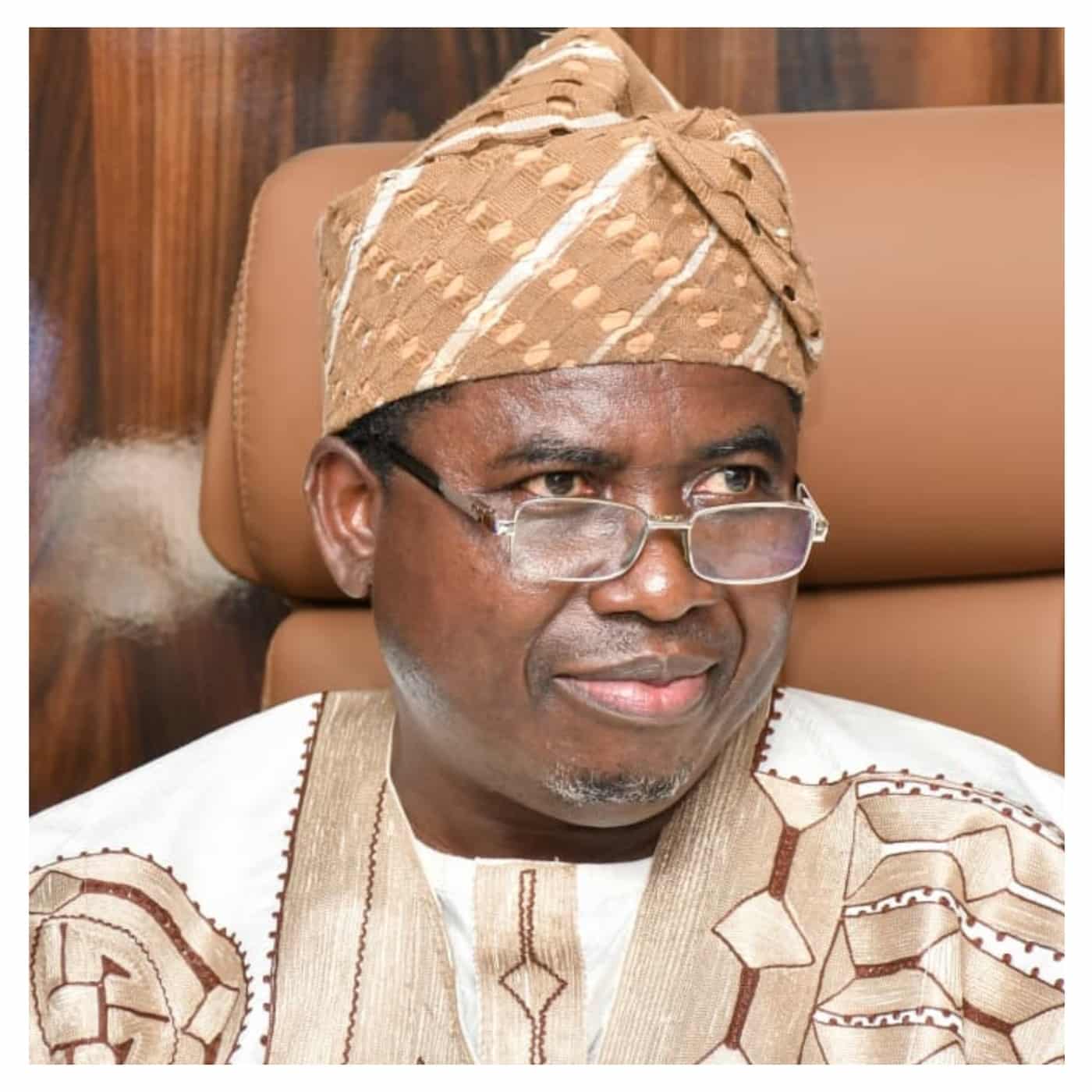
Ahead of the 2027 general election, the credibility of the Independent National Electoral Commission, INEC, voters’ register has come under scrutiny.

DAILY POST reports that this is following the recent revelation by the INEC chairman, Professor Joash Amupitan that names of the many dead persons were still in the register. 

Amupitan had revealed that names of voters who had died as far back as 15 years ago were still in the country’s voter register, a development many argue would not only question the credibility of the 2027 election outcomes but also cause unnecessary financial waste in terms of printing ballot papers and providing other logistics for the exercise.

This was revealed when the INEC boss received Director-General/Chief Executive Officer of the National Identity Management Commission (NIMC) Abisoye Coker-Odusote and her management team who visited him in Abuja on Wednesday.

According to Amupitan, INEC has already entered into partnership with NIMC to ensure a credible voters register and transparent elections in next year’s polls. 

He noted that INEC would leverage NIMC’s data architecture to progressively clean up the register.

He explained that a credible, well-quantified voter register would significantly reduce the overall cost of conducting elections, noting that INEC currently has to print materials in excess of the over 100 million entries on its register to accommodate discrepancies.

He stressed that the newly signed NIMC Act 2026 lays the foundation for a new electoral system in Nigeria built on verified identity and stronger data integrity, expressing confidence that with NIMC’s database now covering more than 136 million enrolled Nigerians, deeper cross-platform integration between the two commissions would allow for continuous auditing, verification and elimination of duplicate or underage entries on the voter register.

“Also, the INEC’s newly introduced online voter registration platform is deliberately anchored on the National Identification Number (NIN) as a verification protocol, a critical step toward a more seamless Continuous Voter Registration (CVR) process,” he said.

Apart from the financial implications of such a questionable register, the INEC chairman was candid about the identity-related challenges, saying that voter identity could easily be stolen, easily impersonated and easily duplicated.

The NIMC boss, Coker-Odusote also assured that identity remains the foundation of effective governance and credible election planning, pledging NIMC’s full support to INEC in delivering a fair and transparent 2027 general elections.

The INEC chairman’s revelation was just a confirmation of the fear being expressed by many Nigerians.

A university lecturer, Dr Samuel Adegboye believes that having dead persons’ names on the voter register aids election manipulations. 

He also believes that sometimes, it is deliberate, noting that, “some corrupt INEC officials are working in cahoots with some dubious politicians to ensure that election manipulation is made possible.

“With the names of dead persons in the voter register, it becomes very easy for politicians to inflate figures at the end of the day. And as I said, such politicians work in cahoots with some INEC officials.

“However, the INEC chairman did not tell us the number of dead persons in the register. The numbers could be in the hundreds of thousands considering the number of unnatural deaths that had occurred in Nigeria over the past 10 years as a result of insecurity across the country.”

“So, I commend him for being honest to accept that there are dead persons whose names are still in the voter register. Let it not just end in rhetoric, let him back it up with action as he has promised. Such dead persons’ names should be weeded out of the register. 

“That way, rigging will be maximally reduced and we can expect an improved election outcome,” he told DAILY POST.

He advocated that apart from dead names, the issue of ghost voters must also be tackled. 

He noted that there are hundreds of thousands of non-existent names in the voter register, stressing that since the INEC chairman has started with the dead voters, he should also go a step further to tackle the issue of ghost voters.

“You know, it has become a popular cliche that anything is possible in Nigeria. This is a country where the absurd has become the norm. It started with ghost workers in the civil service where some dubious officials collect salaries for non-existent personnel. 

“And this went on for so many years before it was discovered and since its discovery, that problem has kept recurring in the civil service.

“Recently, we are talking about a ghost agency that has existed for over three years. Can you imagine that? An agency that has been submitting budgets and getting approval for three is what they are telling us doesn’t exist? 

“If that can happen, what makes you think that we can’t have ghost voters? So, since the INEC chairman has decided to be honest enough to admit that there are dead persons’ names in the voter register, I want him to also know that there are ghost voter names in that register. 

“Let him address both issues at the same time so that we can have fair and credible election results in 2027,” he added.

Also, speaking on the matter, a retired civil servant, Johnson Adewale stressed that apart from curtailing rigging and restoring credibility to the electoral process, such a clean-up will save enough funds.

“As the INEC chairman has pointed out, removing dead names from the voter register will help prevent printing ballot papers that will end up in waste-bins. For instance, what use will it be to print 10 million voter’s cards when the actual number of voters is five million? It doesn’t make sense. It amounts to a waste of materials and

money.

“Secondly, when the INEC is working with wrong data, it is bound to make avoidable mistakes. 

“Politicians can easily inflate figures once they have INEC officials that can play balls and it will be difficult to detect because the number in the voter register will seem to align even when most names in the register belong to dead persons. 

“So, it is good news to hear that INEC will collaborate with NIMC to clean up the voter register and ensure that dead persons’ names are removed. It will go a long way to ensuring credibility of the electoral outcome. 

“I am not saying it will automatically prevent rigging but it will reduce election malfeasance and improve fairness in the process. 

“It will also save funds and reduce stress on the part of INEC officials,” he said.

For a former local government counsellor in Amuwo Odofin Local Government Area of Lagos State, Kolade Adegboyega, “Nigerians are tired of rhetoric; they want action.” 

He agrees with the INEC chairman that such a move would reduce the overall cost of election in Nigeria. 

He commended the INEC chairman’s openness and resolve to tackle the menace once and for all by seeking collaboration with NIMC.

He, however, advised the INEC boss to do everything within his power to ensure that Nigerians have credible elections in 2027. 

“The INEC chairman should do everything possible to remove all bottlenecks that could taint the outcome of the 2027 elections.

“His move to collaborate with NIMC to clean up the voter register is a welcome development because once you don’t have a credible register, the credibility of the entire process becomes questionable. 

“So, he should be encouraged as he embarks on such a clean-up exercise,” he submitted.

Also, speaking, a lawyer and public affairs commentator, Jason Osazuwa decried the development, saying, “if not that the entire system is already corrupt, how can such a thing happen? 

“We all know that Nigeria has a big problem with keeping data and that’s why we have ghost workers in the civil service everywhere.

“It is shameful that at this age and time, we are talking about having names of dead persons in our voter register.

“I only want the INEC boss to live up to his words. Let him partner with NIMC to clean the register. We want to have fair, credible elections in 2027 and beyond.”

Continue Reading
Click to comment

Leave a Reply

Your email address will not be published. Required fields are marked *

Business

FG to digitise mining sector, track operators

info

Published

on

By

WhatsApp Image 2026 05 22 at 07.41.44.jpeg

MTN ADVERT

The Federal Government seeks to deploy Nigeria’s digital identity infrastructure to track mining operators, strengthen regulation, and curb illegal mining nationwide.

The Minister of Solid Minerals Development, Dele Alake, disclosed that when he received the Director-General of the National Identity Management Commission (NIMC), Abisoye Coker-Odusote, and her management team during a courtesy visit to the ministry in Abuja.

The meeting explored areas for collaboration between the ministry and NIMC to integrate digital identity into the solid minerals sector, improving governance, regulatory compliance, and monitoring of mining operations.

A statement issued on Sunday by the minister’s Special Assistant on Media, Lara Owoeye-Wise, said that both institutions are working to leverage technology and credible identity systems to support ongoing reforms in the sector.

Mr Alake described NIMC as a critical institution in Nigeria’s governance architecture, noting that effective regulation and national planning increasingly depend on reliable identity management and accurate data.

PT WHATSAPP CHANNEL

“NIMC occupies a critical position in translating policy into reality. It is pivotal to the development of any nation because governance today is driven by data, technology, and credible identity systems,” the minister said.

Tracking mining operators

Mr Alake said integrating digital identity into the mining sector would enable government agencies to properly identify operators, monitor mining activities, and distinguish legitimate licence holders from illegal miners.

According to him, effective identity management is essential to strengthening enforcement and tackling insecurity associated with illegal mining.

“Without identification, we cannot trace; we cannot track, and insecurity will flourish. In the solid minerals sector, we need effective tracking of both legal and illegal operations,” he said.

He added, “A credible identity ecosystem will strengthen regulation, improve enforcement, and support our efforts to sanitise the sector.”

He said technology, digital identity, data gathering, and statistics have become indispensable tools for evidence-based policymaking, efficient licensing, investment promotion, and improved oversight of mining operations.

The minister also noted that access to credible and verifiable data would enable government institutions to understand activities across the mining value chain better and formulate policies that support the sector’s sustainable development.

NIMC proposes deeper collaboration

Speaking during the meeting, Ms Coker-Odusote said the recently enacted NIMC Act 2026 has strengthened the legal framework for Nigeria’s digital identity ecosystem and created new opportunities for collaboration with government institutions.

She said integrating NIMC’s digital identity infrastructure into the mining sector would improve interagency data integration, strengthen regulatory compliance, and enhance security.

According to her, the collaboration would also improve monitoring of mining operators, support law enforcement, and facilitate the implementation of Community Development Agreements between mining companies and host communities.

She added that a robust digital identity system would improve transparency, strengthen service delivery, and enable more efficient data sharing across government agencies.

“The commission’s infrastructure can support the creation of a more reliable identity ecosystem for the mining sector, helping regulators verify operators and improve monitoring across the country,” she said.

Reforms target illegal mining

The initiative forms part of the Federal Government’s broader reforms aimed at sanitising Nigeria’s solid minerals sector, which continues to face challenges, including illegal mining, insecurity, environmental degradation, and weak regulatory oversight.

READ ALSO: Nigeria will be big player in global supply of critical minerals – Dele Alake

Authorities have repeatedly identified illegal mining as one of the biggest obstacles to unlocking the sector’s economic potential, with criminal networks and unlicensed operators exploiting mineral resources while depriving the government of revenue.

PREMIUM TIMES recently reported that the Federal Government arrested two suspected illegal miners and shut down an illegal site in Osun State as part of an intensified nationwide enforcement campaign. During the operation, Mining Marshals confiscated equipment and sealed the site, while the suspects assisted investigators in identifying financiers of the illegal activities.

The minister had said that the Mining Marshals arrested more than 300 suspected illegal miners nationwide, with over 150 suspects, including foreign nationals, currently facing prosecution. Several illegal mining sites have also been closed as part of efforts to restore order to the sector.

The Tinubu administration has also introduced reforms to attract responsible investment into mining, improve transparency, strengthen licensing procedures, and ensure Nigeria derives greater economic benefits from its vast mineral resources.


Continue Reading

News

Can an Apple lawsuit derail OpenAI’s hardware plans?

info

Published

on

By

Portrait.jpg

Apple recently filed a trade secrets lawsuit against OpenAI, accusing the AI company of a pattern of misconduct aimed at getting current and former Apple employees to share confidential information. (In response, OpenAI said it is “not aware of any evidence that this complaint has merit.”)

On the latest episode of TechCrunch’s Equity podcast, Kirsten Korosec, Sean O’Kane, and I debated whether this lawsuit will cast a shadow over OpenAI’s much-discussed plans to get into the hardware business (starting with a mobile smart speaker) and go public.

“Even setting aside whether or not the court grants any kind of injunctive relief or any kind of restraining order over what OpenAI is doing, it just naturally can lead to that sort of situation where it’s going to cause some delays in what OpenAI is working on,” Sean suggested. “Which I’m sure was probably part of the reasoning behind Apple doing this. They don’t do this stuff willy nilly.”

With all those plans on the line, will OpenAI try to settle this as quickly as possible, or did it learn from its recent courtroom victory against Elon Musk that it can endure the cost and embarrassment of a trial? Kirsten, at least, predicts the latter.

Keep reading for a preview of our conversation, edited for length and clarity.

Kirsten Korosec: Sean, how do you feel about Sam Altman listening to you with a little device maybe in your pocket?

Sean O’Kane: I’m good. Maybe that’s predictable, but I’m good. No thanks.

We’ll get into it, I’m sure, but this is allegedly the first product that OpenAI has been working on in its hardware division with Jony Ive and company. They’ve been really coy ever since that weird video they put out last year of them sitting at that coffee shop or bar in San Francisco and sort of talking very vaguely about hardware and legacy devices, meaning laptops and phones. And so if this is the direction they’re headed in, all power to people who want to have somebody like that always listening to them. This is not going to be for me.

Anthony Ha: Part of what we have to remember about those kinds of devices is also that, depending on how mobile it is, it’s not just listening to you, it’s listening to the people around you. I might be fine with it — I’m not fine with it, but let’s say I was — but then if we met up in-person at Disrupt, then suddenly it might be listening to all of us. 

There’s all kinds of social norms that are going to have to be renegotiated if these things become widespread. I think we should make fun of and criticize people who record other people without consent.

Kirsten: Well, I bring up the device that has been speculated about for a really long time, and we’ll see what it really ends up being once it’s officially introduced, but it’s important in the context of this lawsuit that Apple filed last Friday. 

It was the biggest news of the week, certainly, and this is a trade secret lawsuit. It has some pretty wild allegations and we should very much emphasize these are allegations that have been filed in a complaint by Apple. But what it is accusing OpenAI of is a pattern of misconduct at the highest levels, specifically directed towards OpenAI employees who used to work at Apple. And in fact they’ve named the chief hardware officer Tang Tan in this lawsuit.

This is all important because Apple is accusing OpenAI of essentially stealing their trade secrets, but in the context of that, this could be then used for a competing hardware product. I’m wondering if maybe we don’t get into whether this lawsuit has merits, because we haven’t gone through full discovery, but what are your initial impressions of the lawsuit aside from the fact that wow, this is going to be entertaining?

Sean: Two things. One, this is a pretty big risk potentially to whatever it is OpenAI is working on. Even setting aside whether or not the court grants any kind of injunctive relief or any kind of restraining order over what OpenAI is doing, it just naturally can lead to that sort of situation where it’s going to cause some delays in what OpenAI is working on, which I’m sure was probably part of the reasoning behind Apple doing this. They don’t do this stuff willy nilly.

The other is that we think that OpenAI is — we know that they’ve filed confidentially for an IPO. We think it might happen as early as the end of this year, or early next year, if you believe Sam Altman’s cautious language around the IPO. And this just raises a whole bunch of questions around that because, on the one hand, we think their business right now is probably overwhelmingly the software; they’re not really factoring in any hardware business into that picture at the moment.

They’re about to go to the markets and they’re going to be pitching bankers and investors on where they think their addressable market should be, and if they have a big amount of that pegged to a potential hardware division and hardware products, this could be a huge risk to that and changes a lot of the calculus of sort of how the IPO gets priced. So that’s where my head’s at.

Anthony: One [allegation] that I assume that Apple must have pretty solid like numbers on is, they said more than 400 Apple employees now work at OpenAI. Granted, both of them are very large companies with many thousands or tens of thousands of employees. So as a percentage, it’s not necessarily huge. But that seems like a lot of people and a pretty serious talent drain. 

And the other thing I’m wondering is related to Sean’s point. With the context of the potential IPO, how much damage did OpenAI ultimately take from a marketing and brand perspective from the trial it already went through? That it seemed to basically win, but there was a lot of not-terrible-but-kind-of-embarrassing dirty laundry that came out in the testimony. To what extent are they just like, “We do not want to go through that again”? Or did they take the lesson of, “Hey, we went through it and we survived and we’ll be okay if we have to do another trial with Apple”?

Kirsten: I fully predict the latter, by the way.

When you purchase through links in our articles, we may earn a small commission. This doesn’t affect our editorial independence.

Continue Reading

Trending