Connect with us

News

Our Fencers Are Ready’ — Nigeria Targets Commonwealth Success As Adeyinka Backs Team For Glasgow

info

Published

on

WhatsApp Image 2025 06 07 at 12.17.25.jpeg

President of the Nigeria Fencing Federation (NFF), Adeyinka Samuel, has expressed confidence in Team Nigeria’s chances at the 2026 Commonwealth Fencing Championships, insisting the country’s athletes are leaving no stone unturned in their preparations for the competition in Glasgow, Scotland.

READ ALSO: Fencing Federation President Adeyinka Samuel Showers Accolades On Nigeria’s Array Of Young Fencers

With the championships drawing closer, Samuel revealed that Nigeria’s fencers have been putting in intensive work in training, with the federation focused on ensuring the athletes arrive in Scotland in peak condition.

The Commonwealth Fencing Championships, held alongside the Commonwealth Games programme, provide one of the biggest international stages for athletes from across the Commonwealth and offer valuable ranking points and elite-level competition.

Speaking on the team’s preparations, Samuel said the commitment shown by the athletes has given him every reason to believe Nigeria can make a strong impression against some of the world’s best fencers.

“Our athletes have been working extremely hard, and I am pleased with the level of dedication they have shown. They understand the importance of this championship, and we are optimistic about what they can achieve,” Samuel said.

The federation president acknowledged that the competition will be fierce, with traditional fencing nations expected to field strong teams, but maintained that Nigeria’s representatives have prepared well enough to compete at a high level.

Samuel also praised the collaborative efforts of the coaches, technical officials and the National Sports Commission (NSC) in creating an environment that allows the athletes to focus fully on their preparations.

“We have confidence in this team. They have shown discipline throughout the build-up, and we believe they are capable of making Nigeria proud when the competition begins,” he added.

Fencing has continued to grow steadily in Nigeria in recent years, with the country producing promising performances at African and international competitions.

The federation has also intensified grassroots development programmes aimed at producing a new generation of elite athletes capable of competing consistently on the world stage.

As Team Nigeria puts the finishing touches to its preparations, attention will now shift to Glasgow, where the nation’s fencers will be aiming to translate months of hard work into strong performances and further raise Nigeria’s profile in one of the fastest-growing Olympic sports.
Continue Reading
Click to comment

Leave a Reply

Your email address will not be published. Required fields are marked *

Business

Dangote Refinery to double workforce in expansion push

info

Published

on

By

Dangote Refinery 2 1024x831 1 e1778177983979.jpg

Dangote Petroleum Refinery and Petrochemicals FZE plans to double its labour force to meet its target of doubling its processing capacity by 2029.

“Well, within the refinery, the workforce will practically become double, except in the water treatment section, because there we already have substantial capacity,” Edwin Devakumar, vice president, oil & gas and fertiliser at Dangote Industries Limited, told journalists at the refinery in Lagos on Friday.

He observed that labour expansion in the transport segment might not be significant, except in the case of an increase in local consumption.

“Obviously, we don’t expect a substantial increase in the consumption of petrol and diesel within the country in the short term,” he added.

The oil processing plant is on a drive to raise N2.2 trillion ($1.6 billion) in equity capital from retail investors to finance a major expansion from 700,000 barrels per day (bpd) to 1.4 million bpd.

On Monday, when it opened its order book to the public, setting the capital raise programme in motion, overwhelming subscription traffic, which attracted billions of naira in demand to the offer in its first few minutes, triggered downtime across a couple of trading platforms across Nigeria.

PT WHATSAPP CHANNEL
Dangote Refinery AD

Bamboo and Cowrywise, two of several fintech and digital application channels approved by Nigeria’s Securities and Exchange Commission to facilitate transactions for the offer, reported outages on their social media posts, with Bamboo said to have seen a 1,000-fold jump in traffic compared to regular days.

The pan-African share sale, dubbed by Mr Dangote as “the people’s IPO,” is broadly tapping into Nigeria’s fintech infrastructure to drive inclusion across the continent’s most populous country, with a minimum subscription of 10 units, equivalent to N5,250.

Towards that end, the transaction is targeting investors as diverse as traders, cooks, drivers and managers, giving “every human being living on the continent to be part of this action,” Mr Dangote told attendees at the sign-off ceremony of the offer documents in Lagos last week.

The green shoe option in the offer gives Dangote Refinery the flexibility to allot 30 per cent of the excess shares if the IPO is oversubscribed.

Should that happen, it will make the IPO not just Africa’s biggest yet but also the largest-ever among frontier markets, Temi Popoola, the CEO of the Nigerian Exchange (NGX), said this week while responding to questions on CNN.

Compared to the first phase of the refinery project, which cost $20 billion and suffered construction delays, the expansion will cost less, Mr Devakumar said, because there won’t be a need to build most of the infrastructure used in the first stage, including a granite quarry and a port facility.

“The equipment, per se, will be the same because it’s a replica. But at the same time, we are trying to cut down on engineering and design costs because most of that will again be a replica. So we have told the design engineers, reduce your cost, and they have already agreed,” he said.

The current expansion plan at the fertiliser unit is expected to increase annual output from 3 million tons to 12 million tons.

READ ALSO: What Dangote IPO signals – NGX Chairman

Apart from Lagos, where it is pursuing a primary listing, the Dangote Refinery is also looking to float its shares on bourses in Africa, including Johannesburg and Nairobi. A cross-border listing outside Africa, most likely in the US, is under consideration and could happen in three to four years.

According to Minister of Industry, Trade and Investment Jumoke Oduwole, listing the refinery’s shares on the NGX could lift market capitalisation by $60 billion.

The company logged $1.8 billion in after-tax profit for the six months to June, when revenue topped $13 billion, according to the offer prospectus, riding on the soaring oil prices that followed the outbreak of the US war against Iran.

That compares to a net loss of $476 million recorded for last year.


Discover more from Premium Times Nigeria

Subscribe to get the latest posts sent to your email.

Continue Reading

News

From NITEL to ntel: Inside the struggle to rebuild Nigeria’s telecoms pioneer – Technology Times

info

Published

on

By

Image fx 84.png

For many Nigerians, the name NITEL evokes memories of a different telecommunications era, one in which securing a telephone line could take months or even years and having a working fixed-line connection was a marker of privilege.

Long before mobile phones transformed the way Nigerians communicated, Nigerian Telecommunications Limited (NITEL) was the backbone of the country’s telecommunications system. Its network connected government institutions, businesses and households, while its national transmission infrastructure and international gateways provided the foundation for Nigeria’s communications services.

That era began to unravel as Nigeria liberalised its telecommunications industry at the turn of the millennium.

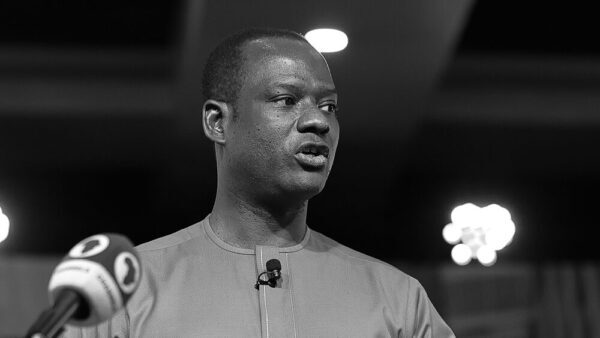
Ikechi Nnah, General Manager, Legal Adviser and Company Secretary of NatCom Development and Investment Limited, trading as ntel. Image credit: Ikechi Nnah/Facebook.

The licensing of GSM operators in 2001 triggered a wave of private-sector investment that rapidly expanded mobile connectivity and changed the economics of telecommunications. Operators including MTN, Econet Wireless, later Airtel, Globacom and Etisalat built mobile networks at a pace that NITEL struggled to match.

Years of inadequate investment, operational problems, failed reforms and unsuccessful privatisation efforts left the state-owned operator increasingly unable to compete.

By the time NITEL Plc and Nigerian Mobile Telecommunications Limited (Mtel), its mobile phone subsidiary, were liquidated in 2014, much of the infrastructure and value associated with the former telecoms giant had already been eroded.

More than a decade after that liquidation, the consequences of that decline remain relevant to ntel, the company that emerged from the acquisition of NITEL/Mtel’s core assets.

A rare insider account by Ikechi Nnah, General Manager, Legal Adviser and Company Secretary of NatCom Development and Investment Limited, trading as ntel, provides a glimpse into the condition of the assets inherited by the company and the scale of the task confronting the new operator.

His account suggests that the central challenge facing NatCom after its acquisition was not simply to launch another telecommunications company. It was to reconstruct a network and business whose physical infrastructure, property portfolio and institutional foundations had already suffered years of deterioration.

NITEL’s long decline

NITEL occupied a unique position in Nigeria’s telecommunications history. For decades, the company controlled the country’s fixed-line telephone network, national transmission infrastructure and international telecommunications gateways. Its network was critical to government, businesses and households at a time when alternatives to fixed-line telecommunications were limited.

But its dominance became increasingly difficult to sustain as Nigeria opened the sector to private investment. The arrival of GSM services in 2001 fundamentally altered the market. Mobile operators could deploy networks without relying on the legacy fixed-line infrastructure, while competition encouraged rapid investment and expanded access to telecommunications services.

NITEL, meanwhile, struggled with a combination of ageing infrastructure, limited investment and institutional problems.

Successive efforts by the Federal Government of Nigeria to privatise or reform the company failed to produce a sustainable turnaround. The prolonged uncertainty surrounding the company’s future further complicated efforts to attract the investment required to modernise its network.

As the GSM operators expanded, NITEL’s position deteriorated. Its infrastructure aged, parts of its network became unusable and skilled personnel left. The company that had once served as the country’s primary telecommunications carrier increasingly became a legacy of Nigeria’s pre-liberalisation communications system. That decline culminated in the liquidation of NITEL and Mtel in 2014.

But according to Nnah, liquidation was not the beginning of the dismantling of NITEL’s assets. Much of that process had happened years earlier.

NITEL: What was actually sold for $252.5 million?

The Federal Government’s sale of NITEL and Mtel’s core assets to NatCom Development and Investment Limited for $252.521 million attracted considerable public attention.

For some observers, the figure raised questions about the valuation of a company that had once controlled extensive telecommunications infrastructure and property assets across Nigeria.

Nnah’s account provides important context to that debate. According to him, the NITEL known to the public had already been broken up considerably before NatCom acquired its core assets.

He pointed to the establishment of NITEL Trustees Limited in 2005, which was created to dispose of non-core assets and generate funds to meet pension obligations following the restructuring of NITEL’s workforce. Under this scheme, more than 300 premium property titles were transferred to the trustee company, with many of those assets subsequently sold.

“When people heard that NITEL/Mtel assets were sold for a mere $252,521,000 … in 2014, they did not know that what they knew as NITEL had been balkanised and sold in bits and pieces many years before 2014,” Nnah says.

The distinction is important. NatCom did not acquire the intact NITEL of its heyday. It acquired the core assets that remained after years of restructuring, asset disposal and institutional decline.

That context changes the way the $252.5 million transaction can be understood. The acquisition was not simply a transfer of a functioning national telecommunications company from government to private ownership. It was the starting point for an attempt to extract value from what remained of a once extensive telecommunications system.

Soji Maurice-Diya, CEO of NatCom Development and Investment Limited, trading as ntel. Image credit: Technology Times/ Rilwan Oladapo.

The company that emerged from the NITEL/Mtel transaction is now seeking to establish a new identity. Rather than simply attempting to recreate the old state-owned operator, ntel is positioning itself around new telecommunications and digital services under its “Next Frontier” strategy.

NatCom’s rude awakening

NatCom formally assumed control of the assets on June 1, 2015. For the new owners, however, taking possession of the assets was only the beginning.

Nnah recalls discovering an infrastructure estate that had suffered years of neglect and, in some cases, outright vandalism.

Exchange buildings had been abandoned and vandalised. National trunk cables had disappeared in many locations. Parts of the metropolitan fibre network had been damaged during road construction projects, while underground infrastructure had become vulnerable to theft. The problem was not confined to telecommunications equipment.

The company’s property portfolio presented its own challenges, including questions over ownership, leases and access to sites on which telecommunications infrastructure had been installed.

“I was forcibly brought down from the euphoria of expectations when I confronted the rot that was NITEL’s landed properties, towers and masts,” Nnah recalls. His insider’s insight captures the gap between acquiring telecommunications assets on paper and having a network capable of supporting a modern telecommunications business.

An asset listed in an acquisition document could be very different from an asset that was operationally usable. A fibre route could have been cut. An exchange could have been vandalised. A tower could have remained physically standing while its surrounding property became the subject of a dispute.

For NatCom, rebuilding therefore required an inventory of what remained, followed by engineering, legal and commercial work to restore value.

The legal problems behind the network

Nnah’s position as General Manager, Legal Adviser and Company Secretary gave him a different perspective on the challenges confronting the new company. While engineers dealt with damaged infrastructure, the legal team had to contend with the consequences of years of unresolved property and contractual issues. Some Mtel sites, according to his account, were located on leased properties whose agreements had expired before NatCom took control. Other sites became the subject of disputes that the new company had to resolve.

“My department was charged with titles and suchlike, and in the course of my work, I soon became familiar, on a daily basis, with the decay in many parts of our national infrastructure,” he says.

The experience illustrates an often overlooked dimension of infrastructure recovery. Telecommunications networks are not simply collections of fibre cables, towers, switches and exchanges. They depend on thousands of physical locations, property rights, access agreements, wayleaves, contracts and regulatory permissions.

When an infrastructure company deteriorates over many years, those supporting legal and commercial arrangements can deteriorate alongside the physical network. Rebuilding consequently becomes a multidimensional exercise.

The cost of losing infrastructure

The NITEL experience also offers a broader lesson for Nigeria’s infrastructure economy. Telecommunications infrastructure has become particularly vulnerable to vandalism, theft and accidental damage as fibre deployment expands across the country.

Road construction remains a significant source of fibre cuts, while theft and vandalism can disable infrastructure serving large numbers of telecommunications users. The consequences extend beyond the immediate repair bill.

A damaged fibre route can disrupt connectivity for businesses, government agencies and consumers. Repeated damage can also increase the cost of deploying and maintaining broadband infrastructure, particularly in markets where operators already face substantial capital expenditure requirements.

This makes the story of NITEL relevant to Nigeria’s current broadband ambitions. The country is investing in expanding fibre infrastructure and extending connectivity to underserved communities. But building new infrastructure without protecting existing networks risks creating a cycle in which capital is repeatedly spent replacing assets that could otherwise have remained productive.

The deterioration of NITEL’s network demonstrates the long-term cost of allowing strategic infrastructure to decline without effective maintenance, investment and protection.

From NITEL to ntel

The company that emerged from the NITEL/Mtel transaction is now seeking to establish a new identity. Rather than simply attempting to recreate the old state-owned operator, ntel is positioning itself around new telecommunications and digital services under its “Next Frontier” strategy.

The strategy includes initiatives such as Project NOVA and AirFibre, which the company has unveiled as part of its effort to strengthen broadband connectivity for businesses and consumers.

That positioning represents a significant departure from NITEL’s historic role. The old NITEL was built around a largely state-controlled telecommunications infrastructure. The new ntel is operating in a market defined by mobile broadband, fibre connectivity, enterprise services, fixed wireless access and increasingly data-intensive digital applications.

The commercial environment is also fundamentally different. Nigeria now has hundreds of millions of active telecommunications connections across mobile and broadband networks, while consumers and businesses increasingly depend on reliable internet connectivity for financial services, commerce, education, entertainment and government services.

For ntel, therefore, the challenge is not to restore the telecommunications landscape of the past. It is to build a commercially viable position within the telecommunications landscape that emerged after NITEL.

A different kind of rebirth

Nnah’s reflections provide a useful lens through which to view that transition.

“Looking back, the transition from NITEL to NatCom was about far more than the acquisition of assets,” he recalls.

“It was a journey of restoring value where much had been lost, protecting what remained and laying the foundation for a new future.”

That distinction is central to understanding ntel’s story. The company did not inherit a clean balance sheet and a fully operational national network waiting to be modernised. It inherited the remnants of a telecommunications system that had been weakened over years by underinvestment, institutional uncertainty, asset disposals and physical deterioration.

The rebuilding process consequently involved more than telecommunications engineering. It required property recovery, legal resolution, infrastructure rehabilitation and the creation of a new commercial strategy suited to a liberalised market.

More than 20 years after the GSM revolution began to displace NITEL’s traditional dominance, the company’s legacy remains embedded in Nigeria’s telecommunications infrastructure story.

The bigger lesson

NITEL’s rise, decline and eventual transformation into ntel is ultimately a case study in what happens when strategic infrastructure loses investment, maintenance and institutional continuity over an extended period. It also demonstrates that rebuilding infrastructure can be considerably more complicated and expensive than preserving it.

Nigeria’s current digital economy ambitions place renewed emphasis on reliable telecommunications infrastructure. Broadband expansion, cloud services, digital public infrastructure, fintech, e-commerce and emerging technologies all depend on networks that can withstand physical damage and remain commercially sustainable.

The experience of NITEL therefore extends beyond the history of one telecommunications company.

It raises questions about how Nigeria protects strategic infrastructure, maintains public assets during periods of institutional transition and preserves the underlying value of networks that may take decades to build.

For ntel, the “Next Frontier” represents an attempt to move beyond that history. But the road to that frontier began with an inheritance that was considerably more complicated than the $252.5 million acquisition figure suggested. What NatCom acquired in 2015 was not simply NITEL.

It was what remained of NITEL, and the long, difficult process of rebuilding that legacy has become an important part of ntel’s own story.

Continue Reading

Trending