Business
Lasaco Assurance turns tide on half-year loss, helped by cost efficiency


Composite insurance underwriter Lasaco Assurance has turned the corner on the N731.5 million half-year loss it logged in the first six months of last year, which heralded its first annual loss in thirteen years during the financial year 2025.
The insurer, in the last mile of a recapitalisation deadline in the Nigerian insurance industry that expires this month, recorded N384.9 million in the year to June, compared with a year ago, according to its latest corporate report published Friday.
Its return to profitability owed less to revenue growth than to cost-cutting. Insurance revenue, its core income source, retreated by 3.2 per cent from the half-year 2025 level to N16.3 billion.
That happened following a slide in the cash its general business insurance contract brings to the pool.
Lasaco Insurance cut back insurance service expenses by 17 per cent, and it also reduced net expenses from reinsurance contracts by 11.4 per cent; both were key factors that drove insurance service results to N3.1 billion from N1.1 billion a year ago.

Investment result was less impressive, dropping 13.4 per cent to N1.6 billion, owing to a decline in interest revenue calculated using the effective interest method.
The financial services company earned less in interest terms from fixed deposits and much less from bonds during the period.
It incurred a net foreign exchange loss of N67.9 million, compared with the N58.1 million gain recorded in the same period last year, hurting net investment results.
One other dark spot in the broadly strong result was a plunge in other operating income to N33.3 million from N246.1 million. Operating expenses, up by 9.2 per cent, rose to N4.2 billion from N3.8 billion.
Profit before tax stood at N436.2 million, compared to a pre-tax profit of N518.1 million one year prior, while post-tax profit came to N384.9 million, relative to a net loss of N731.5 million in the corresponding period of last year.
ALSO READ: Lasaco Assurance Plc appoints new managing director
Nigeria’s latest round of insurance industry recapitalisation, which concludes this month, requires life insurance businesses to scale up their minimum paid-up capital from N2 billion to N10 billion and non-life insurers from N3 billion to N15 billion.
Composite insurance firms have also been set a minimum threshold of N25 billion, up from N5 billion.
From its recently concluded rights issue, the underwriter raised N19.3 billion, which it said has passed capital verification with the National Insurance Commission and has received confirmation of admissibility from the market regulator, the Securities and Exchange Commission.
NGX Insurance Index, the equity index that tracks the performance of Nigeria’s most capitalised and liquid insurance stocks, has been up by 23.8 per cent since President Bola Tinubu signed the Nigerian Insurance Industry Reform Act on 4th August 2025.





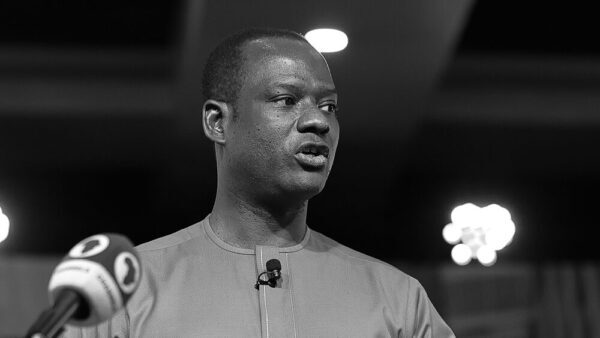
The Federal Government says Fitch Ratings’ decision to revise Nigeria’s credit rating outlook from Stable to Positive reflects progress in economic reforms, foreign exchange market adjustments and efforts to strengthen the country’s external position.
Fitch announced the revision on 9 October, retaining Nigeria’s long-term foreign-currency issuer default rating at ‘B’.
In a statement issued on Saturday, the Minister of Finance and Coordinating Minister of the Economy, Taiwo Oyedele, said Fitch cited increased foreign exchange reserves, easing inflation and improved economic prospects among the factors supporting the outlook revision.
According to the minister, Nigeria’s gross foreign exchange reserves rose to $54.9 billion as of 25 September 2026, from $32 billion in mid-April 2024.
He attributed the increase to more formalised foreign exchange transactions, portfolio inflows, higher exports and remittances.
Fitch also projected that Nigeria would record a current account surplus equivalent to 6.4 per cent of gross domestic product in 2026.

Economic growth and inflation
The ratings agency projected that Nigeria’s real gross domestic product would grow by 4.3 per cent in 2026, compared with 4 per cent in 2025, with growth remaining above 4 per cent in 2027 and 2028.
Fitch expects non-oil activities to remain the main driver of economic expansion.
The projection comes as Nigeria’s economy recorded growth of 4.43 per cent year-on-year in the second quarter of 2026, according to the National Bureau of Statistics (NBS).
The figure was higher than the 3.89 per cent recorded in the first quarter of 2026 and the 4.23 per cent recorded in the corresponding quarter of 2025.
The World Bank’s October 2026 Nigeria Development Update projected average annual economic growth of 4.4 per cent between 2026 and 2028, identifying services and agriculture among the contributors to economic activity.
On inflation, Fitch projected an average rate of 15.4 per cent in 2026, less than half the level recorded in 2024.
The NBS reported that Nigeria’s headline inflation rate eased marginally to 15.39 per cent in August 2026, from 15.43 per cent in July.
The figures provide recent context for Fitch’s assessment of inflation, although the agency’s annual average forecast is different from the monthly inflation rate reported by the NBS.
Reserves, oil production and public debt
Fitch also noted developments in Nigeria’s oil sector, including crude oil production meeting the country’s OPEC target of 1.5 million barrels per day from May 2026.
Mr Oyedele said increased domestic refining was helping to reduce fuel imports and foreign exchange demand.
On public finances, Fitch expects Nigeria’s tax reforms to increase non-oil revenue relative to the size of the economy.
The agency projected that general government debt would average 32 per cent of GDP between 2026 and 2028, below the median of 56 per cent for countries with a ‘B’ rating.
Fitch also highlighted Nigeria’s domestic debt market and the banking sector recapitalisation exercise, noting that many banks had capital adequacy ratios above 20 per cent.
However, the agency identified persistent challenges, including inflation remaining above levels in peer countries, government revenue being low relative to the size of the economy, and interest payments accounting for a high proportion of government revenue.
The minister said the federal government would continue implementing reforms aimed at increasing revenue, improving spending efficiency, strengthening debt management and supporting non-oil economic growth.
Other rating developments
The Fitch decision follows other developments in Nigeria’s international credit assessments.
READ ALSO: FG to negotiate ₦1,350 petrol price ceiling as global oil shock drives pump prices
In May 2026, S&P Global Ratings upgraded Nigeria’s credit rating from ‘B-’ to ‘B’. In August, Moody’s revised its outlook on Nigeria to Positive while retaining its ‘B3’ rating.
Mr Oyedele noted that the government’s medium-term objective remained to improve Nigeria’s credit standing and work towards investment-grade status.
He said the administration would continue to focus on foreign exchange market reforms, tax revenue mobilisation, fiscal governance, more efficient public spending and growth in non-oil sectors.
The minister said its broader objective was to “translate economic reforms into jobs, food security, support for small businesses and improved living standards”.
Discover more from Premium Times Nigeria
Subscribe to get the latest posts sent to your email.
-

 News3 days ago
Robot data startup Mecka AI nabs $60M from Sequoia
-
Business2 days ago
Communications Ministry made ₦345.5 million duplicate payment for Abuja ICT Park project
-
Business2 days ago
Fuel subsidy would cost Nigeria over N20trn yearly — Minister
-
News2 days ago
LumenUs helps automate tedious paperwork in times of grief