News
Samsung pushes AI audio eraser innovation with Galaxy S26 – Technology Times


Samsung has unveiled a major upgrade to its mobile audio capabilities with the introduction of real-time Audio Eraser on the Samsung Galaxy S26 series, marking a shift in how users experience sound on smartphones.
The new feature enables users to adjust voices, music and background noise instantly while watching streamed or social media content, moving beyond the traditional approach of editing audio after recording. By bringing sound control into live playback, Samsung is positioning artificial intelligence as a core part of everyday media consumption.
Audio Eraser was first introduced as a post-production tool on the Samsung Galaxy S25 series, where it allowed users to clean up unwanted noise in recorded videos. The capability later expanded to playback adjustments within native apps such as Gallery and Voice Recorder on foldable devices including the Samsung Galaxy Z Fold7 and Samsung Galaxy Z Flip7.


With the Galaxy S26 series, however, the feature takes a significant leap by supporting real-time audio control across over-the-top streaming platforms and social media services. This means users can now modify what they hear as content plays, rather than waiting until after viewing.
AI audio eraser takes major leap on Galaxy S26, Samsung says
With the Galaxy S26 series, however, the feature takes a significant leap by supporting real-time audio control across over-the-top streaming platforms and social media services. This means the smartphone users can now modify what they hear as content plays, rather than waiting until after viewing.
Samsung says the upgrade is powered by an integrated AI sound engine combined with advanced sound separation technology. The system is designed to distinguish between different audio elements such as speech, music and ambient noise, allowing users to amplify or suppress each layer independently.
“Audio Eraser has evolved into a live audio experience,” the company explains, highlighting the transition from delayed editing to immediate sound optimisation. According to Samsung, the feature “enables real-time sound separation and optimization across voices, music and background noise, not only for recorded content but also for over-the-top (OTT) or social media content you are watching.”
The company adds that the technology “ensures a clear, immersive listening experience across various streaming platforms by effectively neutralizing distracting background noise,” particularly in environments where audio clarity is often compromised.
Beyond noise reduction, Samsung is positioning the feature as a tool for personalisation. “Audio Eraser is no longer limited to reducing noise. It now allows you to easily design your sound in real time,” the company says, signalling a broader ambition to give users more control over how they consume media.
The introduction of real-time audio control reflects a growing trend among smartphone makers to embed AI deeper into core device functions. While cameras and displays have traditionally dominated flagship innovation, Samsung’s latest move suggests that audio is emerging as a new frontier for differentiation.
For users, the impact is immediate and practical: clearer dialogue in crowded spaces, reduced background distractions during streaming, and the ability to tailor sound output to individual preferences without additional apps or editing tools.
As AI capabilities continue to expand on-device, features like Audio Eraser point to a future where smartphones actively adapt content in real time, reshaping not just how media is created, but how it is experienced.
Stay ahead with real-time reports, breaking news, and exclusive insights delivered directly to your phone. Don’t settle for outdated information. Join TECHNOLOGYTIMES NEWS on WhatsApp for 24/7 updates.
Join Our Whatsapp Channel

Former presidential aide Laolu Akande has criticised the African Democratic Congress, ADC, presidential candidate Atiku Abubakar's reported position on power returning to the North, describing the argument as an insult to Nigerians from the region.
Akande, a former Senior Special Assistant to the President on Media and Publicity in the Office of the Vice President, made the remarks while speaking on Symfoni TV on Friday.
Speaking on the readiness and viability of presidential candidates ahead of the coming election, Akande argued that the country must maintain the principle of rotational presidency to promote a sense of belonging among its various regions.
“Atiku is just basically saying that, okay, the North is angry; we want power back. And that idea, with due respect to our brothers in the North, is an insult. It’s an insult. This country, we must maintain rotational presidency for purposes of building a sense of belonging,” he said.
Speaking on the ADC's choice of presidential candidate, he said, “If they were serious, they should have picked Amaechi, or they should have prevented Obi from leaving, and then Atiku would have been a star.”
‘Atiku’s push for return of power to North is insult’ — Laolu Akande
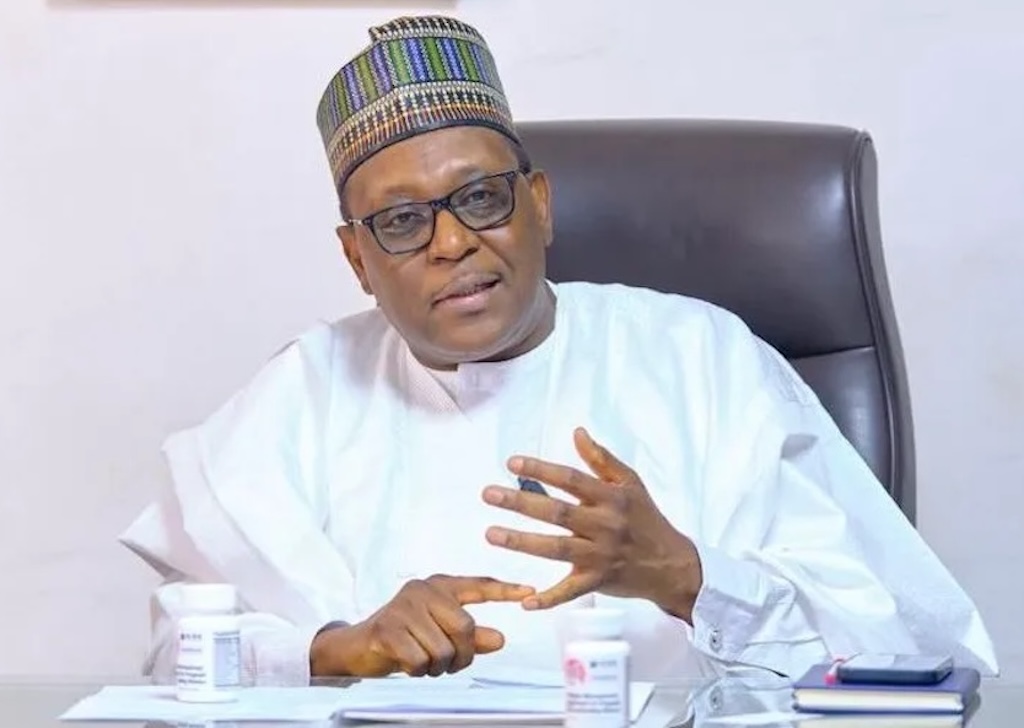
The Coordinating Minister of Health and Social Welfare, Muhammad Pate, has confirmed that the Ebola virus detected in Nigeria is highly similar to the virus identified in Kenya’s first imported case.
Mr Pate disclosed this on Friday during a briefing at the Federal Ministry of Health in Abuja, saying genomic sequencing showed that the viruses differed by only one mutation.
He said the analysis was conducted by sequencing teams at the Nigeria Centre for Disease Control and Prevention (NCDC) and the Institute of Genomics and Global Health at Redeemer’s University, Ede, Osun State, with the team led by virologist Christian Happi.
However, he cautioned that the finding does not establish how the Nigerian first case acquired the infection.
“Based on the genomic analysis, there is no evidence of travel of that index case in Kenya that links it to Nigeria, but the viruses are appearing to be related,” he said.
He added that the finding could change the understanding of the route of transmission as further investigations and testing continue.


Kenya has so far recorded nine confirmed Ebola cases caused by Bundibugyo virus, including one death, according to the European Centre for Disease Prevention and Control (ECDC). Eight of the cases were linked to the country’s first imported case from the Democratic Republic of the Congo (DRC), including four healthcare workers.
Africa CDC probes link
The genomic finding came on the same day the Africa Centres for Disease Control and Prevention (Africa CDC) said it is investigating a possible connection between Nigeria’s case and Kenya’s first imported case.
The agency said both patients had travelled through Entebbe International Airport in Uganda on 3 October, prompting investigations into whether they had shared equipment or had other contact. Africa CDC, however, stressed that no connection had been established between the infections.
The Kenyan patient travelled from the DRC through Uganda before arriving in Nairobi. He later died, becoming the first recorded Ebola death in Kenya’s current outbreak.
The Nigerian patient also passed through Uganda, but Ugandan authorities had earlier rejected suggestions that this established the country as the source of her infection.
Uganda denies active case
On 21 October, Uganda’s Ministry of Health said it had no confirmed active Ebola case and that the Nigerian patient’s transit through the country did not establish that she contracted the virus there.
The ministry said preliminary information indicated that the Nigerian woman had travelled to eastern DRC for business and passed through Uganda in early October without showing symptoms. It said the location of her exposure remained under investigation.
The new genomic finding now provides evidence of similarity between the Nigerian and Kenyan infections, although Nigerian authorities have not established that the patient was infected in Kenya.
One confirmed case
Mr Pate said Nigeria still has only one confirmed Ebola case and that authorities were continuing contact tracing, quarantine and additional testing of contacts.
Some tests have returned negative results, while others are pending, he said.
He urged Nigerians to remain vigilant but calm, saying there is no need for panic.
“We will continue to work diligently to ensure that we contain this virus as much as possible, and that we avoid a situation that spills over to the communities,” he said.
READ ALSO: Ebola: Atiku demands details of FG’s N10bn emergency fund
The minister said the government is also strengthening infection prevention and control measures in health facilities and would train health workers on how to identify and manage suspected cases.
He urged hospitals to notify public health authorities of suspected cases and encouraged Nigerians to observe basic preventive measures, including regular handwashing and hygiene.
Mr Pate also said Ebola is not currently known to be transmitted through the air but through close contact with infected body fluids.
He urged Nigerians to rely on information from public health authorities, including the NCDC, Federal Ministry of Health, World Health Organisation and Africa CDC, rather than unverified information on social media.
Discover more from Premium Times Nigeria
Subscribe to get the latest posts sent to your email.
-

 News17 hours ago
Obi, Kwankwaso to hold Middle Belt Youth, Village Hall Meeting in Jos
-
News4 days ago
Mamdani says feds have abdicated on AI, urges New Yorkers to push back
-
News3 days ago
Meta’s Muse hits 10M U.S. downloads in 40 days, a milestone reached by only 11 other apps
-
Business3 days ago
How Your Side Hustle Income Ends Up in Your RSA