News
Tinubu signs executive order to harmonise Nigeria’s virtual assets regulation, sets up CBN-led council – Technology Times

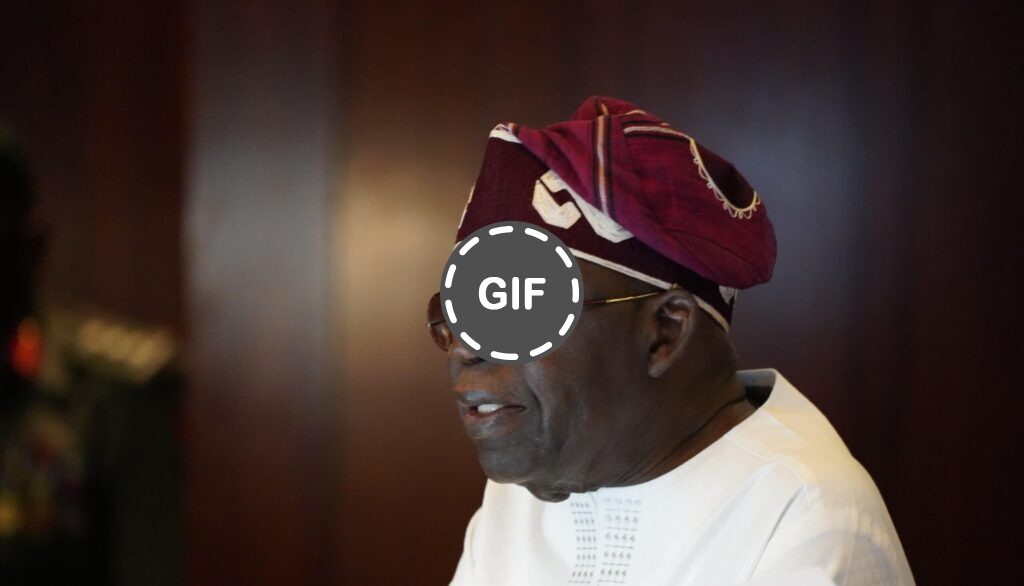
President Bola Tinubu has signed a new Executive Order establishing a coordinated national framework for regulating virtual assets in Nigeria, creating a CBN-led oversight council to harmonise oversight across financial, capital market, revenue, intelligence and national security agencies.
The Presidential Executive Order on Virtual Assets Coordination, 2026, which took effect immediately upon signing, seeks to eliminate regulatory fragmentation in Nigeria’s fast-growing virtual assets ecosystem while strengthening consumer protection, safeguarding the financial system and supporting responsible innovation.
Announcing the development in a State House statement issued today, Bayo Onanuga, Special Adviser to the President on Information and Strategy, said the Order was signed pursuant to Section 5 of the Constitution of the Federal Republic of Nigeria, 1999 (as amended).
According to the Presidency, the Executive Order responds to an increasingly complex regulatory environment where virtual assets “blur the traditional boundaries between currencies, money, commodities and securities.”


According to the Presidency, the Executive Order responds to an increasingly complex regulatory environment where virtual assets “blur the traditional boundaries between currencies, money, commodities and securities.”
The government says the absence of coordinated oversight has resulted in overlapping responsibilities among regulators, regulatory gaps and increased exposure to financial crimes.
“With relevant agencies operating in silos, overlapping in some areas and leaving gaps in others, the country has been exposed to risks, including money laundering, terrorism financing, cybersecurity and data privacy threats, fraud, and revenue losses,” ” the Presidency says.
“Too often, unregistered and fraudulent operators have exploited these gaps to prey on unsuspecting Nigerians, costing families their savings.”
CBN to chair new Virtual Asset Council
A key provision of the Executive Order is the establishment of a Virtual Asset Council, which will serve as the country’s highest coordinating body for the sector.
The Council will be chaired by the Central Bank of Nigeria (CBN), while the Nigeria Revenue Service (NRS) and the Securities and Exchange Commission (SEC) will serve as vice-chairpersons.
Other members include the Nigerian Financial Intelligence Unit (NFIU) and the Office of the National Security Adviser (ONSA).
According to the Presidency, the Council will provide policy direction, promote inter-agency collaboration and work with the Attorney-General of the Federation to develop a harmonised legal and institutional framework for virtual assets that aligns with Nigeria’s national security, economic and social objectives.
“The Order is designed to close these gaps through supervisory coordination, without introducing new layers of regulation or displacing the mandates of existing agencies,” the Presidency says.
CBN to host new Virtual Asset Office
The Executive Order also establishes a Virtual Asset Office, which will function as the operational arm of the Council.
Its secretariat will be domiciled at the Central Bank of Nigeria (CBN).
The Office will coordinate information sharing, regulatory applications and reporting among participating agencies through an integrated supervisory technology platform designed to provide shared regulatory visibility while allowing each institution to retain ownership and control of its own data.
Importantly, the Presidency stressed that the Executive Order does not establish a new regulator or transfer statutory powers from existing agencies.
Instead, it creates a coordination mechanism that enables agencies to work more effectively within their existing legal mandates.
“Each institution,” the statement said, “retains its full statutory mandate and independence, and the framework coordinates their work rather than replacing it.”
Registration to depend on nature of virtual asset activity
The new framework introduces an activity-based approach to registration and supervision of virtual asset operators.
Under the Executive Order, virtual asset activities that qualify as securities will continue to be regulated and registered by the Securities and Exchange Commission.
Meanwhile, payment, settlement, custody and related services involving non-security virtual assets will fall under the regulatory oversight of the Central Bank of Nigeria.
Where uncertainty exists regarding regulatory jurisdiction, the newly established Virtual Asset Council will determine which agency has responsibility.
According to the Presidency, this coordinated model is intended to close loopholes that previously enabled unregistered operators to avoid regulatory oversight.
As part of the new regulatory framework, the CBN will proceed with the establishment of a regulatory sandbox dedicated to virtual assets.
The sandbox will provide a controlled environment where eligible operators can develop, test and operate virtual asset products, blockchain solutions and related digital financial innovations under regulatory supervision before wider market deployment.
The initiative, according to the Presidency, will enable participating regulators to evaluate potential implications for monetary sovereignty, financial stability, consumer protection, financial inclusion, market integrity and revenue administration.
“It will help ensure that innovations that reach Nigerians have been properly examined and supervised,” the statement said.
The CBN is expected to announce additional operational details of the sandbox in due course.
Nigeria Revenue Service to issue virtual assets tax policy
The Executive Order also mandates the Nigeria Revenue Service to release a dedicated tax policy for Nigeria’s virtual assets sector.
The policy will clarify how existing tax laws apply to virtual assets, provide certainty for taxpayers and service providers, strengthen voluntary compliance and ensure the growing sector contributes appropriately to national revenue.
The government said the tax framework complements the broader coordination mechanism by aligning tax administration with the responsibilities of other participating agencies.
Further details will be announced by the Nigeria Revenue Service.
Virtual Assets White Paper underway
Beyond the Executive Order, the Federal Government says it is finalising a comprehensive Virtual Assets White Paper that will outline Nigeria’s long-term policy direction for the sector.
The White Paper will define implementation priorities and serve as a roadmap for stakeholders across Nigeria’s virtual assets ecosystem.
To fast-track implementation of the Executive Order, President Tinubu has directed the newly established Virtual Asset Council to produce a Harmonised Implementation Framework within 30 days.
The framework will guide participating agencies in implementing the Executive Order and ensuring coordinated regulation across Nigeria’s evolving virtual assets landscape.
Stay ahead with real-time reports, breaking news, and exclusive insights delivered directly to your phone. Don’t settle for outdated information. Join TECHNOLOGYTIMES NEWS on WhatsApp for 24/7 updates.
Join Our Whatsapp Channel




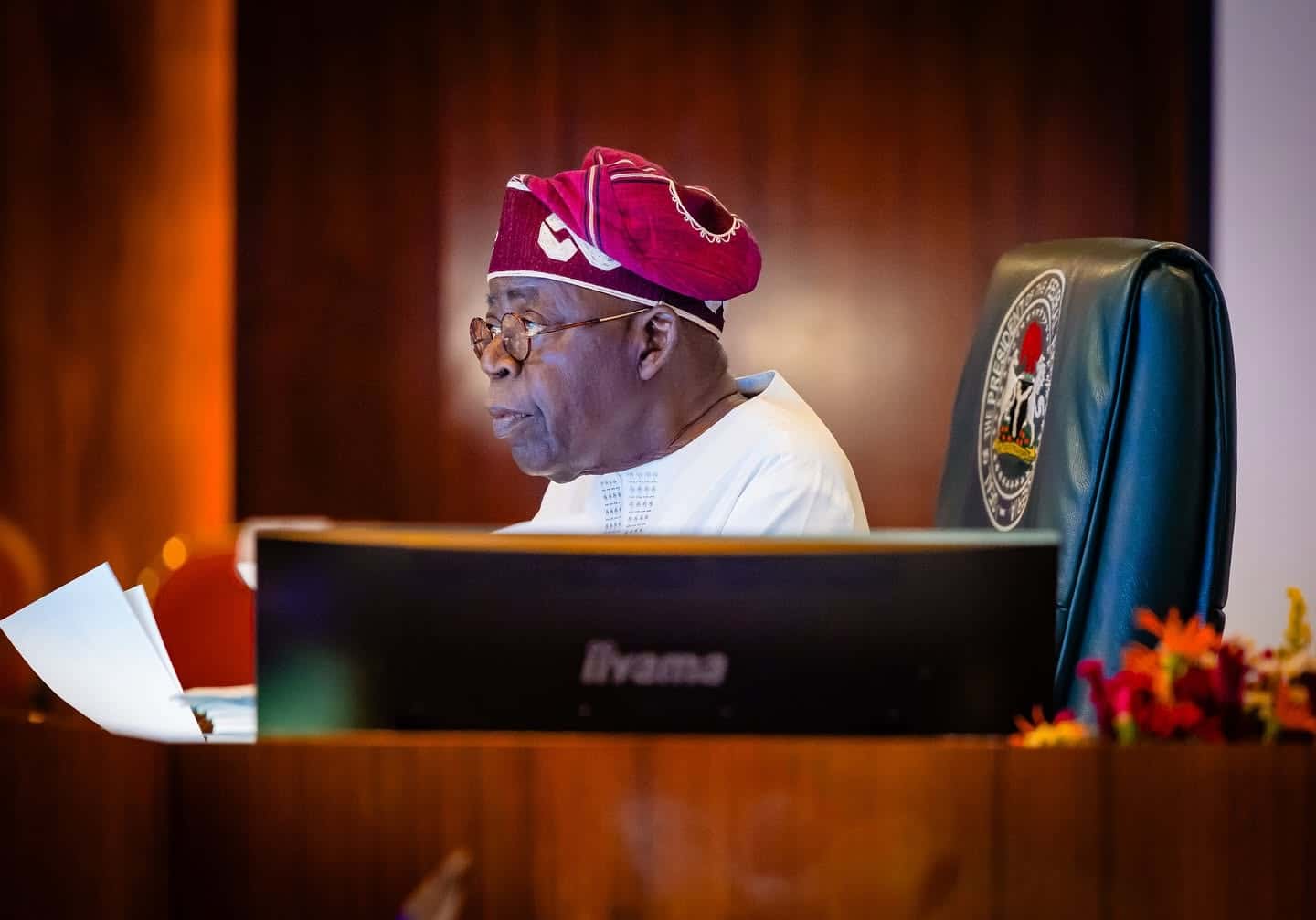
On Thursday, an International Arbitration Tribunal under the auspices of the International Chamber of Commerce (ICC) in Paris issued an award in favour of Nigeria, rejecting the claims in the arbitration instituted by Sunrise Power and Transmission Company Ltd (Sunrise).
The company had made a claim against the Federal Republic of Nigeria, demanding $680 million as a settlement sum and interest in respect of another arbitration in which it is claiming over $2.7 billion in compensation and interest.
The claim relates to disputes associated with the development of the 3,960 MW Mambila Hydroelectric Power Project in Taraba State.
The tribunal, in its verdict on Thursday, directed Sunrise and its promoter to refund Nigeria’s legal fees of $11.8 million.
It also rejected Sunrise’s claim for an order that Nigeria should pay the company $400 million in satisfaction of the settlement sum of $200 million and the default sum of $200 million.
The tribunal insisted that Leno Adesanya, the promoter of Sunrise, is bound by the arbitration agreement with Nigeria pursuant to the settlement agreement, adding that the tribunal has jurisdiction over Nigeria’s counterclaim against him and his firm.


Tinubu speaks
In his reaction Thursday evening, President Bola Tinubu said the latest decision affirms the Nigerian State’s determination not to succumb to predatory and exploitative claims by corrupt local and international entities and their enablers and funders.
“On behalf of the Government and People of the Federal Republic of Nigeria, I strongly commend the tremendous efforts of the Attorney-General of the Federation and Minister of Justice, Prince Lateef Fagbemi and the entire team at the Federal Ministry of Justice for their efforts in this matter,” the president said in a statement signed by presidential spokesperson, Bayo Onanuga.
“I also commend the FRN defence team, led by Ms Elizabeth Oger-Gross and Mr Tolu Obamuroh, both of Paul Hastings LLP, for their professional and excellent defence of the country.
“I commend the patriotism and support of former President Olusegun Obasanjo, GCFR, and late President Muhammadu Buhari, GCFR, who testified in the case, which dated back to an illegal 2003 contract to build a 3,050-megawatt hydroelectric plant in Taraba State under a build-operate-transfer model. The Federal Executive Council never authorised the contract.”
READ ALSO: Shettima clarifies remarks on northern governors’ support for President Tinubu in 2023
Mr Tinubu also thanked the other witnesses in the case, including former Ministers Babatunde Raji Fashola, SAN, and Suleiman Adamu, as well as the experts, for their active participation in defending Nigeria’s interests in the arbitration.
“I commend the National Security Adviser for his support and the Economic and Financial Crimes Commission for its investigation into the case.
“I want to assure you that while our country remains committed to partnering with genuine investors and honouring its legal obligations, it will continue to defend all opportunistic claims instituted against our commonwealth strongly,” he said.
Thursday’s ICC ruling clears the single biggest legal hurdle that has paralysed the Mambilla hydro power project for years, the statement said.
Discover more from Premium Times Nigeria
Subscribe to get the latest posts sent to your email.

-

 News2 days ago
Nigeria Takes on the World! Chess Stars Begin 2026 Olympiad Battle in Samarkand
-
News3 days ago
Felix Arome Assumes Office as Director-General of Front Line Alliance Network
-
Health3 days ago
97% of PHCs in 16 states fail national staffing standards – Report
-
Health3 days ago
Nigerian senator receives Health Champion 2026 award, calls for stronger health financing