Business
FG to digitise mining sector, track operators


The Federal Government seeks to deploy Nigeria’s digital identity infrastructure to track mining operators, strengthen regulation, and curb illegal mining nationwide.
The Minister of Solid Minerals Development, Dele Alake, disclosed that when he received the Director-General of the National Identity Management Commission (NIMC), Abisoye Coker-Odusote, and her management team during a courtesy visit to the ministry in Abuja.
The meeting explored areas for collaboration between the ministry and NIMC to integrate digital identity into the solid minerals sector, improving governance, regulatory compliance, and monitoring of mining operations.
A statement issued on Sunday by the minister’s Special Assistant on Media, Lara Owoeye-Wise, said that both institutions are working to leverage technology and credible identity systems to support ongoing reforms in the sector.
Mr Alake described NIMC as a critical institution in Nigeria’s governance architecture, noting that effective regulation and national planning increasingly depend on reliable identity management and accurate data.

“NIMC occupies a critical position in translating policy into reality. It is pivotal to the development of any nation because governance today is driven by data, technology, and credible identity systems,” the minister said.
Tracking mining operators
Mr Alake said integrating digital identity into the mining sector would enable government agencies to properly identify operators, monitor mining activities, and distinguish legitimate licence holders from illegal miners.
According to him, effective identity management is essential to strengthening enforcement and tackling insecurity associated with illegal mining.
“Without identification, we cannot trace; we cannot track, and insecurity will flourish. In the solid minerals sector, we need effective tracking of both legal and illegal operations,” he said.
He added, “A credible identity ecosystem will strengthen regulation, improve enforcement, and support our efforts to sanitise the sector.”
He said technology, digital identity, data gathering, and statistics have become indispensable tools for evidence-based policymaking, efficient licensing, investment promotion, and improved oversight of mining operations.
The minister also noted that access to credible and verifiable data would enable government institutions to understand activities across the mining value chain better and formulate policies that support the sector’s sustainable development.
NIMC proposes deeper collaboration
Speaking during the meeting, Ms Coker-Odusote said the recently enacted NIMC Act 2026 has strengthened the legal framework for Nigeria’s digital identity ecosystem and created new opportunities for collaboration with government institutions.
She said integrating NIMC’s digital identity infrastructure into the mining sector would improve interagency data integration, strengthen regulatory compliance, and enhance security.
According to her, the collaboration would also improve monitoring of mining operators, support law enforcement, and facilitate the implementation of Community Development Agreements between mining companies and host communities.
She added that a robust digital identity system would improve transparency, strengthen service delivery, and enable more efficient data sharing across government agencies.
“The commission’s infrastructure can support the creation of a more reliable identity ecosystem for the mining sector, helping regulators verify operators and improve monitoring across the country,” she said.
Reforms target illegal mining
The initiative forms part of the Federal Government’s broader reforms aimed at sanitising Nigeria’s solid minerals sector, which continues to face challenges, including illegal mining, insecurity, environmental degradation, and weak regulatory oversight.
READ ALSO: Nigeria will be big player in global supply of critical minerals – Dele Alake
Authorities have repeatedly identified illegal mining as one of the biggest obstacles to unlocking the sector’s economic potential, with criminal networks and unlicensed operators exploiting mineral resources while depriving the government of revenue.
PREMIUM TIMES recently reported that the Federal Government arrested two suspected illegal miners and shut down an illegal site in Osun State as part of an intensified nationwide enforcement campaign. During the operation, Mining Marshals confiscated equipment and sealed the site, while the suspects assisted investigators in identifying financiers of the illegal activities.
The minister had said that the Mining Marshals arrested more than 300 suspected illegal miners nationwide, with over 150 suspects, including foreign nationals, currently facing prosecution. Several illegal mining sites have also been closed as part of efforts to restore order to the sector.
The Tinubu administration has also introduced reforms to attract responsible investment into mining, improve transparency, strengthen licensing procedures, and ensure Nigeria derives greater economic benefits from its vast mineral resources.






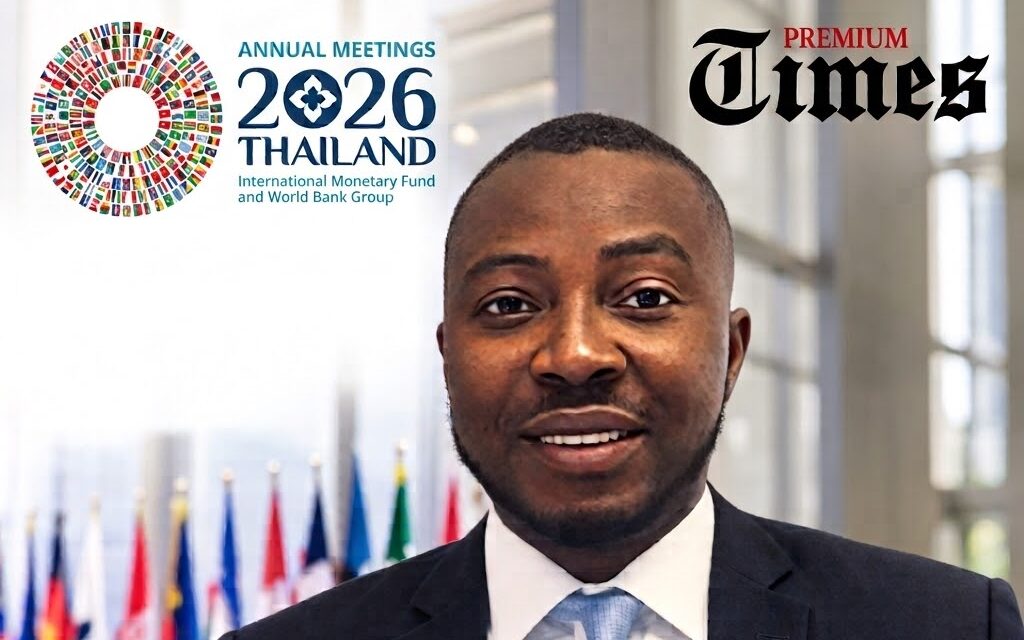
Financial experts, government officials, central bank chiefs, heads of multilateral organisations and other participants are gathered this week in Bangkok, Thailand, for the annual meetings of the International Monetary Fund (IMF) and World Bank scheduled to be held between October 12 and 18.
Participants are expected to deliberate on the disruptive potential of Artificial Intelligence (AI) in the global economy, the widening war in the Middle East and its impact on the global economy, the global energy supply shock, mounting debts, and rising interest rates that pose daunting risks to global economic growth.
IMF Managing Director Kristalina Georgieva says the Queen Sirikit National Convention Centre will host 18,000 people who were registered to attend the meetings, 4,000 more than the last off-site meetings held in Morocco in October 2023.
The IMF has made no significant change to its forecast of 3% global growth in 2026, and the body says some countries are expected to be downgraded because of war and reduced energy exports.
The meetings are also expected to address the growing public debt burden that has slowed growth and worsened inflation, as public debt remains at its highest level since World War Two and will exceed 100% of GDP before 2030, according to the IMF.
Emerging markets and low-income countries are particularly vulnerable, given high public debt levels that will have to be renegotiated at higher interest rates.

Equally important on the agenda is the precarity of platform-driven labour, amid AI-enabled automation and the changing future of work.
On Monday, Ms Georgieva said Artificial Intelligence (AI) could affect about 40 per cent of jobs globally, urging governments to prepare workers for the changing labour market. She described AI as a “slow-moving tsunami” for the labour market, saying it could augment, downgrade or eliminate jobs.
IMF estimates show that AI could affect about 60 per cent of jobs in advanced economies and 23 per cent in low-income countries, reflecting the slower spread of AI rather than greater protection from its effects.
Bangkok
The Bangkok meetings are taking place amid disruptions and a war that has negatively affected energy supplies, especially via the Middle East.
Flights to Bangkok, the host city of this year’s off-site meetings, often route through the Middle East, creating immediate challenges for global travellers heading to Thailand’s capital.
On Sunday, there were attacks on Saudi airports, prompting disruptions to international travel.
The IMF and World Bank’s last off-site annual meetings took place in Morocco in 2023.
Nigeria’s participation
Already, Nigeria’s Minister of Finance and Coordinating Minister of the Economy, Taiwo Oyedele, has arrived in Bangkok, Thailand, to lead the nation’s delegation to the meetings
A statement from the Federal Ministry of Finance said the annual gathering provides Nigeria with an opportunity to engage with international financial institutions and development partners on economic issues affecting the country and its development priorities.
Mr Oyedele’s presence at the meetings is equally expected to allow the Federal Government to present its economic priorities to development organisations and international partners. He is also expected to discuss how external cooperation can support domestic reform efforts.
The finance ministry website also says that, on the sidelines of the meetings, Nigeria will convene investors, project sponsors and public institutions around a curated pipeline of bankable opportunities across strategic sectors. The programme is focused on private-capital mobilisation, food security and infrastructure development. Another event focuses on investor and project-owner conversations at Fairmont Bangkok Sukhumvit.
PREMIUM TIMES newspaper is in Bangkok, Thailand’s capital, to report on the meetings and other policy decisions as they affect the global economy and Nigeria’s domestic affairs.
Discover more from Premium Times Nigeria
Subscribe to get the latest posts sent to your email.
-

 Business4 days ago
Communications Ministry made ₦345.5 million duplicate payment for Abuja ICT Park project
-
News4 days ago
LumenUs helps automate tedious paperwork in times of grief
-
News3 days ago
Inside INEC’s AI and cybersecurity plans to secure Nigeria’s 2027 Elections – Technology Times
-
News3 days ago
EuroMatch NPFL: Ikorodu City Return to Winning Ways as Salami, Ikechukwu Sink Kwara United in Lagos