Connect with us

Featured

📖 CD JAN Chronicles the Political Journey of Chief Isaac Kwallu, the “Ballot Box General” of Plateau State in New Book

editor

Published

on

Book Alert “KWALLU Duels With Political Lizards” by CD JAN1

A new literary work is set to capture the attention of readers across Nigeria and beyond. Titled KWALLU: Duels With Political Lizards, the book offers a gripping and poetic exploration of the life and political journey of Chief Hon. (Dr.) Isaac Kyale Kwallu, Dan Masanin Qua’an-Pan — a respected humanist, business tycoon, and politician fondly called the Ballot Box General from Plateau State.

Written by CD JAN, popularly known as JANJAN, this forthcoming release is described as compelling, powerful, truthful, and audacious. It weaves together the trials, travails, and triumphs of a man whose political life has been defined by courage, resilience, and unwavering service to humanity.

KWALLU: Duels With Political Lizards is not just another political biography — it’s a bold and linguistically rich narrative that delves deep into the complexities of truth, leadership, and the Nigerian political landscape. The author’s mastery of language and poetic flair makes the book as engaging as it is thought-provoking.

According to early reviewers, this is the kind of book that doesn’t politely ask for space on your shelf — it demands to be read, understood, and discussed. Its truths may unsettle, but they also inspire reflection and admiration for a man who has weathered the storms of politics with grace and grit.

Stay tuned — this literary masterpiece is coming soon.

👨‍💼 About the Author

CD JAN is a poet, author, and critic from Qua’an Pan Local Government Area, Plateau State, Nigeria. A graduate of Theatre and Film Arts from the University of Jos, he is celebrated for his creative excellence and sharp critical insight.

In 2017, Jan won first place in the Spoken Word category at the Nigerian Universities Theatre Arts Festival (NUTAF), University of Benin, and was awarded a Certificate of Excellence in Criticism by the International Association of Theatre Critics (IATC) that same year.

He is a member of both the Association of Nigerian Authors (ANA) and the International Association of Theatre Critics. His debut poetry collection, Murder The Pen, was published in October 2025 by the Journal of the Australasian Association of Writing Programs (AAWP) in Australia.

With KWALLU: Duels With Political Lizards, CD JAN brings his unique voice and artistic depth into the world of political literature, painting an unforgettable portrait of one of Plateau State’s most dynamic figures.

Watch out for the release!

Continue Reading
Click to comment

Leave a Reply

Your email address will not be published. Required fields are marked *

Events

Peace Walk: WOPPI Urges Plateau Citizens to Invest in Peace Every Day

info

Published

on

By

FB IMG

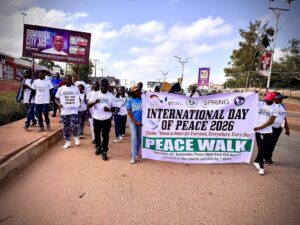
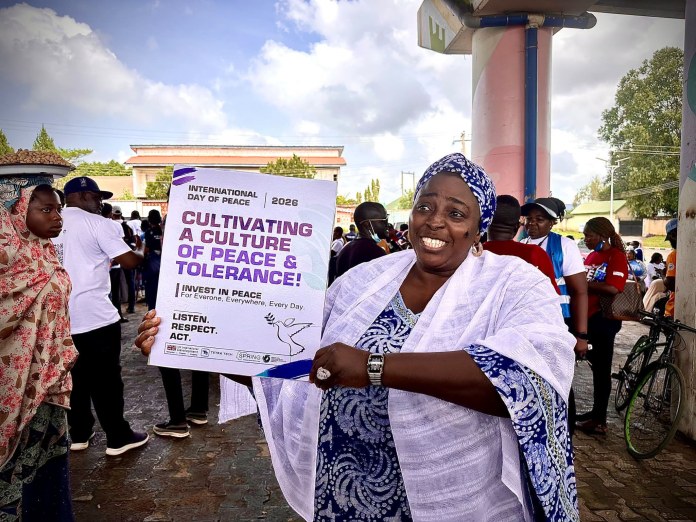
The streets of Jos echoed with a simple message on Saturday: peace is everyone’s responsibility.

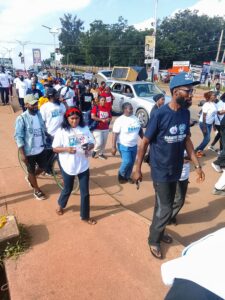
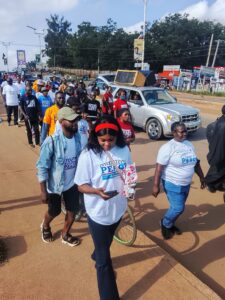
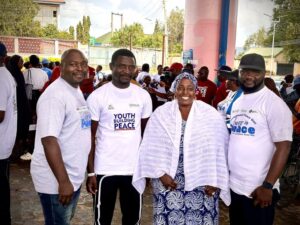
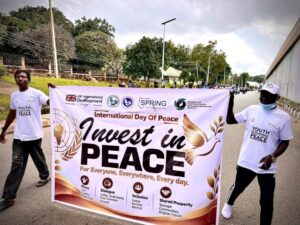
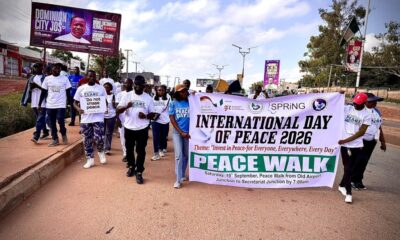
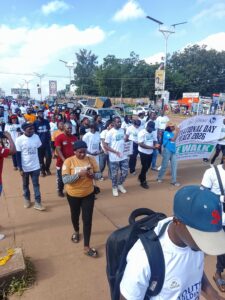
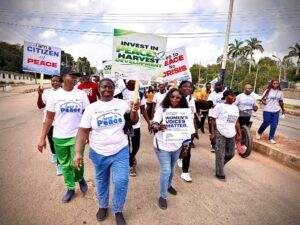
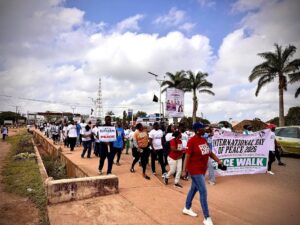
As part of activities marking the 2026 International Day of Peace, the Women for Positive Peacebuilding Initiative (WOPPI) joined other peace organisations for a peace walk from Old Airport Junction to Secretariat Junction Bridge.

Holding placards calling for unity, dialogue and peaceful coexistence, participants took the message of peace to the streets and into the public space.

This year’s International Day of Peace, observed on September 21, is themed “Invest in Peace – For Everyone, Everywhere, Every Day.” The United Nations says the theme highlights the role of ordinary people as “everyday architects of peace.” (United Nations Peacekeeping)
FB IMG

For WOPPI Executive Director, Lantana Abdullah, the message is particularly important for Plateau, a state with a history of violent conflicts.

She said peace cannot be left to government or security agencies alone. Every citizen, she stressed, has a role to play.

“Every citizen residing in Plateau or beyond Plateau or in Nigeria must play their part in making sure we sustain and build enduring peace for everyone.”

Abdullah urged citizens to choose dialogue over confrontation, report responsibly and speak up when they see issues capable of threatening peace.

She also challenged negative narratives about Plateau, pointing out that people continue to live, work and build their livelihoods across the state despite its troubled past.

For WOPPI, women must also be at the centre of this process. The organisation works to strengthen women’s voices, train them as mediators and involve them in preventing and resolving conflicts within their communities.

The walk therefore carried more than placards. It carried a reminder: peace is not something people wait for others to create. It is something communities build—one conversation, one intervention and one peaceful choice at a time.

And in the words of this year’s global message, that investment must happen for everyone, everywhere, every day. (United Nations)
 

Continue Reading

Featured

Children Are Suffering in Silence: Plateau Child Protection Network Rates Abuse Crisis 9/10

info

Published

on

By

IMG 20260910 WA0009

Behind the familiar rhythm of everyday life in Plateau State, a disturbing reality is unfolding.

Some children are being sent into mining sites at ages when they should be playing. Others are staying on the streets late into the night, some reportedly becoming involved in substance abuse. Some are beaten, denied food, forced into hard labour or sexually abused in the very homes where they are expected to be protected.

For the Child Protection Network (CPN) in Plateau State, these stories are not isolated. They arrive week after week.

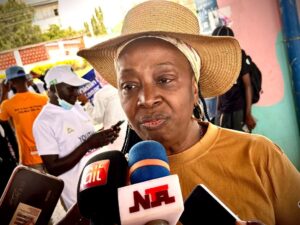
The network’s Plateau State Coordinator, Sandra Chikan, puts the scale of the problem at 9 out of 10. During her interaction with PLABOMA

“On a weekly basis, the average number of cases is not less than three,” she said, explaining that this represents only cases reported through the network’s helplines.

And there could be many more.

Abuse Goes Beyond Conflict

Child abuse in Plateau State is often associated with conflict and displacement. But according to Chikan, the danger facing children goes much deeper and exists within ordinary communities.

She said children in mining communities are being exposed to artisanal mining, with reports involving children as young as three and four years old.

Then there are children who should still be under close parental supervision but are reportedly found outside until 1 a.m. or 3 a.m.

“What are they doing?” Chikan asked.

According to her, some are becoming involved in substance abuse, while others are being used to carry, sell or peddle drugs.

The vulnerability does not end there.

Children seeking work can also find themselves exposed to traffickers, particularly when they are pushed or encouraged to leave home in search of employment without adequate protection.

Some of the Worst Abuse Happens at Home

Perhaps the most troubling part of the situation is that for some children, danger is not somewhere far away.

It is home.

Chikan said the network receives reports of children living with uncles, aunties, guardians and other caregivers being subjected to violence and exploitation.

She recalled a recent case involving a girl whose hand was broken by her guardian.

The case, she said, was particularly disturbing because the person involved had reportedly been brought to the attention of authorities before.

There are also children working as domestic helps who are beaten, denied food or forced to work for long hours.

Chikan recalled the case of a boy who was reportedly sleeping in a Keke, being beaten regularly and not receiving enough food.

She also spoke of underage girls working from morning until night in restaurants, sometimes without being properly fed.

“Neglect is high,” she said.

Some parents, she added, leave their children without adequate supervision, exposing them to environments where they can become involved in harmful activities.

And in some communities, she said, children are being preyed upon by sexual offenders.

What Happens When a Child Is Reported?

This is where the Child Protection Network says its work begins.

CPN is not a law-enforcement agency. Instead, it brings together government institutions, NGOs and other organisations involved in protecting children.

When a child is reported, the network works through its referral system to connect the case with the appropriate agency.

If a child needs to be rescued, the network can contact the relevant authorities. If the child needs medical attention, members help facilitate access to healthcare. If trauma is involved, counselling and psychosocial support can be provided.

And when a child cannot immediately return home, the network works with shelters to provide temporary protection.

Chikan said that in the last quarter alone, the network handled 36 cases, with 85 per cent recording positive justice outcomes.

For the children involved, she explained, justice can mean different things.

It could mean being reunited with a safe family.

It could mean being removed from an abusive home.

It could mean receiving medical treatment, returning to school or getting counselling.

For others, it means staying in a safe shelter until a suitable family or alternative care arrangement is found.

A Network Fighting to Keep Cases From Disappearing

One of CPN’s biggest roles is ensuring that reported cases do not simply disappear.

From the moment an allegation is reported, the network works with relevant agencies and follows up on the case.

That can involve contacting authorities, arranging shelter, supporting medical treatment, providing counselling, helping families care for vulnerable children and monitoring the progress of interventions.

But Chikan says the network needs more resources to do more.

Emergency cases can happen at any time, including in the middle of the night, when finding a safe place for a child becomes an immediate challenge.

CPN currently has only a small emergency space at its office and relies heavily on partner shelters.

The network therefore wants stronger child protection structures across Plateau State, including more local government child protection committees and school-based child rights clubs.

The Bigger Picture

The stories coming through the Child Protection Network paint a picture of children facing threats in places where they should be safest — at home, in communities, in workplaces and even in environments where they should be learning.

For CPN, protecting these children requires more than rescuing them after abuse has occurred.

It requires communities to recognise abuse early.

It requires children to know their rights.

It requires parents and caregivers to understand that violence is not discipline.

It requires institutions to respond quickly when a child speaks.

And above all, it requires society to stop looking away.

Because behind every case number is a child — a child who may have been beaten, neglected, exploited, trafficked or abused, and who is depending on someone to notice.

For the Child Protection Network, that is the reason the work must continue: to make sure that when a child cries for help, someone is there to listen, respond and protect them.

CPN HOTLINE:

MTN 09033309421, 09033441242.

AIRTEL 08125802205, 08123911883.

Email: cpnplateaustate@gmail.com

Continue Reading

Trending