News
X is shutting down Communities because of low usage and lots of spam


Launched in 2021, when the company was still known as Twitter, Communities were meant to provide the social network’s users with a place to connect with each other around shared interests. Now, X is shutting down the feature for good, saying it was overrun with spam and a headache to manage.
Plus, noted X’s head of product Nikitia Bier, hardly anyone was using them.
“Communities had a great vision, but they were used by less than 0.4% of users—yet contributed to 80% of spam reports, financial scams, and malware on X,” Bier wrote on X, explaining the company’s thinking behind the removal of the high-profile feature.
“Of the handful of Communities that succeeded, most were user-acquisition channels for Kick or compensated clipper communities.”
In other words, Communities often weren’t being used for their original purpose. Instead, they had become a place focused on driving (often paid) traffic to other online creators outside of X itself. (Clipping is the practice of sharing short clips of another creator’s work or a brand’s video, for which the clipper is compensated. Marketers and creators leverage these communities to generate interest in their original content.)
Bier even scoffed at X’s failed Communities project as a “Temu version of subreddits” — a reference to the groups found within the more popular interest-based social network, Reddit.

He did, however, note that there were a few good communities in the mix that will have to migrate elsewhere, but largely suggested that the feature wasn’t worth maintaining given its overall low use.
Techcrunch event
San Francisco, CA
|
October 13-15, 2026
Communities on X will be shut down on May 6, 2026. Until then, Community admins can migrate their members to the newly revamped group chat experience.
To ready itself for the influx of X Community members, XChat — the app’s messaging service, which is poised to launch as a standalone app — will support “joinable” links for group chats. These public links can be shared on X’s timeline and pinned, and support up to 350 members per chat. The group chat may support even more members in the future, Bier suggested.
Despite these changes, Bier pointed out that X isn’t giving up on communities; the company will just take a different approach.
In addition to the expanded group chats, the company this week launched Custom Timelines for its Premium subscribers, which allow users to pin different topical feeds to their Home tab. These feeds are also curated and personalized to the individual user, based on how they engage with X.
X’s product releases and updates have been hitting at a faster pace as of late, with X’s plans for its XChat app and another for payments, plus new features like cashtags, mute buttons for topics, voice notes in chat, a new photo editor, automatic translations, new reply settings, and the new custom timelines.
As Bier noted in March, the X team has begun to hit a rhythm of launching two to three net new features per week, meaning there are likely more features still to come.
When you purchase through links in our articles, we may earn a small commission. This doesn’t affect our editorial independence.
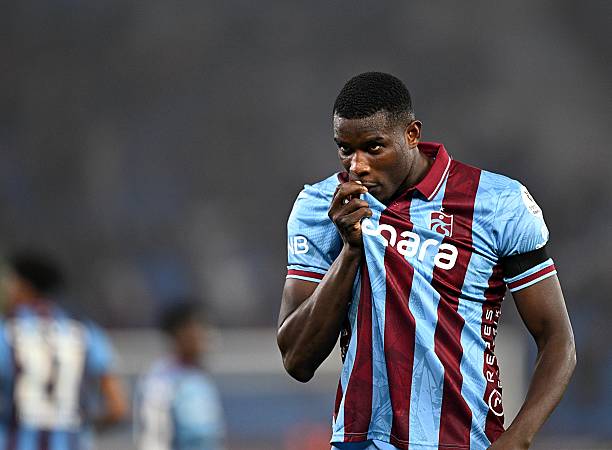
Trabzonspor of Turkey striker, Paul Ebere Onuachu is being tipped to take over full sponsorship of a one-day memorial football competition to be staged in honour of his first grassroots coach, Osahon Emokpae.
Sports247 gathered that the competition, which is scheduled to hold this Thursday at FHA Stadium in FESTAC Town, Lagos, is the brainchild of Nigerian Grassroots Football Federation (NGFF), of whose junior team Coach Osahon was the pioneer handler.
NGFF president, Pastor Oscar Ezinwa Emmanuel disclosed that the single day competition will be staged like a memorial carnival involving 12 teams, all of which were influenced one way or the other by Coach Osahon, who was until recently the caretaker committee chairman of Badagry Division Football Association (BDFA).
Pastor Oscar, who is also fondly called ‘TM,’ further disclosed that the competition, which will be staged on a knock-out basis, with games lasting only 20 minutes each, without any half time, will be graced by many esteemed personalities of football across Lagos State, Nigeria and abroad.
The competing teams will be led by Young Stars FC of Satellite Town, which Onuachu played for as a teenager, and from where Osahon took him along to FC Ebedie of Sagamu, when he became head coach of the club owned by Barrister Churchill Oliseh.
Other teams to feature in Thursday’s Osahon Emokpae Memorial Football Carnival include Young Eleven FC, CATS Boys FC, NGFF All Stars Selected, Vido 99 FC, ECAS FC and Golden Intercontinental FC.
Also listed to feature in the competition, which will run from 8am to 4pm at the popular terrain owned by Federal Housing Authority are Flying Sports Academy, SC Heritage, Santana Boys FC, Festiko FC and Awori United.
The NGFF scribe told Sports247 that the organising committee decided to woo Onuachu as the competition’s sponsor based on the fact that he is the late coach’s biggest product and he contributed immensely in efforts to stabilise the grassroots football zealot when the illness that claimed his life started.
“We know that Paul Onuachu really spent a lot on Coach Osahon’s medical bills, and we thank him so much for his efforts. It’s a good example he gave for other players to always remember the coaches that brought them up.
“In the same vein, we are solemly appealing to him to kindly take up the bill for this carnival that we want to stage in honour of Coach Osahon, a man who gave all his life to promoting youth football.
“We have a budget of just one million naira to cover things like refreshments, snacks, water, organisational needs, logistics, fees for referees, awards and other necessities.
“I personally appeal to Onuachu to take up this responsibility and, by the special grace of God, he will be blessed more abundantly in return. Good health will continue to follow him and he will soar higher.
“I know him as a caring boy, who has even given donations to his community in Imo State, for which God will also reward him exceedingly. Injury will mot befall him and he will have a sound mind on the field all the time. Amen,” Pastor Oscar prayed.
-

 Business3 days ago
NCAA cautions against further cut in aviation funding
-
Business4 days ago
Nigeria, Canada expand air deal, facilitate direct flights
-
News3 days ago
Nigeria’s GBB to deploy 54 smart police stations after Gombe pilot – Technology Times
-
News4 days ago
‘We won’t tolerate such’ – City Boy Movement sacks Oyo coordinator for insulting Tinubu, son