News
Why Politicians Are Joining APC — Gagdi Explains

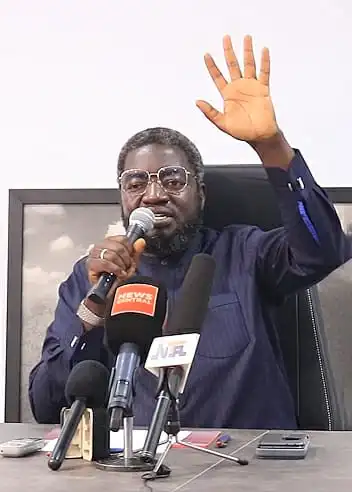
“Why are leaders joining APC? Is it coercion? No,” declared Yusuf Adamu Babayo Gagdi, as he addressed journalists during a media parley held at his Jos residence on Saturday, offering a strong defence of the growing wave of defections into the ruling party.
The member representing Pankshin, Kanke and Kanam Federal Constituency dismissed claims that the increasing number of politicians joining the All Progressives Congress (APC) is the result of pressure or political manipulation. Instead, he argued that the trend reflects confidence in the party’s governance and leadership.
According to Gagdi, the decision by governors and political leaders to align with the APC is a constitutional right rooted in freedom of association. He stressed that no individual, including the president, has the authority to prevent politicians from joining any party of their choice.

“It will not be fair to accuse the president of forcing anyone to join APC. These are decisions taken freely within the provisions of the constitution,” he said.
Gagdi further rejected suggestions that Nigeria is drifting toward a one-party system, insisting that the existence of multiple political parties and the ability of individuals to switch affiliations demonstrate the strength of the country’s democracy.
Providing context for the defections, the lawmaker pointed to what he described as the visible impact of government policies under President Bola Ahmed Tinubu. He maintained that improvements in infrastructure, economic reforms and governance outcomes are influencing political actors to identify with the ruling party.
“Why are you not open to the fact that APC is doing well and that is why people want to join?” he asked, urging critics to consider performance as a driving factor rather than attributing defections to negative motives.
While acknowledging that not all Nigerians may agree with government policies, Gagdi emphasized that democracy allows for differing opinions, adding that support and opposition are both legitimate features of the political system.
Beyond the issue of party defections, the lawmaker used the engagement to encourage journalists to embrace investigative reporting, particularly in scrutinizing public finances and governance outcomes across states.
He also highlighted his legislative contributions, noting that he has sponsored 58 bills, with six already signed into law, alongside reforms to Nigeria’s policing framework and interventions in the education sector.
The interactive session, which brought together journalists, bloggers, publishers and content creators, was described by Gagdi as an open platform for dialogue rather than a political campaign, even as political activities begin to gather momentum ahead of the 2027 general elections.
Gagdi maintained that public trust in leadership should be based on tangible results, insisting that policies—though sometimes difficult—are designed to deliver long-term benefits for Nigerians.
News
BREAKING: Super Eagles Camp Grows to 23 as Ndidi, Chukwueze Land in Uyo Ahead of Madagascar Clash
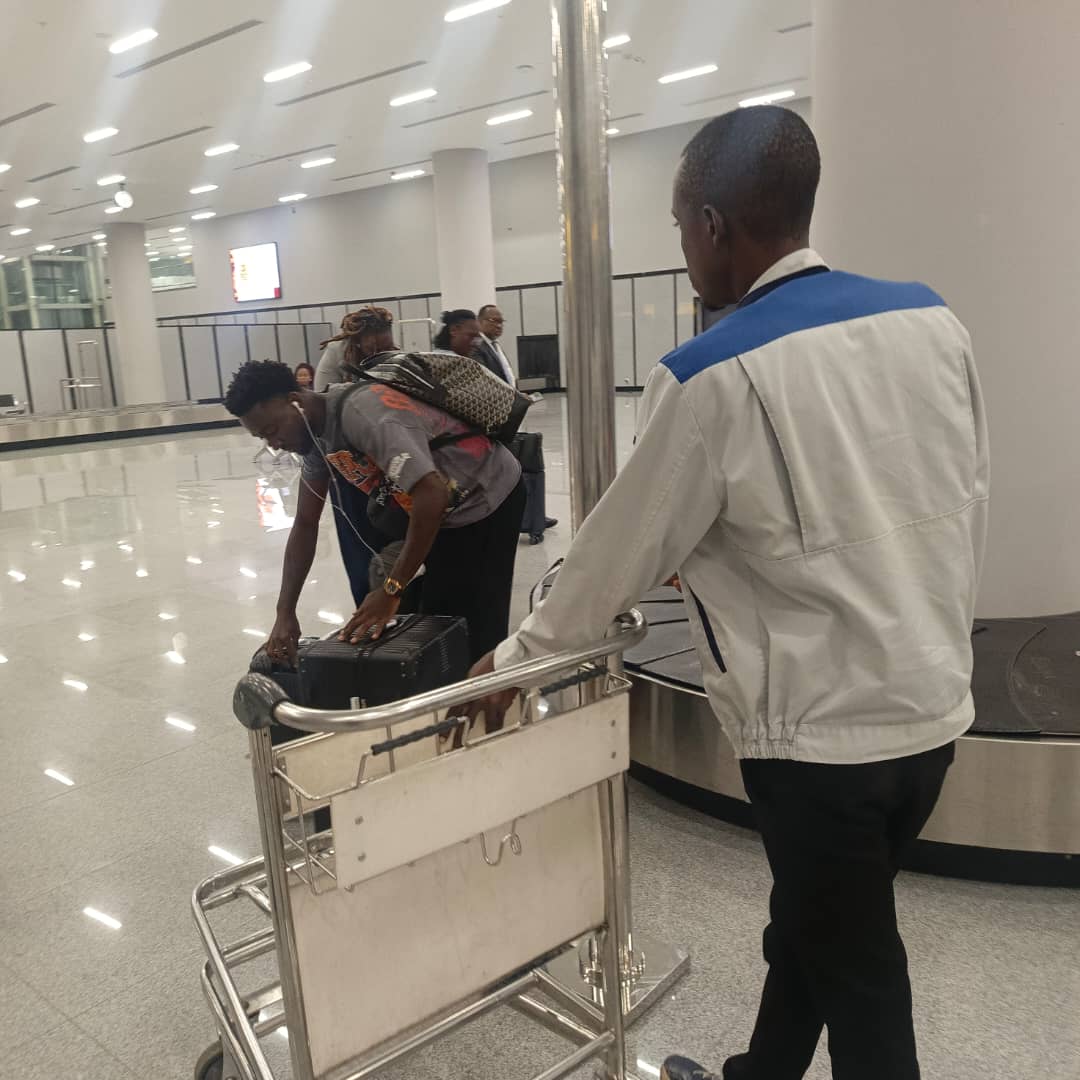
The Super Eagles camp in Uyo has grown to 23 players following the arrival of captain Wilfred Ndidi and winger Samuel Chukwueze as Nigeria intensifies preparations for Friday’s 2027 Africa Cup of Nations qualifier against Madagascar.
Ndidi and Chukwueze landed at the Victor Attah International Airport in Uyo at exactly 5:20 p.m. on Tuesday, arriving from Lagos aboard an Ibom Air flight before linking up with the rest of Éric Chelle’s squad.
Their arrival followed that of goalkeeper Stanley Nwabali, who had earlier increased the number of players in camp from 20 to 21 before the team headed out for its first training session.
The initial 20 arrivals were Moses Simon, Akor Adams, Taiwo Awoniyi, Isaac James, Emmanuel Fernandez, Benjamin Fredrick, Moses Usor, George Ilenikhena, Arthur Okonkwo, Alex Iwobi, Semi Ajayi, Calvin Bassey, Ola Aina, Ademola Lookman, Bright Osayi-Samuel, Chibuike Nwaiwu, Tolu Arokodare, Bruno Onyemaechi, Raphael Onyedika and Frank Onyeka.
With Nwabali, Ndidi and Chukwueze subsequently reporting, Chelle now has 23 players available, giving the coach an almost complete group as preparations gather momentum in Uyo.
Nigeria’s squad underwent a late alteration after Victor Osimhen was ruled out through injury, prompting the recall of Taiwo Awoniyi as his replacement.
The Coventry City striker is already in camp and will compete with Akor Adams, Tolu Arokodare and George Ilenikhena among the centre-forward options.
The Super Eagles will host Madagascar at the Godswill Akpabio International Stadium, Uyo, on Friday, September 25, before travelling to Bissau for their second Group L qualifier against Guinea-Bissau on September 29.
After the disappointment of missing the 2026 FIFA World Cup, Nigeria are under pressure to begin their AFCON campaign positively.
With 23 players now assembled in Uyo and training underway, Chelle can turn his attention to shaping the team he believes can deliver the opening three points against Madagascar.
-

 Business3 days ago
Lingzhi Global, NACOFTAN Announce 2026 Coffee Festival in Cross River
-
Events3 days ago
Peace Walk: WOPPI Urges Plateau Citizens to Invest in Peace Every Day
-
 Health3 days ago
Nigerian hospitals collaborate to perform tele-robotic surgery
-
News3 days ago
INEC declares APM’s Adamu Yakubu winner of Sakwa bye-election in Bauchi