News
US Missionary Quotes Quran to Condemn Nigerian Govt Over Attacks on Christians in Jos


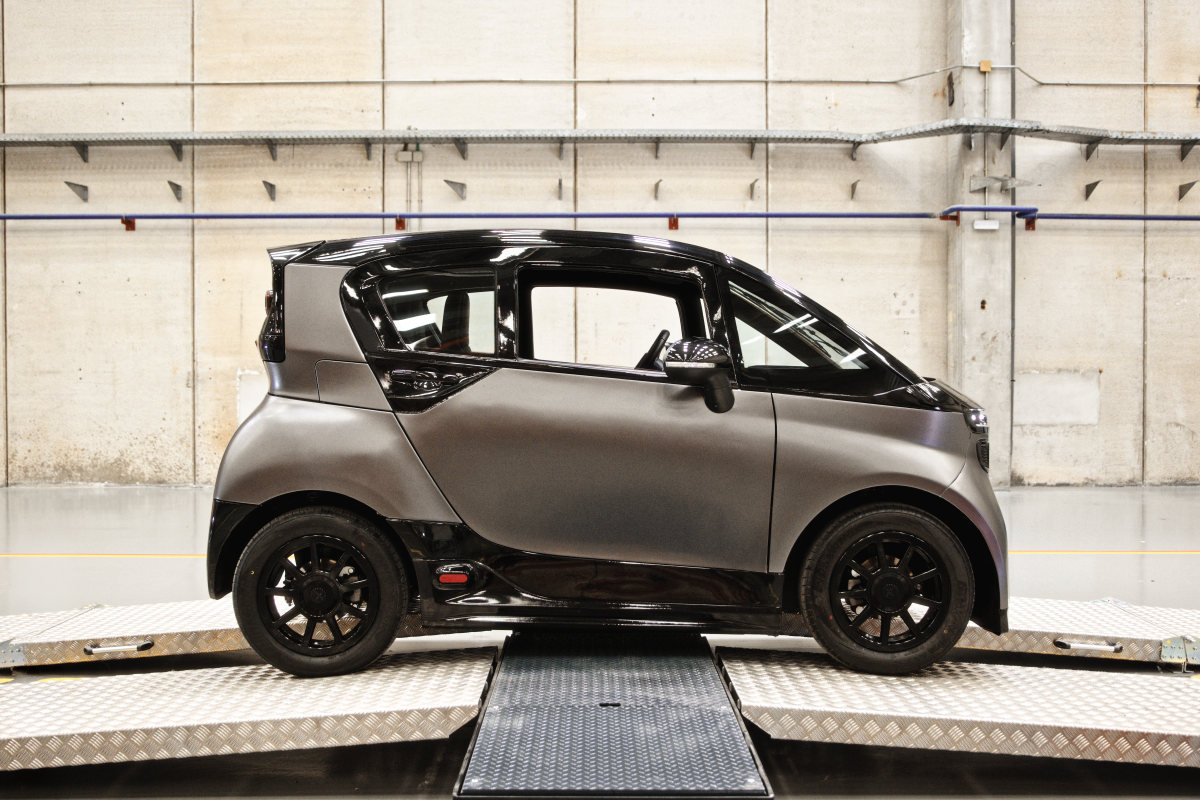
Cars in European cities are smaller than ever. But as Europe’s appetite for microcars has grown, the cute Italian ‘yoghurt pots’ have largely given way to small Chinese EVs. Even Smart, the the iconic ultracompact car brand, has moved manufacturing to China.
Spanish startup Liux thinks it can compete in a crowded market with a tiny electric car built around sustainability.
Following the tracks of the Microlino out of Switzerland, Liux is trying to carve out a place in the market with its upcoming microcar, the Liux Big. The “Big” name is a joke. It is small enough to park at a right angle to the curb; but the name also reflects the oversized ambitions of a team that rarely takes the expected route.
“The idea of a European car does not exist,” Liux co-founder Antonio Espinosa de los Monteros told TechCrunch. Coming from the CEO of a startup whose cars are already making headlines for being “made in Spain,” it was a surprising take — and one that reveals a lot about the company’s priorities.
It is true that Liux opened Spain’s first new car plant in more than 30 years. But as we sat down in its elegant showroom, Espinosa and his co-founder David Sancho said they had concluded that a fully sovereign supply chain is unattainable. Instead, Liux is trying to navigate that reality while keeping sustainability as its north star.

Liux’s batteries are not made in Europe, but they are rechargeable at home, including with power generated from solar panels. The car is also meant to be easy to maintain and avoid the faster obsolescence cycles of modern cars. Perhaps most notably, its fiber body is made from a novel linen-based biocomposite designed so the material can later be extracted and recycled.
“One thing that’s very clear for David and me is that recycling isn’t just a lab concept. You can recycle almost anything in a lab. What makes something recyclable has to do with how it’s built,” Espinosa said. “When you build something, you have to try to preserve the integrity of the material and the components so that a second life is possible.”
“Real circularity” is where Espinosa comes from; he previously cofounded Auara, a Spanish B Corp selling natural mineral water in bottles that are both recycled and recyclable. But after a larger player acquired this successful brand, he embarked on a new chapter with Sancho as his co-driver.
When it comes to cars, Sancho is in the driver’s seat, with low emissions on the radar. His specialty is engineering electric vehicles that can rival gas-powered ones. Before Liux, his most impressive feat was the Bóreas, a hybrid supercar unveiled at the 24 Hours of Le Mans in 2017. But after a fallout with his former partners, he and Espinosa teamed up to found Liux.
Liux’s first prototype, the Animal, combined their expertise: The fully electric five-seater was made almost entirely from recycled or plant-based materials. And yet, the two co-founders decided to pivot soon after unveiling the SUV to the world in 2022. It was then that they determined that their odds of completing homologation would be much higher with a smaller car.
Fast forward to 2026, and Liux has secured Europe-wide homologation for the Liux Big, which it expects to start selling in the first half of next year. In the meantime, the company has grown to 65 employees and is getting ready to ramp up production across three facilities in Spain.
These include the plant that TechCrunch visited in Azuqueca de Henares, about a one-hour drive from central Madrid.
Liux’s Azuqueca factory is small because it follows Toyota’s “lean management” principles and performs only the last steps of the process, said its head of production Beatriz Belda González, a Spanish-born engineer who previously worked for BMW in Munich. But don’t let its size fool you: Liux says its production capacity could reach 20,000 cars a year by 2030.

It is still too early to gauge demand, but more than 7,500 people have joined the waiting list for a Liux Big. Joining doesn’t require a fee, but the list has helped the startup learn more about its prospective buyers. The most represented profile is a 55- to 60-year-old city dweller, and Liux is now assuming that the Liux Big will often be a household’s second car.
This may dampen hopes that microcars could challenge traditional car ownership, but Liux has to pick its battles, Espinosa said. Rather than trying to guess where the market is going, or how fast, the startup is keeping the door open to partnerships with companies that manage B2B fleets and others that could help make its cars autonomous.
For Espinosa, the Liux Big could already make a difference by offering a more sustainable option that is also affordable. The startup hasn’t confirmed its final price tag, but said it will be below €18,000 — about $21,000 — before potential EV subsidies. This puts it at the higher end of the price range for microcars, but Liux hopes it will punch above its weight — literally.
According to Liux’s head of R&D, Celso Fernández Llorens, weight and size limitations are a huge constraint in this category. In his view, most microcars are fairly similar, despite the fact that European authorities differentiate ultralight L6e four-wheelers from slightly heavier L7e ones. Liux, however worked around these constraints to make the most of its L7e homologation.

Thanks to a litany of decisions large and small, the startup managed to fit a 260-liter trunk into the car. But most of its efforts were geared toward making sure users feel like they are driving a car, rather than a two-wheeler. That’s also closely tied to safety, Sancho said: you don’t want a car that’s only lightweight because its frame can’t withstand a crash, or that will topple on the first turn.
With this in mind, and despite the fact that its category doesn’t even require crash tests, Liux has been testing and showcasing the Liux Big’s ability to slalom, brake, and perform other maneuvers. The startup demonstrated some of those capabilities to TechCrunch during a short ride and test drive in its upcoming off-road version.
For now, its main model will have two versions: 15 kWh and 20 kWh. A cargo version is also planned, and with Sancho on the team, the temptation to build a supercar is never far away. In a LinkedIn post, the company noted that it doesn’t intend to be “a one-car brand.”
First, though, Liux will use the €16 million it has secured so far (about $18.5 million, including European funding) to bring the Liux Big’s urban version to market through partnerships with car dealerships across Europe.
The showroom where we met is also a preview of Liux’s future sales experience, head of brand Ana Terrado Leyva said. She pointed to textile screens, 3D models showcasing the Liux Big’s three color options — two more than the Ford T — and a linoleum floor as a nod to linen. These aesthetic choices, she said, are another way Liux hopes to stand out from its Chinese competitors.
Maybe the idea of a European car does exist.
When you purchase through links in our articles, we may earn a small commission. This doesn’t affect our editorial independence.

-

 Health4 days ago
Malaria kills German airport worker in rare outbreak
-
Health2 days ago
FG reports health gains, urges NMA to lead fight against quackery
-
News3 days ago
TCC SEASON 7: THE NEXT CHAPTER BEGINS AS NIGERIA’S DEVELOPMENT LEAGUE TURNS TALENT INTO A GLOBAL FOOTBALL CURRENCY
-
Health4 days ago
FG targets steady power for 30% of health facilities by 2027 amid PHC electricity gap