Connect with us

News

UN Women trains journalists in Plateau on peace, security reportage

info

Published

on

Received

The UN Women Peace and Security (WPS) in Nigeria on Wednesday 5th July, organized a one-day annual planning workshop on women, peace and security reportage for journalists in Plateau State.

The group’s National Programme Officer, Mrs. Olubukola Ademola, while speaking at the event, said that the essence of the workshop was to get the participation of the media at various levels to work with peace-building agencies to drive women’s inclusion in peace and security in the State and Nigeria in general.

She said the training would enable the journalists to respond to issues as they evolve, to avoid conflicts and enable them to create adequate response mechanisms to ensure peace and security.

According to her, UN Women focus is to achieve gender equality, and strategic political empowerment of Women in Nigeria and give them a voice that will make them add value to National development. She hinted that the group is also working relentlessly to ensure that women are economically empowered and ensure that the numerous challenges faced by Women are tackled; enhancing their capacities in contributing to peace and security.

Ademola maintained that the media could work in synergy with relevant stakeholders and peace building
agencies in the state to promote peace and security.

She said that the media had considerable opportunities to address peace and security and enhance the formation of a framework that would promote peace.

The officer added that the media roles ranged from setting agenda, monitoring and promoting issues on
accountability to amplifying various issues, creating awareness and push it forward for the government to see and act.

She explained that the workshop would help the media to focus on women’s rights and gender equality issues
through quality reportage of gender-sensitive matters.

Ademola said that a lot of work had been carried out in terms of mediation but the challenge was the under-reportage of WPS work.

“The problem is not being able to tell the story of how efforts of WPS had transformed relationships at personal and community levels.

“The problem is that stories do not include information on intervention of women groups in reducing violence and transforming communities.” she further stated

While presenting the status report from 2019 to date, Mr. Wika Gofwen, the WPS Media Network Coordinator in Plateau State stated that the Media Network is an offshoot of the UN Women which is aimed at amplifying the voice of women positively in all facets of life and give their activities the required visibility.

He hinted that the Network was a collection of various Media Practitioners which include Print, electronic and online Media. He urged the participants to take the workshop seriously and work towards achieving the mandate of the UN Women.

Other Participants at the workshop expressed enthusiasm for implementing what they had been taught.

One of the participants, Mrs Saadatu Mohammed, said she had learned new strategies and activities that would enable women to speak when violated.

Another participant, Mrs Juliana Aladeye, said the workshop was timely and had given her more insight in reporting and documenting women
programs better.

Continue Reading
Click to comment

Leave a Reply

Your email address will not be published. Required fields are marked *

News

NISER,​‌‌⁠‍​​‍⁠⁠‍‌⁠‍⁠‌​​⁠‌​ IWMI Seek Urgent Reforms To Fix Nigeria’s Agricultural System

info

Published

on

IMG 20261106 WA00111.webp

By Suleiman Shehu

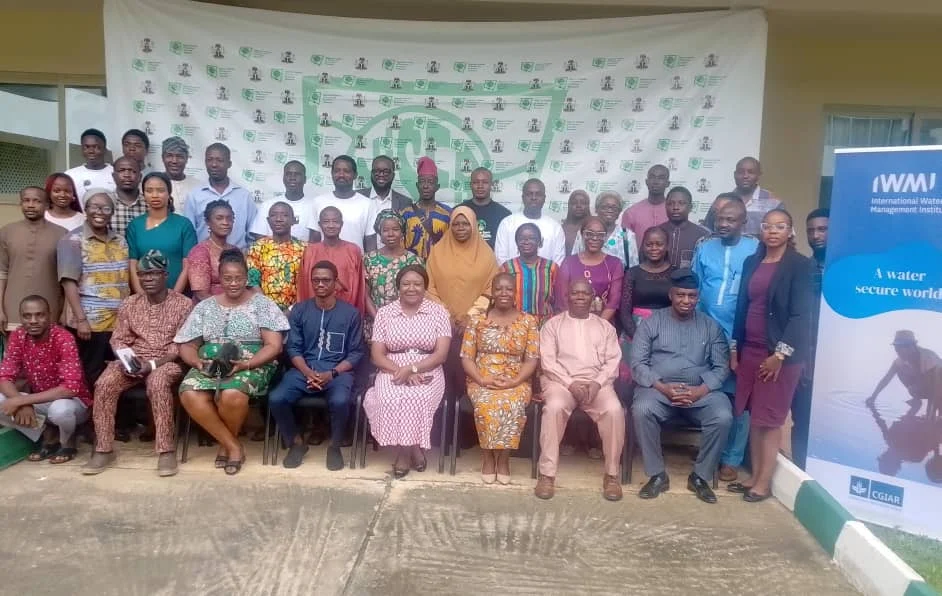
The Nigerian Institute of Social and Economic Research (NISER) and the International Water Management Institute (IWMI) say Nigeria must urgently reform its agriculture to boost productivity and tackle food crises.

The institutions made the call at a stakeholders’ seminar and validation roundtable in Ibadan on Thursday.

The seminar, themed “Strengthening Nigeria’s Agrifood Knowledge and Innovation System for Demand-Driving Scaling (AKIS-DS), was organised by NISER in collaboration with IWMI.

It was organised under the CGIAR’s Scaling for Impact program.

The News Agency of Nigeria (NAN) reports that the AKIS-DS initiative seeks to understand how Nigeria’s agricultural knowledge and innovation system works.

This includes the roles and relationships among research institutions, extension and advisory services, government agencies, private sector and farmer organisations.

NISER Director-General (DG), Prof. Antonia Simbine, said Nigeria’s persistent food inflation and rising food insecurity show the need to reform agricultural knowledge and innovation systems.

Simbine said it was unacceptable that Nigeria’s agriculture continues to face high food inflation and insecurity.

According to her, the sector contributes approximately 28 per cent of Gross Domestic Product (GDP) and employs 50 per cent to 70 per cent of the rural workforce.

Simbine emphasised that Nigeria’s food crises should not be exclusively attributed to prevailing conflicts and global developments, saying longstanding structural weaknesses in the agricultural sector also contribute significantly.

She said the predominance of smallholder farmers cultivating less than two hectares, heavy dependence on rain-fed agriculture, outdated farming technologies and post-harvest losses were among the factors undermining food production.

The DG also identified climate change and insecurity across major food-producing communities as critical challenges confronting the agricultural sector.

She was concerned that insecurity had disrupted farming activities and forced many rural residents to abandon their communities in states such as Plateau and Benue, recognised for their agricultural contributions.

Simbine called for improved agricultural research, modernisation of fertiliser practices, sustainable land management, mechanisation and infrastructural investment to boost productivity.

She emphasised the need to accelerate the adoption of climate-smart and digital agricultural technologies, reminding research institutions of their responsibility to generate relevant innovations and ensure they reach smallholder farmers.

The IWMI Country Focal Point in Nigeria, Dr Charity Osei-Amponsah, said developing agricultural technologies alone without effective mechanisms to ensure innovations reach the intended beneficiaries was inadequate.

Osei-Amponsah said agricultural technologies must reach the right users, particularly smallholder farmers, and be adopted and used effectively to improve productivity and access to markets and finance.

She further stressed the importance of replicating successful innovations across different farming communities and states to expand their impact.

Osei-Amponsah maintained that stronger collaboration among agricultural stakeholders, improved knowledge-sharing mechanisms and institutional reforms were necessary to ensure research findings translated into practical benefits for farmers.

In his presentation, IWMI intern, Mr Mubaraq Owolabi, identified the need to strengthen connections among research institutions, extension services, farmers and financial institutions.

Owolabi further said that ensuring a monitoring and evaluation system would strengthen Nigeria’s agricultural innovation.

“Strengthening these institutional linkages and promoting effective coordination among stakeholders are essential to ensuring that agricultural research translates into practical benefits for farmers in Nigeria,” he said. (NAN)

Edited by Moses Solanke

Continue Reading

News

2027: ‘Will he cancel South-South Commission’ – Oshiomhole questions what Peter Obi will do differently

info

Published

on

Oshiomhole (2)

Edo North Senator, Adams Oshiomhole, has questioned what the Nigerian Democratic Congress, NDC, presidential candidate, Peter Obi, will do differently from what President Bola Tinubu will do for the people of Akwa Ibom State.

Speaking at the All Progressives Congress, APC, presidential campaign rally in Uyo on Friday, Oshiomhole asked if Obi would cancel the South-South Development Commission.

He said the commission was created by President Bola Tinubu to bring development to the South-South, adding that it is for Akwa Ibom, Cross River, Rivers, Bayelsa, Delta and Edo States

According to him, Tinubu did not just create the commission on paper but also funded it, adding that thousands of children from poor homes in Akwa Ibom are in university because of the student loan.

"When Peter Obi comes, ask him, will you cancel the South-South Development Commission? Ask him, will you keep it or will you cancel it? If he says he will cancel it, you will know he came to deceive you.

"Ask him, will you bring back multiple exchange rates where only the connected get dollars cheap? If Peter Obi could not fix Anambra State in eight years, how can he look you korokoro in the eye and say he will do it in four years? He just wants turn-by-turn democracy,” Oshiomhole claimed.

2027: ‘Will he cancel South-South Commission’ – Oshiomhole questions what Peter Obi will do differently

Continue Reading

Trending