Business
Enterprise Life Assurance Meets Full Regulatory Capital Requirements, Boosts Liquidity

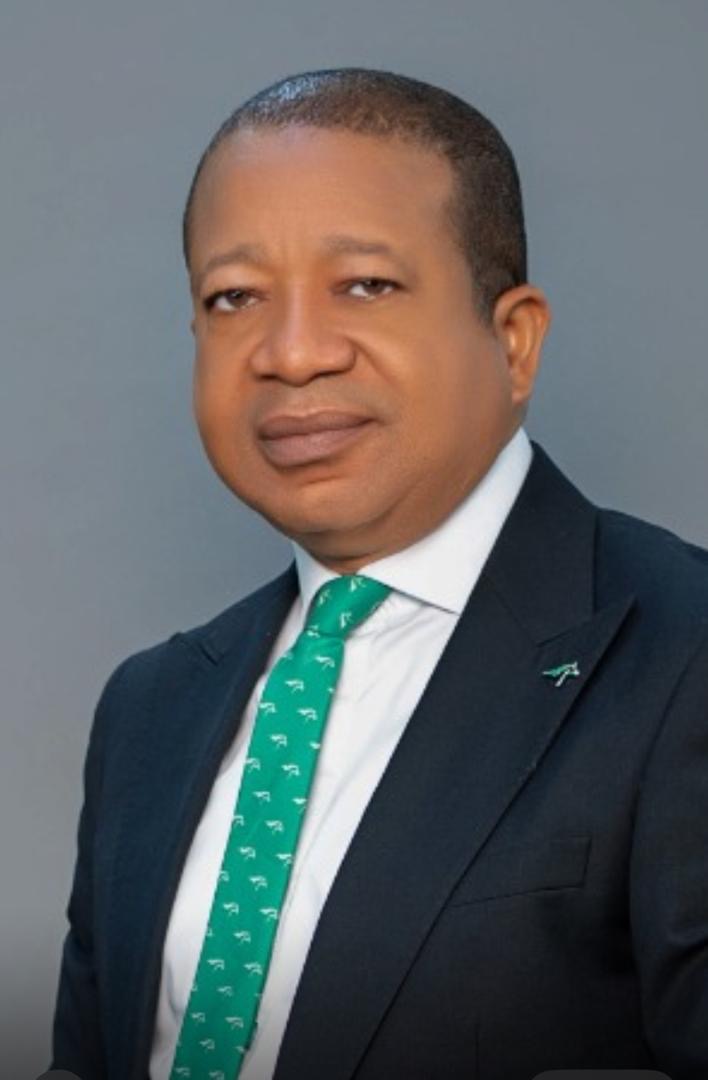
BY NKECHI NAECHE-ESEZOBOR—Enterprise Life Assurance (Nigeria) Limited has announced the full remittance of its statutory deposit of N1 billion to the Central Bank of Nigeria (CBN), underscoring its robust financial health and compliance with regulatory mandates.
The Managing Director and Chief Executive Officer of the company, Nelson Akerele, disclosed this during a recent media briefing while addressing the firm’s capital positioning and compliance with the National Insurance Commission (NAICOM).
According to Akerele, Enterprise Life—which entered the Nigerian market approximately five years ago alongside peers like Heirs General and Heirs Life—has progressively built on its foundational capital structure to satisfy current regulatory thresholds.
“We started with ₦8 billion,” Akerele stated, recalling the company’s entry as one of the four entities licensed in that licensing wave. “What we have as a statutory deposit right now, as I speak, is ₦1 billion, which has been fully remitted to the designated account assigned to us.”
Beyond meeting the statutory deposit mandate, the Enterprise Life boss revealed that the company has fully satisfied its Minimum Capital Requirement (MCR).
He attributed this seamless compliance to a deliberate operational strategy that favors liquid assets over heavy fixed investments.
Unlike traditional players with massive capital tied up in real estate, Enterprise Life has maintained an agile, cash-ready balance sheet.
“We are not heavy in terms of buildings and all that; our assets are held in liquid form—in cash and cash equivalents,” Akerele emphasized. “We are an extremely liquid company.”
This cash-heavy asset strategy positions the insurer to promptly meet its obligations, match underwriting risks effectively, and settle policyholders’ claims without the delays often associated with liquidating physical property.
The announcement comes at a critical time when NAICOM continues to emphasize stricter solvency and liquidity management across the Nigerian insurance ecosystem to boost public confidence in the sector.
The post Enterprise Life Assurance Meets Full Regulatory Capital Requirements, Boosts Liquidity appeared first on Business Today NG.


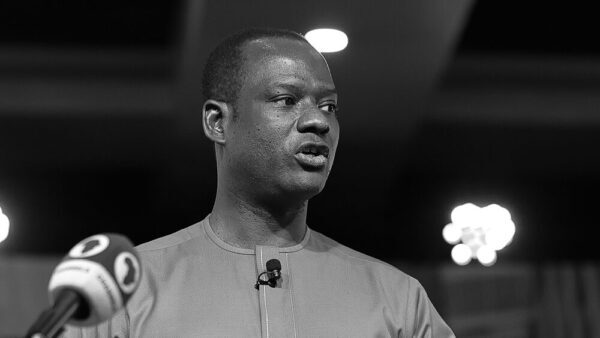
Nigeria’s Finance Minister and the Coordinating Minister of the Economy, Taiwo Oyedele, on Wednesday said the country is fortunate to have President Bola Tinubu at the helm of affairs at a time of economic challenges and global uncertainty.
Mr Oyedele made the remark on Wednesday on the sidelines of the World Bank/International Monetary Fund (IMF) meetings in Bangkok, Thailand, where he praised the president for his willingness to implement difficult economic reforms and his understanding of economic and monetary policy issues.
“I say to myself every time that Nigeria is lucky to have a leader like Mr President,” the minister said.
“A leader that says ‘I’ll do the right thing, even when it’s not popular’. There are so very few of them, and our president is not saying it; he’s doing it, he’s doing it even with pre-election (concerns),” he added.
Since assuming office in May 2023, the Tinubu administration has introduced a series of economic reforms, the impact of which international institutions like the World Bank and the IMF have acknowledged
The reforms include the removal of costly petrol subsidies, which had been a major drain on public finance for years, the unification of the foreign exchange rates and the sharp devaluation of the naira to attract foreign capital.


Although abolishing fuel subsidies has boosted government revenue and is seen as an investor-friendly move, it has triggered a cost-of-living crisis and spurred inflationary pressures.
Reforms in the foreign exchange market have helped increase accretion to external reserves, which stood at $55.1 billion as of 9 October, its peak level in over 18 years.
The banking sector also underwent a recapitalisation exercise that ended in March and helped Nigerian banks raise N4.7 trillion in new capital.
According to the Central Bank of Nigeria, the recapitalisation strengthened banks’ capital adequacy ratios, keeping the sector above international Basel benchmarks.
Mr Oyedele said President Tinubu possesses two attributes uncommon among leaders, notably those of democratic governments.
READ ALSO: AFC appoints Cardoso as board chairman
The first is his willingness to do what he considers right, even when the decision is unpopular or politically difficult.
“I remember at least three issues that were discussed with him recently, and on my own I would offer to say ‘maybe we wait until after the election’. And his question is always, ‘Is it the right thing to do?’ Yes, yes, it is. Why do we have to wait?” Mr Oyedele said.
“Number two attribute is that our President gets it. It’s not easy to understand issues to do with the economy, finance, monetary policy, like respect for the independence of the monetary authority. For Mr President, it’s 100 per cent,” he added.
The minister added that the president’s position on such matters has made it unnecessary for officials to discuss the issue with him repeatedly.
“We don’t even talk about it. So, I feel like we are so blessed, we cannot afford to wait even one minute,” he said.
Discover more from Premium Times Nigeria
Subscribe to get the latest posts sent to your email.
-

 News2 days ago
Meta releases its first frontier model, Muse Wonder
-
Health3 days ago
Kwara public hospitals introduce digital medical records
-
News3 days ago
EuroMatch NPFL: ‘We Never Gave Up!’ — Fidelis Ilechukwu Hails Rangers’ Fighting Spirit, Reacts to Two Penalties Against Barau FC
-
News4 days ago
2027:Stop attacking Peter Obi – Anglican Bishop cautions South East leaders