Health
INVESTIGATION: Commissioned But Locked: How an idle hospital is failing women in Akwa Ibom


One midnight in September 2025, as labour pains intensified, Blessing Okon was rushed through the dark roads of Oko-Ita in Ibiono Ibom Local Government Area of Akwa Ibom State in search of help.
They passed the newly commissioned Mother and Child Hospital, a modern fully built facility designed to serve women like her, and which is less than a kilometre from her home. But its gates were locked.
She and her husband went to a primary healthcare centre (PHC) in Ikot Usen, about 30 minutes away. When they arrived, no health worker was on duty.
They waited nearly an hour as her condition worsened. No help came.

“I had felt the signs earlier but thought it was not serious and could wait till morning,” Mrs Okon recalled.

With no alternative, her husband drove her back home, where a traditional birth attendant (TBA) was called in to assist with the delivery.
The outcome was severe.
Mrs Okon said she suffered complications and heavy bleeding that left her unable to walk properly or carry heavy objects for months.
“The TBA tried her best. At the time, I had already become weak and lost a lot of blood,” she said. “If not for the intervention of the TBA, I would have died.”
The irony is that the facility meant to tend to such emergencies was within reach but remained closed.
The Renewed Hope Mother and Child Hospital in Oko-Ita, a 100-bed specialist facility built to serve Ibiono Ibom and surrounding communities, had been commissioned months earlier but had never opened its doors.
A paved access road leads into the compound. Streetlights line the entrance. Air-conditioning units are fixed along its walls. But behind the gates sit empty wards and silent corridors.
There are no patients. No staff. No activity.
“We live close to the facility; it is even within walking distance,” Mrs Okon said. “But I couldn’t go there because it was locked.”

The statistics behind the crisis
Nigeria continues to record some of the highest maternal and child mortality rates in the world, with tens of thousands of women dying each year from pregnancy and childbirth-related complications.
The major drivers include delayed access to skilled care, weak health infrastructure, and shortages of trained health workers.
According to the 2024 Nigeria Demographic and Health Survey, Akwa Ibom has one of the lowest percentages (38.6 per cent) of live births delivered in a health facility in the country. It ranks lowest among Nigeria’s 17 southern states. It also ranks lower than five of the six north-central states and three out of six north-east states.
The report further shows that Akwa Ibom has one of the lowest percentages of births delivered by a skilled provider (51.5 per cent) in Nigeria, the lowest across the southern and North-central states except Niger.
Akwa Ibom State has a maternal mortality rate of 774 per 100,000 live births, according to District Health Information Software 2, a free and open-source software platform primarily used for managing and analysing health information in Nigeria.
It was against this backdrop that the federal government, through the Office of the Senior Special Assistant to the President on Sustainable Development Goals, launched the Renewed Hope Mother and Child Hospitals initiative to expand access to maternal, neonatal, and child healthcare in underserved communities.
The initiative delivered purpose-built specialist hospitals across several states, designed to provide antenatal and postnatal care, safe delivery services, emergency obstetric care, neonatal care, and diagnostic support.
The Senior Special Assistant to the President on Sustainable Development Goals, Adejoke Orelope-Adefulire, described the hospitals as symbols of renewed hope for women, newborns, and families nationwide.
In Akwa Ibom, a 100-bed Mother and Child Hospital was commissioned in Oko Ita, Ibiono Ibom LGA, on 6 August 2025. The facility was expected to serve more than 24 communities and about 30,000 residents.

Community leaders said the commissioning raised expectations. David Udofia, the head of Oko-Ita, recalled that residents trooped out in large numbers for the event, hopeful that access to quality maternal care had finally arrived.
“We were thankful to the government and believed that in no distant time, the hospital would become operational and our women and children would begin to access care close to home,” he said.
Similarly, the village head of Ikot Obong, Okon Robert, said the facility quickly became a symbol of hope for women who had long endured difficult, sometimes fatal, childbirth experiences.

At the commissioning, Governor Umo Eno, represented by his deputy, Akon Eyakenyi, said the hospital would strengthen healthcare delivery in the state and expand access to affordable services, particularly in rural communities.
A non-functional facility

Months after its commissioning, the Renewed Hope Mother and Child Hospital in Oko-Ita remains closed and unused.
Visits to the facility in May and June show a completed structure standing idle. The compound is quiet. There is no movement of patients or staff.
The gates remain locked. Inside, wards and consultation rooms are empty. Equipment installed in the facility has never been used.
Two security guards at the entrance said the hospital has remained shut since it was commissioned. They said no doctors, nurses, or administrative staff have been deployed to the facility.
At the reception area, a plaque still hangs on the wall. It reads: “Regular antenatal care reduces the risk of complicated pregnancy. FG/Akwa Ibom Government cares.” But there is no service delivery behind the message.

“We have not seen any doctors or nurses,” the village head of Ikot Obong, Mr Robert, said. “Our women keep checking, hoping to find someone, but there is no one to attend to them, and repeated efforts to engage authorities have yielded no results.
Residents said the situation has remained unchanged since commissioning. Women who need maternal care still travel to distant health centres or rely on lower-level facilities with limited capacity.
Mr Robert said several women had died during childbirth due to delayed access to care. Although private hospitals are available, the charges are out of reach for many families.
“These deaths could have been avoided if we had a functional hospital with doctors and nurses available,” he said. “The government needs to rescue us. Our women are dying.
Mfoniso Basset, the youth leader of Ikot-Obong, said repeated efforts to get authorities to open the hospital have not yielded results.
“We keep going there hoping it will open one day, but nothing has changed,” he said.

A system without alternatives
In the absence of the hospital, residents rely on distant and overstretched facilities.
Apart from the PHC in Ikot Usen, the Ikpa PHC operational base serves as another option. Located about 15 minutes away, patients spend about N1,500 on transport to reach it.
The facility, staffed by about seven health workers, provides immunisation, antenatal care, family planning and nutrition services to several communities.
But its capacity is limited.
Ikaite Eneti, a nurse-midwife at the centre, said complicated cases, such as obstructed labour or severe postpartum haemorrhage, are referred to larger hospitals, including St Luke’s General Hospital in Anua, Uyo, about one hour away, or facilities in Ikot Ekpene, roughly 40 minutes away.

Even then, patients often face delays and overcrowding.
Health experts warn that such delays significantly increase the risk of severe complications, including haemorrhage, infection, organ damage and long term reproductive health problems.
Heavy reliance on TBAs
With limited access to skilled care, many women turn to TBA.
“We are not happy patronising TBAs, but emergencies leave people with no choice,” said the woman leader of Oko-Ita, Alice Okon.

For some families, the consequences are severe.
In 2021, Uwem Okon-Urua went into labour at night and was taken to Ikot Usen health centre, only to find it locked.

A TBA, later, gave her a local concoction to induce labour. The baby was eventually delivered, but not without complications. She lost a significant amount of blood and suffered severe tears.
“I wouldn’t have taken it under normal circumstances, but I was desperate,” she said. “I thought I would not survive. The pain was unbearable. After delivery, I was advised to seek proper medical care.”
Ms Eneti, the nurse-midwife at Ikpa, confirmed that depending on TBAs is common. She recounted a case in February involving a newborn brought in for immunisation with a severely infected umbilical cord.
“The mother said a TBA instructed her to apply salt and toothpaste,” she said. “That led to the complication. After attending to the child, we educated her to always come for a proper check-up instead of accepting whatever she is told by TBAs.”
When delay becomes death
When Isaiah Udofia learned that his wife, Sarah, was pregnant with twins, he could not contain his joy. In their modest home in Ikot Mbuk, Idoro, another community in Ibiono Ibom LGA of Akwa Ibom State, the family began counting down the months, already imagining the names of the children they expected.
But when labour began one evening in 2025, that anticipation collapsed into panic.
The Comprehensive Health Centre in Idoro, meant to serve as the first point of care in emergencies, had no bed and no nurse on duty. The facility stood with walls, but without care. It was built by the community and handed over to the state government years ago.
Mr Udofia said the centre, which once served 27 villages, deteriorated over time. Part of the roof has been torn off by the wind, and bushes now grow through the wards that once held patients.

Its white-tiled toilets have darkened with neglect, and the beds have rusted after years of exposure. Reptiles now move through rooms once meant for care. Only one small room remains in use, reserved for immunisation and antenatal services.
In that moment of urgency, Mr Udofia said his thoughts turned to the newly built Mother and Child Hospital, designed to provide comprehensive maternal and newborn care. Although completed, the facility had never opened its doors.
With no functioning public facility nearby, he took his wife to a TBA in the community. The attempt to deliver the twins there also failed when complications set in, forcing another desperate search for help.
“I spent about an hour before I could find a motorcycle,” Mr Udofia recalled, his voice heavy. “Our road is bad. From our community to the nearest PHC at Ono took us about 50 minutes.”
At the PHC in Ono, there was still no solution, only another referral. From there, they were sent onward to the University of Uyo Teaching Hospital in the state capital.
By the time doctors intervened, both babies were dead. His wife, Sarah, survived only after emergency surgery to remove the lifeless twins.
“The failure to get the Mother and Child hospital operational and the distance to other options killed my children,” Mr Udofia said. “Each time I remember them, I am pained because they would have survived.”
At the Idoro Comprehensive Health Centre, the Officer-in-Charge, Anietie Natan, said pregnant women only come for routine care. She added that the absence of the Mother and Child Hospital as a functional alternative has deepened the pressure on the facility.

For residents like Ukeme Udom, the situation reflects more than neglect.
“The failure to get the hospital operational, as well as address healthcare needs in Idoro, is no longer just neglect; it is an injustice,” he said.

“People die because they have nowhere to go. The roads are terrible. Many don’t make it to distant hospitals.”
Over N500 million spent, yet the hospital remains idle
An analysis of publicly available spending records on Govspend, a platform that tracks government expenditure, shows that more than N500 million was paid for the construction of the Mother and Child Hospital in Oko-Ita.
Records show that on 22 May 2023, Westfield Global Construction Ltd received N145 million for construction works on the hospital. A further payment of N190 million was made to the same company on 26 March 2024, bringing the total payments to the contractor under the project to N336 million.

Another contractor, Taruve Nigeria Limited, received N167 million on 31 December 2025 for external works, including access roads with kerbs, drainage systems, and stamped concrete flooring within the hospital complex. The payment was processed under the same project code, 0554008001.
Taken together, total verified construction spending on the facility stands at N503.6 million.
This figure does not include the costs of medical equipment.

According to information published by the Office of the Senior Special Assistant to the President on Sustainable Development Goals, the hospital was equipped with operating theatres, recovery rooms, private and general wards, consultation rooms, a laboratory and scanning unit, as well as equipment such as an ultrasound machine, vacuum extractor delivery set, and fully stocked emergency carts.
Further review of the Akwa Ibom State 2026 budget shows that N350 million was also allocated for the rehabilitation of the facility and construction of internal roads, even though the hospital has not commenced operations, and the internal road network within the complex already exists.

A staffing problem
The Akwa Ibom State Commissioner for Health, Ekem Emmanuel, did not respond to calls, WhatsApp messages and text messages sent to him on 25, 27 and 28 April requesting comments on the findings of this investigation.
However, the Chairman of the Akwa Ibom State House of Assembly Committee on Health, Moses Essien, said the delay in opening the hospital is largely due to a shortage of health workers, describing it as part of a broader workforce gap in the state.
Mr Essien said more than 2,000 medical professionals have been approved for recruitment by the state government following a health-sector emergency declaration on 12 September 2025.
According to him, the recruitment process has reached the computer-based testing stage, while oral interviews are ongoing.
“I have been following up, and I am sure that when the process is completed, personnel will be sent to the facility to work,” he said. “Some doctors from the local government have also reached out to me, expressing worry about the facility.”
He added that medical superintendents were appointed in November 2025 to oversee the facility pending full deployment of staff. He also noted that the recruitment process has been highly competitive, with about 35,000 applicants vying for 2,000 positions.
A national staffing benchmark shows that a functional secondary or specialist hospital typically requires about five doctors, around 40 nurses and midwives, and at least four personnel each in the laboratory and pharmacy units to sustain 24 hour service delivery.

Sources in Ibiono Ibom also said delays in deployment may be linked to the absence of staff accommodation, as the hospital was constructed without staff quarters.
While staff housing is not formally required under Nigeria’s minimum standards for secondary healthcare facilities, it is widely considered essential in practice for facilities expected to operate around the clock.
Responding to this, Mr Essien said provisions have been made under the emergency declaration to address accommodation challenges, adding that the primary issue remains deployment rather than housing.
“There are other locations where infrastructure will be upgraded, and the governor is working with the contractors to handle them,” he said.
“He has given us assurances that he will improve the health sector maximally. He has shown that by not only allocating 11.9 per cent of the 2026 budget, about N139 billion out of 1.38 trillion, to the sector, but also making some releases.”

Expedite recruitment of health workers
Speaking with PREMIUM TIMES, the Chairman of the Nigerian Medical Association, Akwa Ibom State, Aniekan Peter, said it is important to expedite recruitment of health workers, warning that continued delays are worsening pressure on an already overstretched health system.
Mr Peter said health should not be treated as routine civil service administration but as an essential service requiring urgent attention, adding that delays in recruitment are directly affecting service delivery across the state.
While acknowledging government efforts in building and expanding health facilities, he warned that infrastructure gains risk being undermined by staffing gaps.
He also clarified that the state did not receive enough qualified applicants for the 400 doctor slots advertised, adding that a fresh recruitment call would be necessary.
This, he said, explains why the reported 35,000 applicants applied for other categories of health workers.
“The governor must give immediate directives to the Head of Service and the Civil Service Commission to do their job quickly. Employment should not take two months, but we have been on this for more than six months,” he said.

He added that the state faces a health workforce deficit of more than 10,000 personnel and noted that recruitment must be continuous to meet demand.
“Health centres must have at least four doctors, but we have a situation where even general hospitals are struggling with two. In other climes, a comprehensive health centre has more than 10 doctors attending to people. We must do things differently if we are serious about healthcare delivery. Health is life and death,” he said.
Mr Peter also recommended removing health worker recruitment from the general civil service bureaucracy and placing it under the Ministry of Health, which he said is better positioned to understand the urgency of medical staffing.
“The ministry will be faster with recruitment, and we can also hold the health commissioner accountable for any failure,” he said. “In matters of health, a second look matters a lot. Any day spent delaying recruitment, people die.”
READ ALSO: Northern communities need urgent investment in health, education- Shettima
He also suggested that recruitment processes should be completed before commissioning new hospitals to ensure the immediate deployment of staff and to avoid situations where completed facilities remain unused.

A pattern that continues to haunt communities
Months after that night, Mrs Okon still remembers not only the pain of childbirth, but the reality that help was physically close yet functionally out of reach.
Each time she passes the silent gates of the Renewed Hope Mother and Child Hospital in Oko-Ita, she is reminded of what could have been different.
Around her, the pattern continues: women still travel long distances in the dark, still gamble between distance and delay, and still turn to unskilled care when time runs out.
This reporting was completed with the support of the Centre for Journalism Innovation and Development (CJID).






State government-owned hospitals in Kwara State are introducing electronic medical records (EMR) to strengthen health information management and modernise public healthcare delivery in the state.
The Executive Secretary of the KW-HMB, Abdulraheem Malik, disclosed this to PREMIUM TIMES in Ilorin, the state capital.
He said the initiative, being implemented through KW-HMB under the HOPE-PHC Project, will see healthcare workers begin training on the system in November.
The digital healthcare programme is expected to reduce reliance on paper-based medical records, improve access to patients’ medical histories and promote continuity of care across public hospitals in the state.
The system is also designed to strengthen administrative efficiency and support evidence-based decision-making in hospital management.
The rollout builds on an earlier hospital digitalisation pilot involving six hospitals and the state government’s ongoing efforts to integrate digital solutions into healthcare service delivery.

The initiative also complements the board’s efforts to strengthen health information management, including the inauguration of its Data Management Committee in August 2026.
The KW-HMB boss, Mr Malik, commended Governor AbdulRahman AbdulRazaq for approving the initiative, describing it as an important milestone in the state’s drive towards a more efficient, accountable and technology-driven public healthcare system.
READ ALSO: 30 children rescued from illegal orphanage in Kwara
Mr Malik said the adoption of electronic medical records would strengthen hospital operations, improve patient information management and support more efficient clinical encounters across the state.
He reaffirmed the board’s commitment to working with relevant stakeholders to ensure the successful implementation of the programme and deliver more responsive, efficient and patient-centred healthcare services to residents.
The staff training scheduled for November is expected to equip healthcare personnel with the skills required to operate the system effectively.
When fully implemented, the initiative is expected to improve the management of patients’ health information and support better coordination of care across Kwara State’s public hospitals.
Discover more from Premium Times Nigeria
Subscribe to get the latest posts sent to your email.
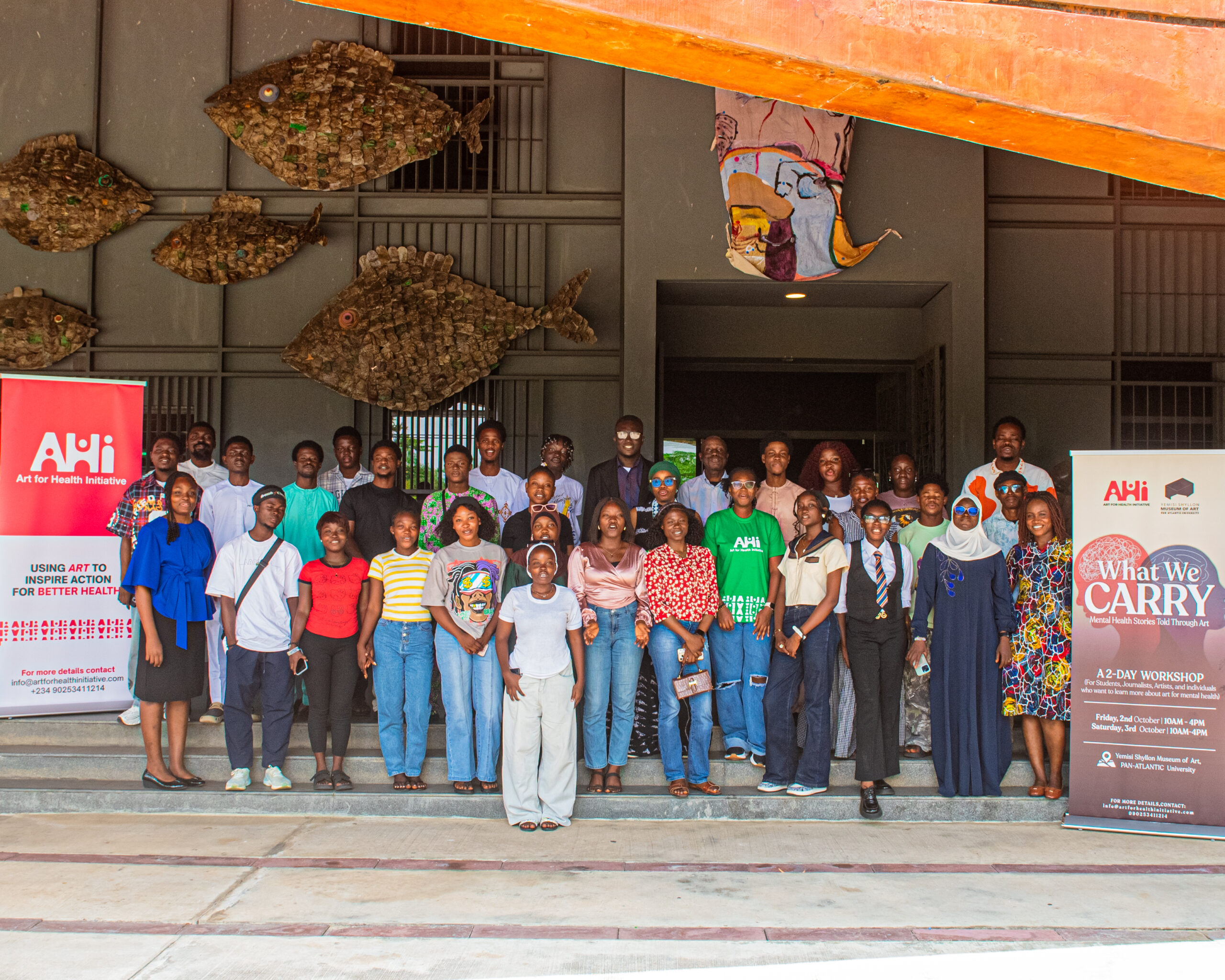
Twenty-five art students of the Yaba College of Technology (Yabatech), Lagos State, have explored mental health and emotional well-being through art in a workshop aimed at encouraging conversations around mental health.
The two-day Health Story Lab, organised by the Yemisi Shyllon Museum of Art (YSMA), Pan-Atlantic University, in collaboration with the Art for Health Initiative (AHI), was held on 2 and 3 October in Lagos.
The programme, titled “What We Carry: Stories of Mental Health and Resilience”, brought together art, public health, mental health and storytelling to help the students explore how creative expression can be used to communicate experiences that may be difficult to discuss openly.
The workshop was held ahead of World Mental Health Day (WMHD), marked annually on 10 October.
Using art to discuss mental health
The students participated in sessions on public health and art, mental health and resilience, creative expression and art for social change.
According to the organisers, the discussions gave the students an opportunity to reflect on issues such as stress, uncertainty, social pressure, family expectations, grief, fear and hope.

The students subsequently developed creative concepts and received feedback from facilitators and their peers.
The students also examined the role of art in health communication during a session led by Olayinka Badmus, a public health strategist. The session explored how creative expression can communicate public health issues and make health conversations more accessible.
Another session, led by psychiatrist and psychotherapist Emmanuel Abayomi, focused on mental health and resilience, while Art Project Lead Temitope Oladeji guided students to express their experiences and emotions through art. The programme also included a museum tour focused on art for social change, led by a museum educator, Charles Udeh.
Solomon Nkwagu, Head of Corporate Communication and Visitors’ Services at YSMA, said the programme showed the potential of art to encourage conversations around public and mental health.
“They began to see the possibility of using their creative voices to start conversations around public and mental health, to tell stories that people can recognise themselves in, and perhaps even to create moments of reflection and healing for others. That shift in perspective was one of the most rewarding parts of the programme,” Mr Nkwagu said.
In her remarks, Chidera Aneke, Founder of AHI, said the initiative was designed to make health communication more participatory, culturally relevant and emotionally engaging.
Ms Aneke said health information could be communicated not only through statistics and clinical information but also through stories, images, symbols, emotions and lived experiences.
“We wanted to create a space where young artists could understand that health is not only communicated through statistics, campaigns or clinical information. It can also be communicated through stories, images, symbols, emotions and lived experiences,” she said.
“Working with the students showed us the possibilities that emerge when artists are given the knowledge, language and space to think about health through their own creative practice.”
Mental health burden
Mental health remains a significant public health concern in Nigeria.
A 2026 systematic review and meta-analysis of 53 studies involving more than 132,000 people estimated that 7.9 per cent of the general population had experienced suicidal thoughts, while 1.9 per cent had made suicidal plans and 1.3 per cent had attempted suicide.

The researchers said suicidal behaviour was more common among some groups, including adolescents, young people, and pregnant women.
This year’s World Mental Health Day theme is “Lived experiences heard: real voices, real change.”
The World Health Organisation (WHO) is calling for people who have experienced mental health conditions to have a meaningful role in shaping policies, services and decisions that affect them.
“World Mental Health Day is an opportunity to meaningfully engage with people with lived experience (PWLE) of mental health conditions and to recognise their knowledge as a vital form of expertise,” it noted.
READ ALSO: PT Health Watch: Why some pregnant women develop gestational diabetes
“This year’s campaign calls for their voices to shape the policies, services and decisions that affect their lives.”
From workshop to exhibition
The Yabatech students will develop artworks based on the issues explored during the workshop.
The works are expected to form a micro-exhibition in Lagos in November, giving members of the public an opportunity to engage with mental health and resilience through the perspectives of young artists.
The organisers said the initiative is intended to demonstrate how partnerships between the creative sector, museums and public health practitioners can create new ways of discussing mental health.
Discover more from Premium Times Nigeria
Subscribe to get the latest posts sent to your email.
-

 Business3 days ago
Communications Ministry made ₦345.5 million duplicate payment for Abuja ICT Park project
-
Business4 days ago
Fuel subsidy would cost Nigeria over N20trn yearly — Minister
-
News3 days ago
LumenUs helps automate tedious paperwork in times of grief
-
News3 days ago
Inside INEC’s AI and cybersecurity plans to secure Nigeria’s 2027 Elections – Technology Times