News
APC outlines five-point digital agenda for Nigeria’s $1 trillion economy – Technology Times


Stay connected via Google News

Speaking at the West Africa Convergence Conference (WACC) 2026 in Lagos, Nentawe Yilwatda, APC National Chairman, said the party’s long-term vision is to build a technology-driven economy capable of competing globally while creating jobs, attracting investment and improving public services.
Yilwatda said the APC’s technology blueprint for 2027–2031 would support the Federal Government’s ambition of building a $1 trillion economy by making digital infrastructure central to national development. The conference was themed “Leveraging Technology for Development in Nigeria, 2027–2031: Delivering the Renewed Hope Agenda.”

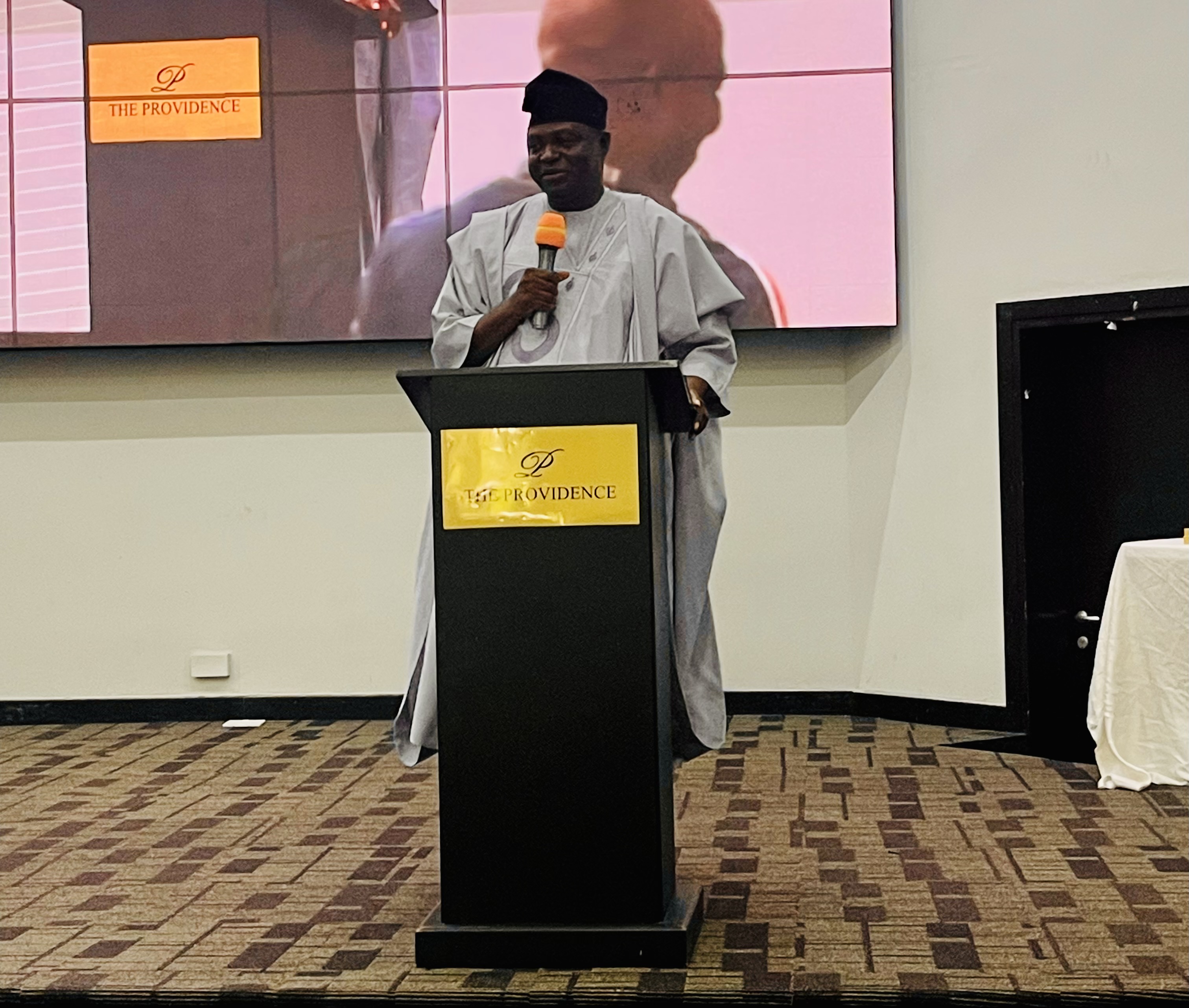
Yilwatda described information and communications technology (ICT) as one of the strongest drivers of Nigeria’s economy, noting that the sector currently contributes “about 18 to 19% of our GDP.” He said the government aims to deepen the sector’s impact by raising ICT’s contribution to 22% of GDP by 2027.
According to him, the future of Nigeria will be written through technology including the fiber networks, data centers and Nigeria’s innovation goals. He stated that the task of the party is to turn those potentials into commodities.
Yilwatda described information and communications technology (ICT) as one of the strongest drivers of Nigeria’s economy, noting that the sector currently contributes “about 18 to 19% of our GDP.” He said the government aims to deepen the sector’s impact by raising ICT’s contribution to 22% of GDP by 2027.
Highlighting the country’s growing appeal to global investors, he pointed to international recognition of Lagos’ startup ecosystem, saying the city “was picked as the fastest growing tech ecosystem globally.” According to him, the recognition reflects Nigeria’s growing reputation as a destination for innovation and venture capital and reinforces the country’s potential to become Africa’s leading technology hub.
APC on building Africa’s largest digital economy
The first pillar of the APC’s digital vision focuses on expanding broadband infrastructure to accelerate digital inclusion and economic growth. According to Yilwatda, the party plans to achieve 90% broadband penetration through a US$2 billion fibre infrastructure programme while expanding universal digital access across the country.
“We want to achieve 90% broadband penetration. We are also deploying a US$2 billion fiber infrastructure. And we are also working on universal data access” he said.
He added that the expansion of digital infrastructure would improve public services, accelerate economic growth and create millions of jobs.
Artificial intelligence forms the second pillar of the party’s digital roadmap. Yilwatda said the APC plans to invest in AI infrastructure, cloud computing, high-performance computing, research centres and startup development to position Nigeria as a producer not merely a consumer of AI technologies.
The initiative also includes strengthening AI centres of excellence in universities and encouraging AI adoption across public and private sectors as Nigerian universities are already establishing AI centres of excellence through public funding and specialised training programmes.
Recognising Nigeria’s growing influence in digital payments, the APC chairman said it intends to consolidate the country’s position as Africa’s fintech leader.
The roadmap includes expanding financial inclusion, encouraging regulatory innovation, developing cross-border payment systems and increasing venture capital investment in financial technology companies.
“We improve on regulatory innovation, expand financial inclusion, develop a cross-border payment system and enable venture capital investment” Yilwatda said.
He noted that stronger payment infrastructure would support businesses operating across African markets under the African Continental Free Trade Area (AfCFTA).
The first pillar of the APC’s digital vision focuses on expanding broadband infrastructure to accelerate digital inclusion and economic growth. According to Yilwatda, the party plans to achieve 90% broadband penetration through a US$2 billion fibre infrastructure programme while expanding universal digital access across the country.


“My dream is one, I want to see the world look at Nigeria and see Africa’s digital powerhouse. Africa’s innovation capital. Africa’s fintech leader. Africa’s largest digital economy. And one of the world’s most exciting technology nations” he said.
Expanding digital public infrastructure
A major pillar centres on strengthening Nigeria’s digital public infrastructure through identity management, digital payments and electronic government services. Yilwatda described digital identity as the foundation for economic governance, saying accurate identification of citizens and businesses is essential to delivering efficient government services.
“You cannot build a one trillion dollar economy without being able to identify your citizens, identify businesses, identify assets and also economic activities accurately” he said.
He added that integrating digital identity with payment systems and public services would improve transparency, service delivery and economic participation. He urged digital payment providers should play a larger role in government programmes and financial inclusion.
The APC chairman also called for stronger cross-border payment infrastructure to support trade under the African Continental Free Trade Area (AfCFTA).
The fifth pillar seeks to position Nigeria as West Africa’s digital integration leader by harmonising digital regulations, payment systems and data frameworks across the ECOWAS region.
Yilwatda stated that stronger digital integration would make cross-border trade more efficient while enabling Nigerian fintech companies and technology firms to expand across the region.
“We must take advantage of ECOWAS, come with data frameworks that can allow for data integration across the West African nations” he said.
Digital infrastructure as a national asset
Beyond the five ambitions, Yilwatda called for digital infrastructure including fibre networks, data centres and cloud infrastructure to be recognised as critical national infrastructure alongside roads, railways, airports and power projects.
He argued that existing financing institutions should expand their mandates to support investments in digital infrastructure, saying Nigeria’s future competitiveness would depend on sustained investments in technology, criticising the country’s traditional infrastructure priorities, saying broadband networks, data centres and connectivity should receive the same attention as roads and airports.
Beyond the five ambitions, Yilwatda called for digital infrastructure including fibre networks, data centres and cloud infrastructure to be recognised as critical national infrastructure alongside roads, railways, airports and power projects.


“The nations compete through fiber optic network, through data centers, through cloud computing infrastructure, through artificial intelligence capabilities” Yilwatda outlined.
He therefore called for amendments to existing laws to allow government-backed financing for digital infrastructure projects.
“My dream is one, I want to see the world look at Nigeria and see Africa’s digital powerhouse. Africa’s innovation capital. Africa’s fintech leader. Africa’s largest digital economy. And one of the world’s most exciting technology nations” he said.
The West Africa Convergence Conference (WACC) is a leading annual technology policy forum that has, for over two decades, convening government officials, regulators, technology companies, investors and industry leaders to shape conversations on digital transformation, innovation and the growth of Nigeria’s digital economy.
Stay ahead with real-time reports, breaking news, and exclusive insights delivered directly to your phone. Don’t settle for outdated information. Join TECHNOLOGYTIMES NEWS on WhatsApp for 24/7 updates.
Join Our Whatsapp Channel






A former Managing Director of the Nigerian Ports Authority, Aminu Dabo, has dumped the All Progressives Congress, APC.
Dabo, who was chairman of the APC caucus in Dambatta Local Government Area of Kano State, resigned from the party in a letter dated October 7, 2026.
The letter was addressed to the chairman of Dambatta Gabas Ward.
He said he took the decision after careful consideration of personal reasons and his future plans.
According to him, he has already submitted the resignation letter to the appropriate party officials in Dambatta for further action.
Dabo thanked the leadership of the APC for giving him the opportunity to serve and for the confidence reposed in him.
“I remain grateful for the cordial relationship I enjoyed and appreciative of the experience gained during my time of service,” he said.
Recall that Dabo was a governorship aspirant in Kano State and previously served as the Commissioner for Land in the state.
-

 News3 days ago
Meta releases its first frontier model, Muse Wonder
-
News4 days ago
2027:Stop attacking Peter Obi – Anglican Bishop cautions South East leaders
-
News4 days ago
Will the HomeView be Apple’s first smart home success?
-
Health3 days ago
Kwara public hospitals introduce digital medical records