Health
Tinubu establishes National Health Technology and Data Analytics Office, appoints Obi Adigwe pioneer coordinator



President Bola Tinubu has approved the establishment of the National Health Technology and Data Analytics Office (NHTDAO) and appointed Obi Adigwe as its pioneer National Coordinator.
The agency will be domiciled in the Office of the Coordinating Minister of Health and Social Welfare.
The NHTDAO will serve as a meta-level national platform for coordinating the country’s digital health agenda.
It will reinforce, not replace, the existing statutory functions of relevant departments and agencies.
It will also harmonise and empower the public and private institutions across the health system, set the standards that connect them, and operationalise the National Digital Health Architecture, approved by the National Council on Health in November 2025.

The National Coordinator, Mr Adigwe, as Director General of the National Institute for Pharmaceutical Research and Development, has leveraged science to catalyse interventions in artificial intelligence, translational research, and technology transfer.
He coordinated major projects, including the ¥300m Nanotechnology grant and the AFREXIMBank grant for Africa’s first API Training Facility. He led the roadmap development that underpinned an €18 million EU grant, the largest in Africa for the thematic area.
During the last pandemic, Mr Adigwe showcased African science globally by conducting the world’s first analysis to debunk claims about the Covid Organics preparation.
The Office’s Steering Committee, which will provide strategic direction and oversight, comprises:
- Muhammad Ali Pate, CON, Coordinating Minister of Health and Social Welfare (Co-chair)
- Olaniyi Yusuf, Chairman, Nigerian Economic Summit Group (Co-chair)
- Iziaq Adekunle Salako, Minister of State for Health and Social Welfare (Alternate Co-chair)
- Kachollom Daju, Permanent Secretary, Federal Ministry of Health and Social Welfare
- Idris Alubankudi Saliu, Special Adviser to the President on Technology and Digital Economy
- Muntaqa Umar-Sadiq, National Coordinator, SWAp Coordination Office
- Abdu Mukhtar, National Coordinator, Presidential Initiative to Unlock the Healthcare Value Chain
- Muyi Aina, Executive Director, National Primary Health Care Development Agency
- Kelechi Ohiri, Director General, National Health Insurance Authority
- Director, Health Planning, Research and Statistics, Federal Ministry of Health and Social Welfare
National Information Technology Development Agency - Six representatives of State Commissioners of Health, one from each of the six geopolitical zones
- Pharm Hamza Buhari, stakeholder representing industry and community
President Tinubu expects the NHTDAO to accelerate Nigeria’s transition to a secure, interoperable and data-driven health system that improves health outcomes for all citizens, in line with the Renewed Hope Agenda of his administration.
Bayo Onanuga
Special Adviser to the President
(Information & Strategy)
26 June, 2026






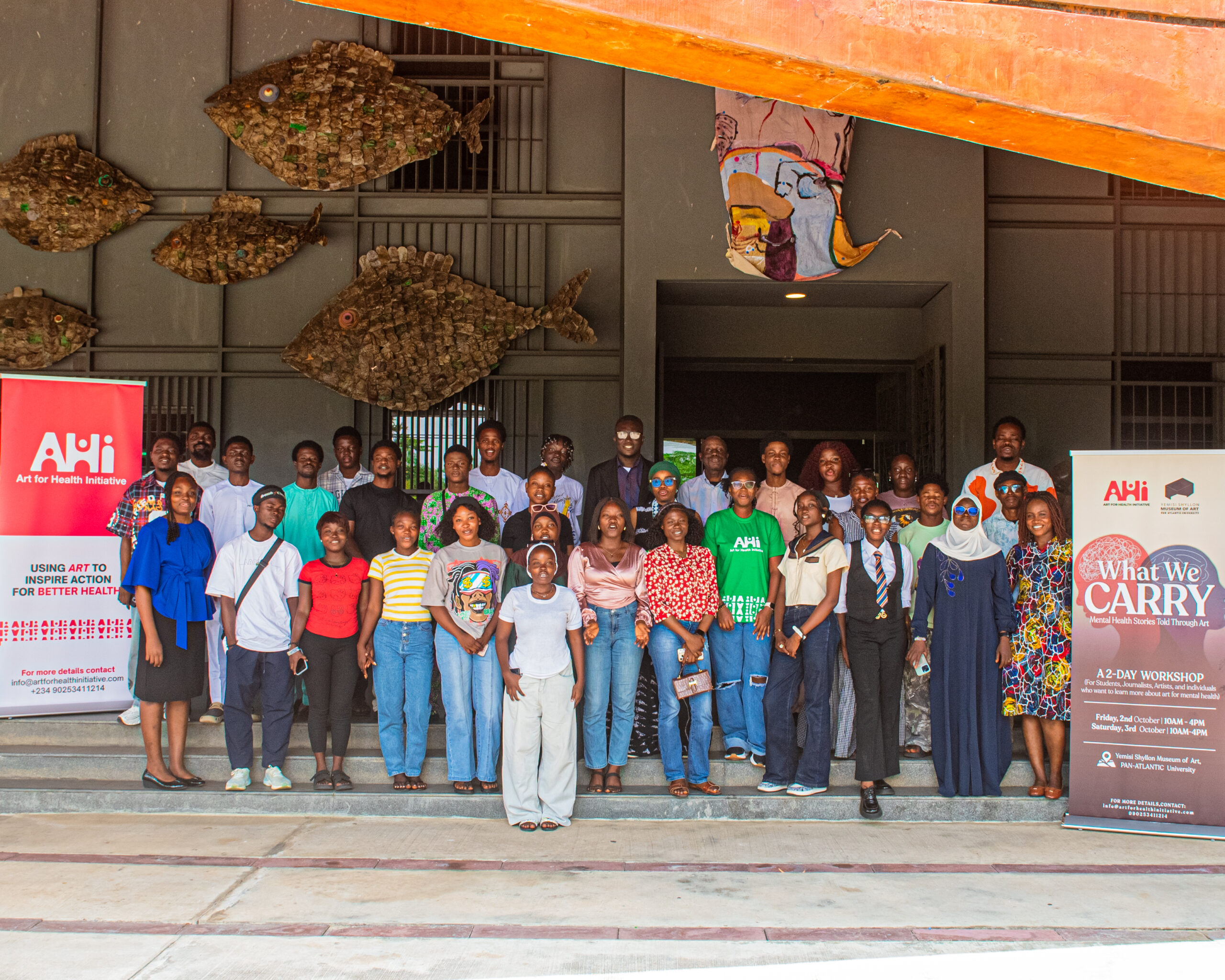
Twenty-five art students of the Yaba College of Technology (Yabatech), Lagos State, have explored mental health and emotional well-being through art in a workshop aimed at encouraging conversations around mental health.
The two-day Health Story Lab, organised by the Yemisi Shyllon Museum of Art (YSMA), Pan-Atlantic University, in collaboration with the Art for Health Initiative (AHI), was held on 2 and 3 October in Lagos.
The programme, titled “What We Carry: Stories of Mental Health and Resilience”, brought together art, public health, mental health and storytelling to help the students explore how creative expression can be used to communicate experiences that may be difficult to discuss openly.
The workshop was held ahead of World Mental Health Day (WMHD), marked annually on 10 October.
Using art to discuss mental health
The students participated in sessions on public health and art, mental health and resilience, creative expression and art for social change.
According to the organisers, the discussions gave the students an opportunity to reflect on issues such as stress, uncertainty, social pressure, family expectations, grief, fear and hope.


The students subsequently developed creative concepts and received feedback from facilitators and their peers.
The students also examined the role of art in health communication during a session led by Olayinka Badmus, a public health strategist. The session explored how creative expression can communicate public health issues and make health conversations more accessible.
Another session, led by psychiatrist and psychotherapist Emmanuel Abayomi, focused on mental health and resilience, while Art Project Lead Temitope Oladeji guided students to express their experiences and emotions through art. The programme also included a museum tour focused on art for social change, led by a museum educator, Charles Udeh.
Solomon Nkwagu, Head of Corporate Communication and Visitors’ Services at YSMA, said the programme showed the potential of art to encourage conversations around public and mental health.
“They began to see the possibility of using their creative voices to start conversations around public and mental health, to tell stories that people can recognise themselves in, and perhaps even to create moments of reflection and healing for others. That shift in perspective was one of the most rewarding parts of the programme,” Mr Nkwagu said.
In her remarks, Chidera Aneke, Founder of AHI, said the initiative was designed to make health communication more participatory, culturally relevant and emotionally engaging.
Ms Aneke said health information could be communicated not only through statistics and clinical information but also through stories, images, symbols, emotions and lived experiences.
“We wanted to create a space where young artists could understand that health is not only communicated through statistics, campaigns or clinical information. It can also be communicated through stories, images, symbols, emotions and lived experiences,” she said.
“Working with the students showed us the possibilities that emerge when artists are given the knowledge, language and space to think about health through their own creative practice.”
Mental health burden
Mental health remains a significant public health concern in Nigeria.
A 2026 systematic review and meta-analysis of 53 studies involving more than 132,000 people estimated that 7.9 per cent of the general population had experienced suicidal thoughts, while 1.9 per cent had made suicidal plans and 1.3 per cent had attempted suicide.

The researchers said suicidal behaviour was more common among some groups, including adolescents, young people, and pregnant women.
This year’s World Mental Health Day theme is “Lived experiences heard: real voices, real change.”
The World Health Organisation (WHO) is calling for people who have experienced mental health conditions to have a meaningful role in shaping policies, services and decisions that affect them.
“World Mental Health Day is an opportunity to meaningfully engage with people with lived experience (PWLE) of mental health conditions and to recognise their knowledge as a vital form of expertise,” it noted.
READ ALSO: PT Health Watch: Why some pregnant women develop gestational diabetes
“This year’s campaign calls for their voices to shape the policies, services and decisions that affect their lives.”
From workshop to exhibition
The Yabatech students will develop artworks based on the issues explored during the workshop.
The works are expected to form a micro-exhibition in Lagos in November, giving members of the public an opportunity to engage with mental health and resilience through the perspectives of young artists.
The organisers said the initiative is intended to demonstrate how partnerships between the creative sector, museums and public health practitioners can create new ways of discussing mental health.
Discover more from Premium Times Nigeria
Subscribe to get the latest posts sent to your email.
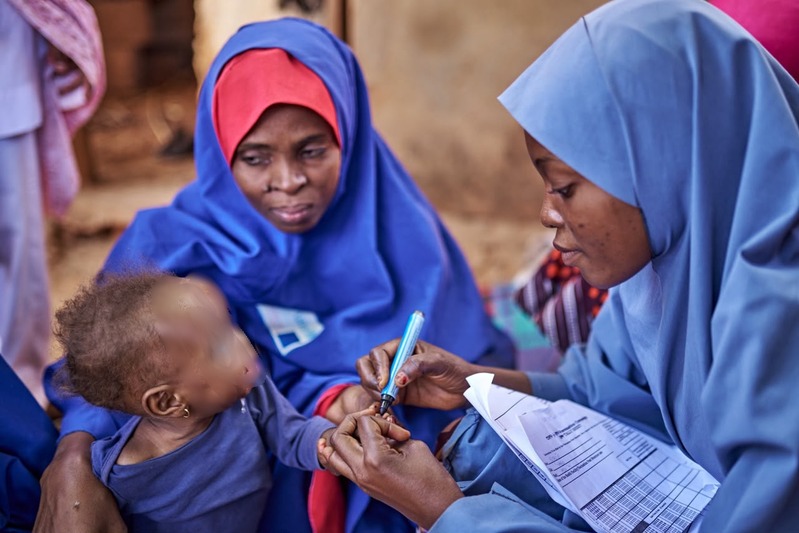
Gavi, the Vaccine Alliance, says 9.5 million children in 57 supported countries received no routine vaccine in 2025, despite gains in global immunisation.
The figure, described as the number of “zero-dose” children, was contained in Gavi’s 2025 Annual Progress Report, which reviewed the alliance’s 2021-2025 strategic period.
Gavi defines zero-dose children as infants who have not received the first dose of a diphtheria, tetanus and pertussis-containing vaccine by the end of their first year.
Number falls from 2021 peak
According to the report, the number of zero-dose children in 2025 was 600,000 lower than in 2024 and 25 per cent lower than the peak recorded in 2021 following disruptions to routine immunisation caused by the COVID-19 pandemic.
However, the figure remained four per cent above the 2019 baseline, partly because of continued growth in the number of children being born.
Gavi said children living in fragile, conflict-affected and humanitarian settings remain among those most likely to be missed by immunisation programmes.
Nigeria remains one of the countries with the highest number of zero-dose children. UNICEF estimated that about 2.2 million Nigerian children had never received a routine vaccine in 2025, the highest number in Africa.
Nigeria records gains in targeted areas
The report highlighted Nigeria, Ethiopia and Pakistan among countries where emerging data showed stronger immunisation coverage gains in sub-national areas that received greater Gavi focus and investment during the 2021-2025 period.
Gavi said the findings underscored the value of targeted, equity-focused investments in reaching communities that are being missed by routine immunisation.
The report also identified Nigeria among countries covered by Gavi’s Zero-Dose Learning Hubs, which examined what works and what does not in identifying and reaching zero-dose and under-immunised children.
The findings from Nigeria, Bangladesh, Mali and Uganda highlighted several issues, including gender-related barriers to immunisation.
73m children immunised in 2025
Despite the number of zero-dose children, Gavi said more than 73 million children were immunised through routine programmes with its support in 2025.
More than 351 million children were immunised during the 2021-2025 strategic period, “exceeding Gavi’s target of 300 million children.”
“By end 2025, Gavi-supported countries had immunised more than 1.3 billion unique children with Gavi support since 2000, exceeding our Investment Opportunity 2021-2025 commitment of more than 1.1 billion children immunised by 2025,” it noted.
Gavi said vaccination averted more than 2.2 million future deaths in 2025, bringing the total number of future deaths averted through its supported vaccination programmes to more than 7.8 million during the 2021-2025 period.
Generated economic benefits
The report said immunisation programmes generated more than $30 billion in economic benefits for Gavi-supported countries in 2025, the highest amount recorded in a single year.
The benefits were calculated from the costs of illness averted, including medical and associated costs, caretaker wages and productivity losses resulting from disability or death.
Gavi said the programmes generated more than $104 billion in economic benefits between 2021 and 2025 and more than $308 billion between 2000 and 2025.
Countries also contributed a record $301 million towards the co-financing of Gavi-supported vaccines in 2025, an 18 per cent increase from 2024.
About 80 per cent of the contribution came from domestic resources, while “approximately 20 per cent from low-interest loans from the World Bank.”
Gavi said countries had contributed a total of $2.2 billion towards vaccine co-financing since the policy was introduced in 2008.
More children
For its 2026 to 2030 strategic period, Gavi said it aims to protect another 500 million children through immunisation and avert between eight million and nine million future deaths.
READ ALSO:New TB vaccines could save 7.3m lives by 2050 – Gavi
The Alliance also targets more than $100 billion in economic benefits during the period. Gavi said it would place greater emphasis on reaching zero-dose and under-immunised children while strengthening the sustainability of national immunisation programmes.
In her comments, Gavi Chief Executive Officer, Sania Nishtar, said the results showed that immunisation generates benefits beyond preventing disease. “However, when it comes to immunisation we know that the return on investment extends far beyond health to supporting sustainable, inclusive economic growth,” Ms Nishtar said.
WHO Director-General, Tedros Ghebreyesus, also said immunisation delivers massive gains in lives saved and diseases prevented, but also in terms of economic benefits.
“Countries understand that the cost of failing to vaccinate is far too great, while the benefits extend across families, communities, economies and future generations,” Mr Ghebreyesus was quoted to have said.
Discover more from Premium Times Nigeria
Subscribe to get the latest posts sent to your email.
-

 Business2 days ago
Communications Ministry made ₦345.5 million duplicate payment for Abuja ICT Park project
-
Business3 days ago
Fuel subsidy would cost Nigeria over N20trn yearly — Minister
-
News2 days ago
LumenUs helps automate tedious paperwork in times of grief
-
Business2 days ago
Cardoso Takes Nigeria’s Financial Reforms to Singapore, Signs MoU With GFTN on Innovation