Business
NCAA cautions against further cut in aviation funding


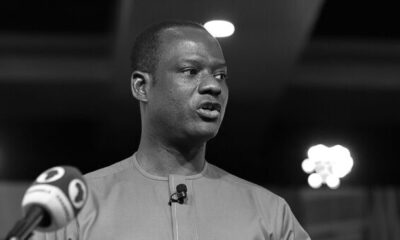
The Director-General of the Nigeria Civil Aviation Authority (NCAA), Chris Najomo, has cautioned against any further reduction in the regulator’s statutory funding, warning that such a move could weaken Nigeria’s aviation safety oversight.
Mr Najomo spoke on Thursday at a public hearing by the House of Representatives Committee on Aviation on the proposed review of the allocation of the five per cent Ticket Sales Charge (TSC) and Cargo Sales Charge (CSC) at the National Assembly Complex in Abuja.
He said the NCAA supported adequate funding for all aviation agencies but warned that changing the existing revenue-sharing formula without considering the regulator’s responsibilities could affect its ability to discharge its statutory mandate.
According to him, the TSC accounts for about 85 per cent of the NCAA’s revenue, making the charge critical to the authority’s operations.
He contrasted this with the Nigerian Airspace Management Agency (NAMA), which generates a substantial portion of its revenue from commercial charges paid by aircraft operators for air navigation services.

Mr Najomo cited the International Civil Aviation Organisation’s (ICAO) Policies on Charges for Airports and Air Navigation Services, Doc 9082, which provides guidance on how costs associated with air navigation services should be recovered.
He said the cost of such services should principally be recovered from aircraft operators that use them rather than through passenger-based charges such as the TSC.
He explained that any further reduction in the NCAA’s statutory funding could have implications for the authority’s ability to maintain effective safety oversight across the country’s civil aviation industry.
He told lawmakers that the authority could not responsibly guarantee the same level of safety oversight if its funding was reduced without an alternative and sustainable source of revenue.
The warning comes as lawmakers consider proposals to review the distribution of the five per cent TSC and CSC among aviation agencies.
The debate has also attracted concerns from airline operators, who argue that the TSC has become a financial burden on domestic carriers and have proposed replacing the percentage-based charge with a fixed levy.
The Airline Operators of Nigeria (AON), represented at the hearing by former Managing Director of NAMA, Roland Iyayi, urged the National Assembly to abolish the five per cent TSC and replace it with a flat-rate charge similar to the Passenger Service Charge collected by the Federal Airports Authority of Nigeria.
Mr Iyayi argued that the percentage-based system places additional pressure on airlines at a time when operators are grappling with high fuel, maintenance and other operating costs.
The AON also proposed increasing NAMA’s share of aviation revenues and establishing a dedicated Aviation Development Fund to finance infrastructure and other sectoral needs.
Other aviation experts oppose equal funding treatment
Mr Najomo, however, said any additional funding required by NAMA should first be pursued through improved collection of its statutory commercial revenues, greater operational efficiency and stronger corporate governance.
He added that targeted government support could be considered for strategic capital infrastructure where necessary, in line with ICAO policies and international best practice.
Other aviation experts at the hearing also warned against treating the regulator and aviation service providers in the same way under a revised funding arrangement.
Musa Nuhu, a former Nigeria representative on the ICAO Council and immediate past director-general of the NCAA, said the regulator had a distinct responsibility that should not be weakened by changes to the funding structure.
Nigeria’s Permanent Representative to ICAO, Mahmud Ben-Tukur, similarly stressed the importance of maintaining the independence and financial capacity of the aviation regulator.
They argued that while aviation agencies perform complementary functions, responsibility for safety oversight of Nigeria’s civil aviation industry rests with the NCAA.
READ ALSO: NCAA threatens sanctions as Royal Air Maroc allegedly defies regulatory authority
Speaking virtually, Bernard Aliu, a former Nigeria permanent representative to ICAO and former president of the ICAO Assembly, and Harold Demuren, a former director-general of civil aviation, also backed the call to preserve the NCAA’s financial independence.
They said a strong and adequately funded regulator was essential to maintaining Nigeria’s aviation safety oversight system and compliance with international aviation standards.
The public hearing was attended by members of the National Assembly’s aviation committees, including their chairmen, Abdulfatai Buhari and Abdullahi Idris Garba, as well as heads of aviation agencies, airline operators and other industry stakeholders.
Discover more from Premium Times Nigeria
Subscribe to get the latest posts sent to your email.







The Nigerian Ports Authority (NPA) has moved to address rail connectivity and logistics challenges affecting inland dry ports as part of efforts to integrate the facilities into the nation’s port system and improve cargo movement across the country.
The move followed a meeting between the NPA management, led by its Managing Director, Abubakar Dantsoho, and the Executive Director of Dala Inland Dry Port, Ahmad Rabiu, alongside representatives of Funtua Inland Dry Port, at the authority’s corporate headquarters in Marina, Lagos.
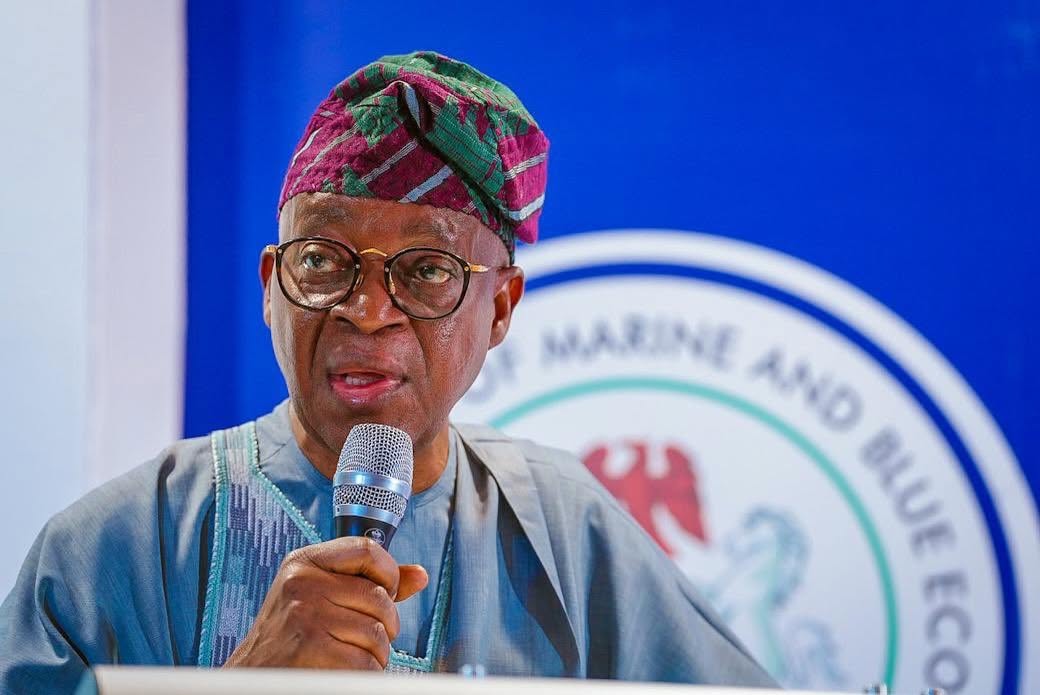
The engagement came after the Minister of Marine and Blue Economy, Adegboyega Oyetola, directed the transfer of operational oversight of inland dry ports to the NPA.
The discussions focused on strengthening institutional collaboration, addressing infrastructure constraints and improving operational efficiency across Nigeria’s maritime logistics chain.
Speaking during the meeting, Mr Dantsoho stressed the need to upgrade inland dry port infrastructure and technical capacity to complement ongoing modernisation efforts at the nation’s seaports.
He said the facilities must be equipped to handle increasing cargo volumes and support the broader transformation of Nigeria’s maritime sector.

“For our Inland Dry Ports to function at the same velocity as the ongoing modernisation across our seaports, we must proactively upgrade dry port infrastructure and technical capacity,” Mr Dantsoho said.
He explained that the integration of digital platforms, including the Port Community System (PCS) and the National Single Window, into seaport operations must be matched by corresponding improvements at inland dry ports.
“As we integrate digital systems such as the Port Community System (PCS) and the National Single Window in our seaports, the dry ports must deploy modern equipment and advanced technical capabilities to handle larger cargo volumes and bigger vessels coming to our coast,” he added.
Increased private-sector investment
The NPA managing director also called for increased private-sector investment in inland dry port infrastructure, noting that stronger investment would be critical to improving cargo handling capacity and operational efficiency.
He cited APM Terminals’ establishment of an Export Processing Terminal in Northern Nigeria as an example of private-sector participation in the development of inland logistics infrastructure.
ALSO READ: INVESTIGATION: Ganduje embroiled in multi-billion naira Kano dry port ownership scandal
Mr Dantsoho assured stakeholders that efforts to optimise the inland port system were underway and confirmed plans to visit the Dala and Funtua facilities to assess their operational conditions and infrastructure requirements.
Operational oversight
Speaking on behalf of the delegation, Hassan Bello welcomed the transfer of operational oversight to the NPA, expressing appreciation for what he described as a seamless transition.
Mr Bello referenced the gazetted Port Act, which recognises inland dry ports as official ports of origin and destination, while drawing attention to challenges confronting the facilities, particularly inadequate rail connectivity and broader logistics constraints.
Rail access is a critical component of inland dry port operations, as efficient connections to the national rail network can facilitate cargo movement between seaports and inland destinations, potentially reducing pressure on road transport and lowering logistics costs.
The meeting also established a framework for further technical consultations, infrastructure integration and physical planning to identify the requirements for improving operations at the facilities.
The discussions highlighted the need for detailed technical assessments, stakeholder coordination and physical inspections to establish infrastructure priorities and guide subsequent project development.
The planned visits to Dala and Funtua inland dry ports are expected to provide NPA with a clearer understanding of the facilities’ operational challenges and the interventions required to strengthen their roles in cargo distribution, trade facilitation and wider maritime logistics network.
Discover more from Premium Times Nigeria
Subscribe to get the latest posts sent to your email.
-

 Business3 days ago
Communications Ministry made ₦345.5 million duplicate payment for Abuja ICT Park project
-
News3 days ago
LumenUs helps automate tedious paperwork in times of grief
-
Business4 days ago
Fuel subsidy would cost Nigeria over N20trn yearly — Minister
-
News3 days ago
Inside INEC’s AI and cybersecurity plans to secure Nigeria’s 2027 Elections – Technology Times