Connect with us

Business

Tinubu approves N3.3tn plan to clear power sector debts

info

Published

on

Bola Tinubu.jpg

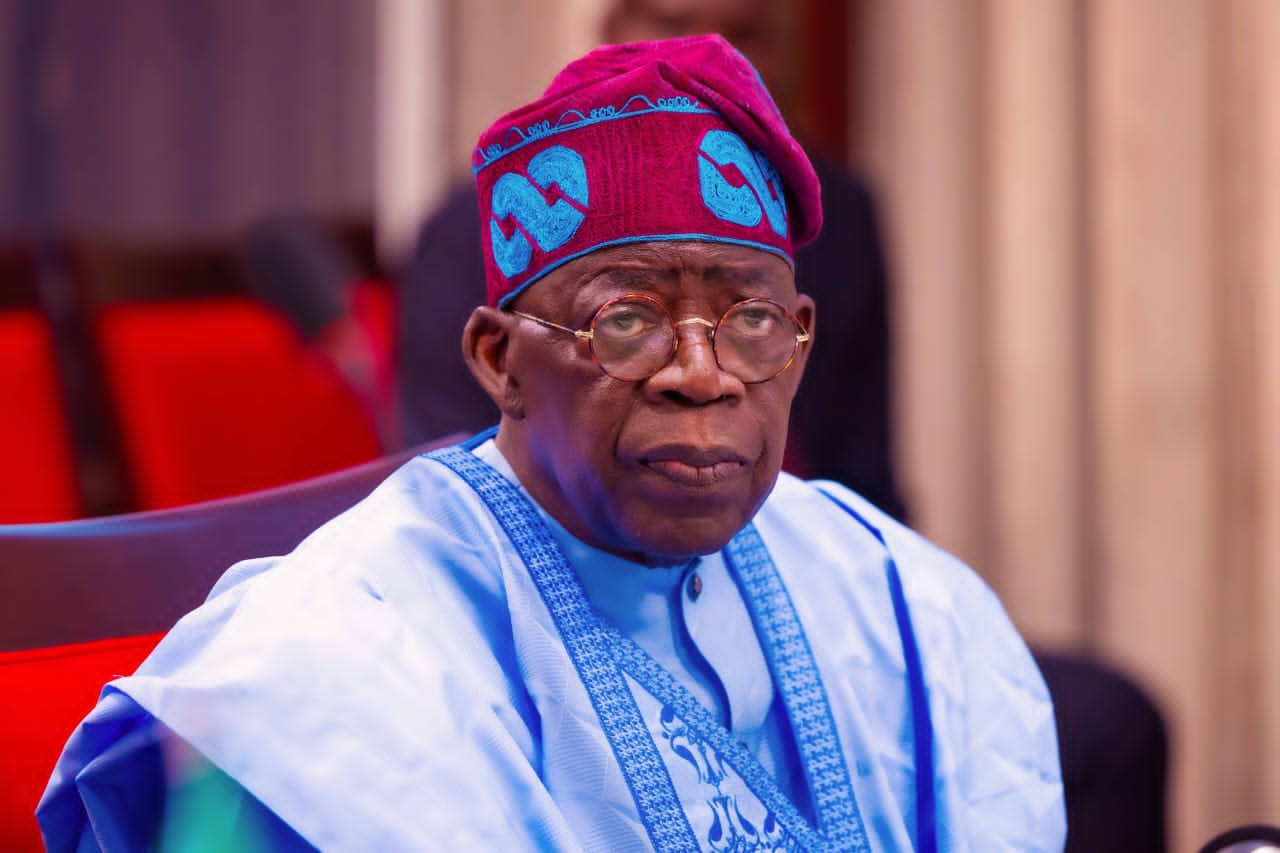
President Bola Tinubu has approved a N3.3 trillion payment plan to settle outstanding debts in Nigeria’s electricity sector under the Presidential Power Sector Financial Reforms Programme.

The development was disclosed in a statement issued on Sunday by the President’s Special Adviser on Information and Strategy, Bayo Onanuga.

“President Bola Tinubu has approved the payment plan to finally settle the outstanding debts under the Presidential Power Sector Financial Reforms Programme,” the statement said.

According to the presidency, the decision followed a final review of legacy debts that have plagued the power sector for over a decade.

The government said the liabilities accumulated between February 2015 and March 2025, adding that after verification, ₦3.3 trillion was agreed as a full and final settlement.

Implementation has already commenced, with 15 power generation companies signing settlement agreements valued at ₦2.3 trillion, the statement noted .

Mr Onanuga said the federal government has raised ₦501 billion so far to fund the payments, out of which ₦223 billion has been disbursed, with further payments ongoing.

The intervention comes amid persistent electricity shortages across Nigeria, forcing households and businesses to rely heavily on petrol and diesel generators and solar alternatives. Similarly, electricity grids have collapsed multiple times this year, leaving millions in the dark across the country.

The power supply challenge has significantly increased operating costs for businesses, many of which pass the additional burden on to consumers through higher prices of goods and services.

Labour opposition

The approval comes months after the Nigeria Labour Congress (NLC) criticised demands by power generation companies for financial intervention.

In February, the union described a reported N6 trillion demand by the companies as “a clandestine scheme” to siphon public funds under the guise of sectoral support.

The NLC accused the Association of Power Generation Companies (APGC) of seeking an unjustifiable bailout, arguing that the privatisation of the power sector has failed to deliver improved generation capacity or reliable service. At the heart of the dispute is the federal government’s reported contemplation of a N3 trillion intervention for GENCOs.

The union also rejected claims that it lacked the expertise to comment on electricity market issues, noting that its affiliates include workers within the sector.

According to the NLC, a key concern is that assets reportedly acquired for about N400 billion are now linked to demands running into trillions of naira, despite what it described as stagnant output since privatisation.

“This is not economics; this is plunder. They call it business, but we call it a heist,” NLC President Joe Ajaero said at the time.

Expected impact

The federal government said the debt settlement is expected to improve liquidity across the power value chain and enhance electricity generation.

It noted that timely payments to gas suppliers and generation companies would help stabilise operations and improve service delivery.

“This programme is not just about settling legacy debts. It is about restoring confidence across the power sector — ensuring gas suppliers are paid, power plants can keep running, and the system begins to work more reliably,” said Olu Arowolo-Verheijen, Special Adviser on Energy to the President.

She added that the initiative forms part of broader reforms, including improved metering and service-based tariffs linked to electricity supply quality.

The government also said it is prioritising power supply to industries, businesses, and small enterprises to support economic growth and job creation.

“The goal is simple: more reliable power for homes, stronger support for businesses, and a system that works better for all Nigerians,” she said.

President Tinubu commended stakeholders involved in resolving the sector’s long-standing issues and confirmed that the next phase of the programme (Series II) will commence this quarter.

Continue Reading
Click to comment

Leave a Reply

Your email address will not be published. Required fields are marked *

Business

FCCPC Seals Peachville Platinum Estate Offices Over N140m Undelivered Abuja Property

info

Published

on

The Federal Competition and Consumer Protection Commission (FCCPC) has taken enforcement action against Peachville Platinum Estate Limited after the company failed to comply with a Compliance Notice issued in connection with a consumer complaint over the alleged non-delivery of a N140 million property in Abuja.

During the enforcement exercise conducted on Thursday, a team from the Commission, led by Marvin Nadah, sealed the company’s headquarters located along Airport Road, alongside its management office situated at Peachville Gardens, opposite Games Village.

The complaint concerns a four bedroom detached duplex with boys’ quarters at Peach Ville Estate, Phase II, Kukwaba District, Abuja. The complainant told the Commission that they paid the full purchase price in August 2025 after the company assured them that it would hand over the property upon completion of payment. According to the complainant, the property remained unfinished and was never handed over.

The Commission investigated the complaint and gave both parties an opportunity to present their accounts. The company said the parties had agreed, at a meeting at the Federal Capital Territory Administration, that it would hand over the property by August 2026. The company did not provide documents to support its account of the agreement.

The Commission convened further proceedings and summoned the company to provide additional information. The company’s responses failed to satisfactorily address the issues the Commission raised. Its representatives also declined to sign the witness statements required to conclude the hearing.

The Commission issued a Compliance Notice on 17 August 2026 under section 150 of the Federal Competition and Consumer Protection Act, 2018. The company received the notice on 19 August 2026. After confirming that the company had failed to comply within the stipulated period, the Commission took enforcement action under section 150(4)(a) of the Act.

Commenting on the action, the Executive Vice Chairman and Chief Executive Officer of the FCCPC, Mr. Tunji Bello, said, “For many Nigerians, buying a home involves years of savings. When a developer accepts payment and commits to a handover date, the buyer is entitled to rely on that commitment. If delays arise, the developer should explain them promptly and give the buyer a realistic timetable.

“The Commission gave both parties an opportunity to be heard. Once the Commission issues a Compliance Notice, the business is required to take the steps set out in it within the specified period. Where a business fails to comply, the Commission will take the enforcement action provided for by law.”

The post FCCPC Seals Peachville Platinum Estate Offices Over N140m Undelivered Abuja Property appeared first on Business Today NG.

Continue Reading

Business

Finance must break developing countries from ‘debt and disaster’ loop – UN climate chief

info

Published

on

WhatsApp Image 2026 11 13 at 21.43.24.jpeg

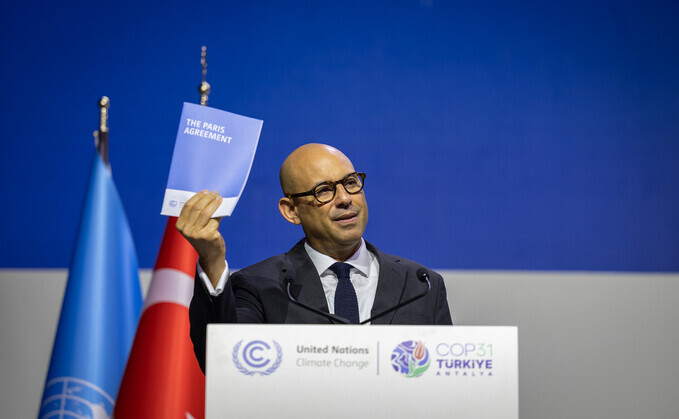
The executive secretary of UN Climate Change, Simon Stiell, told the ministers at COP31 that climate finance must be redesigned to lift developing countries out of a cycle of debt and disaster, adding that meeting a headline figure will not do it.

“Meeting a financial target does not always meet countries’ needs. To do that, we need to look at how finance is delivered,” Mr Stiell said on Friday at the opening of a high-level ministerial dialogue on climate finance in Antalya, Turkey.

Countries agreed at COP29 that developed nations would lead in providing $300 billion a year by 2035, as part of a wider effort to raise $1.3 trillion annually from all sources.

Mr Stiell said the roadmap for reaching those sums “must become reality”, but that the terms of the money mattered as much as the amount.

“Many developing countries are trapped in a downward loop of debt, disaster, and devastating capital costs,” he said. “The threat of floods, fires, storms and droughts hangs over them, pushing up the price of borrowing even before disaster strikes.”

He stated that the terms of finance should reflect each country’s debt position.

PT WHATSAPP CHANNEL
Dangote Refinery AD

“Private finance, loans and guarantees are essential to achieving our collective goals. But grant-based and highly concessional finance will remain critical, particularly for Least Developed Countries, Small Island Developing States and other very vulnerable economies,” he said.

According to him, broader action on debt is also needed to prevent countries from being forced to choose between repayments and resilience.

International climate finance for developing countries reached about $137 billion in 2024, and almost 70 per cent of it came in the form of loans, according to a UN Women flagship report released on Tuesday in Antalya.

Countries in sub-Saharan Africa paid more than twice as much in external debt service between 2021 and 2023 as they received in climate finance, according to an analysis published by the Heinrich Böll Foundation.

The analysis found that interest payments consumed more than 10 per cent of government revenue in 27 African countries in 2024.

The chair of the African Group of Negotiators, Nana Antwi-Boasiako Amoah, has said that a transition could not be called just if poorer countries have to “mortgage their futures” to pay for it.

The group lost a bid on Monday for a separate agenda item on tripling adaptation finance. It now wants the target prioritised in the summit’s cover decision.

Nigeria is not on the UN’s list of least developed countries, which places it among the states the UN climate chief expects to rely more on loans, guarantees and private capital.

It needs about $337 billion between 2026 and 2035 to implement its climate commitments, according to the National Council on Climate Change.

Omotenioye Majekodunmi, the agency’s director-general, said more than 80 per cent of that will have to come from private investment, commercial debt, and international carbon finance.

About $2.5 billion a year went to climate action in Nigeria in 2021 and 2022, counting domestic and international sources, according to the Climate Policy Initiative’s tracking.

The dialogue was the last in a series that began in 2013, and its conclusions will go to COP32 in Ethiopia next year, Mr Stiell said.


Discover more from Premium Times Nigeria

Subscribe to get the latest posts sent to your email.

Continue Reading

Trending