Connect with us

News

Three Killed in Fresh Attack by Suspected Militias in Plateau State

editor

Published

on

Plateau state

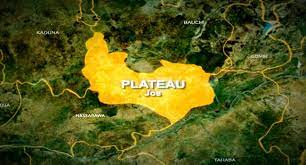
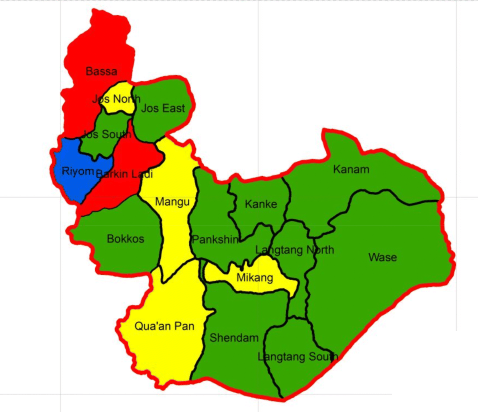
Three people have been killed following an attack by suspected Fulani militias on Hwrra Village in the Kwall District of Bassa Local Government Area, Plateau State, on Monday, April 7, 2025.

The victims—Yakubu Mali, 48, Mangwa Ive, 40, and Ezra Riti—were all members of the Irigwe community.

The latest incident comes days after gunmen attacked 6 villages in Bokkos Local Government Area of the state, k!lling 52 people.

National Publicity Secretary, Irigwe Youth Movement, Joseph Chudu Yonkpa, who confirmed the incident in a statement on Tuesday, April 8, said several attacks have claimed the lives of our people in the last four weeks.

“On April 6, 2025, just a day after our people celebrated the Zrrechi festival, Fulani militias also launched an ambush on our people heading to Hukke which they narrowly escaped via the whiskers,” the statement read.

“This incident is part of a disturbing trend of attacks that have claimed the lives of our people in the last four weeks:

1. On April 2, 2025, Mr. Dewi Terry Nah, 33 years old, from Nzharuvo was stabbed to death by Fulani militias along Twin Hill (Gyu).

2. On March 24, 2025, Fulani militias launched an ambush opposite the shooting range, Twin Hill, k!lling Mr. Dumba Yohanna Monday, 33 years old, and another person who narrowly escaped.

3. On March 23, 2025, Fulani militias launched a devastating ambush on our people from Dundu, k!lling three individuals: Mr. John Avia, 48 years old, Mr. Sunday Dickson, 32 years old, and Mr. Peter Dickson, 30 years old.

4. On March 13, 2025, Fulani militias attacked two Irigwe sons at their farm in Yhwiba, k!lling Mr. Audu Buge, 24 years old, while Mr. Iche Sunday narrowly survived with serious injuries and is receiving treatment in an undisclosed location.

“The atrocities committed by Fulani militias in Irigwe land extend beyond ambushes and attacks on our people. Their cattle have been grazing on hecters of our irrigation farms with impunity, rendering countless families jobless and hungry as their only source of livelihood is destroyed.

“The continued k!llings and destruction of our people’s means of livelihood are deliberate attempts to turn the Irigwe community into a lawless one. However, we remain undeterred, and our resolve to seek justice for our people is unshaken.

“The leadership of the Irigwe Youth Movement calls on:

1. The Executive Chairman of Bassa LGA, Hon. Dr. Joshua Sunday Riti, to:

a. Collaborate with the state government and relevant security agencies to immediately arrest, halt, and prosecute the perpetrators and accomplices of these heinous crimes in Irigwe land.

b. Empower local vigilante groups within Bassa Local Government to boost security intelligence gathering and early warning signs, as these continued killings of our people must stop.

2. All political bigwigs in Irigwe land, illustrious sons and daughters, members of the state and national assembly, to come out openly and not only condemn these acts of inhumanity but also create measures to stop their reoccurrence.

3. The General Officer Commanding (GOC) of the 3-Division Nigerian Army Headquarters, Bassa, and also the Commander of Operation Safe Haven Headquarters Jos, to beef up security architecture in Bassa by arresting the perpetrators of these heinous crimes in Irigwe land, Bokkos, and other communities of Plateau State, and all their accomplice and sponsors and bringing them to face the full wrath of the law.

4. Plateau State Emergency Management Agency (PLASEMA), National Emergency Management Agency (NEMA), non-governmental organizations, private and public servants, and other compassionate Nigerians to come to the aid of these attacked and troubled communities whose families and means of livelihood have been cut short by these marauders with essential materials, especially at these critical moments.

“To our dear Irigwe people, may your spirits never be broken. Continue to pray and intensify vigilance within the ambits of the law. The Irigwe Youth Movement will continue to explore legal ways to seek justice and bring an end to these happenings in our land.”

Continue Reading
Click to comment

Leave a Reply

Your email address will not be published. Required fields are marked *

News

WAFU-B Women’s Champions League Qualifiers: Ruthless Edo Queens Crush AS Garde Nationale 7-0, Moses Bags Hat-Trick

info

Published

on

By

IMG 20260824 WA0051.jpg

Nigeria champions Edo Queens made a sensational start to their WAFU-B Women’s Champions League qualifying campaign after thrashing AS Garde Nationale of Niger 7-0 in their opening Group B encounter in Ouagadougou, Burkina Faso.

Edo Queens wasted no time making their intentions clear as Chioma Moses opened the scoring in the fifth minute, giving the Nigerian champions an early advantage and putting their opponents under immediate pressure.

Read Also: Gift Okunwa-Igunbor: NFF Fact-Finding Committee Must Demand Better Working Conditions

Moses doubled the lead in first-half stoppage time after converting from the penalty spot, sending Edo Queens into the break with a commanding 2-0 advantage.

The Nigerian champions returned from the interval with even greater intensity, with Atume Doosuur scoring just two minutes into the second half to make it 3-0.

Doosuur completed her brace in the 56th minute before Aminat Folorunsho added a fifth goal six minutes later as Edo Queens continued to tear apart the AS Garde Nationale defence.

Moses completed her hat-trick in the 76th minute, producing the standout individual performance of the match, before Oluwakemi Adegbuyi put the finishing touch on the emphatic victory with the seventh goal in the third minute of stoppage time.

The victory was built around a sensational display from Chioma Moses, who emerged as the Woman of the Match after scoring three goals and playing a central role in Edo Queens’ dominant performance.

Moses’ hat-trick not only underlined her clinical finishing but also gave the Nigerian champions a major attacking weapon as they began their campaign in emphatic fashion.

The 7-0 demolition gives Edo Queens an early boost in their bid to secure another appearance at the CAF Women’s Champions League after their impressive run in the competition in 2024.

Edo Queens won the WAFU-B competition on their debut in 2024 before going on to finish fourth at the CAF Women’s Champions League later that year. (“aclsports.com” (https://www.aclsports.com/caf-womens-champions-league-edo-queens-in-burkina-faso-for-qualifiers/?utm_source=chatgpt.com))

Ahead of this year’s competition, Edo Queens assistant coach Gabriel Benson had expressed confidence in the squad and challenged the players to represent Nigeria and Edo State with pride.

“Edo Queens have all it takes to make the country proud,” Benson said before the tournament. (“punchng.com” (https://punchng.com/edo-queens-begin-wafu-b-campaign-against-as-gnn/?utm_source=chatgpt.com))

“The girls are ready and good to go.”

They backed up that confidence with a ruthless performance, with Moses’ hat-trick and Doosuur’s brace highlighting the attacking firepower available to the Nigerian champions.

Edo Queens will now turn their attention to their remaining Group B fixtures against ASEC Mimosas of Côte d’Ivoire and Ghanaian champions Ampem Darkoa, knowing that stronger tests await them in their pursuit of a place in the CAF Women’s Champions League.

But after putting seven goals past AS Garde Nationale in their opening match, Edo Queens have already delivered a powerful warning to their WAFU-B rivals — and with Woman of the Match Chioma Moses leading the charge, the Nigerian champions look ready for another big continental run.

Continue Reading

Business

Africa largest beneficiary of GEF funding – Official

info

Published

on

By

Images 2.jpg

MTN ADVERT

The Global Environment Facility (GEF), a family of funds supporting environmental action globally, says African countries are the largest beneficiaries of its funding for sustainable environmental projects.

Ulrich Apel, GEF Senior Environmental Specialist, disclosed this on Monday while responding to questions on mechanisms for accessing environmental finance.

Apel said Africa had received about 30 per cent of GEF funding, ahead of Asia, which received 18 per cent, and Latin America and the Caribbean, which received 15 per cent.

“First of all, we have programmes that cover all the available funding. We programme all of our available funding, and in fact, the African region is the largest beneficiary of our funding, having received about 30 per cent of the funds, followed by Asia with 18 per cent, and Latin America and the Caribbean with 15 per cent,” he said.

He was responding to PREMIUM TIMES’ questions about how African countries, including Nigeria, could more easily access GEF funding.

PT WHATSAPP CHANNEL

According to him, African countries are a particular focus of the GEF’s funding because of the region’s vulnerability to land degradation, desertification and drought, which are central issues at the ongoing United Nations Convention to Combat Desertification (UNCCD) COP17.

“So, I don’t think the problem is necessarily the accessibility of funds, because we programme all the funding that we have available,” Apel said.

The disclosure came as governments, financial institutions and businesses at UNCCD COP17 in Mongolia intensified efforts to mobilise finance for land restoration and drought resilience.

Finance takes centre stage at COP17

24 August was designated as Finance Day at UNCCD COP17 in Ulaanbaatar, Mongolia, with discussions across meeting rooms and the plenary hall focused on mobilising public and private investment for land restoration and drought resilience.

The 17th Conference of the Parties to the UNCCD is placing particular emphasis on rangelands — including drylands, grasslands, shrublands, wetlands and deserts — which cover more than half of the Earth’s land surface.

Despite their importance to pastoralists, biodiversity, food systems and carbon storage, about half of the world’s rangelands are estimated to be degraded.

Against this backdrop, governments, development banks, investment funds and businesses participating in COP17 on Monday announced $1.3 billion in new and pipeline financing for land restoration and drought resilience across 23 countries on five continents.

GEF unveils drought programme

The GEF also announced the development of a new Drylands and Drought Management Integrated Program aimed at helping countries proactively manage drought, strengthen resilience in drylands and respond to growing risks to ecosystems, food security, water availability, livelihoods and health.

The programme will be implemented during the GEF-9 investment cycle, covering 2026 to 2030.

The facility said the programme responds to requests from parties to the UNCCD for the GEF to prioritise drought resilience in its programming.

It will support countries and communities in better preparing for, monitoring, assessing, mitigating, and responding to the cascading impacts of drought.

“Investing in healthy land and healthy people means investing in food security, climate resilience, biodiversity, water, jobs, and peace,” said Claude Gascon, GEF Interim CEO and Chairperson.

“Through this new Integrated Program, we will support countries in moving from crisis response toward proactive drought resilience.”

The Drylands and Drought Management Integrated Program has a tentative GEF grant envelope of $140 million.

It will work closely with the Riyadh Global Drought Resilience Partnership, the Drought Resilience Investment Facility, and other initiatives that support resilience across drylands and rangelands.

GEF backs rangelands initiative

As part of the broader push, the GEF is also supporting the Rangelands Flagship Initiative, a multi-partner global initiative led by Mongolia and the UNCCD to significantly increase investments in conserving, sustainably managing and restoring rangelands.

The GEF supports the development and coordination of the initiative through the UNCCD COP17 Legacy Project, a $3.3 million GEF investment implemented by the International Union for Conservation of Nature (IUCN).

The project is leveraging an additional $8 million in co-financing from Mongolia and IUCN.

During the GEF-8 cycle, which runs from 2022 to 2026, the GEF approved 50 projects across its family of funds supporting sustainable rangeland management and restoration, as well as pastoralist livelihoods.

The projects represent a total investment of more than $300 million.

The GEF said the projects, which are at various stages of development, could complement the Rangelands Flagship Initiative and help scale up successful approaches to rangeland management and restoration.

What GEF-9 means for Africa

With an initial programming level of $3.9 billion, GEF-9 will support expanded investments in nature-positive development, drought resilience and sustainable land management.

Four GEF-9 Integrated Programs are strongly aligned with UNCCD objectives and are expected to attract more than $800 million in GEF grant funding.

READ ALSO: COP17 advances $1.3bn for land restoration, puts rangelands at centre

They include programmes focused on Food Systems, Critical Forest Biomes, Blue and Green Islands, and the new Drylands and Drought Management Integrated Program.

Under GEF-9, drought resilience is expected to become more central, targeted and measurable.

The cycle includes a dedicated objective for implementing national drought plans, a drought vulnerability index incorporated into the resource allocation formula for countries, and new indicators to track improvements in drought resilience.

The GEF said GEF-9 would enable investments that help countries address urgent environmental priorities through a whole-of-government and whole-of-society approach.

Across the GEF family of funds, 20 per cent of resources are expected to benefit Indigenous Peoples and local communities directly.

The replenishment also places greater emphasis on mobilising private capital for environmental action. Ten per cent of total GEF-9 funding is allocated to the blended finance window, with an overall target of using 25 per cent of GEF resources to help mobilise private-sector investment


Discover more from Premium Times Nigeria

Subscribe to get the latest posts sent to your email.

Continue Reading

Trending