News
WAFU-B Women’s Champions League Qualifiers: Ruthless Edo Queens Crush AS Garde Nationale 7-0, Moses Bags Hat-Trick


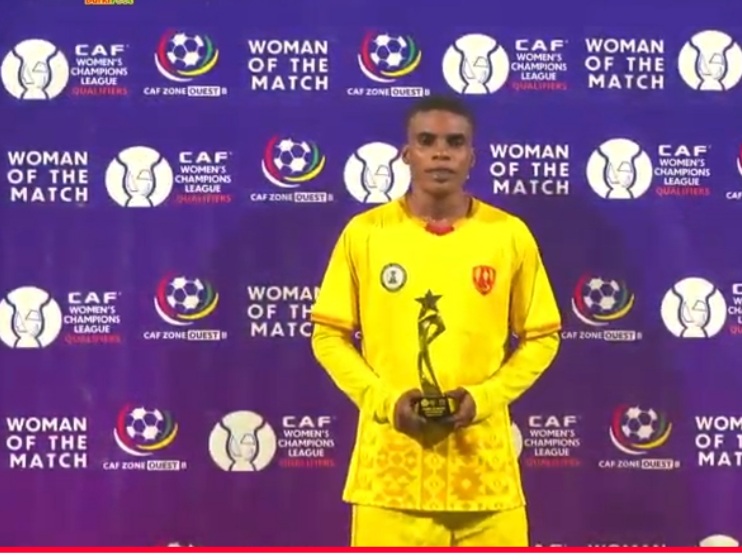
Nigeria champions Edo Queens made a sensational start to their WAFU-B Women’s Champions League qualifying campaign after thrashing AS Garde Nationale of Niger 7-0 in their opening Group B encounter in Ouagadougou, Burkina Faso.
Edo Queens wasted no time making their intentions clear as Chioma Moses opened the scoring in the fifth minute, giving the Nigerian champions an early advantage and putting their opponents under immediate pressure.
Read Also: Gift Okunwa-Igunbor: NFF Fact-Finding Committee Must Demand Better Working Conditions
Moses doubled the lead in first-half stoppage time after converting from the penalty spot, sending Edo Queens into the break with a commanding 2-0 advantage.
The Nigerian champions returned from the interval with even greater intensity, with Atume Doosuur scoring just two minutes into the second half to make it 3-0.
Doosuur completed her brace in the 56th minute before Aminat Folorunsho added a fifth goal six minutes later as Edo Queens continued to tear apart the AS Garde Nationale defence.
Moses completed her hat-trick in the 76th minute, producing the standout individual performance of the match, before Oluwakemi Adegbuyi put the finishing touch on the emphatic victory with the seventh goal in the third minute of stoppage time.
The victory was built around a sensational display from Chioma Moses, who emerged as the Woman of the Match after scoring three goals and playing a central role in Edo Queens’ dominant performance.
Moses’ hat-trick not only underlined her clinical finishing but also gave the Nigerian champions a major attacking weapon as they began their campaign in emphatic fashion.
The 7-0 demolition gives Edo Queens an early boost in their bid to secure another appearance at the CAF Women’s Champions League after their impressive run in the competition in 2024.
Edo Queens won the WAFU-B competition on their debut in 2024 before going on to finish fourth at the CAF Women’s Champions League later that year. (“aclsports.com” (https://www.aclsports.com/caf-womens-champions-league-edo-queens-in-burkina-faso-for-qualifiers/?utm_source=chatgpt.com))
Ahead of this year’s competition, Edo Queens assistant coach Gabriel Benson had expressed confidence in the squad and challenged the players to represent Nigeria and Edo State with pride.
“Edo Queens have all it takes to make the country proud,” Benson said before the tournament. (“punchng.com” (https://punchng.com/edo-queens-begin-wafu-b-campaign-against-as-gnn/?utm_source=chatgpt.com))
“The girls are ready and good to go.”
They backed up that confidence with a ruthless performance, with Moses’ hat-trick and Doosuur’s brace highlighting the attacking firepower available to the Nigerian champions.
Edo Queens will now turn their attention to their remaining Group B fixtures against ASEC Mimosas of Côte d’Ivoire and Ghanaian champions Ampem Darkoa, knowing that stronger tests await them in their pursuit of a place in the CAF Women’s Champions League.
But after putting seven goals past AS Garde Nationale in their opening match, Edo Queens have already delivered a powerful warning to their WAFU-B rivals — and with Woman of the Match Chioma Moses leading the charge, the Nigerian champions look ready for another big continental run.








Nigeria’s Olympic Eagles have produced a sensational comeback to defeat DR Congo 4-0 in the second leg of their U23 Africa Cup of Nations (AFCON) qualifying tie, securing a 4-2 aggregate victory and keeping their qualification campaign alive.
After suffering a disappointing 2-0 defeat in the first leg, the Nigerian side responded emphatically at the Remo Stars Stadium in Ikenne, delivering an outstanding performance to overturn the deficit and advance to the next stage.
Alex Oweilayefa set the tone for Nigeria’s remarkable comeback when he opened the scoring in the 8th minute, reducing DR Congo’s aggregate advantage and giving the home supporters renewed belief.
The Olympic Eagles continued their attacking momentum after the restart, with Peter Edokpolor doubling Nigeria’s lead in the 47th minute to level the aggregate score at 2-2.
Samuel Victor then struck in the 57th minute, completing Nigeria’s turnaround and putting the hosts ahead on aggregate for the first time in the tie.
With DR Congo struggling to contain Nigeria’s attacking pressure, the Olympic Eagles maintained their intensity and discipline as the contest approached its conclusion.
The decisive moment arrived deep into stoppage time when Muiz Adeleke converted a penalty in the 90+4th minute to seal a commanding 4-0 victory on the night.
The result completed an extraordinary turnaround for Nigeria, who progressed with a 4-2 aggregate triumph after entering the return fixture with a two-goal deficit.
The victory represents a significant statement from the Dream Team, whose response demonstrated resilience, attacking quality and determination under pressure.
Following their impressive comeback, Nigeria will now turn their attention to Zambia, whom they are scheduled to face in May 2027 in the next stage of the qualification campaign.
The Olympic Eagles will be aiming to maintain their momentum and build on the confidence gained from their emphatic victory over DR Congo.
For Nigerian football supporters, the night in Ikenne will be remembered for a remarkable comeback that showed the fighting spirit of the nation’s U23 side.
From a 2-0 first-leg setback to a stunning 4-0 triumph — the Olympic Eagles have answered in style!
Business
COP31: How Nigeria can turn household solar systems into investment opportunities – Lagos Carbon CEO

In this interview with PREMIUM TIMES on the sidelines of the ongoing United Nations Climate Change Conference (COP31) in Türkiye, Ibukun Adebayo, Chief Executive Officer of Lagos Carbon, discusses opportunities in Nigeria’s growing solar energy market and how the country can leverage renewable energy certificates to mobilise investment, expand solar generation and strengthen its clean energy industry.
Excerpt:
PT: Could you share your thoughts on the ongoing conversations about the opportunities and challenges surrounding Nigeria’s solar boom?
Mr Adebayo: I’m the CEO of Lagos Carbon. I spent 30 years in the City of London, working on solutions that we can bring back to Nigeria. Our main challenge right now is the slow pace of energy decarbonisation. However, the opportunity before us is to monetise existing solar installations through carbon credits and Environmental Attribute Certificates (EACs) to fund greater solar generation. Today, an amazing opportunity exists through a certificate called an International Renewable Energy Certificate (I-REC), which measures one megawatt-hour of power generated from a renewable energy source, primarily solar.
If you put solar on your roof today, you can generate carbon credits and EACs from your installation, which can be sold. Unlike carbon credits, which have requirements around permanence and additionality, EACs are relatively straightforward. The Nigerian national renewable energy market offers a higher redemption value. This means that when you achieve a reduction in greenhouse gas emissions, the value you can realise from selling the certificate can be higher than what you might get from carbon credits.
PT: What do you think we need to do to implement this in Nigeria and make it work across households? How can Nigerians, particularly those who have already installed solar systems, benefit?


Mr Adebayo: Aggregating solar installations within a particular vicinity or locality creates the economies of scale needed to generate one megawatt-hour of renewable energy, which can then be sold. The benefits can be shared among participating communities. Revenue from selling EACs or International Renewable Energy Certificates can be distributed among community members. Therefore, even if households have individual solar installations, they need to aggregate them. That is the solution.
PT: In terms of policy, there have also been discussions about Nigeria’s abundant mineral resources, which could be used to manufacture solar systems, batteries and other components. What is your view on the direction Nigeria is taking, particularly regarding its existing policies?
Mr Adebayo: Nigeria has made progress in establishing a national carbon market framework. In October last year, Nigeria made a significant development in positioning itself within the global carbon market, particularly in relation to Articles 6.2 and 6.4 of the Paris Agreement. However, the challenge remains the same: we do not have enough electricity. We need to mobilise funding to add solar capacity. Monetising energy certificates is one of the fastest ways to achieve this. We need to let the market work within the appropriate policy framework.
PT: There are also concerns about affordability and people’s ability to access some of the materials and technologies needed to develop these systems. Do you have anything to share on that?
Mr Adebayo: Yes. There are discussions around developing local manufacturing capacity for solar panels, inverters and all the components that make up the solar industry. Of course, that will cost money and require significant investment. However, what should concern us most is the end user. The problem we are trying to solve is not simply how to build a manufacturing industry. It is how to provide electricity that supports economic growth, job security and individual development.
That is the key. What we are saying is that by selling energy certificates collectively as communities, we can create an opportunity that has never existed before. It will help create a bottom-up approach to mobilising investment in the industry you just mentioned. We should take advantage of this opportunity because, for the first time, we have a mechanism that can help make it possible.
PT: Some people have raised concerns about false climate solutions. They argue that carbon markets and similar mechanisms could distract from addressing the climate crisis. There are also concerns about potential land grabbing and the impact on local communities. On the other hand, some stakeholders believe carbon markets and trading are the way forward. Nigeria has also introduced a carbon market framework. What is your position on this?
Mr Adebayo: We have to decide on our priorities. Our priorities should include how we use our land, economic growth and the economic opportunities available to us. For me, we must start with economic opportunity. Everything else should fall into place around that. Markets and climate finance can help achieve those goals.
There are international organisations and European corporations with an annual demand of about $32 million for emissions reductions, which they can purchase from Nigeria, Lagos, any other state or even internationally. That presents an opportunity for Nigeria to access carbon and climate finance. Why do they do it? If I am a European corporation looking to offset my emissions, I could buy carbon credits through the European trading system at $18 per credit. Alternatively, I could buy a Nigerian environmental certificate or carbon credit for $10. In either case, I am supporting the same reduction in atmospheric carbon emissions. It does not matter whether I purchase the credit in London or Lagos; the environmental benefit is the same, and the people providing the opportunity to offset emissions receive the investment. Why not bring that finance into Nigeria? Why not allow that money to support solar development and strengthen our economy?
PT: We also see Nigeria importing more solar panels and other equipment. What do you think we need to do differently in this regard?
Mr Adebayo: I am agnostic on that issue. What matters to me is ensuring that solar supply meets solar demand. As you know, the Middle Belt states have significant potential for solar generation. We are talking about thousands of megawatt-hours of electricity, yet Nigeria’s requirement runs into several gigawatts. We need this electricity to support the industry. Industry is often described as the engine room of Nigeria’s economy, but we do not have enough power to keep the lights on. We need to decide whether we want to become resource nationalists, worrying about foreign participation, or ensure we have sufficient, good-quality, and affordable electricity to support economic growth. That is not a question for me to answer. I would rather put that question to the authorities.
READ ALSO: Experts urge more local content to unlock Nigeria’s $8.5 billion solar potential
PT: Finally, what is your message regarding solar adoption and the sustainable use of solar energy systems in Nigeria?
Mr Adebayo: Because of our geographical location, we are blessed with approximately 8,700 hours of solar potential annually. That is an astonishing resource. If we learn to harness it properly, it could be more valuable to us than our oil and gas combined. We should make solar energy accessible to the masses and find ways to develop Nigeria’s solar industry. This will help reduce our reliance on fossil fuels, making the planet and our country much cleaner and greener.
PT: Thank you for your time and for sharing your thoughts on this important issue with us.
Discover more from Premium Times Nigeria
Subscribe to get the latest posts sent to your email.
-

 News4 days ago
Every ₦1 spent on advertising generates ₦16.50 in Nigeria’s GDP, ARCON says – Technology Times
-
News3 days ago
Tinubu (APC) in Jos: Promises to restore peace in the State and Nigeria
-
News3 days ago
Heavy Security as Tinubu Takes Campaign to Jos
-
News3 days ago
Yari Defends Tinubu on Insecurity, Says Opposition Failed to Tackle Crisis for Over 20 Years