Health
Two deaths recorded as US battles Cyclosporiasis outbreak


Two people have died in the United States after contracting Cyclosporiasis, marking the first known deaths linked to the country’s largest recorded outbreak of the disease.
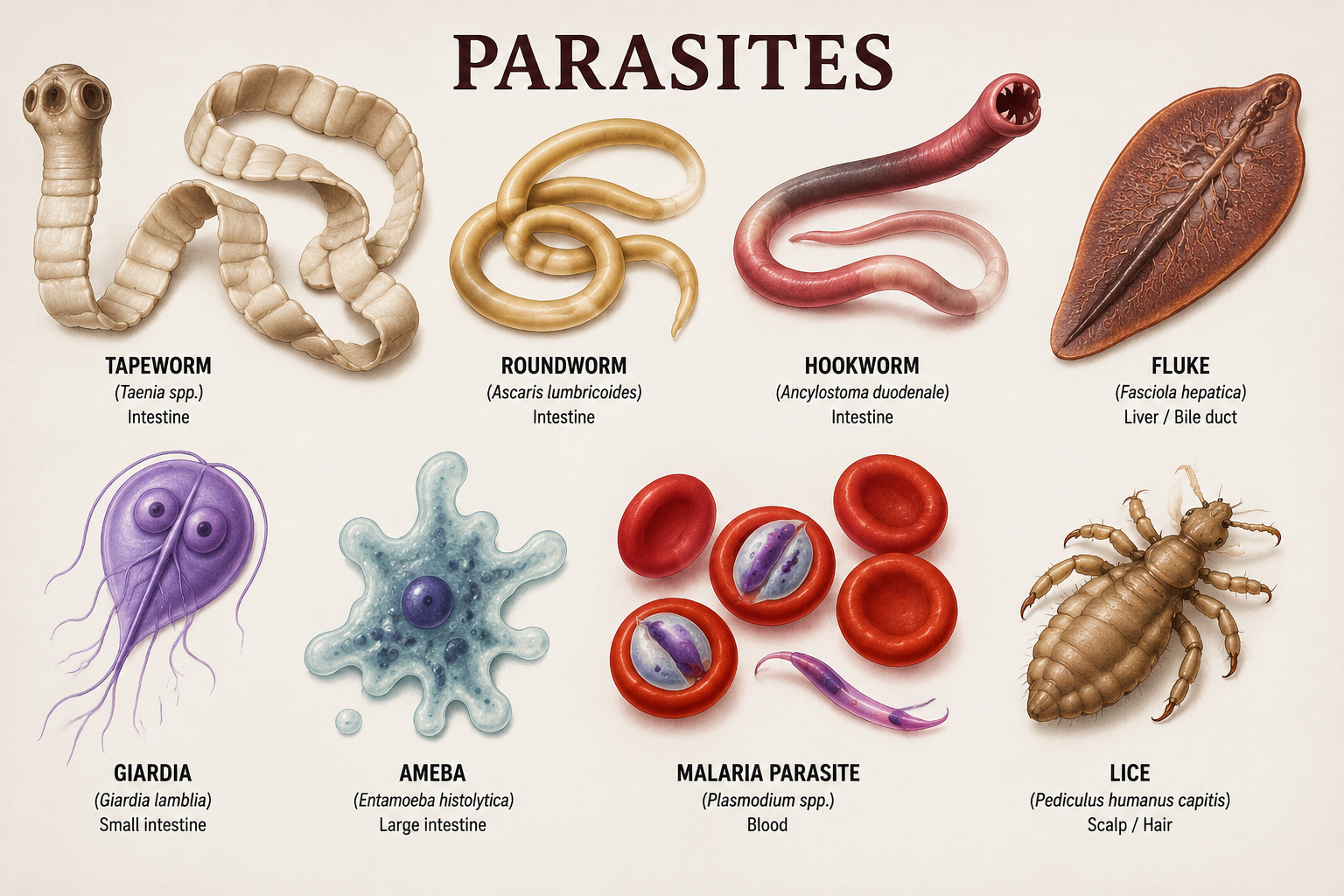
Cyclosporiasis is an infection of the intestine caused by a parasite that thrives in human waste.
The deaths were recorded in Michigan, the state hardest hit by the outbreak.
Reuters reported on Monday that the state health authorities said both patients had serious underlying medical conditions that may have been worsened by the infection and the severe dehydration associated with the illness.
The US Centres for Disease Control and Prevention (CDC) said it had confirmed 6,707 laboratory cases nationwide as of 28 July, alongside more than 11,500 suspected cases awaiting laboratory confirmation.

Michigan, the hardest-hit, has recorded 11,234 cases as of Monday, including 193 hospitalisations.
About Cyclosporiasis
Cyclosporiasis is an intestinal infection caused by the microscopic parasite known as Cyclospora cayetanensis.
According to the CDC, people become infected after eating food or drinking water contaminated with human faeces containing the parasite.
Although the disease is not usually life-threatening, it can cause severe illness in some people.
Symptoms include watery diarrhoea, nausea, stomach cramps, loss of appetite, fatigue, and dehydration.
The CDC notes that some infected people may not develop symptoms, while untreated infections can last for weeks or even months, with symptoms disappearing and returning over time.
Outbreak investigation
The US Food and Drug Administration (FDA) has linked part of the outbreak to iceberg lettuce supplied by Taylor Farms’ operations in central Mexico and served at Taco Bell restaurants.
The affected lettuce has since been recalled.
However, investigators believe the contaminated lettuce does not explain all reported infections and are examining whether other food sources may also be responsible.
Epidemiologists suspect that more than one outbreak may be occurring simultaneously.
READ ALSO: Mendicants, Social Parasites, and Our Rights As Human Beings, By Ifeanyi Uddin
Public health experts told Reuters that recent staffing and funding cuts across US health agencies may have slowed efforts to investigate and contain the outbreak.
Paul Bollyky, an infectious disease expert at Stanford Medicine, was quoted to have said that “Cyclospora is harder to track than many foodborne pathogens because, unlike bacteria, it cannot be grown in the lab or easily genome-mapped to trace an outbreak.”
Mr Bollyky warned that reduced staffing in public health departments could make outbreaks more difficult to investigate and control.
He said the scale of the outbreak raises broader questions about the safety of the US food supply.
“Anytime you have over 10,000 people infected with a foodborne pathogen, you do have to wonder whether this is a canary in the coal mine.”
Discover more from Premium Times Nigeria
Subscribe to get the latest posts sent to your email.





An ongoing strike by health professionals in Katsina State has disrupted services at public hospitals, leaving patients and pltheir caregivers uncertain about access to medical treatment.
The health workers embarked on a one-week warning strike following disagreements with the state government over their welfare and remuneration.
A visit to Turai Yar’Adua Maternal and Child Hospital in Katsina on Saturday revealed the impact of the industrial action, with only a few patients seen around the surgical ward.
For many families, the dispute over workers’ remuneration has heightened concerns over the health and safety of loved ones requiring urgent medical attention.
One of the affected caregivers, Aina’u Abdulmajid, said her patient was suffering from complications arising from surgery and appealed to the state government to restore normal hospital services.
“For the sake of God, we call on the government to intervene. Our patient is suffering from complications arising from surgery. Please help us and restore services,” she pleaded.

Ms Abdulmajid’s appeal reflected the predicament of families who depend on public hospitals for treatment but have found themselves caught between an unresolved labour dispute and the urgent need for medical attention.
Another caregiver, Sulaiman Mansir, said he had brought his sick child to the hospital for treatment but was confronted with the disruptions caused by the strike.
Mr Mansir expressed concern over the uncertainty surrounding his child’s treatment and urged the government to engage the striking health workers to resolve the dispute without further delay.
The industrial action has compounded the difficulties faced by families already grappling with transportation costs, medicines and other medical expenses.
Why health workers are on strike
The News Agency of Nigeria (NAN) reports that the strike was declared by the Assembly of Health Professionals following unresolved disagreements with the Katsina State government over workers’ remuneration and welfare.
The assembly comprises the Medical and Health Workers Union of Nigeria (MHWUN), the National Association of Nigerian Nurses and Midwives (NANNM), and the National Union of Allied Health Professionals (NUAHP).
The assembly’s chairperson, Ibrahim Balange, said the unions issued a seven-day strike notice to the government on 7 October, but the notice expired without a satisfactory resolution of their demands.
Mr Balange explained that the dispute began in 2024, when the state government indicated plans to review the allowances of health professionals to align them with those of their counterparts in federal government service.
He said the workers subsequently raised concerns about the implementation of the minimum wage, alleging that the salary structure approved for them differed from what they were receiving.
According to him, a committee established to investigate the complaints submitted recommendations in March 2025, but the government had yet to implement them.
He said the Office of Public Service Reform later offered the workers 10 per cent of the salary difference between them and their counterparts in federal institutions.
However, the offer did not resolve the disagreement.
READ ALSO: Assault on doctor triggers fresh strike at teaching hospital, months after EFCC controversy
Government responds
Following the commencement of the strike, the state government increased its offer to 15 per cent, but the unions rejected it, maintaining that it fell short of their demands.
The Head of the State Civil Service, Masa’ud Banye, confirmed that government officials had met with representatives of the striking workers to discuss the dispute.
Mr Banye expressed optimism that the disagreement would soon be resolved and acknowledged the difficulties patients were experiencing because of the industrial action.
He said Governor Dikko Radda’s administration remained committed to effective healthcare delivery in the state.
(NAN)
Discover more from Premium Times Nigeria
Subscribe to get the latest posts sent to your email.

A mental health advocacy group, Nigerian Mental Health (NMH), has welcomed the Senate’s passage of the Suicide Prevention Bill, 2024 (SB 730), seeking to decriminalise attempted suicide in Nigeria.
The bill, sponsored by the senator representing Cross River South Senatorial District, Asuquo Ekpenyong, passed second reading on 13 October 2026 and was referred to the Senate Committees on Health (Secondary and Tertiary) and Judiciary, Human Rights and Legal Matters for further consideration.
NMH and the Nigeria Suicide Prevention Advocacy Working Group (NSPAWG) made their position known in a joint statement shared with PREMIUM TIMES on Friday, calling for inclusive public hearings as the bill progresses.
The organisations urged the Senate committees to allow mental health professionals, civil society organisations, healthcare professionals and people with lived experience to contribute to the legislative process.
Why the bill matters
Under Section 327 of the Criminal Code and Section 231 of the Penal Code, attempted suicide remains a criminal offence, with survivors exposed to the risk of prosecution and imprisonment.
NMH and NSPAWG said criminalisation can discourage people experiencing suicidal distress and their families from seeking timely support.
“A person who survives a suicide attempt should be able to access care without fear of criminal punishment,” the organisations said.
The groups cited World Health Organisation (WHO) estimates that Nigeria records more than 15,000 deaths by suicide and roughly 300,000 suicide attempts annually.
The bill’s sponsor, Mr Ekpenyong, said during deliberations, that attempted suicide should be treated as a mental health emergency requiring medical intervention rather than criminal punishment.
What the bill proposes
The proposed legislation seeks to establish a coordinated national framework for suicide prevention, going beyond the removal of criminal penalties for attempted suicide.
It proposes medical assessment, referral, treatment and follow-up support for people who survive suicide attempts, as well as crisis-response services.
The bill also provides for training of relevant professionals and first responders, public education and stronger national data collection.
NMH and NSPAWG said effective implementation would require clear responsibilities, sustainable funding and accountability.
The organisations said the bill’s progress builds on advocacy efforts following the passage of the National Mental Health Act, 2021.
NMH said it launched the #SuicideNotCrimeNG campaign, bringing together more than 40 mental health organisations, professional associations and civil society partners calling for an end to the criminalisation of attempted suicide.
Akpabio’s position
The Senate’s consideration of the bill also featured opposition from Senate President Godswill Akpabio to removing imprisonment as a punishment for attempted suicide.
During the debate, Mr Akpabio argued that removing the penalty could encourage suicide attempts.
“If you attempt suicide, make sure you die. Anyone who attempts and fails will go to jail,” he said.
He also called for adequate input from state Houses of Assembly during the public hearing to avoid conflicts between the proposed legislation and existing laws.
Call for public hearings.
NMH and NSPAWG urged the two Senate committees handling the bill to ensure that the next stage of consideration is informed by evidence, the experiences of affected people and the practical realities of delivering mental health services across Nigeria.
“The Senate has moved the process forward; now it is our turn. This next stage, which opens the door to public hearings, is a meaningful opportunity for people with lived experience, mental health professionals, and civil society to engage and help shape a framework that protects lives and upholds human dignity,” said Chime Asonye, founder of NMH.
ALSO READ: World Mental Health Day: NHRC seeks inclusion of human rights focus in strategic plan
The organisations urged Nigerians, health advocates and community leaders to participate by submitting memoranda and supporting the national petition for decriminalisation.
They also renewed their call on the Federal Ministry of Health and Social Welfare to “operationalise and adequately fund the Department of Mental Health Services established under the National Mental Health Act, 2021.”
“The bill’s passage through second reading is progress, but the legislative process is not over. Nigeria needs a legal and service-delivery framework that prioritises prevention, treatment, recovery and the dignity of people experiencing suicidal distress,” NMH noted.
Discover more from Premium Times Nigeria
Subscribe to get the latest posts sent to your email.
-
News3 days ago
Miners Association Seeks Support To Unlock $3bn Gemstone Export Potential
-

 Health3 days ago
Katsina health professionals declare 7-day warning strike
-
Business4 days ago
AFC Appoints CBN Governor Yemi Cardoso as Board Chairman
-
Health4 days ago
Kenya confirms second Ebola case as contact develops symptoms in quarantine