News
CAF Confederation Cup: North African Powerhouses Stand Between Nigerian Clubs and Group Stage


Nigeria’s path to the 2026/27 CAF Confederation Cup group stage has once again brought the country’s clubs face-to-face with the enduring power of North African football.
Shooting Stars have been handed a daunting second preliminary-round tie against three-time Confederation Cup winners CS Sfaxien of Tunisia, while El-Kanemi Warriors could face another North African heavyweight, Moroccan giants Raja Casablanca, if they overcome Benin Republic’s UDIB.
For the Nigerian representatives, the draw is a reminder of the enormous continental hurdle posed by clubs from Egypt, Morocco, Algeria and Tunisia.
A familiar continental problem for Nigeria
North Africa’s dominance of the Confederation Cup is difficult to ignore.
Since the competition was established in 2004, North African clubs have won 18 of the 23 completed editions, including the last four.
The region has produced multiple champions through CS Sfaxien, Raja Casablanca, Zamalek, RS Berkane, USM Alger, Al Ahly, Etoile du Sahel and other heavyweight clubs. CAF notes that the 2025/26 final between USM Alger and Zamalek was the ninth all-North African final, while five of the last eight finals had featured two clubs from the region.
Nigeria, by comparison, has never won the Confederation Cup.
The country’s best performance came in 2005, when Dolphins reached the final. CAF also records Nigeria as the country with the most different representatives in the competition , 24 since 2004 highlighting the gap between participation and conversion into continental success.
Shooting Stars face a proven continental force
Shooting Stars’ challenge is particularly significant.
CS Sfaxien are not merely another Tunisian opponent. They are the competition’s record three-time winners, having lifted the trophy in 2007, 2008 and 2013.
The Ibadan club must therefore negotiate a tie against one of the most experienced sides in Confederation Cup history before they can even think about the next qualifying hurdle.
And should Shooting Stars prevail, another West African tie against either Côte d’Ivoire’s AF Amadou Diallo or Sierra Leone’s East End Lions awaits.
El-Kanemi’s potential Raja obstacle
El-Kanemi Warriors have a seemingly more manageable first assignment against UDIB of Benin Republic.
But qualification would immediately bring a much bigger test.
Raja Casablanca, twice Confederation Cup champions, are waiting on the other side of the bracket.
The Moroccan giants have already demonstrated their ability to eliminate Nigerian opposition in this competition, beating Enyimba in the 2018 semi-finals before going on to win the title.
The recent record also underlines the scale of the problem.
Enyimba were drawn against Egyptian giants Zamalek and Al Masry in the 2024/25 Confederation Cup group stage and failed to record a win against either Egyptian opponent, eventually exiting in third place.
North Africa’s continental advantage
The problem extends beyond individual match-ups.
North African clubs have built a sustained ecosystem around continental football, combining stronger financial resources, deeper squads, greater continental experience and regular exposure to high-pressure CAF knockout football.
CAF’s wider Champions League history tells the same story, with the governing body describing Egypt, Morocco, Algeria and Tunisia as the countries whose clubs have particularly dominated the competition in the modern era.
For Shooting Stars and El-Kanemi, however, the immediate task is straightforward.
Shooting Stars must find a way past CS Sfaxien.
El-Kanemi must first eliminate UDIB, knowing that doing so could earn them a blockbuster showdown with Raja Casablanca.
For Nigerian clubs seeking a return to the group-stage elite, North Africa once again stands firmly in the way.
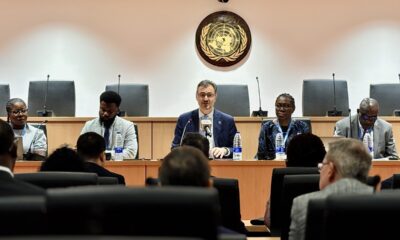





The World Health Organisation (WHO) has warned that gaps in routine immunisation are leaving Nigerian children vulnerable to preventable diseases, urging the government to increase domestic health financing and strengthen disease surveillance and outbreak preparedness.
Pavel Ursu, the WHO representative in Nigeria, raised the concern on Tuesday during the organisation’s Health Diplomacy Dialogue in Abuja, which brought together diplomats and health officials to discuss health security, disease outbreaks, global health financing and antimicrobial resistance.
Mr Ursu said Nigeria continued to face challenges in containing vaccine-preventable diseases, including measles and circulating vaccine-derived poliovirus, despite support from international partners.
He said the country’s immunisation programme must reach approximately eight million additional children annually, placing increasing pressure on the health system.
“If we want to maintain the same level of performance, we have to invest more,” he said.
Mr Ursu acknowledged support from Gavi, the Vaccine Alliance, and other partners in providing vaccines and related commodities but stressed the need for Nigeria to progressively increase domestic financing and assume greater responsibility for protecting its population.


He also highlighted changes in global health cooperation, including declining development assistance for health and ongoing discussions about reforming the global health architecture.
He said African countries needed to strengthen domestic financing, improve health system resilience, expand digital health services and promote local manufacturing of health commodities.
Mr Ursu said the dialogue was established to provide a platform for the WHO and diplomatic missions to exchange strategic information on public health developments, emerging threats and international health policy, including for embassies without dedicated development cooperation programmes.
He called for stronger international cooperation, including timely information-sharing and coordinated responses to outbreaks that could cross national borders.
Outbreaks expose gaps in health security
Speaking on health security, Alex Chimbaru, the WHO emergencies adviser, said Nigeria’s disease outbreaks reflected persistent weaknesses in immunisation coverage, disease surveillance and access to safe water and sanitation.
He said more than 700 children had been disabled by circulating vaccine-derived poliovirus in previous years, warning that the actual number could be higher.
Mr Chimbaru also highlighted cholera as a major public health concern, citing inadequate water, sanitation and hygiene infrastructure, insecurity and population displacement as factors complicating prevention and response efforts.
He said Borno State accounted for 96 per cent of cases in the affected area discussed during his presentation, highlighting the need to prioritise interventions in vulnerable communities.
According to him, the WHO, other United Nations agencies, Médecins Sans Frontières (MSF) and other partners supported the response through surveillance, logistics, case management, vaccination, risk communication and infection prevention and control.
Mr Chimbaru called for sustained investment in water and sanitation, functional public health emergency operations centres, rapid response teams and stronger cross-border coordination to prevent and contain outbreaks.
He also urged development partners to reinforce government-led health systems rather than establish parallel structures, stressing that sustainable financing and stronger primary healthcare services were essential to health security.
Abuja to host global conference on antimicrobial resistance
The dialogue also featured discussions on Nigeria’s preparations to host a global conference on antimicrobial resistance (AMR) in Abuja from 6 to 8 December.
Mary Bartuo, the WHO team lead for universal health coverage and life course, said the conference would seek to translate international commitments into measurable action, stronger accountability and sustainable financing.
READ ALSO: Non-communicable diseases caused 74% of global deaths in 2023 – WHO
She said AMR was associated with about one million deaths annually in the African Region and posed growing threats to food security, livestock production and economic development.
Ms Bartuo said priorities under the proposed Abuja Compact included responsible AMR use, infection prevention and control, vaccination, water and sanitation, equitable access to medicines and diagnostics, research, local manufacturing and sustainable financing.
She urged diplomatic missions to participate in the conference and support efforts to strengthen national and international responses to AMR.
The WHO officials called for sustained investment and stronger collaboration among governments, diplomatic missions and development partners to improve health security and strengthen countries’ capacity to prevent, detect and respond to public health threats.
Discover more from Premium Times Nigeria
Subscribe to get the latest posts sent to your email.

Troops of Enduring Peace have arrested four suspected illegal arms fabricators and gunrunners during coordinated intelligence-driven operations in the Mangu and Barkin Ladi Local Government Areas of Plateau State.
The Nigerian Army said on Tuesday that the operation also led to the recovery of locally fabricated firearms, ammunition and other incriminating items.
It stated that the operation dealt a blow to suspected illegal arms supply networks fuelling insecurity in the state.
“Acting on credible intelligence received on 4 October 2026, troops of Sectors 8 and 4 conducted coordinated covert operations between 7 and 11 October 2026, leading to the arrest of the suspects,” it said.
The arrested suspects include Ayuba Sunday Abot, a suspected illegal arms fabricator operating in Heipang, Barkin Ladi LGA, and three suspected gunrunners identified as Tangkat Danjuma, Kopdi Appollos and Nyam Nzang, who allegedly operated across Mangu and Barkin Ladi LGAs.
The statement explained that items recovered during the operations include one locally fabricated revolver rifle, one locally fabricated pistol, one fabricated AK-47 barrel, one AK-47 magazine and 42 rounds of 7.62 × 54mm ammunition, alongside other items suspected to be associated with the illegal activities.
“The recoveries are expected to provide valuable leads in ongoing investigations aimed at uncovering illicit arms production and distribution networks.
“Preliminary interrogation reportedly revealed allegations that the recovered ammunition was purchased at ₦3,000 per round from an unidentified soldier,” it said.
It noted that the allegation is being thoroughly investigated to establish its authenticity and identify any persons who may have been involved in the alleged transaction.
It added that the suspects and recovered items were in the custody of the troops’ headquarters for further investigation and necessary action.

-
News4 days ago
Inside INEC’s AI and cybersecurity plans to secure Nigeria’s 2027 Elections – Technology Times
-

 News3 days ago
EuroMatch NPFL: Ikorodu City Return to Winning Ways as Salami, Ikechukwu Sink Kwara United in Lagos
-
News3 days ago
Petra Power looks to modernize energy for data centers and defense vehicles
-
News3 days ago
Microsoft’s Satya Nadella says AI models need an ‘emergency brake’