Health
FG orders measures to protect health workers from harassment, assault

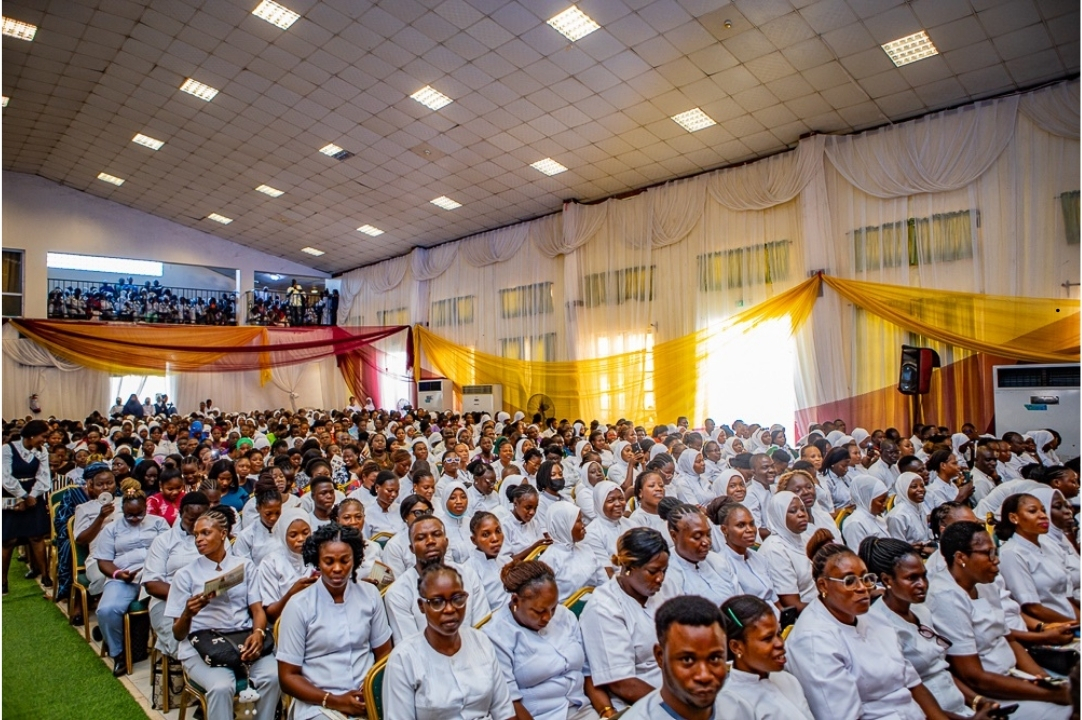

The federal government has ordered the immediate implementation of measures to strengthen the protection of health workers across the country following a rise in incidents of harassment, intimidation and assault in healthcare facilities.
The directive followed the submission of the report of the Ministerial Committee on the Harassment of Health Workers by Security Personnel, according to a statement issued on Wednesday by the Permanent Secretary of the Federal Ministry of Health and Social Welfare, Daju Kachollom.
The committee was set up on 19 May after an incident involving operatives of the Economic and Financial Crimes Commission (EFCC) and workers of the University of Uyo Teaching Hospital in Akwa Ibom State.
Ms Kachollom said the incident disrupted clinical services and triggered industrial action, prompting the federal government to constitute the committee to investigate the matter and recommend measures to prevent similar occurrences nationwide.
She said the committee reviewed reports from Federal Tertiary Health Institutions and consulted relevant professional, regulatory, security and human rights bodies before submitting its findings to the government.

The permanent secretary said the committee found that the Uyo incident was not isolated, with 18 cases of assault, intimidation or harassment reported across federal tertiary health institutions within the preceding 12 months.
According to Ms Kachollom, the incidents involved patients, relatives, members of the public and security personnel, resulting in bodily injuries, psychological harm, damage to hospital property and service disruptions.
She added that the committee also identified poor communication, prolonged waiting times, inadequate staffing, deficient infrastructure, emotional distress, abuse of authority and absence of clear security protocols as contributory factors to the incidents.
Following receipt of the report, the Coordinating Minister of Health and Social Welfare, Muhammad Pate, accepted the committee’s recommendations and ordered their immediate implementation with an accompanying action plan.
Mr Pate said health workers dedicate their lives to caring for Nigerians and must be able to carry out their duties in an environment that is safe, secure and free from violence, intimidation or harassment.
He said the federal government will continue to work with all relevant institutions to protect the health workforce, uphold the rule of law and ensure that healthcare delivery is never compromised.
The minister warned that anyone who assaults, threatens, intimidates or harasses a health worker would be investigated and prosecuted where evidence warranted under applicable laws of the Federal Republic of Nigeria.
“The absence of a specific law relating solely to violence against health workers would not prevent enforcement through existing criminal, civil or administrative laws, including applicable sanctions and compensation,” he said.
“Federal Tertiary Health Institutions have been directed to strengthen internal security arrangements and establish Violence Prevention Teams to improve safety within health facilities nationwide.”
The ministry said that the institutions are also expected to improve access control, surveillance systems, visitor identification procedures and security around emergency units and other sensitive service areas to safeguard healthcare delivery.
Measures
Ms Kachollom further directed every institution to designate liaison officers for engagement with law enforcement agencies and ensure security operations within hospitals do not endanger patients or interrupt essential services.
She said all incidents of assault, threats or harassment within health facilities must be promptly reported, investigated and documented, while affected workers should receive institutional support and appropriate referrals where necessary.
Hospital managements were also directed to strengthen complaint-handling procedures, improve patient communication and train staff in conflict prevention and de-escalation as part of broader workplace safety initiatives.
The permanent secretary said broader policy recommendations contained in the report would be presented to the next National Council on Health for consideration towards adopting a national framework covering federal, state and private health institutions.
READ ALSO: Cross River raises health workers’ retirement age
She added that the ministry would monitor implementation against assigned responsibilities and timelines, with periodic progress reports submitted to the Coordinating Minister to ensure effective compliance nationwide.
“The federal government affirms that no grievance, disagreement or official assignment constitutes lawful justification for violence against a health worker or interference with the delivery of healthcare,” she said.
She added that existing laws would be enforced, offenders held accountable and all lawful measures taken to secure health facilities, protect health workers and safeguard uninterrupted patient care.
(NAN)
Discover more from Premium Times Nigeria
Subscribe to get the latest posts sent to your email.



A worker at Frankfurt Airport in Germany has died of malaria in a rare outbreak believed to have been caused by infected mosquitoes brought into the country on an aircraft.
Five other airport workers have also contracted the disease and are receiving medical treatment, according to the BBC.
The airport operator, Fraport, confirmed the death on Wednesday. “Sadly, we must confirm that one employee has died as a result of the infection,” a Fraport spokesperson told the BBC.
The outbreak is being investigated by Frankfurt’s Public Health Department, with officials trying to establish how the workers became infected.
The BBC reported that the six infected workers are men who work in different areas and perform different jobs at the airport. None is known to have travelled to a country where malaria is common.
German health authorities believe the infections may have been caused by mosquitoes brought into Germany on an aircraft. Mosquito traps have now been installed at the airport, while captured mosquitoes are being analysed to determine their species and origin.
Rare outbreak
The cases are described as “airport malaria”, a rare form of transmission that can occur when an infected mosquito is transported on an aircraft or in luggage and later bites people at or near an airport.
Germany’s Robert Koch Institute (RKI), the country’s federal public health and disease control agency, said the first four workers became ill between 4 and 6 July.
The institute said malaria cases in Germany exclusively involve people who were infected while travelling to malaria-endemic areas, making transmission at a German airport unusual.
READ ALSO: WHO, Africa CDC warn of widening malaria funding gap in Africa
The last documented case of airport malaria at Frankfurt Airport was in 2023, the RKI said.
Frankfurt’s public health authorities have said the risk to the general population remains very low because malaria is not transmitted directly from person to person. It is spread through the bites of infected mosquitoes.
Malaria remains a major public health concern in Nigeria, although recent data show signs of progress.
In July, Malaria Consortium reported that malaria prevalence in Nigeria had fallen from 42 per cent in 2010 to 15.2 per cent in 2025.
Despite the decline, the organisation said Nigeria continues to carry one of the world’s heaviest malaria burdens, with children under five and pregnant women disproportionately affected.
Malaria is caused by parasites transmitted through the bites of infected mosquitoes. It is preventable and curable, but can become severe or fatal when diagnosis and treatment are delayed.
Discover more from Premium Times Nigeria
Subscribe to get the latest posts sent to your email.
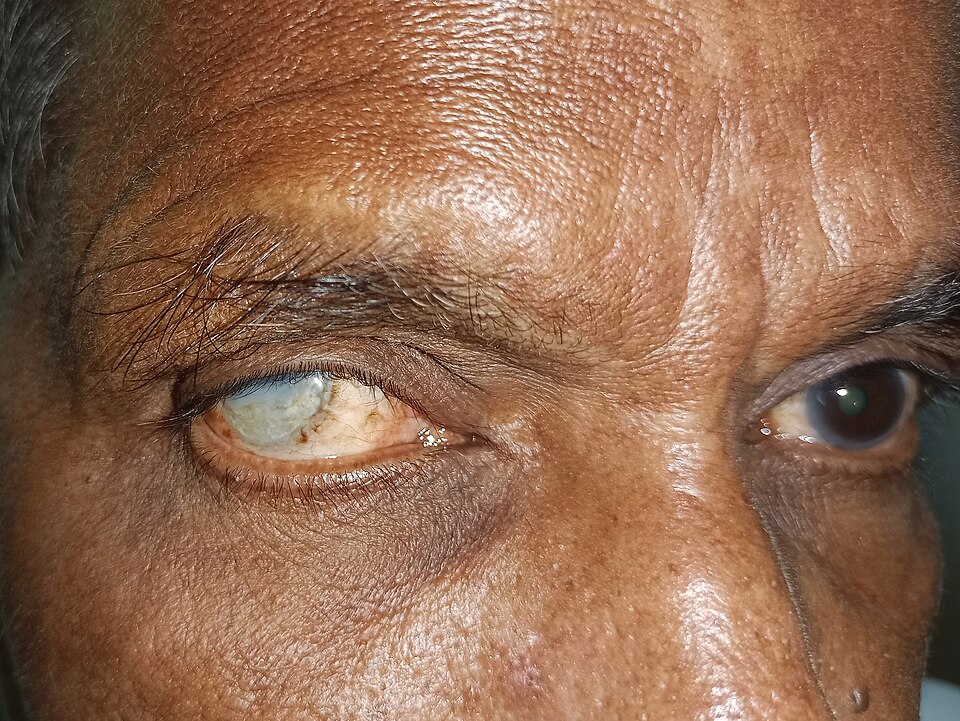
The Ophthalmological Society of Nigeria (OSN) has revealed that more than two million Nigerians are living with avoidable blindness, largely caused by cataracts.
The vice-president of the OSN, Abubakar Rafindadi, a professor, disclosed this on Wednesday at a press briefing ahead of the 51st Annual General Meeting and Annual Scientific Conference, Abuja ASO 2026, scheduled for 2 to 4 September in Abuja.
Mr Rafindadi said that despite ongoing efforts to tackle avoidable blindness, the country has not attained the cataract surgical rates required to reduce the burden significantly.
“The statistics have not changed dramatically. We are still fighting a heavy burden of avoidable blindness, with over two million people having avoidable blindness, mainly cataracts, despite the efforts we are making.
“We are not matching the required cataract surgical rates that we need,” he said.
The OSN vice-president, however, said the country had recorded significant progress in ophthalmic training, technology, and service delivery since its last annual conference.
Establishment of centres
Mr Rafindadi identified the establishment of simulation centres in Lagos and Ibadan as one of the major developments, saying the facilities would enable ophthalmologists to improve their skills in cataract and vitreoretinal surgery.
He said the society had also expanded the integration of eye care into primary healthcare, with the number of states participating in the programme increasing from 14 to 21.
According to him, more than 2,500 primary healthcare workers have been trained under the programme, including during a recent exercise in Bauchi State.
He said the society was also exploring technology, including tele-screening and artificial intelligence, to extend quality eye care to rural communities and underserved populations in urban centres.
Mr Rafindadi noted that although Nigeria had become increasingly urbanised, many people living in underserved communities within major cities still faced difficulties accessing quality eye care.
He said, “We are trying to see how we can adopt the new technological innovations to reach the rural populace and also the underserved populace within the metropolis.
“We are looking at how we can use technology to bridge these gaps through things like tele-screening, artificial intelligence technology, and so on.”
The OSN Vice-President also highlighted improvements in the availability of ophthalmic equipment and advanced surgical services, noting that posterior segment surgeries were now being offered in several parts of the country where such services were previously unavailable.
He said centres in Benin, Lagos, Ibadan, Kaduna, and Kano were among those providing advanced posterior segment surgical services.
Mr Rafindadi said the society was also concerned about the shortage and uneven distribution of ophthalmologists and other eye-care professionals across the country.
He attributed the concentration of specialists in major population centres partly to insecurity and inadequate employment opportunities in rural areas.
According to him, state and local governments must increase the employment of ophthalmologists, optometrists, opticians, and ophthalmic nurses to ensure equitable distribution of eye-care services.
He further disclosed that more than 1.5 million reading glasses had been distributed under the Jigibola 2.0 initiative, with a target of five million by 2027.
Harmful practices
On the dangers of harmful traditional eye practices, Mr Rafindadi urged Nigerians to avoid unverified substances and treatments that could lead to irreversible vision loss.
He said the society was working with the government and traditional medicine institutions to identify practices that could be safely integrated into healthcare while eliminating harmful ones.
READ ALSO: Kogi targets 4.5 million residents for river blindness prevention treatment
“We must keep talking to the public. Please don’t go to these people. They should be aware that these practices can be harmful and can cause irreversible loss of vision to them,” he said.
The OSN said it would conduct more than 500 free cataract surgeries as part of activities leading up to the 51st Annual General Meeting and Scientific Conference.
The cataract surgery outreach, which is scheduled for 27 and 28 August, with the possibility of extending to 29 August if necessary, is expected to benefit patients screened and selected from various centres in the Federal Capital Territory and neighbouring areas.
The Society said more than 500 patients had already been selected and medically assessed as fit for surgery.
The conference, themed “Re-imaging Eye Care in the Digital Era,” will focus on the application of artificial intelligence, tele-ophthalmology, digital diagnostics, and other emerging technologies to improve access to eye care in Nigeria.
Mr Rafindadi said the society would use the conference to develop evidence-based recommendations and a strategic roadmap for improving eye care delivery in the country.
Discover more from Premium Times Nigeria
Subscribe to get the latest posts sent to your email.
-
Business3 days ago
Police Arrest of Five Suspected Telecommunication Vandals, Recovery of Truckload of Suspected Stolen Iron Rods
-

 Health3 days ago
FCTA trains health workers in basic life support, plans Code Blue teams in hospitals
-
News3 days ago
SSA Adeboye: National Intermediate Games Will Give Nigeria’s Young Talents the Platform to Shine
-
News3 days ago
Who’s behind the new ‘stealth model’ Ox Alpha?