
News
Governor Mutfwang Begins Strategic Assessment to Restore Plateau’s Heritage, Boost Tourism

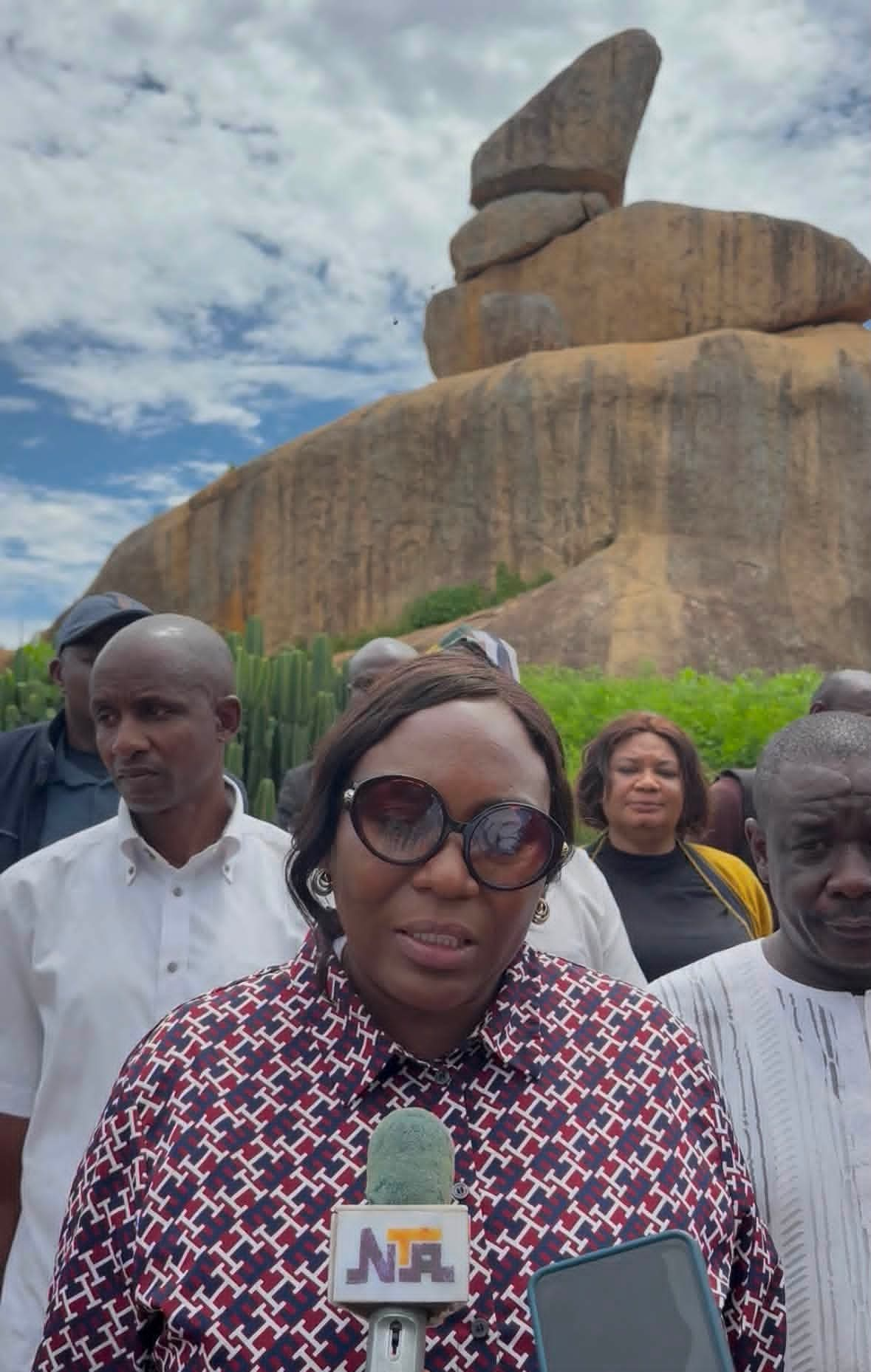
JOS, Plateau State — The Plateau State Government has commenced a comprehensive assessment of key tourist and heritage sites across the Greater Jos Master Plan as part of efforts to restore the state’s tourism potential, preserve its natural heritage and drive economic growth.
The initiative, which aligns with Governor Caleb Manasseh Mutfwang’s “Time is Now” agenda on tourism, hospitality and economic diversification, is aimed at repositioning Plateau State as a leading tourism destination while creating jobs, promoting peace and attracting investment.

The inspection tour, held on Tuesday, was led by the Commissioner for Information and Communication and Supervising Commissioner for Tourism, Culture and Hospitality, Rt. Hon. Joyce Lohya Ramnap (mni). She was accompanied by the Permanent Secretary of the Ministry of Tourism, Culture and Hospitality, Mr. Musa Nyam Agwom, officials of the Ministry of Housing and Urban Development, and other technical experts.
The delegation inspected several iconic tourist attractions, including the Gog and Magog rock formations at Shere Hills, the Unity Rock in Rayfield, which naturally resembles the map of Nigeria, the famous Riyom Rock Formation, regarded as one of Plateau State’s enduring symbols, and the historic Mado Tourist Village, a 50-room facility established in 1978 to serve visitors to the Jos Wildlife Park and Museum.

During the inspection, officials expressed concern over the deteriorating condition of some of the sites, particularly the Gog and Magog rock formation, where quarrying activities have reportedly destroyed sections of the natural landscape that once served as a popular destination for hiking and picnics.
Speaking with journalists after the tour, Rt. Hon. Ramnap said Plateau possesses exceptional natural tourism assets that require deliberate preservation and strategic development.
She explained that the assessment is designed to ensure the state’s heritage sites are fully integrated into the Greater Jos Master Plan, providing a roadmap for sustainable tourism development.
“It is not just about identifying these locations. We want to establish policies that will protect them, assess their strengths and challenges, and create long-term development strategies that will stand the test of time,” she said.
The commissioner disclosed that the state government is developing a comprehensive tourism policy that will safeguard heritage sites while unlocking their economic potential.
Expressing concern over the level of destruction observed at the Gog and Magog site, Ramnap said the government would investigate the activities of the quarry company operating in the area.
“It is unfortunate to see such an important natural attraction being tampered with. From what we have observed, the level of devastation appears to exceed what could have been approved. Government will investigate the matter and take appropriate measures to protect the site,” she stated.
She encouraged tourists, hikers and residents to continue exploring Plateau’s natural attractions, describing the state’s environment as a unique destination for recreation, wellness and investment.
“There is so much to offer on the Plateau. These natural sites provide opportunities for recreation, healing and economic growth through tourism,” she added.

Addressing concerns over poor road access and encroachment around some of the tourist sites, Ramnap said the findings from the inspection would inform future infrastructure development and conservation policies.
She noted that consultants are working alongside government officials to ensure the Greater Jos Master Plan incorporates improved road networks, environmental protection and community partnerships around identified tourism assets.
Also speaking, the Director of Building at the Plateau State Ministry of Housing and Urban Development, Architect Joseph Yakwan, said the inspection would contribute significantly to the preparation of the Greater Jos Master Plan.
“The Greater Jos Master Plan is being developed by our ministry, and part of our responsibility is to ensure that tourism assets are adequately captured so they can contribute to the city’s future growth and development,” he said.
At the Riyom Rock Formation, community representative Hon. Terry Davou appealed to the state government to restore the iconic landmark and return it to its former status as one of Plateau’s premier tourist destinations.
He recalled that the rock attracted visitors from across Nigeria and overseas during the 1970s and 1980s and urged government to invest in its preservation and promotion.
“This rock has become one of the symbols of Plateau State. Whatever its origin, what matters today is preserving it and developing it into a world-class tourist attraction. Our community will be delighted if government invests in its restoration,” he said.
The assessment marks the beginning of a broader strategy by the Mutfwang administration to integrate tourism development into the Greater Jos Master Plan, protect Plateau State’s natural heritage and harness tourism as a catalyst for economic diversification, job creation and sustainable development.



Nigerian table tennis prospect Matthew Kuti has set his sights on winning two gold medals for the country at the 2026 Youth Olympic Games in Dakar, Senegal, as he intensifies preparations for the competition.
Kuti is targeting victory in both the men’s singles and mixed doubles events, expressing confidence in his preparation while acknowledging the technical demands of table tennis at the highest level.
“Thinking game is a very difficult game and it’s very scientific game. So I’m very, very happy that I participate in today’s game,” Kuti said.
The young Nigerian explained that his ambition is to represent the country successfully in Dakar, where he hopes to compete across multiple events and convert his preparations into gold medals.
“My challenge is to go there and take a gold for Nigeria, play many tournament and also there is mixed doubles in Dakar and singles. I want to win the two,” he said.
Kuti acknowledged that achieving the double target would require commitment and hard work, noting that he is currently in training as he works towards peak performance for the Games.
“So I will try my best. I will try what I can do because now I’m in training. So I will try my best,” he added.
The Youth Olympic Games will take place in Senegal from October 31 to November 13, 2026, bringing together young athletes from across the world in a multi-sport competition.
For Kuti, the tournament represents an opportunity to test himself against international opposition and contribute to Nigeria’s medal ambitions. His focus on both singles and mixed doubles reflects his determination to make the most of the opportunities available to him in Dakar.
With preparations ongoing, the Nigerian youngster will be hoping that his training, tournament experience and determination can translate into strong performances when the competition begins.
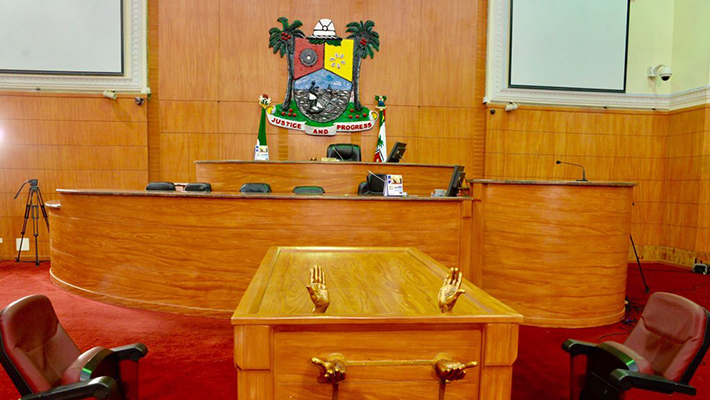
The Lagos State House of Assembly has unanimously supported the proposed establishment of state police, following its consideration of the Constitution Amendment Bill transmitted by the National Assembly.
The speaker, Mudashiru Obasa, disclosed this on Tuesday during plenary, which lawmakers reconvened for after cutting their recess short to consider the proposed amendment.
Mr Obasa said the establishment of state police had remained a recurring issue from the fifth to the 10th assembly, with successive legislatures discussing ways to strengthen security and protect lives and property.
He described the development as a step forward but expressed concern that some issues raised by state legislatures had not been adequately addressed.
“I am pleased that the issue of state police has received attention, but there are concerns that must be addressed to ensure that the arrangement works effectively,” Mr Obasa said.
The bill, titled the Constitution of the Federal Republic of Nigeria, 1999 (Sixth Alteration) Bill, 2026, seeks to provide for the establishment of the State Police Service and related matters.
The speaker said further developments in the amendment process should give states greater control over policing arrangements but stressed the need to clearly define the relationship between federal and state police, particularly regarding powers, control and responsibilities.
“The functions and responsibilities of state police should be clearly defined, with appropriate provisions made for state legislatures,” he said.
He commended President Bola Tinubu for commitment to democracy and democratic institutions, as well as the Senate and House of Representatives for advancing the proposal.
Mr Obasa further called for a clear constitutional provision for parliamentary police to protect legislative institutions and preserve their independence.
He cited past incidents in which state legislative buildings were allegedly demolished or locked up at the instance of governors, describing such developments as threats to legislative autonomy.
“There should also be provisions for parliamentary police, as we have in the United States Congress and at Westminster in the United Kingdom, to protect democracy and safeguard state legislatures.
“We must learn from past incidents in which a governor could order demolition of a legislative building or have a state legislature locked up simply to serve personal interests.
“To prevent such incidents from happening again and protect our nascent democracy, we must safeguard our existing state legislatures. Establishing parliamentary police will help protect legislative institutions and ensure that independence of the legislature is not undermined,” he said.
The speaker expressed confidence that outstanding concerns would be addressed as the constitutional amendment process progressed.
The House subsequently adjourned plenary until November 9, 2026.
The Lagos assembly‘s position comes as the push for state police has crossed its most critical constitutional hurdle.
The Presidential Working Group on the National Policing Bill, chaired by the Chief of Staff to the President, Femi Gbajabiamila, had on Friday announced that 24 State Houses of Assembly had approved the Constitution (Sixth Alteration) Bill, 2026.
According to him, the approval meets the two-thirds threshold—24 of 36 states—required under Section 9 of the 1999 Constitution for alteration.
The Working Group chairman commended the state assemblies and the National Assembly for passing the amendment in both chambers.
The 24 states are Adamawa, Delta, Edo, Kwara, Nasarawa, Ogun, Osun, Oyo, Plateau, Rivers, Taraba, Zamfara, Enugu, Anambra, Imo, Ekiti, Kebbi, Akwa Ibom, Bayelsa, Benue, Cross River, Abia, Yobe, and Kaduna.
With Lagos’ unanimous vote on Tuesday, the figure has now risen to 25, leaving 11 states yet to formally communicate their positions.
The National Assembly transmitted the bill to the states on September 16 with a 30-day administrative window.
(NAN)

-
 News3 days ago
Troops rescued 70 abductees, recovered N10 million ransom: DHQ
-
 News3 days ago
Plateau Activates Ebola Preparedness Measures, Urges Residents to Observe Safety Guidelines
-
 Business3 days ago
CBN grants JP Morgan approval-in-principle to set up merchant bank
-
Business3 days ago
REA Ends 16 Years of Darkness in Two Kano Communities


