News
How do you issue a ticket to a robotaxi?


We’re going to do a bit of a deep dive today, which may make this newsletter look a little different than normal. There is a reason!
How do you ticket a robotaxi? Under these new rules, law enforcement can cite AV companies for traffic violations committed by their vehicles. The rule, called “Notice of Autonomous Vehicle Noncompliance,” requires the manufacturer (meaning the robotaxi company) to report the violation to the DMV within 72 hours of receiving it from law enforcement.
I’ve heard a number of interpretations of this rule and how it will be implemented, but it appears there is not a monetary fine attached to these violations. Instead, these violations are another piece of data that the DMV can use to identify problems and take action if needed.
Insiders told me that the data is actionable and more important than a monetary fine. My question: Why not both?
The good news for industry: The DMV will now allow heavy-duty vehicles equipped with autonomous vehicle tech to test and eventually deploy on public roads. Self-driving truck companies are happy with this outcome. Daniel Goff, VP of external affairs at Kodiak, told me the company is already working on the required documentation to apply for a permit.
The burden for the industry: The word that came up in every conversation I had with someone in the AV industry was “burdensome.” And it was always used in reaction to the new data collection and sharing regulations.
Goodbye, disengagement reports; hello, malfunctions: Others were happy to see annual disengagement reporting disappear. Disengagement reports, which detailed instances when human drivers had to take over control due to technology failures or safety concerns, have been controversial because companies use varying standards. This has made it impossible to compare the results or rate the proficiency of autonomous vehicle technology.
That entire section has been removed and replaced with a requirement to report “dynamic driving task performance relevant system failure.” This may seem like semantics — trading one jargony phrase for another. Insiders tell me that while it is not a perfect metric, it is clearer than its predecessor. That doesn’t mean it is beloved either.
There is a lot more in these documents, including a requirement to provide annual updates to first responder interaction plans, access to manual vehicle override systems, two-way communication links with 30-second response times, and updated training requirements to ensure safe and timely interactions with first responders.
My question for you, reader, is whether these rules go too far or if they are appropriate and provide the kind of reporting and data collection needed to keep these companies accountable? Sign up for the Mobility newsletter to vote in our polls!
A little bird

We had a lot of little birds talk to us about the new California AV rules, so nothing new to add here. But remember, you can always send us tips. Here’s how.
Got a tip for us? Email Kirsten Korosec at kirsten.korosec@techcrunch.com or my Signal at kkorosec.07, or email Sean O’Kane at sean.okane@techcrunch.com.
Deals!

BMW i Ventures launched a new $300 million fund with a timely thesis: AI will reshape how the automotive industry operates. The fund will invest in early-stage through Series B startups in North America and Europe that are working on agentic AI and physical AI as well as industrial software, advanced materials, and manufacturing and supply-chain technologies. This third fund brings the firm’s total capital under management to $1.1 billion.
Other deals that got my attention …
Sereact, a German robotics startup, raised $110 million in a Series B funding round led by VC Headline. Other investors include Bullhound Capital, Felix Capital, Daphni, Air Street Capital, Creandum, and Point Nine.
Spirit Airlines is preparing to shut down after failing to secure a $500 million lifeline from the government, the WSJ reports. The company is expected to cease operations around 3 a.m. ET Saturday.
Notable reads and other tidbits

China suspended issuing new licenses for autonomous vehicles after dozens of Baidu’s Apollo Go robotaxis suddenly stopped last month, Bloomberg reported.
Google‘s Gemini AI assistant is hitting the road in millions of vehicles.
Faraday Future paid around $7.5 million to a company controlled by its founder, Jia Yueting, in 2025, senior reporter Sean O’Kane discovered in a recent SEC filing.
Rivian reported earnings this week and one item that stood out to us — and to many others — was the downsizing of its DOE loan from $6.6 billion to $4.5 billion. That loan restructuring comes with changes to its Georgia factory. Instead of two 200,000-vehicle capacity structures on the Georgia site, Rivian will now build a 300,000-vehicle capacity factory and leave the adjacent “pad” untouched and ready for future development. Analysts didn’t necessarily view this as negative but did position this as rightsizing. Barclays, for instance, views the modification as Rivian adjusting to the current EV environment, according to a research note published Friday. Barclays also stated it didn’t believe Rivian currently plans to build the second plant at Georgia, “at least not until early/mid next decade.”
Tesla launched a Semi-Charging for Business program, which includes a new product called the Basecharger that is designed for depot and overnight use.
Uber has tapped Hertz to clean, charge, and fix its Lucid Motors robotaxis. This announcement left us with a cheeky question: How many companies does it take to launch a robotaxi service?
Uber customers in the United States can now book hotels directly through the app, one of several new features announced this week that pushes far beyond the company’s original ride-hailing purpose and even deeper into its users’ lives. At launch, Uber customers will have access to more than 700,000 hotels worldwide through a partnership with Expedia Group, the travel company that Uber CEO Dara Khosrowshahi led for 12 years.
Vay, a remote driving tech startup, says it has grown its fleet to 175 vehicles on the road and has surpassed 60,000 rides.
When you purchase through links in our articles, we may earn a small commission. This doesn’t affect our editorial independence.








The Nigeria Democratic Congress, NDC, has announced a new date for the unveiling and inauguration of its National Campaign Council, NCC.
NDC had earlier slated the inauguration of the campaign council for Tuesday, 20th October, 2026.
But a statement by its National Publicity Secretary, Osa Director, disclosed that the event will now be held on Monday, 26th October, 2026.
"The shift is occasioned by the very tight schedule of our Presidential Candidate, His Excellency, Mr. Peter Obi, who has a very important engagement overseas.
"We apologize for any inconvenience caused by this shift and urge everyone not to lose focus on the goal of ensuring victory for our presidential candidate and all NDC candidates in the forthcoming presidential and general elections. A New Nigeria is POssible," the statement said.
2027: NDC sets new date to inaugurate National Campaign Council

By Mariam Hassan, Esther Nwabueze and Olaitan Idris
Traders and consumers on Sunday in Lagos, expressed concern over losses caused by spoilt fruits and vegetables, blaming the problem on heat, poor transportation and inadequate storage facilities.
They spoke in separate interviews with the News Agency of Nigeria (NAN) at Iddo Terminus, Mile 12, Balogun and Agboju markets.
A visit to the markets showed traders displaying fresh produce, including carrots, cucumbers, watermelons, cabbage, bananas and leafy vegetables, while some kept their goods under tables to shield them from sunlight.
Mr Taiwo Abdulhamid, a trader at Iddo Terminus Market, said he sometimes lost two to three kilogrammes of carrots from every 10 kilogrammes purchased.
Abdulhamid said the losses could cost him between N20,000 and N30,000, forcing him to discard spoilt produce or increase prices to recover part of his money.
Similarly, Mrs Mistura Olawale, a banana and pawpaw seller, said she lost about 10 per cent of her goods to spoilage before they reached the market.
Olawale attributed the losses to bad roads, poor transportation and overripe produce, calling for improved feeder roads and refrigerated transit vans.
At Mile 12 Market, Mr Rafiu Olamide, a seller of ugu and waterleaf, said more than 15 per cent of his vegetables sometimes spoilt within one or two days.
Olamide said vegetables worth about N80,000 could result in losses exceeding N10,000, adding that she sometimes sold slightly damaged produce at reduced prices.
Mrs Blessing Sunday, a banana seller at Balogun Market, Eko Idumota, said she sometimes lost bananas worth about N100,000 from a batch.
Sunday, who spends N300,000 or more purchasing bananas in batches, said intense sunlight contributed to spoilage and could take one to two weeks to sell her stock.
She said selling groundnuts alongside bananas helped cushion the losses, adding that she hesitated to complain to suppliers about damaged fruits for fear of losing their patronage.
Mr Shuaibu Tukur, a carrot seller at Carrot Site, Mile 12, said transportation challenges affected the quality of supplies sourced from Ivory Coast, Cameroon, Bauchi, Jos and Sokoto.
He said journeys from Sokoto to Lagos could take about 20 hours under favourable conditions but extend to two days, depending on road conditions.
Mr Aminu Usman, a tomato seller at Mile 12 Market, said overcrowding during transportation caused tomatoes to press against one another and break.
Usman said carefully selected tomatoes sold for about N45,000, while damaged or less visually appealing ones, locally called “Eesha”, sold for about N19,000.
He called for improved transportation and handling practices to reduce breakages and financial losses.
Beyond traders’ losses, consumers said spoilage often forced them to discard food purchased with money they could ill afford to waste.
Mrs Yusuf Halima said she could lose between N15,000 and N25,000 worth of fruits and vegetables monthly, particularly tomatoes and leafy vegetables.
“Sometimes, I buy N5,000 tomatoes hoping they will last me for two weeks if I blend and store them, but if there is no light for two days, my freezer defrosts and everything spoils,” she said.
Halima said she now bought produce in smaller quantities, adding that traders sometimes raised prices to recover losses from damaged goods.
Another consumer, Mr Joshua Edward, said he discarded between 20 and 30 per cent of the fruits and vegetables he purchased weekly.
“If I buy vegetables or fruits for N10,000 weekly, at least N2,000 to N3,000 worth goes to the bin because it wilted, grew mould or started smelling,” he said.
Edward said the experience had reduced his bulk purchases, in spite of additional transportation costs from visiting markets more frequently.
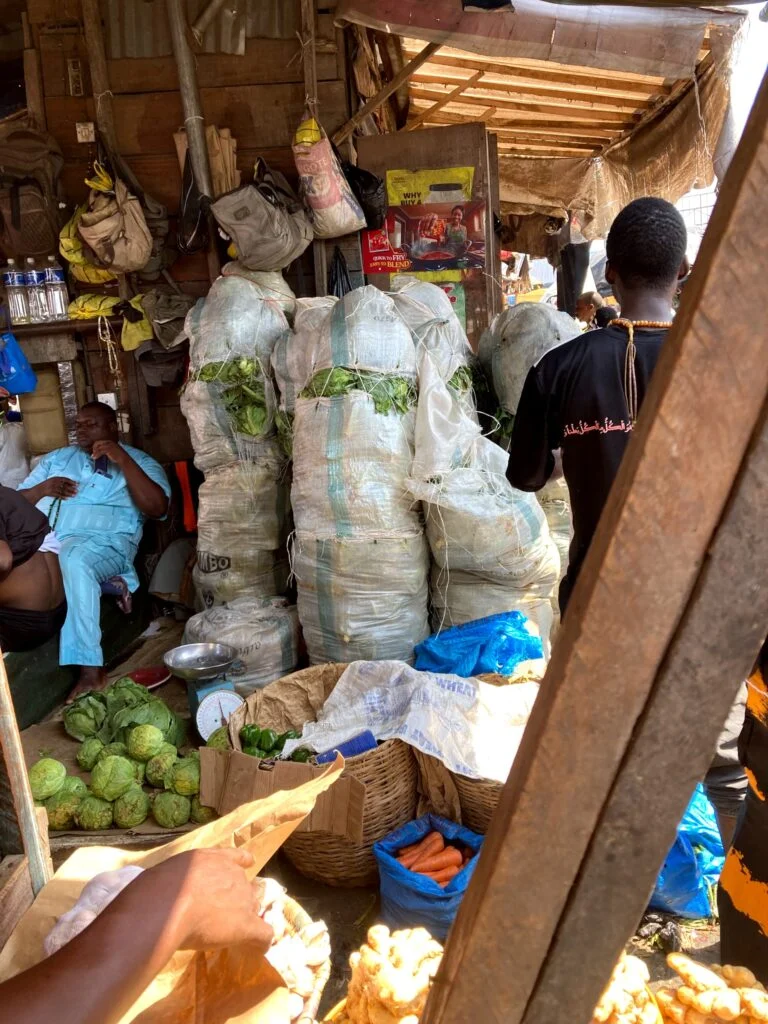
Ms Precious Taiwo, a consumer at Gate 3, Mile 12, said she had lost about N6,000 to spoilt mangoes and bananas, discouraging her from buying fruits as frequently.
Ms Eunice Tosin, a student interviewed at Agboju Market, Festac, said tomatoes and bananas sometimes spoilt shortly after purchase, forcing her to cut off affected portions.
Mrs Onoseme Paulina, a consumer at Iyana Oba, said carrots sometimes deteriorated by the following day, causing losses of about N500 on some occasions.
Paulina expressed concern that some sellers concealed deteriorating carrots beneath fresh ones, adding that she discarded affected produce because of safety concerns.
Mr Eddy Oloye, an engineer and farmer with a personal farm in Lusada, Agbara, said inadequate storage, poor transportation and ineffective preservation methods contributed to post-harvest losses.
Oloye said discarded produce also created environmental nuisance but could be reused as animal feed or processed into other products through effective recycling systems.
He called for government and private-sector support for improved transportation, preservation facilities and training in proper produce handling.
Ms Ebube Agbim, a vegetable seller on Joseph Lambo Street, Costain, said poor packaging and storage contributed to the deterioration of scent leaf, ugu and waterleaf.
Agbim estimated that affected vegetables could be worth about N3,000 daily, although her actual loss was approximately N1,500.
Mr Jubril Useni, a trader at Small Garage, Mile 12, said heat, overcrowded vehicles and prolonged journeys sometimes damaged pepper, green pepper, ground beans and spring onions before they reached the market.
The traders and consumers called for improved transportation, better storage and affordable preservation facilities to reduce waste, protect earnings and make fresh produce last longer. (NAN)(www.nannews.ng)
===========
Edited by Chinyere Joel-Nwokeoma
-
News2 days ago
NUCAP: Nigeria targets 20 million people with 3,700 telecom towers – Technology Times
-

 News2 days ago
Gunmen storm Plateau mining site, kill two persons
-
Business2 days ago
NCC Launches Internet Governance Working Group to Sustain Stakeholder Dialogue
-
News3 days ago
2027: Adebayo’s camp faults Tinubu’s reported campaign absence