News
‘If Nigeria Govt Fails to Protect You, Defend Yourselves’ — US Activist Speaks Amid Insecurity





Former Niger State Commissioner for Information, Culture and Tourism, Jonathan Vatsa, has resigned his membership of the All Progressives Congress, APC, after years of serving in key positions within the party and successive administrations in the state.
Vatsa, a former APC Publicity Secretary in Niger State, announced his resignation in a letter dated October 19, 2026, addressed to the chairman of the party in Gulu Anguwa-Gulu Vatsa Ward, Lapai Local Government Area.
In the letter, a copy of which was made available to journalists in Minna on Sunday, the former commissioner said his decision to leave the party was personal.
“I write to inform you of my decision to resign my membership of the All Progressives Congress (APC), Niger State, with effect from Monday, October 19, 2026,” he wrote.
Vatsa added that he took the decision after consulting his family, friends and political associates.
He also thanked the party for giving him the opportunity to serve in various capacities during his 13 years of membership.
His resignation comes amid political disagreements over the Muslim-Muslim ticket arrangement of the APC in Niger State ahead of the 2027 general elections.
Vatsa has consistently criticised same-faith tickets at both the presidential and governorship levels, warning that the arrangement could undermine the APC's electoral chances.
He has also advocated a balance in the distribution of political appointments and elective offices, maintaining that religious considerations should not exclude sections of the state from political representation.
The former commissioner previously served as the pioneer publicity secretary of the APC in Niger State following the merger of political parties that produced the APC in 2013. He had earlier belonged to the Action Congress of Nigeria, ACN.
He was appointed Commissioner for Information, Culture and Tourism in 2015 under the administration of former Governor Abubakar Sani Bello.
Following a cabinet reshuffle in 2017, he was dropped as commissioner and subsequently appointed coordinator of public communication.
Under Governor Mohammed Umaru Bago, Vatsa served as Special Adviser on Public-Private Partnership, PPP, in 2023 before moving to the media and communication portfolio. He was later dropped from the administration in December.
His departure from the APC marks a new development in the political career of a party stalwart who has remained vocal on issues of political representation and the party's electoral strategy ahead of the 2027 elections.
However, Vatsa did not state any specific reason for his resignation in the letter, describing his decision as personal.

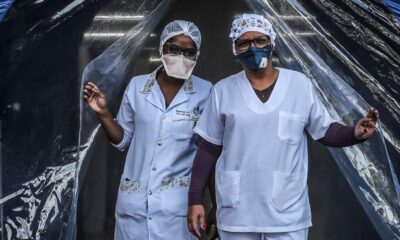
An ongoing strike by health professionals in Katsina State has disrupted services at public hospitals, leaving patients and pltheir caregivers uncertain about access to medical treatment.
The health workers embarked on a one-week warning strike following disagreements with the state government over their welfare and remuneration.
A visit to Turai Yar’Adua Maternal and Child Hospital in Katsina on Saturday revealed the impact of the industrial action, with only a few patients seen around the surgical ward.
For many families, the dispute over workers’ remuneration has heightened concerns over the health and safety of loved ones requiring urgent medical attention.
One of the affected caregivers, Aina’u Abdulmajid, said her patient was suffering from complications arising from surgery and appealed to the state government to restore normal hospital services.
“For the sake of God, we call on the government to intervene. Our patient is suffering from complications arising from surgery. Please help us and restore services,” she pleaded.


Ms Abdulmajid’s appeal reflected the predicament of families who depend on public hospitals for treatment but have found themselves caught between an unresolved labour dispute and the urgent need for medical attention.
Another caregiver, Sulaiman Mansir, said he had brought his sick child to the hospital for treatment but was confronted with the disruptions caused by the strike.
Mr Mansir expressed concern over the uncertainty surrounding his child’s treatment and urged the government to engage the striking health workers to resolve the dispute without further delay.
The industrial action has compounded the difficulties faced by families already grappling with transportation costs, medicines and other medical expenses.
Why health workers are on strike
The News Agency of Nigeria (NAN) reports that the strike was declared by the Assembly of Health Professionals following unresolved disagreements with the Katsina State government over workers’ remuneration and welfare.
The assembly comprises the Medical and Health Workers Union of Nigeria (MHWUN), the National Association of Nigerian Nurses and Midwives (NANNM), and the National Union of Allied Health Professionals (NUAHP).
The assembly’s chairperson, Ibrahim Balange, said the unions issued a seven-day strike notice to the government on 7 October, but the notice expired without a satisfactory resolution of their demands.
Mr Balange explained that the dispute began in 2024, when the state government indicated plans to review the allowances of health professionals to align them with those of their counterparts in federal government service.
He said the workers subsequently raised concerns about the implementation of the minimum wage, alleging that the salary structure approved for them differed from what they were receiving.
According to him, a committee established to investigate the complaints submitted recommendations in March 2025, but the government had yet to implement them.
He said the Office of Public Service Reform later offered the workers 10 per cent of the salary difference between them and their counterparts in federal institutions.
However, the offer did not resolve the disagreement.
READ ALSO: Assault on doctor triggers fresh strike at teaching hospital, months after EFCC controversy
Government responds
Following the commencement of the strike, the state government increased its offer to 15 per cent, but the unions rejected it, maintaining that it fell short of their demands.
The Head of the State Civil Service, Masa’ud Banye, confirmed that government officials had met with representatives of the striking workers to discuss the dispute.
Mr Banye expressed optimism that the disagreement would soon be resolved and acknowledged the difficulties patients were experiencing because of the industrial action.
He said Governor Dikko Radda’s administration remained committed to effective healthcare delivery in the state.
(NAN)
Discover more from Premium Times Nigeria
Subscribe to get the latest posts sent to your email.
-
News3 days ago
Miners Association Seeks Support To Unlock $3bn Gemstone Export Potential
-
Business4 days ago
AFC Appoints CBN Governor Yemi Cardoso as Board Chairman
-

 Health3 days ago
Katsina health professionals declare 7-day warning strike
-
News4 days ago
Lagos unveils 6,000km fibre network backed by $22m investment – Technology Times