News
NEMA, UNICEF strengthen emergency response in Gombe

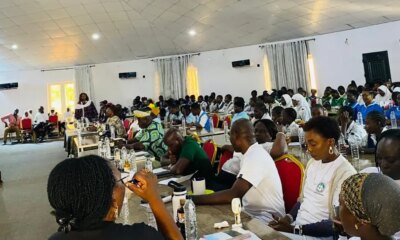
The National Emergency Management Agency (NEMA), supported by the United Nations Children’s Fund (UNICEF), is strengthening emergency response through community engagement training in Gombe.
The three-day training, which began on Tuesday, focuses on improving risk communication, community listening, social behaviour change, and preparedness during humanitarian emergencies.
The programme brought together state-level emergency preparedness and response actors from Adamawa, Bauchi, Borno, Gombe, Plateau, Taraba, and Yobe states for practical capacity building.
Declaring the training open, Godwin Tepikor, NEMA director of planning, research and forecasting, said effective community engagement remained critical to strengthening disaster preparedness and emergency response.
Mr Tepikor, represented by Hajiya Umuna Ahmed, head of operations at NEMA Bauchi/Gombe Office, appreciated UNICEF for its continued partnership in strengthening disaster preparedness and emergency response.
He said increasing frequency and complexity of disasters made clear risk communication, community listening, misinformation management, and appropriate protective actions essential components of effective emergency response.
Mr Tepikor said participants would develop practical skills for ensuring early warning information reached communities promptly, credibly, and in actionable forms to support timely protective decisions.
According to him, strong risk communication and community engagement systems enable communities to understand risks, make informed decisions, and take early action to protect lives and livelihoods.
He described the training as an important platform for collaboration among states’ emergency management agencies, ministries, departments and agencies (MDAs), humanitarian partners, and other relevant stakeholders.
Mr Tepikor urged participants to exchange experiences, share good practices, strengthen partnerships, and apply acquired knowledge to improve risk communication and community engagement within their respective states.
He added that the initiative would ultimately be assessed by participating institutions’ ability to translate acquired knowledge into practical actions that improve preparedness and strengthen community resilience.
Also speaking, Margaret Shoyemi, UNICEF social and behaviour change officer for emergency, public health and humanitarian action, said the programme was designed to strengthen state-level emergency preparedness.
She said the training would improve participants’ capacity in preparedness, community engagement, accountability to affected populations, and effective use of data to guide community-based actions.
Ms Shoyemi explained that UNICEF’s involvement was particularly important because emergencies inevitably affected women, children, families, and communities, requiring responses that addressed their specific needs.
She noted that Nigeria faced several humanitarian challenges, including seasonal flooding, disease outbreaks such as Lassa fever and cholera, displacement, and other emergencies.
According to her, strengthening emergency responders’ capacity was essential to ensuring that the needs of women and children were properly identified and addressed during crises.
She also called for stronger coordination among agencies involved in emergency response, noting NEMA, the Nigeria Centre for Disease Control and Prevention (NCDC), and the National Orientation Agency (NOA).
(NAN)




Business
Photos News: NEM Insurance Emerges General Insurance Company of the Year Award at Almond Award

-

 News3 days ago
Plateau Govt Hails Council Chairmen as Inspection Tour Reveals Projects Across 17 LGAs
-
Business3 days ago
FG welcomes GIGM’s expansion into digital mobility, urges reliable services
-
Business3 days ago
FG Backs Risk-Based Capital, Urges Insurance Directors to Move Beyond Passive Compliance
-
Education3 days ago
PLASGEOC Raises Alarm Over Child Marriage, Calls for Greater Protection of Girls in Plateau