Connect with us

News

San Francisco mayor pushes for tougher rules after the Waymo traffic fiasco

info

Published

on

Waymo robotaxi sf getty.jpg

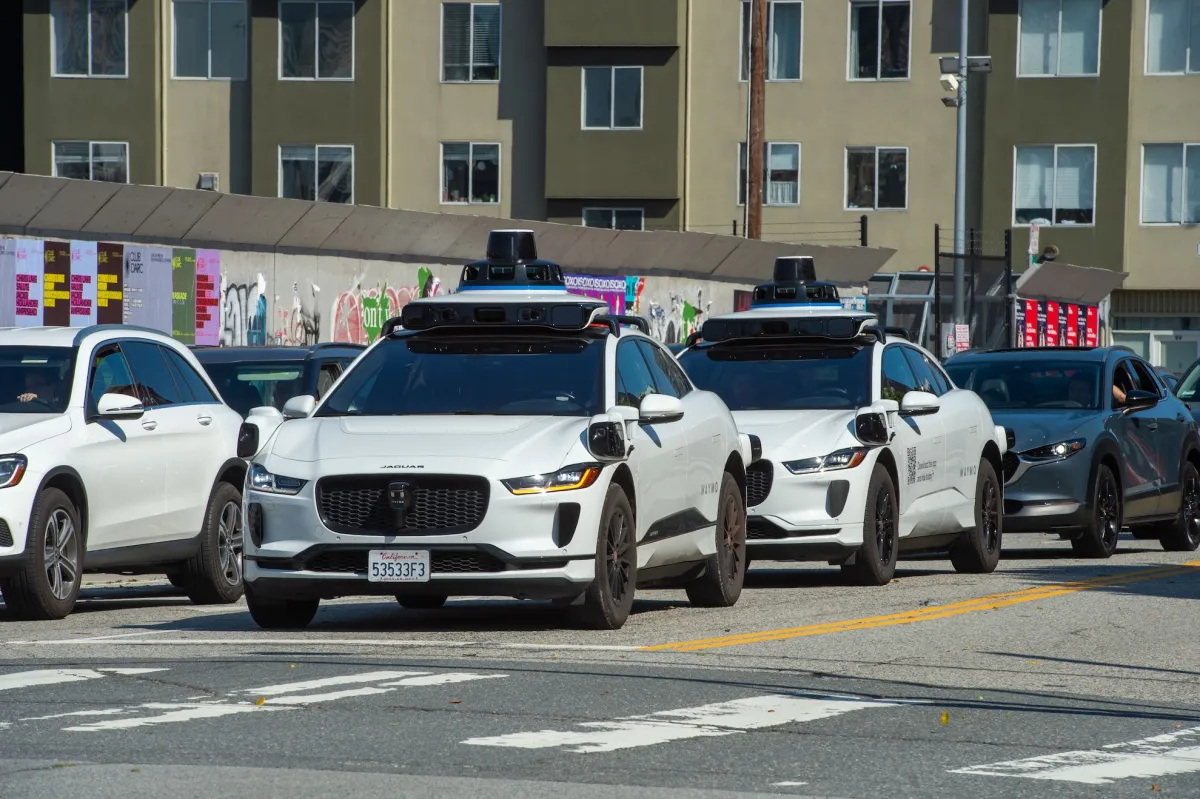
It turns out that even San Francisco mayor Daniel Lurie, who once declared that the city should be a testbed for emerging tech, has his limits. Especially when that emerging tech creates a massive hours-long traffic jam that leaves thousands at a standstill.

Mayor Lurie has asked state regulators to bolster rules for autonomous vehicles nearly two weeks after Waymo robotaxis became immobile in heavy July 4 traffic, ran out of power, and blocked key streets, further compounding the gridlock. The traffic jam, which trapped municipal shuttles, became a citywide problem that affected thousands of people.

In his letter to the state Department of Transportation, which was viewed by TechCrunch, Lurie pointed to two events — a widespread power outage in December and the Golden Gate Bridge fireworks show on July 4 that attracted 100,000 spectators — both of which led to dozens of stranded Waymo vehicles and paralyzed traffic. The San Francisco Chronicle first reported on the letter.

The events, he said in the letter, “demonstrated that California’s current regulatory framework does not adequately address how autonomous vehicles operate during major incidents, planned or not. California’s challenge now is not just whether autonomous vehicles can operate safely under normal conditions, but also whether they can perform reliably during extraordinary ones.”

Lurie said autonomous vehicle manufacturers should be able to demonstrate four “core operational capabilities” and asked the California Department of Transportation to establish statewide standards to prevent future problems like the July 4 gridlock incident.

Under Lurie’s vision, companies would be required to immediately remove or relocate robotaxis from active travel lanes to keep people moving and be required to be able to adapt in real time, adjusting their routes, service area, and pickup and drop-off locations. Companies would also have to share real-time operations data with local agencies, including service disruptions, the locations of immobile robotaxis, and recovery efforts as well as demonstrate through testing that they can handle large influxes of people and traffic.

TechCrunch has reached out to Waymo for comment. The article will be updated once the company responds.

Any company that wants to operate a robotaxi service in California has to successfully navigate two testing and deployment permit processes, one administered by the state’s Department of Motor Vehicles and the other by the Public Utilities Commission. California’s existing regulatory framework is stricter than that of other states like Texas and Arizona, but that hasn’t dissuaded companies from trying to operate there.

San Francisco and the wider area that stretches south into Silicon Valley have long been a testbed for autonomous vehicle technology. Six companies, including Nuro, Waymo, and Zoox, hold driverless testing permits, which allow the vehicles to drive without a human safety operator behind the wheel.

But the area has also become the launch point for commercial services, which requires other permits from the DMV and CPUC.

Waymo is the largest, with an estimated 1,000 robotaxis operating in the Bay Area today. But there are plenty of others either testing or poised to launch commercial operations, including Amazon-owned Zoox as well as a premium robotaxi service that will be operated by Uber. Tesla has a branded robotaxi service but it doesn’t use driverless vehicles, nor does it have the permits to do so. Instead, Tesla has a charter transportation permit, which allows its own drivers to pick up and drop off riders throughout San Francisco in vehicles equipped with its advanced driver-assistance system rather than fully autonomous software.

Waymo’s scale has made it the focal point for regulators in San Francisco and beyond. The company now operates in 11 cities and has said it completes more than 500,000 paid rides every week. In San Francisco, Lurie noted that Waymo had agreed to restrict its service on July 4 near the waterfront and had even assigned a representative to the city’s emergency center. But that wasn’t enough to keep the Waymos out of the heavy traffic that occurred outside of that district.

Lurie said these voluntary actions are no longer enough — a reflection of just how big Waymo’s fleet has become. He said the four proposed requirements “will not undermine autonomous vehicles; they will strengthen them.”

When you purchase through links in our articles, we may earn a small commission. This doesn’t affect our editorial independence.

Continue Reading
Click to comment

Leave a Reply

Your email address will not be published. Required fields are marked *

News

“Herdsmen sent a threat letter to me” – Reverend Dachomo alleges

info

Published

on

By

IMG 9554 1200x675.jpeg

Reverend Ezekiel Dachomo, Regional Chairman of the Church of Christ in Nations (COCIN) in Barkin Ladi Local Government Area in Plateau State has said he has received a threatening letter from suspected Fulani herdsmen vowing to attack and kill him along with members of his household.

Dachomo made the disclosure in a video shared on his X account, following fresh attacks on communities in the state by suspected armed herdsmen.

He claimed the letter, written in both Hausa and English, was sent by the herdsmen and that copies have been distributed to heads of various security agencies in the state.

In the video, the cleric quoted the letter’s senders as saying they would kill him and nine members of his household, just as they allegedly killed nine of his relatives.

Reverend Ezekiel Dachomo

“A few days ago, Fulani herdsmen sent a threatening letter to me and to members of my church. The letter was written in both Hausa and English, and its message was terrifying.

“They vowed to attack me and kill me soon, just as they killed nine of my relatives. Copies of these threatening letters have already been handed over to the security operatives,” Dachomo said.

Despite the threats, Dachomo said he remains unafraid, placing his life in God’s hands.

“Many people have asked me if I am afraid. My answer is no. I am not afraid because my life is in the hands of Almighty God,” he stated.

Reverend Ezekiel Dachomo
Rev Dachomo in Plateau community

“The Lord is on my side; I will not fear. What can man do unto me?”

The reverend recounted the profound personal losses he has endured from recent attacks, describing the pain of conducting burials for loved ones and comforting families who lost parents and relatives.

“I know what it means to bury those I love. I know what it means to wipe the tears of children who watched their parents murdered. I know what it means to stand before grieving families whose only crime was refusing to deny Jesus Christ,” he said.

“Now they say I will be next. But I ask the world, what is my crime? Is my crime that I speak for widows who have no voice? Is my crime that I cry for orphaned children whose parents were murdered? Is my crime that I tell the stories of persecuted Christians in Nigeria so the world will not forget them?”

“If that is my crime, then I will continue until my last breath,” Dachomo added.

He emphasized that killing him would not silence the truth. The cleric called on the world to remember the victims and support justice for persecuted Christians.

“Remember the widows. Remember the orphans. Remember the innocent Christians who continue to suffer simply because of their faith. Stand with us in prayer. Stand with us in truth. Stand with us in demanding justice for every innocent life,” he urged.

“If one day my voice is silenced, let the world remember that I never carried a weapon. My only weapon was the truth. My only mission was to defend the persecuted.”

Continue Reading

News

BREAKING: Court strikes out suit seeking recognition of Turaki-led PDP national leadership

info

Published

on

By

Court.jpg

A Federal High Court in Abuja has struck out a suit seeking to compel the Independent National Electoral Commission, INEC, to recognise and publish the names of the Kabiru Turaki-led Interim National Working Committee of the Peoples Democratic Party (PDP).

Justice Salim Ibrahim, in a judgement delivered on Friday, held that the plaintiffs, led by the Chairman of the PDP Board of Trustees, Senator Adolphus Wabara, lacked the legal standing to institute the suit and consequently struck it out for want of jurisdiction.

The court upheld the preliminary objection filed by INEC and sustained similar objections raised by parties seeking to be joined in the suit, ruling that the plaintiffs failed to establish that INEC had recognised the purported Interim National Working Committee or that they had the authority to sue on behalf of the PDP.

Continue Reading

Trending