Business
CBN issues operational guidelines for BDCs’ forex purchases from banks, introduces tracking portal

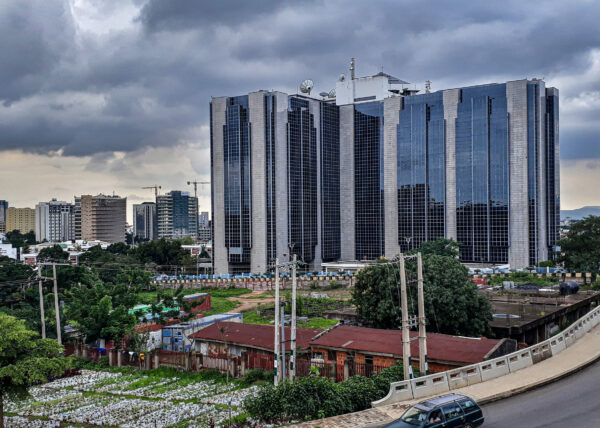

The Central Bank of Nigeria (CBN) has issued detailed operational guidelines for Bureau De Change (BDC) operators to purchase foreign exchange from authorised dealer banks through the Nigerian Foreign Exchange Market (NFEM).
The framework introduces an electronic tracking portal and compliance requirements to improve transparency, efficiency, and liquidity in the retail foreign exchange market.
In a circular addressed to authorised dealer banks and licensed BDC operators on Thursday, the apex bank said the guidance follows its 10 February circular, which granted BDCs access to foreign exchange from the NFEM through authorised dealer banks of their choice.
According to CBN, the new framework provides the regulatory guidance and operational modalities for implementing the policy and supporting sustained liquidity in the retail segment of the foreign exchange market.
CBN said the guidelines take immediate effect and apply to all licensed BDCs, authorised dealer banks, and all foreign exchange transactions conducted between them through the NFEM.

Framework
Under the framework, CBN will deploy a centralised electronic platform known as the FX BDC Purchase Tracker (FXBT) to enable BDCs to submit purchase requests electronically and provide real-time transaction data for regulatory oversight.
The apex bank said every licensed BDC is free to purchase foreign exchange from any authorised dealer bank of its choice, stressing that banks must not impose exclusivity arrangements or referral fees.
“No Authorised Dealer Bank shall impose exclusivity arrangements, referral fees, or any condition that restricts a BDC’s freedom to select its preferred counterparty bank,” CBN said.
Requirements
CBN said only BDCs with valid and subsisting licences would be eligible to participate in the framework, while operators under regulatory sanctions or with suspended licences would be excluded until such restrictions are lifted.
Before executing any foreign exchange transaction, authorised dealer banks are required to complete Know Your Customer (KYC) and Customer Due Diligence (CDD) checks on BDCs.
Banks must also obtain and retain the BDC’s licence certificate, Tax Identification Number (TIN), Corporate Affairs Commission (CAC) incorporation documents, beneficial ownership information, and details of principal officers.
The regulator added that enhanced due diligence should be conducted for higher-risk BDCs, while KYC records must be updated annually or whenever there are significant ownership or management changes.
“No foreign exchange shall be disbursed to any BDC that has not satisfied the Bank’s KYC and due diligence requirements,” it stated.
Settlement rules
The guidelines require authorised dealer banks to acknowledge purchase requests within two business hours through the electronic portal and immediately communicate approval or rejection.
Where requests are rejected, banks must provide reasons, including incomplete KYC documentation, unresolved compliance issues, internal risk considerations, or where the BDC has already reached the weekly $150,000 purchase limit through another bank.
CBN also directed that all settlements between banks and BDCs, as well as between BDCs and customers, must be conducted exclusively through accounts held with licensed financial institutions.
It prohibited third-party transactions, stating that foreign exchange purchased by a BDC must be credited only to its registered settlement account.
“Disbursement to any account other than the BDC’s own registered account shall constitute a regulatory violation and shall be reported immediately to the CBN,” the circular stated.
The apex bank further directed BDCs not to retain unused foreign exchange purchased from the NFEM.
It said any unutilised balance must be sold back to the market within 24 hours after the expiry of the utilisation period.
“Failure to comply shall attract regulatory sanctions, including but not limited to forfeiture of the unutilised balance and suspension of the BDC’s NFEM access,” CBN said.
The bank clarified that the 24-hour rule also applies to foreign exchange obtained from other autonomous sources.
Reporting, sanctions
Under the framework, licensed BDCs are required to continue submitting weekly electronic returns to the CBN detailing total foreign exchange purchased, sales to end-users by transaction category, unutilised balances and how they were disposed of, as well as settlement breakdowns.
CBN warned that violations of the guidelines could attract sanctions under the Banks and Other Financial Institutions Act (BOFIA) 2020 and the Foreign Exchange Act.
READ ALSO: CBN approves weekly sale of $150,000 to BDCs
These include monetary fines, suspension of NFEM access, withdrawal or suspension of BDC licences, revocation of authorised dealer status for banks found complicit in violations, and referral to law enforcement agencies where criminal conduct is suspected.
The Trade and Exchange Department will oversee compliance through on-site and off-site examinations, which may be conducted without prior notice.
CBN added that, while BDCs may continue their existing relationships with authorised dealer banks, all future transactions must comply with the new operational framework with immediate effect.








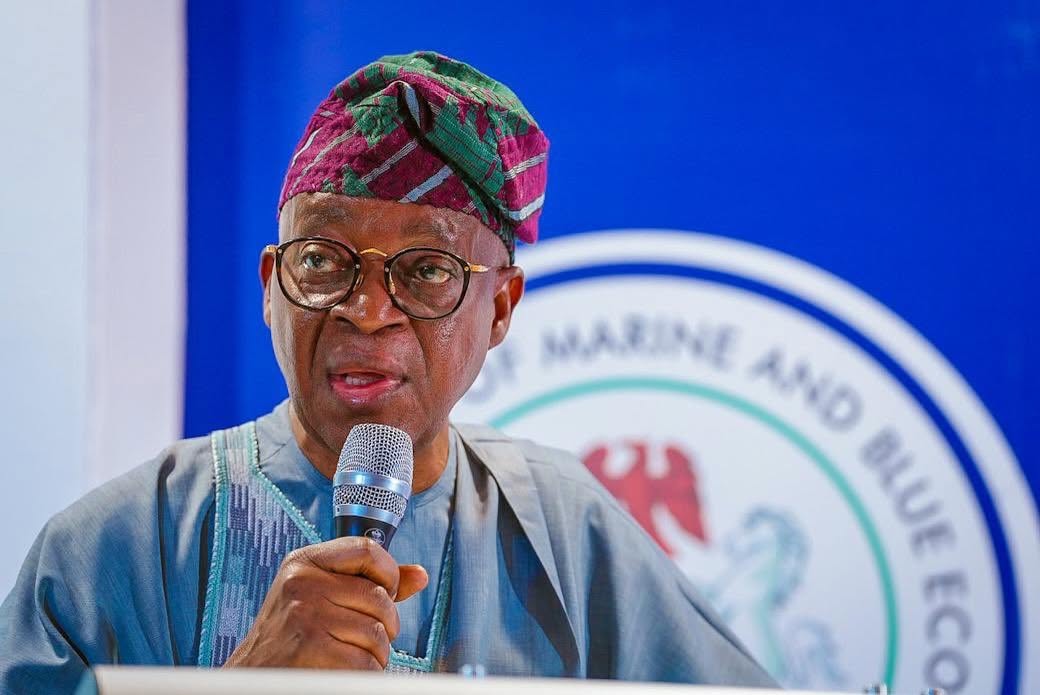
The Nigerian Ports Authority (NPA) has moved to address rail connectivity and logistics challenges affecting inland dry ports as part of efforts to integrate the facilities into the nation’s port system and improve cargo movement across the country.
The move followed a meeting between the NPA management, led by its Managing Director, Abubakar Dantsoho, and the Executive Director of Dala Inland Dry Port, Ahmad Rabiu, alongside representatives of Funtua Inland Dry Port, at the authority’s corporate headquarters in Marina, Lagos.
The engagement came after the Minister of Marine and Blue Economy, Adegboyega Oyetola, directed the transfer of operational oversight of inland dry ports to the NPA.
The discussions focused on strengthening institutional collaboration, addressing infrastructure constraints and improving operational efficiency across Nigeria’s maritime logistics chain.
Speaking during the meeting, Mr Dantsoho stressed the need to upgrade inland dry port infrastructure and technical capacity to complement ongoing modernisation efforts at the nation’s seaports.
He said the facilities must be equipped to handle increasing cargo volumes and support the broader transformation of Nigeria’s maritime sector.

“For our Inland Dry Ports to function at the same velocity as the ongoing modernisation across our seaports, we must proactively upgrade dry port infrastructure and technical capacity,” Mr Dantsoho said.
He explained that the integration of digital platforms, including the Port Community System (PCS) and the National Single Window, into seaport operations must be matched by corresponding improvements at inland dry ports.
“As we integrate digital systems such as the Port Community System (PCS) and the National Single Window in our seaports, the dry ports must deploy modern equipment and advanced technical capabilities to handle larger cargo volumes and bigger vessels coming to our coast,” he added.
Increased private-sector investment
The NPA managing director also called for increased private-sector investment in inland dry port infrastructure, noting that stronger investment would be critical to improving cargo handling capacity and operational efficiency.
He cited APM Terminals’ establishment of an Export Processing Terminal in Northern Nigeria as an example of private-sector participation in the development of inland logistics infrastructure.
ALSO READ: INVESTIGATION: Ganduje embroiled in multi-billion naira Kano dry port ownership scandal
Mr Dantsoho assured stakeholders that efforts to optimise the inland port system were underway and confirmed plans to visit the Dala and Funtua facilities to assess their operational conditions and infrastructure requirements.
Operational oversight
Speaking on behalf of the delegation, Hassan Bello welcomed the transfer of operational oversight to the NPA, expressing appreciation for what he described as a seamless transition.
Mr Bello referenced the gazetted Port Act, which recognises inland dry ports as official ports of origin and destination, while drawing attention to challenges confronting the facilities, particularly inadequate rail connectivity and broader logistics constraints.
Rail access is a critical component of inland dry port operations, as efficient connections to the national rail network can facilitate cargo movement between seaports and inland destinations, potentially reducing pressure on road transport and lowering logistics costs.
The meeting also established a framework for further technical consultations, infrastructure integration and physical planning to identify the requirements for improving operations at the facilities.
The discussions highlighted the need for detailed technical assessments, stakeholder coordination and physical inspections to establish infrastructure priorities and guide subsequent project development.
The planned visits to Dala and Funtua inland dry ports are expected to provide NPA with a clearer understanding of the facilities’ operational challenges and the interventions required to strengthen their roles in cargo distribution, trade facilitation and wider maritime logistics network.
Discover more from Premium Times Nigeria
Subscribe to get the latest posts sent to your email.
-

 Business3 days ago
Communications Ministry made ₦345.5 million duplicate payment for Abuja ICT Park project
-
News3 days ago
LumenUs helps automate tedious paperwork in times of grief
-
Business4 days ago
Fuel subsidy would cost Nigeria over N20trn yearly — Minister
-
News3 days ago
Inside INEC’s AI and cybersecurity plans to secure Nigeria’s 2027 Elections – Technology Times