News
SABER Report: Digital governance reshapes business competitiveness in Nigeria – Technology Times


Digital governance is emerging as a decisive factor in determining business competitiveness across Nigeria’s states, with the latest State Action on Business Enabling Reforms (SABER) Report showing that technology-driven reforms are increasingly shaping investor confidence and economic growth.
The report, reviewed by Technology Times, highlights how states investing in online government services, digital land administration, broadband infrastructure and 5G connectivity are strengthening their appeal to investors by creating more efficient and transparent business environments.


Digital governance reshapes business competitiveness
According to the SABER Report, digital public infrastructure has become as critical to investment attractiveness as traditional infrastructure such as roads, electricity and transport networks.
Rather than focusing solely on physical infrastructure, investors are now assessing how efficiently they can interact with the government through digital platforms, process land transactions, obtain permits and access reliable internet connectivity.


Among the highest-ranked states, digital connectivity emerged as one of the strongest-performing indicators, underscoring the growing role of technology in driving investment competitiveness.
The report notes that digital reforms are extending beyond the automation of government services to include Geographic Information System (GIS)-supported land administration, digital grievance-redress mechanisms, one-stop investment centres and broadband expansion.
These initiatives, the report says, are helping to reduce bureaucracy, improve transparency and lower the cost of doing business across the country.


Kaduna, Oyo and Enugu leverage technology
Among the highest-ranked states, digital connectivity emerged as one of the strongest-performing indicators, underscoring the growing role of technology in driving investment competitiveness.
Kaduna State, ranked second nationally, was recognised for integrating digital infrastructure into its broader economic development strategy.
“With recommended RoW fees, progressing online service automation, and access to 5G infrastructure, the State has taken foundational steps toward better digital connectivity. This is critical as more businesses rely on digital tools, platforms, and communication networks to grow and remain resilient,” the report stated.


The assessment added that Kaduna’s manufacturing base, agro-processing industry and educational institutions are complemented by its commitment to digital governance, creating a more efficient operational environment for investors.
The assessment added that Kaduna’s manufacturing base, agro-processing industry and educational institutions are complemented by its commitment to digital governance, creating a more efficient operational environment for investors.
Oyo State also emerged among the leading performers, with the report citing favourable Right of Way (RoW) fees, digitised government services and 5G coverage as key contributors to its improved digital infrastructure.
The report said these measures complement Oyo’s GIS-backed land administration system, reliable electricity supply, structured tax administration and effective grievance-redress framework.
Enugu State was similarly recognised for leveraging technology to improve governance and investment readiness.
The report noted that Enugu combines digital connectivity with a functional GIS-backed land administration system, a one-stop investment shop and workforce development initiatives, while identifying the digital economy as one of its strategic priorities for accelerating growth through public-private partnerships.


Ekiti and Lagos strengthen digital ecosystems
Ekiti State was highlighted for embracing digital governance through favourable RoW fees, digitised government services and 5G-enabled infrastructure.
According to the report, these initiatives complement the state’s reliable electricity supply, GIS-supported land administration and functional grievance-redress mechanism, helping to strengthen the business environment despite persistent structural challenges.
Lagos State, ranked first in the assessment, was identified as Nigeria’s most advanced business destination.
The report described Lagos as offering “one of the most advanced and competitive business environments in the country,” combining reliable electricity, transport infrastructure, digital services, functional land administration, efficient courts and alternative dispute resolution mechanisms, an operational one-stop shop, accessible grievance-redress systems, credit access and a highly skilled workforce.
It also identified “Smart City Tech (FinTech, GovTech, Wealth-Tech)” among Lagos’ key investment opportunities, highlighting the growing role of digital innovation in driving economic growth.
The Federal Capital Territory featured prominently in the report’s recommendations for digital transformation.
The assessment urged the FCT Administration to digitalise land registration processing and verification systems and upgrade its one-stop shop into a comprehensive digital gateway that would streamline business registration and provide integrated end-to-end services across multiple agencies.


Technology alone is not enough
Despite the progress recorded in digital governance, the report warned that technology alone cannot create an attractive investment climate.
It noted that digital connectivity remains uneven across many states, particularly outside major urban centres.
Using Lagos as an example, the report stated: “The current state of digital connectivity infrastructure is uneven and presents an opportunity for strategic improvement. Existing network coverage is concentrated in urban centres, and limited rural interconnectivity is resulting in restricted e-commerce adoption for businesses ultimately affecting competitiveness.”


Kaduna, Oyo, Enugu and Ekiti were all noted as facing challenges in areas such as investor support, finance and interstate trade, despite their strong performances in digital governance.
The report argued that stronger digital infrastructure would improve data exchange, expand market opportunities for rural enterprises and support greater business productivity through wider access to high-speed internet.
It also identified recurring institutional weaknesses across many top-performing states, including poor investor aftercare, limited access to finance, weak commercial dispute-resolution systems, transport bottlenecks and inadequate electricity supply.
Kaduna, Oyo, Enugu and Ekiti were all noted as facing challenges in areas such as investor support, finance and interstate trade, despite their strong performances in digital governance.
Fibre and GovTech reforms drive next phase
To consolidate gains in digital governance, the report repeatedly recommended the expansion of broadband infrastructure across Nigerian states.
“Upgrade digital infrastructure by extending fiber optic networks and incentivizing last-mile connectivity. This will make high-speed internet more reliable, cut operational friction, and help businesses access markets easier,” the report recommended.
The assessment also called for wider deployment of digital investor issue-resolution platforms, judicial automation, online government portals, digital grievance-redress systems and integrated regulatory platforms.
Overall, the SABER Report points to a significant shift in Nigeria’s business reform agenda, where digital governance is becoming a defining factor in state competitiveness.
States that successfully integrate broadband expansion, 5G deployment, online public services, digital land administration and institutional reforms are likely to gain a stronger competitive advantage in attracting investment, stimulating enterprise growth and advancing Nigeria’s digital economy.
Stay ahead with real-time reports, breaking news, and exclusive insights delivered directly to your phone. Don’t settle for outdated information. Join TECHNOLOGYTIMES NEWS on WhatsApp for 24/7 updates.
Join Our Whatsapp Channel






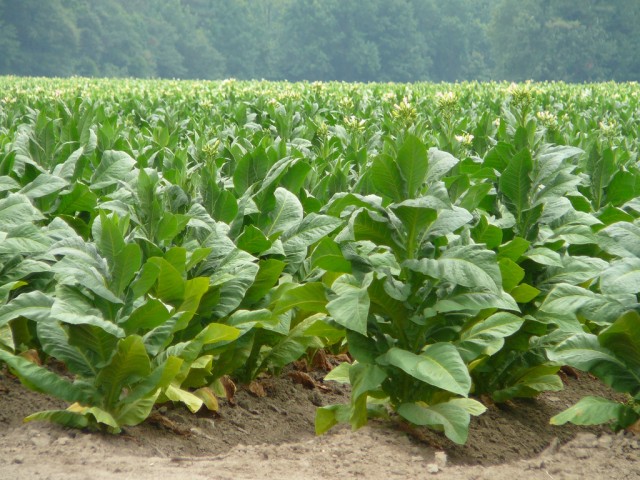

A new analysis by the World Health Organisation (WHO) has revealed that tobacco-leaf production in Africa increased by almost nine per cent between 2012 and 2024, despite a nearly 19 per cent decline in global production.
The increase, according to the findings, is raising concerns about the health risks faced by tobacco farmers and workers, as well as the wider environmental and social consequences of tobacco cultivation.
Africa produced more than 639,000 tonnes of tobacco leaf in 2024, representing about 11 per cent of global tobacco-leaf production, the analysis noted.
The findings showed that tobacco production is highly concentrated in five countries: Zimbabwe, Malawi, Tanzania, Mozambique and Uganda.
East Africa alone accounts for nearly 90 per cent of tobacco-leaf production on the continent.

Health risks
Vinayak Prasad, head of the Tobacco Free Initiative at WHO, said tobacco farming exposes workers and their families to serious health risks, while also damaging the environment and potentially trapping farmers in cycles of debt.
Mr Prasad said the issue extends beyond tobacco control and should also be viewed through the lens of health, trade, development and environmental sustainability.
“This is not just a tobacco-control issue. It is a health, trade, development and environmental issue,” he said.
The analysis identified green tobacco sickness as one of the direct health risks faced by tobacco farmers.
The condition occurs when nicotine from wet tobacco leaves is absorbed through the skin during handling.
Farmers and other workers may also be exposed to pesticides and tobacco dust during cultivation and processing, the report noted.
Beyond direct exposure, tobacco farming also consumes large amounts of land, water and other natural resources that could otherwise support food production and sustainable livelihoods.
The practice is also associated with soil degradation, deforestation and greenhouse gas emissions from the curing of tobacco leaves.
Children at risk
WHO also raised concerns about children from poor households being involved in tobacco farming.
According to the organisation, children in some low and middle-income countries miss school to work on tobacco farms and supplement their family income.
The report said this could further expose children to the health and social risks associated with tobacco cultivation while affecting their education.
Tobacco’s economic burden
The health concerns come alongside an increase in Africa’s cigarette imports.
According to the analysis, the continent’s cigarette import bill more than doubled between 2012 and 2024, rising from $833 million to $1.77 billion.
The findings also challenged the argument that tobacco is economically indispensable to most countries.
Tobacco-leaf exports account for more than one per cent of gross domestic product in only a small number of economies, including Malawi and Zimbabwe.
For most countries, the economic contribution of tobacco production and trade is limited, while the health, social and environmental costs remain substantial, WHO said.
Mr Prasad said countries needed support to move away from economic dependence on tobacco and provide alternative livelihoods for farmers and workers.
“Countries need support to move away from economic dependence on a product that harms health, farmers and the environment,” he said.
He said the findings showed why trade and development policies needed to be aligned with public health and sustainable development goals.
READ ALSO: FG begins nationwide distribution of ambulances to strengthen emergency care
Alternative livelihoods
Under Articles 17 and 18 of the WHO Framework Convention on Tobacco Control, countries are encouraged to promote economically viable alternatives for tobacco workers and growers.
The provisions also call on countries to protect the environment and human health from the effects of tobacco cultivation.
WHO called for stronger support for countries seeking to diversify away from tobacco production, protect farming communities and strengthen tobacco-control policies.
The organisation also urged countries to reduce the economic burden associated with tobacco use and trade.
Discover more from Premium Times Nigeria
Subscribe to get the latest posts sent to your email.

-

 Events2 days ago
Nigeria’s Christian Leaders to Unite in Abuja for First Lausanne Congress in Over 10 Years (Register Now)
-
News3 days ago
Sony Music, Warner sue Anthropic, alleging a “brazen campaign” of intellectual property theft
-
Business3 days ago
OpenAI to end Cursor deal with SpaceX over contract, safety concerns
-
Health3 days ago
FG deploys task force to respond to diphtheria outbreaks in Kano, Katsina