Health
Red Cross Calls for Lasting Peace as 300 Displaced Families in Miango Receive Relief Support

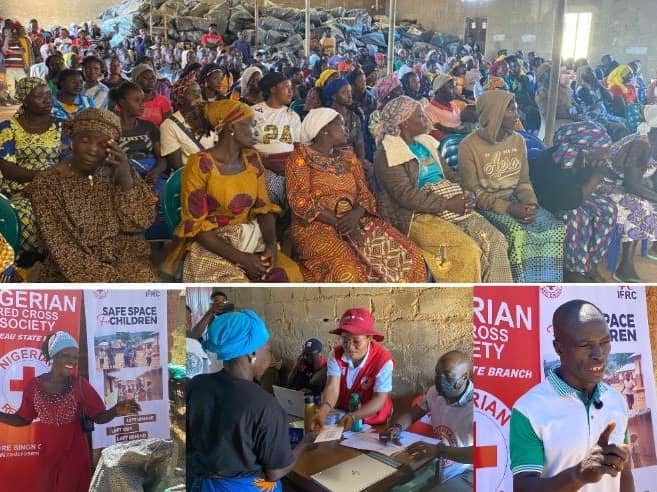
About 300 families in Miango community of Bassa Local Government Area, Plateau State, have received ₦100,000 cash and essential household materials from the Nigerian Red Cross Society (NRCS) in collaboration with the International Federation of Red Cross (IFRC), to help them rebuild their lives after recent violent attacks displaced many residents.
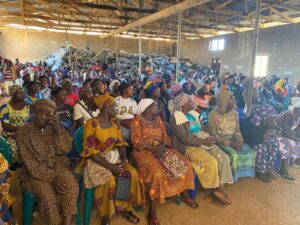
The relief distribution, held on Tuesday, November 11, was both emotional and hopeful as displaced families gathered to receive items including mats, mosquito nets, blankets, aqua tabs for water purification, cooking utensils, buckets, soap, and ATM cards preloaded with ₦100,000 each.

Razaki Unusa, the Team Lead and Plateau State Disaster Management Officer of the Nigerian Red Cross Society (NRCS), said:
“The Red Cross is an organization with the vision to help humanity, giving a hand to those who can’t help themselves. We are here in Bassa LGA to give relief to victims of attacks, and the beneficiaries consist of those who are mostly affected like the pregnant women, widowed, aged persons, persons with disability, those who have lost all members of their family and so on.
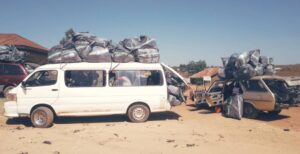
Before we brought this relief, we were able to interact with them to know what they need most and the best way we can come in. We realized that most of them have lost their homes and don’t have where to sleep, that’s why we provided the mats, blankets, and mosquito nets. There’s also the issue of water, which is why we provided them with aqua tabs so that they can drink clean water, and a stipend of ₦100,000 that they can use to settle other things we were not able to provide.
This is the little we can do with the help of our funding partner, the IFRC. From this intervention, we have been able to see the end result of conflict, how it affects people, and how much people in conflicting areas need support. But we can only do this much, so we are calling on the international community together with the government to initiate peace and see how peaceful coexistence can take preeminence so that we don’t keep having people dealing with the consequences.”
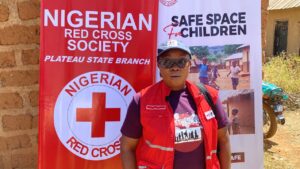
Patience Adaje, Senior Officer, Nature-Based Solutions, IFRC, added:
“Our aim is to help the community, especially the displaced persons, to be able to recover from the losses and the displacement that they’ve gone through.”
Community leaders also expressed deep gratitude. Meangwa of Tegbe District, Sunday Yara, said:
“You know as leaders, when things like this happen, it pains you and you won’t know what to do—because is it to console your people or to mourn yourself? But Red Cross has found a way to console us.”
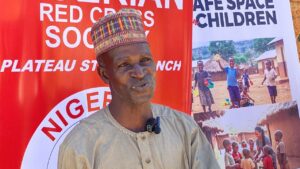

Another Meangwa of Tegbe, Tomos Ganson, noted:
“What has happened in our community is very painful. Almost everybody was affected and we don’t know what to do—houses burnt, farms destroyed. Now we are trying to build our lives again. These things given to us by Red Cross will really help all of us. Thank you, Red Cross, and we hope and pray that they reach out to other communities too, and that these killings should stop.”

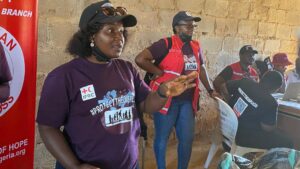
Pastor Sunday Wollo of RCCG Tegbe also shared his experience:
“If you check our church, you will see it empty because these people came, killed us, attacked us. My church members were killed. The Bible said cry to the Lord and He will send you help—and God has sent us Red Cross. Even though it won’t bring back all we have lost, it will help us to get by. Many have lost their homes, properties, and families. At least with this mat, they have what to lie on and money to eat.”

Similarly, Pastor Zanfara Zerechi of Ancha District said:
“I lost my only son to this unprovoked attack. He was killed in broad daylight on his way to the farm. He left behind his wife and son for me to take care of, and it hasn’t been easy at all. So I want to thank Red Cross for providing for us. This ₦100,000 is going to help a lot.”


Two other beneficiaries, Ladi Sunday from Tegbe District and Jumia Barry from Ancha District, said they were “the happiest” since the attacks, as they had not had any sense of direction until this intervention. Jumia explained that her elder brother, who was their breadwinner, was killed. The two women were seen dancing and singing throughout the process, even before receiving their relief items, and even more after collecting theirs.

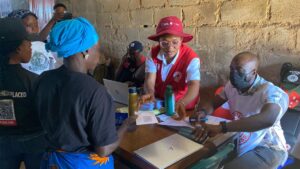
The CRC Community Resilience Corps Committee Leader, Sunday Tsi, said:
“When Red Cross came to our community, they told us they wanted to help us and gave us categories of people—that is, displaced persons like the aged, nursing and lactating mothers, pregnant women, persons with disability, and widowed orphans. So they gathered those people, listened to them, asked them some questions, and then did capturing of the most affected. And today they are here as promised. We are really grateful that they carried us along in the process.”

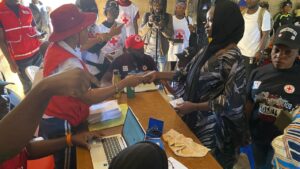
Grace Sunday from Tegbe District narrated her painful experience:
“My mother and the girl staying with me were burnt to death in the first attack. Then, in another attack, I lost my husband, and my daughter’s hand was cut off. Our land was destroyed and it has not been easy for us at all. I will use this money to start a business. I’m so grateful to Red Cross and to God for bringing you. May you continue to prosper.”
Another excited beneficiary, Mary Moses, who took a selfie after receiving her package, said:
“During one of the attacks, my mother and father were killed and since then I have been on my own. So I’m very happy. I’m going to use everything well. I will do business and try to go to school. Thank you, Red Cross, I’m very happy. This number you gave us—when we call it, it will be to say thank you, not for anything bad, only good news. Thank you oh!”
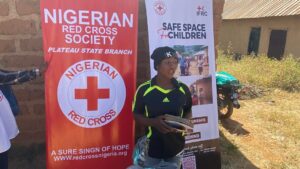
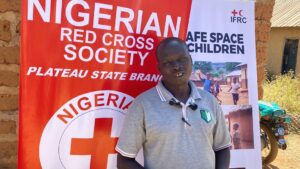
Gastos Sunday also expressed appreciation, saying:
“What happened to us is not to our liking, and that’s why sometimes when they bring things like this to us, you see us crying because we remember our losses. If this wickedness was not done to us, then we wouldn’t be receiving this. But we are indeed very grateful to Red Cross. When they first came and told us they would help, some of us did not believe, but they kept to their words and today they brought all these. We are very grateful. Thank you very much. May God provide for all the international people helping us and the Nigerian Red Cross and all you people helping—thank you. We also pray that these attacks won’t happen again.”
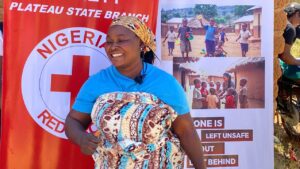
Laraba Yohanna said:
“I have no one. I lost my parents and children in these attacks. Now I have no one. But today, with the help of Red Cross—ah Red Cross thank you. I thank you, where you are taking from will not dry. Thank you.”
Other beneficiaries, including Afiniki Joseph, Mats Danladi, Asebe James, and Eve Barry, also prayed fervently for the Red Cross team in appreciation.
The Community Engagement Accountability (CEA) Focal Point for the Plateau Branch noted that:
“The beneficiaries of this intervention are indeed the most affected displaced persons. Most are displaced, but there are some that are so honorable, and the relief given to them are indeed things needed by these displaced persons, which can be seen from their excitement. The distribution process has been orderly, sincere, and smooth so far, with cooperation from the people and the Red Cross.”


Finally, Gift Reshi Azamu, a volunteer with the NRCS, said:
“It’s been a privilege to work with the Nigerian Red Cross Plateau Chapter, and so far, this has helped me to relate more with the issues that come with conflict. You know, most times you hear about these attacks on radio and television, but you still don’t get it. Having come here and seen these communities, I’ve learnt that choosing peace is the best because these people are going through a lot. But today I can also say that this intervention is indeed very helpful. Look at the smiles on their faces—they were even dancing earlier, some even crying. So I hope more of these interventions keep coming. Yes, humanity first, and we really appreciate Red Cross. It’s an honor working with them.”








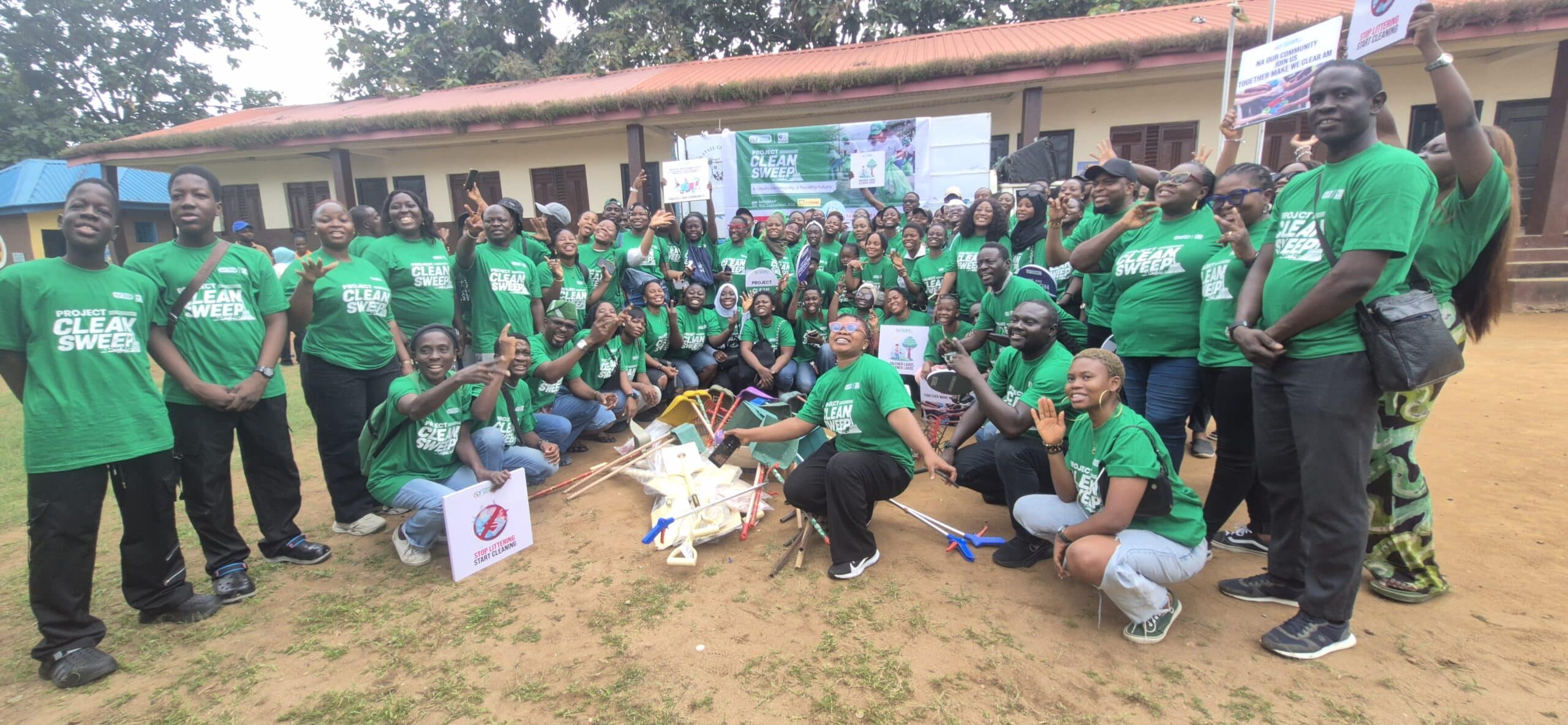
Fidson Healthcare Plc has mobilised its staff and volunteers to clean communities in Lagos as part of activities to mark World Cleanup Day 2026.
The exercise, held on Saturday morning, took place around Obanikoro, Fadeyi, Palmgrove and Shomolu axis of Lagos state, with employees of the company and volunteers participating in the cleanup and environmental hygiene advocacy.
The initiative, tagged Project Clean Sweep 2026, was organised by Fidson in partnership with the African Cleanup Initiative (ACI) as part of its corporate social responsibility (CSR) and sustainability initiative.
The Lagos Waste Management Authority (LAWMA) also participated in the exercise, with its advocacy team supporting the organisers.
World Cleanup Day is an annual global movement held on 20 September to tackle waste pollution and promote sustainable resource management.
Fidson links clean environment to health
In her remarks, Adejoke Alli, the Associate Director of Business Operations at Fidson Healthcare, said the company organised the exercise to contribute to a cleaner and healthier environment in its host community.



“The whole idea is to do our part to ensure that we have a greener Lagos and a greener environment, particularly in our host community around Obanikoro, Fadeyi, Shipeolu and Shomolu, where our head office is located,” Ms Alli said.
“We are very passionate about environmental sustainability. Environmental, Social and Governance (ESG) is also part of our governance framework, so we are particularly interested in ensuring that we maintain an environment with a less carbon footprint, an environment that is clean and habitable, and one that can promote good health.”
She noted beyond just talking or complaining, the organisation decided to take action so that people can see that “we can all make a difference.”
“This is something that we are very proud of, and we hope we’ll continue to do this for the future,” she added.
Tosin Shoboyede, Human Resources Business Partner at Fidson Healthcare, said environmental cleanliness is part of the company’s commitment to its motto, “We value life.”
Mr Shoboyede said maintaining a clean environment was one way of promoting healthy living.
He described the exercise as part of Fidson’s effort to give back to society and contribute to a cleaner environment.
Organisers call for community action
Alexander Kibe, Founder and President of the ACI, said the organisation had been involved in environmental cleanup activities for 16 years, working across Nigeria’s six geopolitical zones.
Mr Kibe said the group was combining the cleanup with advocacy because cleaning the environment without changing people’s behaviour would not provide a lasting solution.

As part of the exercise, the volunteers also went into the market around the area to clean and engage traders on the need to keep their surroundings clean.
“We cannot leave everything to the government,” Mr Kibe said. “As the African Cleanup Initiative, we are playing our part, and Fidson Healthcare is also playing its part.”
He said residents, traders and passers-by also have a responsibility to keep their surroundings clean.
Mr Kibe said the organisers were engaging members of the communities to encourage them to maintain the environment after the cleanup exercise.
Volunteers urge residents to take responsibility
Munnir Adams, Founder of Climb with Me and a volunteer with the ACI, said improving waste management systems would not be enough without citizens taking responsibility for their surroundings.
 Mr Adams said residents should contribute actively to keeping their streets, gutters and areas around their homes clean instead of only complaining about poor waste management.
Rachel Coker, another volunteer with the ACI, said she had participated in the organisation’s activities for more than a year.
Ms Coker said regular environmental sanitation could help reduce exposure to germs and diseases and also contribute to people’s psychological wellbeing.
She said the volunteers were also seeking to set an example for residents and encourage them to make environmental cleanliness a regular habit.
Discover more from Premium Times Nigeria
Subscribe to get the latest posts sent to your email.
-

 News4 days ago
Al Gore has a surprisingly calm take on the AI data center backlash
-
News4 days ago
Mafab seeks investors for nationwide 5G expansion, holds talks with Reliance Jio, Airtel – Technology Times
-
News3 days ago
Tinubu’ll win presidency with 65 percent votes – Jibrin
-
News3 days ago
Crusoe raises $3.9B to build massive data centers and small modular “AI factories”