
Health
23 million children vaccinated against polio, other diseases in six months — Report

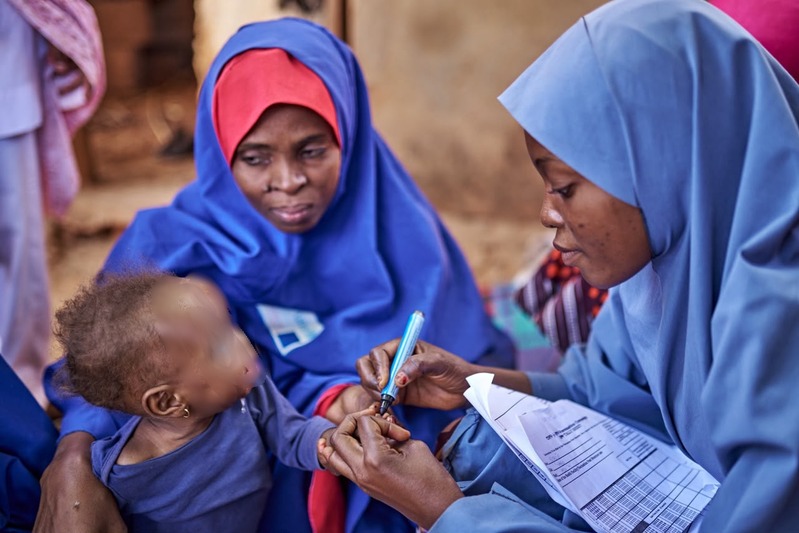

A new report by eHealth Africa has revealed that more than 23 million children were reached and vaccinated against polio and other vaccine-preventable diseases across more than 205,000 settlements in Nigeria between January and June 2026.
The report, titled “Expanding Reach, Readiness and Resilience: Data-Driven Health Systems Across Africa,” indicates that the vaccination figure was part of a broader set of interventions implemented during the first half of 2026.
Digital tools support vaccination campaigns
In partnership with its immunisation partners, eHealth Africa said it expanded the deployment of its in-house PlanFeld digital tool across 253 Local Government Areas (LGAs) in 10 northern states.
Through the tool, 33,837 vaccination teams were provided with digitised microplans and catchment-area maps, the report stated.
The technology was also deployed across four LGAs in Lagos State during the Measles-Rubella vaccination campaign, with 1,980 digitised maps produced and distributed to vaccination teams.

The report further highlighted efforts to strengthen the last-mile vaccine supply chain in Sokoto State.
Through the Vaccine Direct Delivery (VDD) intervention, the number of health facilities served increased from 351 to 407 during the period.
Approximately 3.41 million vaccine antigens were delivered to the facilities to support immunisation services in underserved communities, according to the report.
Solar power for primary healthcare centres
Beyond immunisation, the report documented eHealth Africa’s investment in renewable energy for primary healthcare.
Under the Renewable Energy for Primary Health Care (RE4PHC) intervention, supported by UNICEF, the organisation solarised 238 primary healthcare centres (PHCs) across 12 states.
Of the 238 facilities, 226 were remotely monitored and generated 277,800 kilowatt-hours of solar electricity between January and June, the report stated.
eHealth Africa estimated that the electricity generated saved about N166 million in fuel costs and prevented 240 metric tons of carbon dioxide emissions during the period.
Since the intervention began, estimated fuel savings have exceeded N414 million, according to the report.
Strengthening laboratories and emergency response
The report also highlighted efforts to strengthen diagnostic and disease-surveillance capacity across Africa.
eHealth Africa said it supported 17 laboratories in 13 countries and expanded its Inventory Management System to 18 laboratories.
Upgrades to five laboratories in Ghana, Zambia, Nigeria and Cameroon were also completed and handed over during the period.
The organisation said the upgrades would strengthen infrastructure for diagnosis, surveillance and outbreak response.
Public health
On public health emergency preparedness, eHealth Africa said its 11 Emergency Operations Centres (EOCs) in Nigeria continued to serve as coordination platforms for government agencies, surveillance teams, immunisation officials and development partners.
During the first half of 2026, the centres hosted 546 emergency coordination meetings and supported 102 meetings linked to vaccination campaigns, the report stated.
They also produced 74 public health scorecards to support planning and performance monitoring.
Monitoring medicines at the community level
The report also documented an expansion of community-level surveillance of antibiotic availability and suspected substandard and falsified medicines through the Com-WATCH initiative.
The programme covered Kano, Gombe, Ekiti, Ebonyi, Akwa Ibom and the Federal Capital Territory, with 2,512 surveillance actors enrolled.
A further 2,763 medicine vendors and other actors received training, while more than 20,500 community members were reached with sensitisation messages.
By June, 977 medicine outlets were reporting stock information through the platform, eHealth Africa reported.
Humanitarian support
In humanitarian operations, the organisation stated that it managed the World Food Programme Common Storage facility in Ngala, Borno State, which supported 16 humanitarian partners during the period.
According to the report, the warehouse handled 691 metric tons and 2,527 cubic metres of commodities, while six monthly physical inventories were completed.
READ ALSO: Yobe records 511 diphtheria cases, 13 deaths in 2026
The organisation said no stock losses were reported during the period.
‘Significance goes beyond numbers’
Commenting on the findings, eHealth Africa’s Executive Director, Atef Fawaz, said the results reflected what could be achieved when governments, communities, technology, infrastructure and local expertise worked together to strengthen healthcare delivery.
He said the organisation’s focus was not simply on deploying solutions but on building systems that institutions could own, sustain and continue to improve.
“The significance of these results goes beyond the numbers,” Mr Fawaz said.
Discover more from Premium Times Nigeria
Subscribe to get the latest posts sent to your email.





The Africa Centres for Disease Control and Prevention (Africa CDC) has assured the public that patients’ personal information will remain confidential during ongoing Ebola containment operations, as authorities work to trace people who may have been exposed to the disease.
Wessam Mankoula, an epidemiologist and the agency’s Director of Emergency Preparedness and Response, gave the assurance during a virtual press briefing on Thursday. He explained that patients’ information was shared only with authorised investigators conducting contact tracing.
He said the information would not be disclosed publicly, emphasising the importance of protecting patients’ privacy during outbreak investigations.
The assurance follows the Nigerian government’s confirmation on Tuesday of an Ebola case in the Federal Capital Territory (FCT).
The patient, a woman who recently arrived in Nigeria on an international flight from Uganda, is receiving medical care in isolation at a private hospital in the FCT.
Contact tracing
Mr Mankoula said Nigeria’s National Reference Laboratory confirmed that the imported case involved the Bundibugyo strain of the Ebola virus.

He said 44 high-risk contacts had been identified, and the government was working to identify others who might have been exposed.
Contact tracing involves identifying and monitoring people who may have been in contact with an infected person, so possible infections can be detected early and further transmission limited.
Mr Mankoula also said investigators were examining a possible link between the Nigerian case and a case in Kenya. Both individuals had travelled through Entebbe International Airport in Uganda on 3 October.
He stressed that a connection remained under investigation and had not been established.
READ ALSO: Ebola: FG orders strict screening at Nigeria’s entry points
Regional response
Mr Mankoula said Africa CDC was working with partners, including the WHO, to strengthen disease surveillance and support preparedness measures. These included providing testing supplies at border areas near the Democratic Republic of the Congo (DRC).
Nigeria’s case comes amid an Ebola outbreak in the DRC involving the Bundibugyo virus.
According to figures attributed to the European Centre for Disease Prevention and Control (ECDC), the DRC had recorded 9,552 confirmed cases and 4,602 related deaths as of 19 October, based on data up to 18 October.
The outbreak has affected 66 of the country’s 178 health zones across eight provinces, with Ituri the most affected province.
These developments have heightened concerns about Ebola’s cross-border spread and the need for countries to strengthen surveillance, laboratory testing and coordination to identify suspected cases promptly.
Africa CDC continues to work with national health authorities and international partners to support outbreak response efforts and limit further transmission.
Discover more from Premium Times Nigeria
Subscribe to get the latest posts sent to your email.

Nigeria’s first confirmed Ebola patient in more than a decade is believed to have contracted the virus while travelling in Uganda, although health authorities are yet to establish the source of her infection.
According to a report by Reuters, the Swiss Federal Department of Foreign Affairs told the newspaper in an emailed statement on Thursday that the patient, a Ugandan-born woman married to a Swiss diplomat based in Abuja, has been receiving treatment at a private clinic in the Nigerian capital for about a week.
According to Reuters, the statement said the woman was believed to have contracted the virus during a visit to Uganda about two weeks earlier. Her husband, who travelled with her, is in isolation but has not developed symptoms.
However, the World Health Organisation (WHO) and the Africa Centres for Disease Control and Prevention (Africa CDC) said they had not received verified information that the woman travelled to the Democratic Republic of the Congo (DRC), where the current Ebola outbreak began.
Conflicting travel accounts
According to Reuters, Ugandan authorities had earlier said the woman travelled to eastern DRC before transiting through Uganda.
However, Africa CDC official Wessam Mankoula said on Thursday that there was no validated information confirming that the patient had travelled to the DRC.
Mr Mankoula said Nigeria and Uganda were exchanging information to reconstruct her travel history and identify the possible source of infection.
WHO representative to Nigeria Pavel Ursu said the information received by the agency indicated that the woman had been in Uganda from 16 September and returned to Abuja on 3 October.
The WHO official said the information available to the agency did not establish that she had travelled outside Uganda.
Patrick Otim, a WHO emergency response manager, also said the source of the infection remained unknown as investigators worked to establish the patient’s movements before she became ill.
One area of investigation is the health facilities the woman visited in Abuja after developing symptoms and before she was hospitalised, including the possibility of exposure to other people during that period, he said.
Meanwhile, the Ugandan government said that the country had no active Ebola cases.
Uganda recorded 20 Ebola cases between May and June, most of them linked to infections imported from the DRC. The WHO declared the country’s outbreak over in August after 42 days without a new confirmed case.
Nigeria’s response
The uncertainty surrounding the woman’s travel history comes as Nigeria works to prevent further transmission following confirmation of the imported infection on 20 October.
As PREMIUM TIMES reported, the patient is a 42-year-old woman who lives in Abuja and recently travelled to Uganda. She developed symptoms on 6 October, three days after returning to Nigeria, and initially sought treatment at a private hospital, believing she had malaria.
She later visited another private hospital, where she was admitted on 11 October after her condition failed to improve. Her infection was subsequently confirmed through laboratory testing.
PREMIUM TIMES also reported that health authorities had identified 44 people who might have been exposed to the patient, including healthcare workers, patients, caregivers and travel contacts.
The government has begun contact tracing and is working with international partners to establish the woman’s movements and identify anyone who may have been exposed.
The WHO has urged Nigerians to remain calm, explaining that one confirmed imported case does not, by itself, mean the country is experiencing an Ebola ‘outbreak’. The agency is supporting Nigeria with case investigation, laboratory testing, contact tracing and infection prevention measures.
Regional outbreak
Nigeria’s case comes amid an Ebola outbreak that was declared in the DRC in May and has spread to other African countries, raising concerns about cross-border transmission.
The outbreak is caused by the Bundibugyo virus, a species of Ebola virus for which there is currently no licensed vaccine.
Kenya has also reported cases linked to the movement of the virus across borders, adding to concerns about the challenges of tracing infections among international travellers.
Ebola spreads through direct contact with the blood or other bodily fluids of an infected person, or with contaminated materials. Symptoms may include fever, headache, weakness, vomiting and diarrhoea.
Discover more from Premium Times Nigeria
Subscribe to get the latest posts sent to your email.
-

 News4 days ago
Mamdani says feds have abdicated on AI, urges New Yorkers to push back
-
News13 hours ago
Obi, Kwankwaso to hold Middle Belt Youth, Village Hall Meeting in Jos
-
News3 days ago
Meta’s Muse hits 10M U.S. downloads in 40 days, a milestone reached by only 11 other apps
-
Business3 days ago
How Your Side Hustle Income Ends Up in Your RSA


