Business
Tinubu urges banks to turn recapitalisation into jobs, production


President Bola Tinubu has challenged Nigerian banks to shift their focus from financing the government to providing affordable credit to businesses and productive sectors of the economy to drive investment, production and job creation.
Mr Tinubu, who was represented by the Minister of Finance and Coordinating Minister of the Economy, Taiwo Oyedele, made the call at the 19th Annual Banking and Finance Conference of the Chartered Institute of Bankers of Nigeria (CIBN) on Tuesday.
The President said while the government’s economic reforms had restored macroeconomic stability and improved investor confidence, the next phase must focus on converting those gains into investment, production, jobs and improved living standards.
“The current phase of our reform journey is accelerating the conversion of stability into investment, investment into production, production into jobs, and growth into improved living standards,” he said.

He urged banks to move “from intermediation to transformation”, arguing that the performance of financial institutions should no longer be assessed only by balance-sheet growth, profitability and shareholder returns.

According to him, the critical question should be what the financial system is doing for the real economy.
“A resilient banking system cannot assist indefinitely where businesses cannot obtain affordable credit. Manufacturing that is struggling cannot expand, and millions of productive MSMEs remain outside the formal financial system,” Tinubu said.
He said the government was therefore expanding the architecture of guarantees, risk-sharing, blended finance and credit enhancements, with a National Credit Guarantee Company at its core, to crowd in private capital and support productive investment.
The Nigerian leader said success should increasingly be measured by how much productive capital government policies catalyse, rather than simply by how much the government spends.

Banks must finance growth
The President also said the recently concluded bank recapitalisation must result in more than larger balance sheets, stressing that it should translate into increased capital formation in the real economy.
“It must translate into capital formation in the real economy, financing Nigerian businesses as they expand across Africa and pursue our ambition of a $1 trillion economy,” he said.
“A bigger bank that does not finance a more productive economy is a suboptimal outcome.”
He also called for broader financial inclusion, saying access to bank accounts does not automatically translate into access to finance.
He said the financial system should enable small businesses and entrepreneurs to obtain working capital based on viable cash flows rather than collateral they may not possess.
“We must build a system that finances potential and opportunities rather than quick gains for the privileged,” he said.
Mr Tinubu further called for a transition away from a financial system where attractive returns on government securities make lending to productive businesses less compelling.
He said that improving fiscal conditions would allow the government to create more space for private-sector credit progressively.
The President described the desired outcome as a “virtuous cycle” in which stronger fiscal discipline reduces pressure on government borrowing, lower inflation lowers interest rates, and cheaper capital stimulates investment and production.
He added that increased production would generate more jobs, incomes and tax revenues, further strengthening fiscal sustainability.
“That is how gains from reform begin to compound at scale, and the financial sector must be ready for that transition,” he said.
Tinubu also identified technology, long-term capital and trust as key pillars of a resilient financial system, warning that greater digitalisation would bring increased cybersecurity risks.
He said Nigeria would need to deepen its capital markets, insurance, pension, and asset management industries to mobilise domestic savings and foreign capital for long-term investment.
On the broader economy, the President said Nigeria’s GDP grew by 4.43 per cent in the second quarter of 2026, while headline inflation had eased to 15.43 per cent and external reserves had crossed $54 billion.
He said the improvements showed that “stability has returned” and “credibility is rising”, but cautioned that macroeconomic stability should not be mistaken for economic prosperity.
“Stability is a foundation; prosperity is a destination,” Mr Tinubu said.
“The good news”
In his remarks, Dele Alabi, President/Chairman of Council, CIBN, said the good news is that certain policies implemented in the past couple of years are beginning to yield fruit.
For example, he argued that within Nigeria’s financial system, 33 banks met the revised minimum capital requirements, raising ₦4.65 trillion in new capital, providing a further buffer against domestic and external shocks.
READ ALSO: Credit bypassing Nigeria’s job creators — World Bank Official
“Likewise, recent indicators show that these efforts are beginning to rebuild confidence. As announced by Moody’s Ratings on 28 August 2026, Nigeria’s outlook was changed from stable to positive while the sovereign rating was affirmed at B3,” he said.
Additionally, the CIBN president explained that according to FTSE Russell’s March 2026 Semi-Annual Country Classification Review, Nigeria will be reclassified from Unclassified to Frontier market status, effective 21 September 2026.
“To top all this off, the icing on the cake is that according to the latest figures from the National Bureau of Statistics’ Q2 2026 Gross Domestic Product Report, real GDP grew by 4.43 per cent year-on-year in Q2 2026, up from 3.89 per cent in Q1 2026,” Mr Alabi said.
He noted that collectively, these are important signals of stronger macroeconomic stability, improved investor confidence, and the prospect of broader access to global capital.
He explained that the true test is whether stronger fundamentals translate into lower living costs, more jobs, higher real incomes, affordable credit, reliable public services and reduced poverty.
“Macroeconomic progress must therefore be felt at the micro level – in households, small businesses and the daily lives of ordinary Nigerians,” Mr Alabi said.
He said it is for this reason that the theme of this year’s Conference is sound, and as Nassim Nicholas Taleb aptly observed in his book Antifragile, “Wind extinguishes a candle and energises fire.”
Discover more from Premium Times Nigeria
Subscribe to get the latest posts sent to your email.
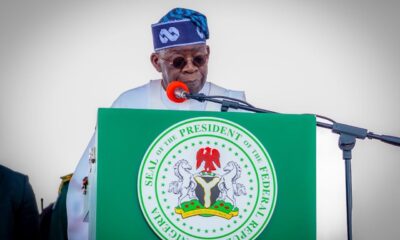

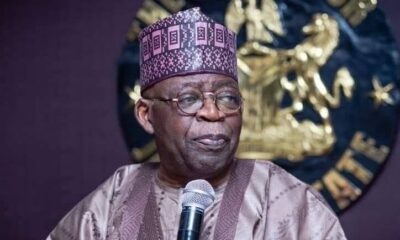


President Bola Tinubu has said his administration will place jobs, enterprise and industrial growth at the centre of Nigeria’s next phase of economic policy.
The government also said it is moving from economic reforms to what he described as an “age of prosperity.”
Mr Tinubu stated these priorities in his Independence Day address to the nation on Thursday, saying Nigeria must convert its large young population into an engine of production rather than a source of economic hardship.
“But prosperity requires more than cheaper goods. It requires productive work. Nigeria is a young country. Millions of young Nigerians enter adulthood every year with talent, energy and ambition.
“Our responsibility is to ensure that this great demographic strength becomes an engine of production rather than a source of despair,” the president said.
The president’s statement followed economic reforms introduced by the Tinubu-led administration since 2023, which include the removal of the petrol subsidy, exchange-rate reforms, tighter monetary and fiscal measures, and changes aimed at improving government revenue and investment.

Support for businesses
Mr Tinubu said the government would support businesses, revive industries, expand digital connectivity, and invest in skills employers need.
He said the government would use Nigeria’s gas resources to power new industries and support businesses working to revive factories in the country’s industrial centres.
“We are therefore placing jobs, enterprise, and industrial growth at the heart of our government’s policies.
“We will use our gas to power new industries. We will support businesses that work to bring factories back to life in our great industrial centres,” Mr Tinubu said.
Digital investment
The president also promised greater digital connectivity and investment in skills, infrastructure and finance to support Nigerian businesses.
“We will expand digital connectivity into communities that have waited too long to participate in the modern economy.
We will invest in the skills employers demand and support Nigerian businesses with the infrastructure and finance they need to grow,” he said.
Mr Tinubu said his administration wanted to see more goods produced locally and more Nigerian companies competing in international markets.
“I want to see more Nigerians making things. I want to see more Nigerian farms feeding our cities and supplying our factories. I want to see Nigerian businesses selling Nigerian goods to the whole world. I want young Nigerians building unicorns and creating opportunities for others here at home,” he said.
Access to credit
The president also highlighted access to credit as part of the government’s strategy to expand economic participation.
He said the Credit Corporation, CREDICORP, was providing consumer credit that would enable Nigerians to acquire vehicles, solar systems, digital devices and other essential assets without having to save for years before making such purchases.
“It is why CREDICORP is giving working Nigerians access to consumer credit, allowing people to acquire vehicles, solar systems, digital devices and other essential assets without first having to accumulate years of savings,” Mr Tinubu said.
ALSO READ: NCDMB participates in Africa Oil Week 2026, champions local content and industrial growth
He said the government would also continue to support businesses through infrastructure and finance, suggesting that access to capital would be an important component of the administration’s new prosperity agenda.
Private-sector expansion
The president linked private-sector expansion to job creation and increased domestic production, saying the government’s responsibility was to create conditions for Nigerian businesses to expand.
Mr Tinubu said millions of Nigerians still struggled to meet basic needs and acknowledged that the challenges predated his administration.
“Some Nigerian families still struggle today for the next meal, the next school fee, the next medical bill, or simply enough money to get to work,” he said.
He attributed the difficulties to decades of low productivity, inadequate infrastructure, insufficient opportunity and weak institutions, while promising continued support for vulnerable households.
The president said the government’s long-term objective was not simply to expand social assistance but to build an economy capable of creating productive opportunities and lifting people out of poverty.
“It will take time. It will require discipline. It will require sustained growth year after year and the creation of millions of productive opportunities across our country,” he said.
Mr Tinubu said Nigeria had now laid the foundation for lasting prosperity and called on Nigerians and businesses to participate in the next phase of economic development.
“The age of reform has done its work. Now begins the age of prosperity,” he said.
Discover more from Premium Times Nigeria
Subscribe to get the latest posts sent to your email.
-

 News4 days ago
Rivers Guber: ALDRAP writes INEC, seeks Chinda’s disqualification after Supreme Court judgment
-
News4 days ago
Cross River Ikan Sports Fight Back To Beat Gateway Horns 25-19 In Showtime Bowl Series XV Flag Football
-
 News3 days ago
TikTok Access Disrupted in Parts of Northern Nigeria as Users Turn to VPNs
-
Health4 days ago
PT Health Watch: How Pregnancy-Induced Hypertension puts mother, baby at risk