
News
Falconets Hold China to Goalless Draw, Keep U-20 World Cup Hopes Alive


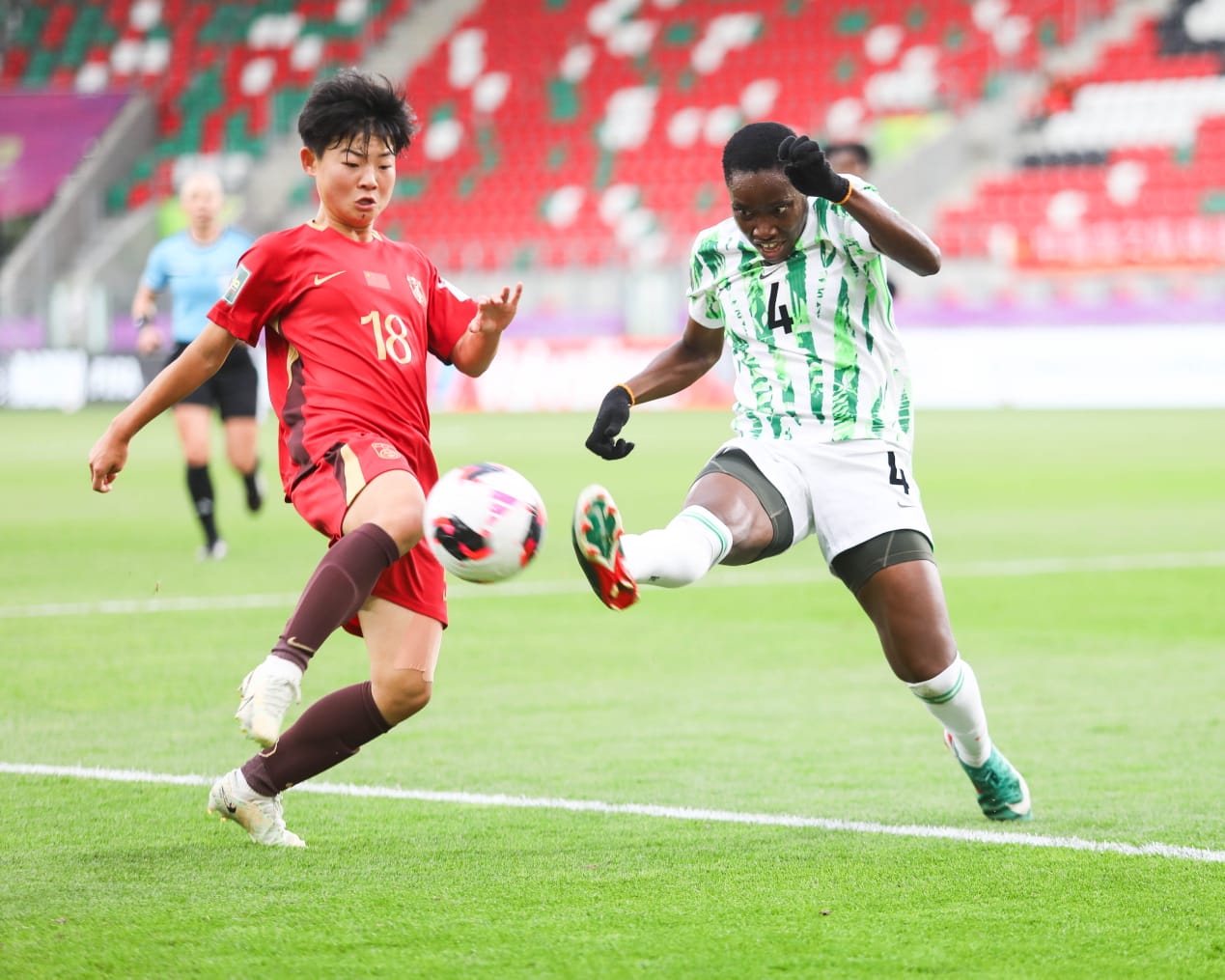
Nigeria’s Falconets fought out a goalless draw with China PR in their second Group F match at the 2026 FIFA U-20 Women’s World Cup in Poland on Thursday, keeping their hopes of reaching the knockout stage alive.
The encounter at Arena Sosnowiec saw both teams create opportunities, but neither side could find the breakthrough as the Falconets secured their first point of the tournament following their opening-day defeat to Spain. Nigeria had lost 2–0 to the former champions in their first match.
Coach Moses Aduku’s side started brightly, with Janet Akekoromowei producing Nigeria’s first clear opportunity in the 17th minute.
The Falconets gradually grew into the contest, with Kafayat Mafisere winning a corner in the 33rd minute before Akekoromowei went close again in the 38th minute and during first-half stoppage time.
China also threatened before the interval, with Huang Jiaxin, Zhou Xinyi and Song Lijuan testing the Nigerian defence, while Xue Sifan delivered dangerous set pieces.
Goalkeeper Christiana Uzoma stood firm whenever called upon, helping the Falconets maintain a clean sheet as both teams went into the break level.
China made an attacking change at the start of the second half, introducing Chen Ruilin for Xiao Yafei, and the substitution gave the Asian side additional impetus.
Chen, Xue and Huang all attempted to break the deadlock, but Nigeria continued to create opportunities of their own.
Precious Oscar, Mafisere and Queen Joseph all went close as the Falconets responded with greater urgency, but the finishing touch remained elusive.
Nigeria thought they had been handed a major opportunity to take the lead in the 74th minute after being awarded a penalty. However, the decision was overturned following a VAR review, leaving the game scoreless.
Both sides continued to push for a winner in the closing stages, but neither could find the decisive goal.
The draw leaves Nigeria with one point from two matches in Group F, while China remain in contention at the top end of the group after their opening 5–0 victory over New Caledonia.
The Falconets will now face New Caledonia on Sunday, September 13, in their final group fixture. The match is scheduled for Łódź, with Nigeria needing a positive result to strengthen their chances of advancing to the knockout rounds.
The result represents an improvement from the opening defeat to Spain, but Aduku and his players know they must finish the group stage strongly.
After being held by China, the Falconets now have their fate partly in their own hands as they prepare for their decisive final group match.
One point gained, one game left — the Falconets must now finish the job against New Caledonia.



News
From Super-Sub to World Cup Superstar! Kanyinsola Yusuf Wins FIFA Player of the Match as Flamingos Stun North Korea 3-1

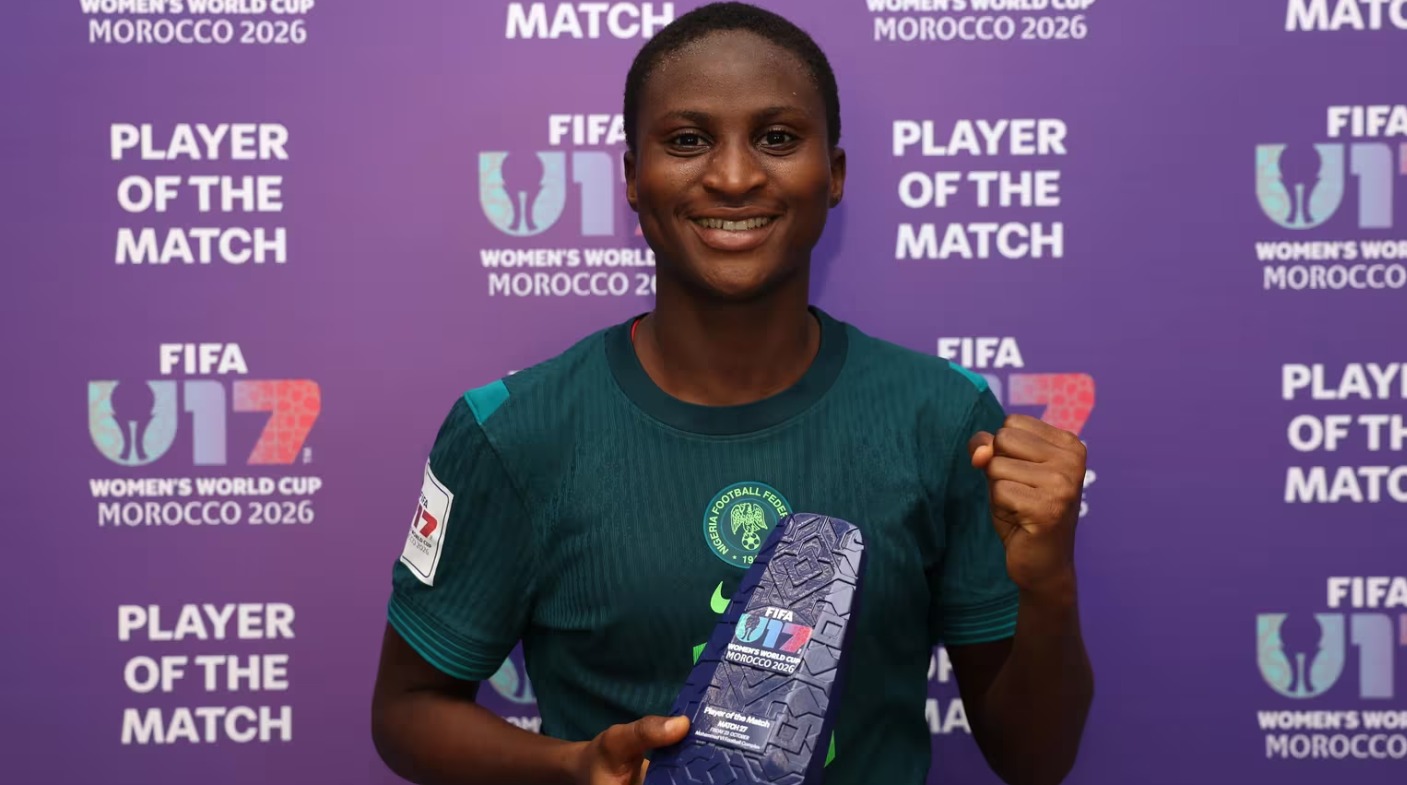
Nigeria’s teenage sensation Kanyinsola Yusuf has emerged as one of the standout performers at the 2026 FIFA U-17 Women’s World Cup in Morocco after winning the Player of the Match award in the Flamingos’ sensational 3-1 victory over defending champions North Korea on Friday.
The prestigious individual recognition crowned an unforgettable afternoon for Yusuf, whose second-half goal helped Nigeria dismantle the tournament favourites and secure a place in the Round of 16.
Yusuf struck in the 56th minute to give Nigeria a commanding three-goal advantage, completing a remarkable attacking display against opponents who had scored 12 goals in their opening two group matches.
Oluwakemi Adegbuyi had opened the scoring in the 15th minute before Oluebube Umejiaku doubled Nigeria’s lead in the 38th minute, leaving the defending champions stunned at half-time.
North Korea pulled a goal back through Yu Jong Hyang’s 82nd-minute penalty, but the Flamingos held firm to record a famous victory.
For Yusuf, the individual honour represents another significant moment in a rapidly developing World Cup campaign.
The youngster had already made an impact in Nigeria’s opening 2-1 defeat to Poland, coming off the bench and helping spark a late fightback, before playing her part in the team’s recovery.
Her emergence adds another exciting dimension to coach Akeem Busari’s squad, which has transformed its fortunes after beginning the tournament with defeat.
Nigeria followed that setback with a 2-0 victory over Puerto Rico before producing Friday’s stunning performance against the reigning champions.
Yusuf’s award also means Nigerian players have claimed the Player of the Match prize in consecutive victories, following Adegbuyi’s recognition against Puerto Rico.
With the Flamingos now through to the knockout stage, Yusuf’s growing influence could prove crucial as Nigeria chase a historic first title.
From an impact substitute against Poland to a match-winning star against North Korea, Yusuf is rapidly making her name on the world stage.

The Bank of Industry (BOI) said it will expand financing for agriculture, local healthcare manufacturing and digital businesses in 2027.
The bank stated this as it seeks to consolidate the gains of its 2025–2027 corporate strategy and strengthen Nigeria’s industrial development.
The bank’s Managing Director and Chief Executive Officer, Olasupo Olusi, disclosed the plan on Thursday at a meeting in Lagos, where he outlined the bank’s priorities for the final year of the strategy.
Mr Olusi said BOI would work with the Federal Ministry of Industry, Trade and Investment on the National Industrial Finance Compact to attract more long-term capital into Nigeria’s industrial sector.
He also said the bank would deploy its new European Investment Bank facilities to agriculture and local healthcare manufacturing to increase domestic production of food and medicines.
The funding includes €85 million secured from the European Investment Bank for agriculture and another €50 million for healthcare manufacturing in 2026, as part of more than €2.2 billion in new funding the bank has secured for Nigerian industry since 2024.


READ ALSO: BOI supports 1.68m jobs as lending rises 26% to ₦644.9 billion
“We will deploy our new European Investment Bank facilities into agriculture and local healthcare manufacturing, so that Nigeria produces more of the food and medicines it consumes,” he said.
The bank also plans to expand its information and communications technology (ICT) and digital economy portfolio through the Investment in Digital and Creative Enterprises (iDICE) programme.
Mr Olusi said the initiatives formed part of the bank’s efforts to consolidate its achievements and meet the targets of its 2025–2027 corporate strategy.
“2027 is the final year of our strategy, and our task is to consolidate and meet every target we set,” the BOI boss, Mr Olusi, said.
BOI said it disbursed N644.9 billion in 2025, reaching 12,501 businesses and supporting 1.68 million jobs.
Discover more from Premium Times Nigeria
Subscribe to get the latest posts sent to your email.
-

 News4 days ago
Mamdani says feds have abdicated on AI, urges New Yorkers to push back
-
News11 hours ago
Obi, Kwankwaso to hold Middle Belt Youth, Village Hall Meeting in Jos
-
News3 days ago
Meta’s Muse hits 10M U.S. downloads in 40 days, a milestone reached by only 11 other apps
-
Business3 days ago
How Your Side Hustle Income Ends Up in Your RSA


