Health
Ebola outbreak spreads to 61 health zones in DRC — WHO

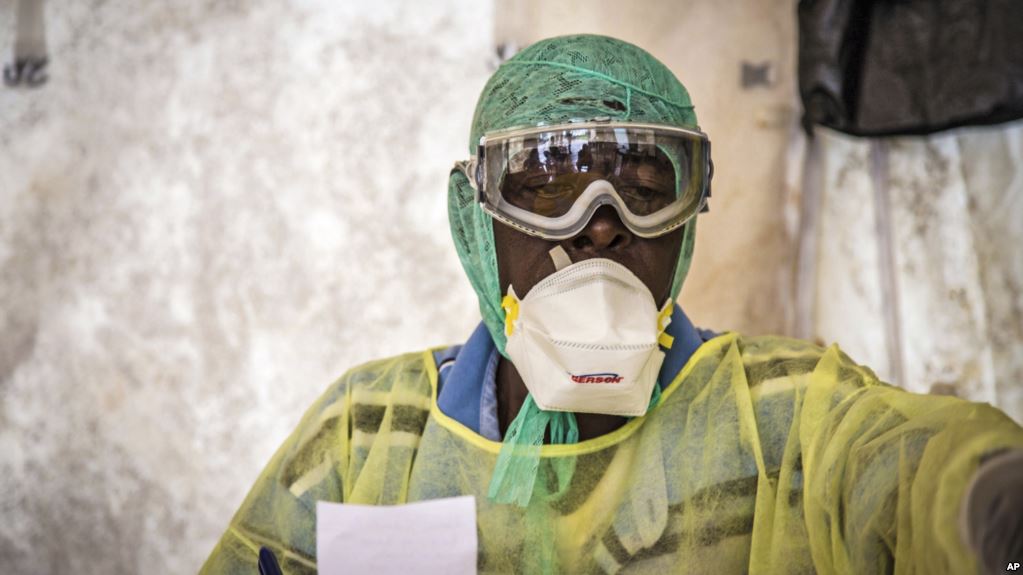

The Ebola outbreak in the Democratic Republic of the Congo (DRC) has continued to spread geographically, with the World Health Organisation (WHO) reporting cases across 61 health zones in six provinces.
The WHO disclosed this in its latest outbreak situation update issued on Thursday, saying the outbreak had expanded to Kayna Health Zone in North Kivu.
The affected provinces are Bas-Uélé, Haut-Uélé, Ituri, North Kivu, South Kivu and Tshopo.
Transmission remains a concern
According to the latest WHO update, transmission patterns remain variable, with evidence of continued geographical expansion and sustained increases in cases across some affected health zones despite ongoing response efforts.
The agency said delayed detection remained a major concern, increasing the risk of further transmission within households, communities and healthcare facilities.

It said limited access to early treatment and difficulties in interrupting transmission were also contributing to the challenges faced by the response.
In addition, the WHO said these challenges required strengthened surveillance, rapid response measures and early treatment to help interrupt transmission.
As of 7 September, the DRC had recorded 6,757 confirmed Ebola cases caused by the Bundibugyo virus, including 3,267 deaths.
The figures represent a crude case fatality ratio of 48.3 per cent, according to the WHO.
Outbreak challenges
The latest development comes less than a month after the WHO described the outbreak as the second-largest Ebola outbreak on record.
At the time, 4,449 confirmed cases had been recorded across 53 health zones in five provinces.
The WHO had also warned that the outbreak was spreading faster than previous Ebola outbreaks at the same stage and was on course to potentially surpass the 2014–2016 West African outbreak, which remains the largest recorded Ebola outbreak.
The outbreak is caused by the rare Bundibugyo species of Ebola virus.
READ ALSO: UK increases Ebola response funding to £78.7m
Unlike the Zaire species, which has caused several previous Ebola outbreaks and for which the Ervebo vaccine is used, there is currently no licensed vaccine specifically approved for Bundibugyo virus disease.
In August, the WHO said a high proportion of cases were being detected in communities rather than treatment centres and outside known contact lists, suggesting that some chains of transmission remained unidentified.
The agency had said response measures included contact tracing, treatment centres, safe burial teams, laboratories and community engagement activities.
The WHO said the continued geographical expansion of the outbreak highlights the need to strengthen surveillance and ensure early detection and treatment, particularly in affected communities and healthcare facilities.
Discover more from Premium Times Nigeria
Subscribe to get the latest posts sent to your email.





The Lagos State government says it has stepped up preparedness measures and is prepared to respond following Nigeria’s confirmation of an imported case of Ebola disease in the Federal Capital Territory (FCT).
The state’s Commissioner for Health, Akin Abayomi, said Lagos remains on “high alert and preparedness” and is treating the situation as a priority.
“Lagos is a gateway city with constant movement to and from Abuja, and we are treating this as a priority,” Mr Abayomi said in a statement posted on X on Friday.
He said the state’s Emergency Operations Centre (EOC) had been working ahead of the confirmation, with measures being put in place across surveillance, isolation, laboratory testing, infection prevention and control.
‘Lagos is prepared’
Mr Abayomi said response teams are conducting simulation exercises to ensure that responders understand their roles before they are needed.
He said the state’s isolation centre has also been upgraded, while additional capacity is being developed.

He noted that training on infection prevention and control is continuing for health workers across public and private health facilities.
The commissioner said Lagos is also establishing a clear laboratory testing pathway, aiming to obtain results within 24 hours.
He noted that screening at airports and other points of entry is being strengthened in collaboration with federal authorities, while disease surveillance is being digitally enhanced on the state’s digital health surveillance platform to support real-time detection, tracing and response.
A “dedicated Ebola Research Committee” is also reviewing the latest evidence on treatment and vaccines to guide the state’s decisions.
Advice to residents
The commissioner urged residents to wash their hands regularly with soap and water and avoid contact with the blood or body fluids of anyone who is ill.
He advised anyone who develops fever, weakness, vomiting, diarrhoea or unexplained bleeding, or believes they may have been exposed, not to self-medicate.
“If you develop fever, weakness, vomiting, diarrhoea or unexplained bleeding, or think you have been exposed, do not self-medicate. Call before visiting a health facility,” he said.
Mr Abayomi also urged health workers to maintain a high index of suspicion, ask about patients’ travel history and use appropriate personal protective equipment.
Residents can report suspected cases or possible exposure through “the Lagos emergency numbers, 112 or 767, or the Directorate of Epidemiology, Biosecurity and Global Health on 0802 316 9485.”
The commissioner urged residents to remain calm, stay alert and rely on official information from the Lagos State Ministry of Health.
Lagos’ 2014 experience
The government’s preparedness comes against the backdrop of Lagos’ experience during Nigeria’s 2014 Ebola outbreak.
Patrick Sawyer, a Liberian diplomat infected with Ebola, arrived in Lagos on 20 July 2014. He was admitted to a private hospital in the city, where the disease was subsequently confirmed.
Nigeria recorded 20 Ebola cases during the outbreak, including eight deaths, before the country was declared free of Ebola transmission on 20 October 2014 after 42 days without a new case.
READ ALSO: Kenya records second Ebola death
Nationwide response
The federal government continues to urge states to strengthen their response systems.
The Coordinating Minister of Health and Social Welfare, Muhammad Pate, said 21 states have updated their Ebola response plans, while the remaining 15 states are being urged to expedite their preparedness and response mechanisms.
The government has also called on healthcare facilities nationwide to strengthen infection prevention and control, promptly identify and isolate suspected cases and report them to public health authorities.
Nigeria currently has one confirmed imported Ebola case, while 44 contacts of the patient are being monitored.
Discover more from Premium Times Nigeria
Subscribe to get the latest posts sent to your email.
Uganda has barred travellers with a history of travel to the Democratic Republic of the Congo (DRC) from transiting through the country as it investigates the traveller who tested positive for Ebola disease in Nigeria.
The Ugandan Ministry of Health announced the measure on Friday, alongside the reinstatement of traveller locator forms “to facilitate timely follow-up and contact tracing where necessary.”
“The Ministry of Health wishes to update the country on an ongoing investigation into the traveller who tested positive for Bundibugyo Virus Disease in Nigeria.
“Available information indicates that the traveller did not exhibit symptoms at the time of departure from Uganda. However, investigations are continuing to establish the timing of symptom onset and the circumstances surrounding her infection,” the ministry noted in a statement signed by its Director General of Health Services, Charles Olaro.
It added that Uganda is working with Nigerian health authorities to establish the traveller’s full travel history, movements and possible exposure. It has also requested additional information from Nigeria, including detailed travel records and genomic sequencing results, where available.
The country insisted that it “remains Ebola-free.”
Uganda had earlier battled an outbreak of Ebola disease caused by the Bundibugyo virus, which was declared on 15 May 2026 after cases were imported from the DRC.
The country recorded 20 confirmed cases, including two deaths, before declaring the outbreak over in August after 42 days without a new locally acquired case.
As of 20 October, the DRC had recorded 9,704 confirmed cases and 4,687 deaths across eight provinces, according to the World Health Organisation (WHO).
Uganda tightens controls
The ministry said infection prevention and control measures had been reinforced at all points of entry and exit and health facilities, while surveillance continued across the country.
It also warned that provisions of Uganda’s Public Health Act would be invoked where public health requirements were breached.
The ministry urged communities to report suspected unauthorised border crossings to relevant authorities for screening and public health follow-up.
The ministry urged travellers and the public to remain calm and vigilant, practise proper hand hygiene and comply with screening and other public health measures.
Earlier Uganda clarification
Uganda’s latest measures follow an earlier clarification after Nigeria announced its Ebola case and said the patient had arrived on an international flight from Uganda.
On 21 October, Uganda said the traveller’s passage through the country does not establish that she contracted Ebola there. The ministry said preliminary information indicated that she had travelled to eastern DRC for business before passing through Uganda and that she had not shown symptoms while in the country.
Uganda also said at the time that it had no active Ebola cases. The latest statement maintains that position, saying investigations with Nigerian authorities are still ongoing.
Nigeria case linked to Kenya
On Friday, Nigeria announced a genomic finding showing that the virus detected in its patient is highly similar to the virus found in Kenya’s first imported case.
Nigeria’s Coordinating Minister of Health and Social Welfare, Muhammad Pate, said the finding does not establish that the Nigerian patient was infected in Kenya, as there was no evidence that she had travelled there.
The Africa Centres for Disease Control and Prevention (Africa CDC) had earlier said it was investigating a possible link between the Nigerian and Kenyan cases because both patients travelled through Uganda’s Entebbe International Airport on 3 October.
Kenya’s first case was imported from the DRC through Uganda. The country has since recorded nine confirmed cases, including two deaths, with the eight additional cases linked to the first patient.
Discover more from Premium Times Nigeria
Subscribe to get the latest posts sent to your email.
-

 News1 day ago
Obi, Kwankwaso to hold Middle Belt Youth, Village Hall Meeting in Jos
-
News4 days ago
Meta’s Muse hits 10M U.S. downloads in 40 days, a milestone reached by only 11 other apps
-
Business4 days ago
How Your Side Hustle Income Ends Up in Your RSA
-
News3 days ago
Blacksmith hits unicorn valuation after Sequoia leads Series C