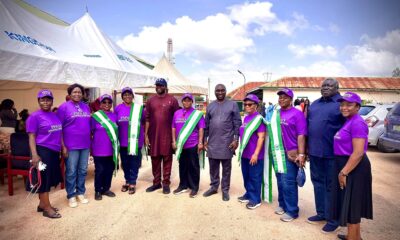
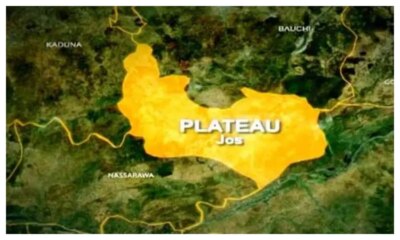
Plateau State commemorated this year’s Democracy Day with a wave of major infrastructure and social development projects, signaling a renewed commitment by Governor Caleb Manasseh Mutfwang’s administration to delivering impactful governance under the “Time is Now” agenda.
The governor led a series of project commissionings spanning transportation, healthcare, education, and public infrastructure, underscoring the administration’s determination to translate democratic ideals into measurable improvements in the lives of citizens.
At the Old Government House in Rayfield, Governor Mutfwang flagged off 15 newly procured Tin City Metro Buses under a revitalized Plateau Express Service. The initiative, aimed at improving intra-city transportation, offers residents safe, affordable, and reliable mobility at a subsidized flat rate of ₦400 per ride—a major relief amid rising transport costs.
Speaking at the event, Commissioner for Transport, Hon. Davou Jatau Gyang, said the intervention could help regular commuters save up to ₦50,000 monthly, and emphasized that the buses were fully funded by the state government, reflecting transparency and accountability.
Governor Mutfwang further revealed plans to deepen transport infrastructure through the construction of a new airport terminal, revival of railway services, and strategic partnerships with Chinese investors.
In the health sector, the state government commissioned a state-of-the-art diagnostic laboratory, pediatric ward, and modern administrative block at the Plateau State Specialist Hospital. The facilities, equipped with medical devices worth over ₦2 billion, also mark the rollout of an Electronic Medical Records (EMR) system—ushering in a new era of digitized healthcare delivery in the state.
Chief Medical Director, Prof. Christopher Yilgwan, hailed the projects as a turnaround for previously abandoned facilities, noting that they now meet global standards and may help reduce medical tourism by providing top-tier services within the state.
At Plateau State Polytechnic, Barkin Ladi, the governor commissioned a new administrative building and renovated multipurpose hall named after former Governor Joshua Dariye. The visit also highlighted the institution’s recent reaccreditation success across various departments.
Commissioner for Education, Mrs. Elizabeth Wapkuk, expressed optimism over the institution’s trajectory, while Governor Mutfwang announced plans to upgrade the polytechnic into a University of Science and Technology. He reassured staff that those with valid appointments would retain their jobs amid ongoing reforms aimed at strengthening academic excellence.
The governor also inaugurated the newly completed Utonkon Bridge and connecting roads at the Utonkon Abattoir axis. The project, he said, would enhance agricultural logistics, improve travel safety, and stimulate economic activity in the surrounding rural communities.
A standout moment during the day’s events came when Governor Mutfwang introduced one of the newly recruited female Metro Bus drivers—a beneficiary of a mechanical training program he had sponsored years ago. Her transition from a vocational trainee to a public transport professional was highlighted as a symbol of the administration’s focus on youth and women empowerment.
Governor Mutfwang affirmed that the day was not just a celebration of democracy but a demonstration of tangible progress. “We are committed to delivering real impact in the lives of our people. This Democracy Day is a reminder that good governance can be seen, felt, and measured,” he said.
The National Bureau of Statistics (NBS) says Nigeria’s headline inflation rate eased slightly to 15.91 per cent in June, down from 15.93 per cent recorded in May, offering a modest sign of slowing price pressures even as food prices continued to rise.
The bureau disclosed this in its latest Consumer Price Index (CPI) report released on Wednesday.
According to the report, the headline inflation rate was significantly lower than the 25.29 per cent recorded in June 2025, representing a year-on-year decline. Compared with May, the inflation rate fell by 0.02 percentage points.
Similarly, on a month-on-month basis, headline inflation slowed to 1.66 per cent in June from 1.75 per cent in May, indicating that the average price level increased at a slower pace during the month.
“This means that in June 2026, the rate of increase in the average price level was lower than the rate of increase in the average price level in May 2026,” the NBS said.
The report also showed that the Consumer Price Index rose to 143.0 in June from 140.7 in May, reflecting a 2.3-point increase in the average price level.
Food prices
While overall inflation moderated slightly, food prices continued to exert pressure on household budgets.
The NBS said food inflation stood at 17.52 per cent on a year-on-year basis in June, compared with 25.41 per cent in the corresponding period of 2025.
However, on a month-on-month basis, food inflation rose to 3.75 per cent in June from 2.98 per cent recorded in May.
According to the bureau, the increase was driven by higher prices of several staple food items, including fresh pepper, tomatoes, crayfish, beef, garri, yam tubers, yam flour, cassava flour, cowpea, bananas and Irish potatoes.
Food and non-alcoholic beverages remained the largest contributor to headline inflation, accounting for 6.37 percentage points.
Other major contributors included restaurants and accommodation services (2.06 percentage points), transport (1.70 percentage points), housing, water, electricity, gas and other fuels (1.34 percentage points), education (0.99 percentage points) and health (0.96 percentage points).
Core inflation moderates
Meanwhile, core inflation, which excludes the prices of volatile agricultural produce and energy, stood at 15.92 per cent year-on-year in June, down from 25.41 per cent recorded in the corresponding period last year.
On a month-on-month basis, core inflation also moderated to 1.66 per cent, compared with 1.94 per cent in May.
The report further showed that the average headline inflation rate for the 12 months ending June 2026 stood at 17.63 per cent, lower than 29.82 per cent recorded in June 2025.
Likewise, the average annual food inflation rate declined to 16.42 per cent from 31.93 per cent in the corresponding period of the previous year.
The NBS said urban inflation stood at 16.08 per cent year-on-year, while rural inflation was 15.48 per cent.
On a month-on-month basis, urban inflation increased to 2.13 per cent from 1.99 per cent in May, whereas rural inflation slowed to 0.52 per cent from 1.17 per cent.
Inflation varies across states
The report also highlighted wide disparities in inflation across the country.
Niger State recorded the highest annual all-items inflation rate at 42.23 per cent, followed by Kogi (41.59 per cent) and the Federal Capital Territory (39.91 per cent).
By contrast, Imo State posted the lowest annual inflation rate at 19.47 per cent, followed by Ebonyi (20.79 per cent) and Katsina (21.87 per cent).
For food inflation, Kogi State recorded the highest year-on-year rate at 53.02 per cent, followed by Niger (43.83 per cent) and Benue (40.83 per cent).
The lowest food inflation rates were recorded in Katsina (19.15 per cent), Rivers (23.81 per cent) and Imo (24.60 per cent).
The June inflation figures come as Nigeria continues to navigate the effects of ongoing economic reforms, including exchange rate adjustments and higher energy and transportation costs, which have contributed to elevated consumer prices over the past two years.
Nigeria’s pioneer telecommunications operator, ntel, is betting that a new generation of high-capacity wireless broadband technology will help redefine its role in the country’s telecoms market as it embarks on an ambitious comeback strategy anchored on infrastructure, digital services and nationwide connectivity.
At the heart of the company’s relaunch is AirFibre, a fixed wireless broadband platform that ntel says is capable of delivering fibre-like performance without the cost, delays and operational challenges associated with laying physical fibre-optic cables.
The service, unveiled during the company’s business relaunch event in Ikoyi, Lagos, is positioned not merely as another broadband offering, but as the flagship product under Project BEAM, one of three strategic pillars alongside Titan and Eden, through which ntel intends to reposition itself in Nigeria’s rapidly evolving digital economy.
During the demonstration of AirFibre to attendees at the ntel business relaunch, the service recorded a download speed of 981.05Mbps and upload of 480.74Mbps, which the comeback player said is a “groundbreaking technology” that delivers speed not commonly encountered on wireless links.
“If you speak to any of the ISPs here, they will tell you their biggest problem is OPEX. They face fibre cuts every day.” AirFibre, according to him, is designed to address precisely that challenge. Rather than depending entirely on buried fibre cables, the solution uses next-generation fixed wireless technology to extend broadband connectivity over the air while delivering performance comparable to fibre.
Speaking at the event, Kingsley Uwazie, Chief Technology Consultant (CTC) of ntel, described AirFibre as the company’s answer to one of the biggest challenges confronting Nigeria’s broadband industry: last-mile connectivity.
“We are going back to what our duty is and what we owe Nigerians, to be that premier national asset… that network that has infrastructure and has a solid foundation that represents Nigerians and is able to touch our every need,” Uwazie said.
The announcement marks one of ntel’s strongest signals yet that the operator intends to return as a significant player in Nigeria’s broadband market after years of limited commercial activity following its acquisition of the assets of the defunct Nigerian Telecommunications Limited (NITEL).
For years, Nigeria’s broadband ambitions have been constrained by inadequate last-mile connectivity despite heavy investment in metropolitan and long-distance fibre infrastructure.
While operators have continued to expand fibre networks across major cities, extending connectivity from backbone infrastructure into homes, businesses and underserved communities has remained expensive and operationally difficult.
According to Uwazie, recurring fibre cuts have become one of the industry’s most persistent operational headaches.
Referring to recent industry reports, he said Nigeria experiences more fibre cuts in a month than some countries record in an entire year, resulting in prolonged service outages and increased operating costs for internet service providers (ISPs).
“If you speak to any of the ISPs here, they will tell you their biggest problem is OPEX. They face fibre cuts every day.”
AirFibre, according to him, is designed to address precisely that challenge. Rather than depending entirely on buried fibre cables, the solution uses next-generation fixed wireless technology to extend broadband connectivity over the air while delivering performance comparable to fibre.
According to the ntel CTC, the platform can be deployed within hours instead of the days or weeks often required to install physical fibre infrastructure.
More importantly, it significantly reduces vulnerability to cable cuts, one of the leading causes of broadband service disruption across Nigeria.
L-R: Chairman, Natcom Development Investment Ltd, Mr. Adeleke Alex-Adedipe; Director, Natcom Development Investment Ltd, Ms. Oladele Aremu; Chairman, Association of Licensed Telecommunications Operators of Nigeria, (ALTON), Mr. Gbenga Adebayo; Chairman, Nigerian Communications Commission (NCC), Chief Idris Olorunnimbe; MD\CEO, Asset Management Company of Nigeria (AMCON), Mr. Gbenga Alade and MD/CEO NATCOM Development Investment Ltd trading as ntel, Mr. Soji Maurice-Diya, during the relaunch of ntel business in Lagos on Monday> Image credit: ntel.
AirFibre, according to him, is designed to address precisely that challenge. Rather than depending entirely on buried fibre cables, the solution uses next-generation fixed wireless technology to extend broadband connectivity over the air while delivering performance comparable to fibre.
Fibre-class performance without fibre
The centrepiece of ntel’s proposition is performance. Uwazie said AirFibre has already demonstrated speeds approaching fibre broadband during field trials.
According to him, the company has achieved wireless throughput of up to 1.2Gbps, with sustained real-world performance reaching approximately 980Mbps.
The platform also delivers latency as low as three to five milliseconds, performance levels that place it within enterprise-grade broadband territory. The technology is built on Tarana Wireless, a fixed wireless access platform designed to overcome many of the limitations traditionally associated with wireless broadband.
Unlike conventional wireless systems that are often affected by interference, line-of-sight restrictions and inconsistent speeds, Tarana’s architecture is intended to deliver reliable, high-capacity broadband suitable for enterprise applications and carrier-grade deployment, Uwazie said.
For ntel, this capability offers a practical alternative to costly fibre deployments while maintaining service quality.
“The AirFibre product will solve all that. It is tested, it is trusted,” Uwazie said.
Strategy extends beyond consumers
Although AirFibre is expected to serve residential customers, ntel’s immediate target market appears to be much broader.
The company intends to position the platform as wholesale infrastructure for ISPs, enterprise organisations and government institutions seeking resilient broadband connectivity.
Rather than competing solely at the retail level, ntel plans to operate an open-access metropolitan network combining fibre infrastructure with wireless broadband.
“Our strategy is to enable the ISPs, enable the ecosystem and, of course, serve businesses—Tier One businesses that need this type of capacity,” Uwazie explained.
The approach reflects growing demand for wholesale broadband infrastructure capable of accelerating connectivity without requiring every operator to build separate access networks.
If successfully executed, AirFibre could reduce deployment costs for ISPs while expanding broadband availability in areas where fibre remains commercially challenging.
Unlike many broadband launches that begin with limited coverage, ntel says it intends to scale rapidly. The company confirmed that operational footprints already exist in Abuja and Lagos, describing the current deployment as a live proof of concept. The immediate objective is to extend coverage across both cities before expanding nationwide.
Uwazie listed Kano, Enugu, Benin City, Ibadan, Akure, Maiduguri, Asaba and Port Harcourt among the cities targeted during subsequent phases.
“We mean business,” he said.
The nationwide strategy reflects ntel’s ambition to rebuild national presence while leveraging existing infrastructure inherited from NITEL together with newly deployed broadband assets.
AirFibre may dominate ntel’s comeback narrative, but it is not the only product unveiled.
The company also introduced Wakago, a global travel eSIM service aimed at Nigerians travelling abroad. Unlike traditional travel eSIM offerings that require users to purchase different digital SIMs for each destination, Wakago enables subscribers to retain a single eSIM profile across multiple countries.
According to ntel, the service supports connectivity in about 190 countries, allowing travellers to move between destinations without repeatedly downloading new eSIM profiles.
The product also introduces local advantages for Nigerian customers, including naira-denominated payments and local customer support.
“Our product is a Nigerian global eSIM product,” Uwazie said. He described it as “a product for Nigerians outside Nigeria.”
The service positions ntel within one of the telecoms industry’s fastest-growing segments as international travel increasingly drives demand for seamless cross-border mobile connectivity.
L-R; Chief Operating Officer/Executive Director, Natcom Development Investment Ltd trading as ntel, Afolabi Oladunjoye; Head of Corporate Communications, ntel, Ariyike Akinbobola; MD/CEO of ntel, Mr. Soji Maurice-Diya; Managing Director, Asset Management Company of Nigeria (AMCOM), Mr. Gbenga Alade; Chairman, Nigerian Communications Commission (NCC), Chief Idris Olorunnimbe and Chairman, ntel, Mr. Adeleke Alex-Adedipe, during the relaunch of ntel business in Lagos on Monday. Image credit: ntel.
The company also introduced Wakago, a global travel eSIM service aimed at Nigerians travelling abroad. Unlike traditional travel eSIM offerings that require users to purchase different digital SIMs for each destination, Wakago enables subscribers to retain a single eSIM profile across multiple countries.
Mobile services still on the roadmap
The relaunch also provided fresh insight into ntel’s longer-term mobile strategy. While AirFibre and Wakago represent the company’s initial commercial offerings, Uwazie confirmed that nationwide mobile voice and data services remain under development.
Rather than relying exclusively on building thousands of new base stations before commercial launch, ntel intends to combine its own network infrastructure with national roaming arrangements.
The hybrid approach could enable faster nationwide availability while reducing capital expenditure during the early stages of expansion.
The company also disclosed plans to introduce additional enterprise connectivity products, including fixed wireless modem services and future digital solutions for business customers.
“We are trying to be smart. We are trying to be nimble. We are trying to achieve things faster.”
Throughout the presentation, Uwazie repeatedly returned to ntel’s heritage. Tracing the evolution of telecommunications in Nigeria from the era of telegraph services through analogue exchanges, digital switching, the establishment of the Nigerian Communications Commission (NCC) and NITEL’s role in developing national communications infrastructure, he argued that ntel represents more than another telecom operator.
“We won’t let the legacy die,” he said. “We are building on the legacy for tomorrow’s innovation.”
That emphasis reflects the company’s attempt to reconnect with one of Nigeria’s oldest telecoms brands while simultaneously presenting itself as a modern digital infrastructure provider.
Nigeria’s broadband market has become increasingly competitive. Mobile network operators continue expanding 4G and 5G coverage, fibre companies are extending metropolitan networks, satellite broadband providers are targeting underserved communities, while ISPs compete aggressively for enterprise and residential customers.
Rather than confronting every competitor directly, ntel appears to be carving out a distinct position centred on resilient connectivity, wholesale infrastructure and fixed wireless broadband.
Its argument is straightforward. Where fibre deployment proves slow or expensive, AirFibre can provide comparable performance more quickly. Where fibre networks remain vulnerable to repeated cable cuts, wireless broadband can improve service resilience.
Where enterprises require backup connectivity, AirFibre offers network redundancy without duplicating underground infrastructure. The proposition could prove particularly attractive to businesses whose operations depend on uninterrupted connectivity.
ntel’s execution remains the defining challenge
While ntel’s technology roadmap is ambitious, successful execution will ultimately determine whether the company regains significant market relevance.
Rolling out nationwide broadband infrastructure requires substantial investment, spectrum resources, operational discipline and sustained customer acquisition.
Enterprise customers will also expect service-level guarantees matching the performance claims presented during the relaunch.
Similarly, expansion into consumer broadband will place ntel in direct competition with established fibre providers, mobile operators and emerging satellite broadband services.
Even so, the company appears confident that its combination of legacy infrastructure, wholesale partnerships and next-generation wireless technology provides a differentiated platform for growth.
Its emphasis on enabling ISPs rather than competing exclusively against them may also broaden commercial opportunities.
What ntel’s comeback could mean for Nigeria
If successfully deployed at scale, AirFibre could contribute meaningfully to Nigeria’s broadband expansion objectives.
Reducing dependence on underground fibre for last-mile connectivity has the potential to lower deployment costs, improve network resilience and accelerate broadband availability in underserved locations.
The platform could also strengthen enterprise connectivity while supporting government institutions and communities requiring reliable high-capacity internet access.
For ISPs, access to wholesale wireless infrastructure could reduce operational costs associated with repeated fibre repairs.
For businesses, faster deployment times could shorten digital transformation projects.
For consumers, improved competition may ultimately translate into broader broadband availability and better service quality.
Whether ntel can fully realise those ambitions remains to be seen.
What is clear, however, is that the company is seeking to re-enter Nigeria’s telecommunications market not by recreating yesterday’s operator, but by positioning itself as a digital infrastructure company built around connectivity, innovation and next-generation broadband.
For a company whose roots stretch back to Nigeria’s earliest telecoms history, AirFibre represents more than a new product. It is the technological foundation upon which ntel hopes to build the next chapter of its comeback.
As Uwazie concluded at the relaunch, the objective is clear: “We will keep you connected.”
Stay ahead with real-time reports, breaking news, and exclusive insights delivered directly to your phone. Don’t settle for outdated information. Join TECHNOLOGYTIMES NEWS on WhatsApp for 24/7 updates.