Health
Only one in four men has optimal semen quality, fertility expert says



A Consultant Gynaecologist and Chief Executive Officer of Nordica Fertility Centre, Victor Ajayi, has said only one in four men currently has optimal semen quality, citing research that points to a steady decline in male fertility over recent decades.
Mr Ajayi made the remark during a webinar organised by the fertility centre on Saturday. The webinar was themed “The Forgotten Men: Conversation on Infertility.”
The News Agency of Nigeria (NAN) reports that the fertility specialist cited a 2012 study which found that only about 25 per cent of men had semen quality considered optimal for natural conception.
He said periodic studies by the World Health Organisation (WHO) have also shown a global decline in male reproductive potential, with sperm counts falling by more than 50 per cent over the past five decades.
According to him, only a small proportion of men now produce the minimum sperm concentration considered adequate for natural conception, compared to the much higher sperm counts commonly recorded decades ago.

Mr Ajayi warned that if the trend continues, it could have serious implications for human reproduction.
Causes of declining sperm quality
He attributed the decline to obesity, unhealthy lifestyles, sperm DNA fragmentation, prolonged exposure of the testes to heat, psychological factors and other underlying medical conditions.
The fertility specialist also challenged the widespread belief that infertility is primarily a woman’s problem.
He said that infertility had been culturally and socially framed as a female problem, leaving women to bear stigma, undergo investigations and shoulder emotional burdens.
He noted that male infertility remained largely overlooked in spite of evidence showing that men contributed significantly to infertility cases.
“It is time to bring men into the conversation about reproductive health, not as bystanders, but as equal participants whose fertility matters,” he said.
The fertility specialist said many of the factors affecting sperm quality were preventable and could be addressed through sustained lifestyle changes.
He called for increased public awareness, early intervention and proper counselling to address male infertility and encourage shared responsibility in reproductive health.
Also speaking, Pilot Gbolahan, Clinical Psychologist at Nordica Fertility Centre, said men rarely displayed their emotional problems.
Mr Gbolahan noted that many men were emotionally distant while suffering from depression caused by infertility and equally avoided therapy.
“Infertility is a medical condition not a reflection of masculinity or strength.
“Male factors contribute to 50 per cent of infertility cases, yet many men delay in seeking fertility evaluation.
“Breaking the silence is the first step towards finding a solution”, he said.
ALSO READ: Nigeria’s fertility rate drops to 4.8 children per woman — NDHS
The psychologist said early assessment could make a significant difference. He advocated for routine psychological services within fertility clinics and reproductive healthcare settings across Nigeria.
Jesse Atongo, Consultant Gynecologist, Nordica Fertility Centre, added that many men equated sexual function to reproductive capacity.
Mr Atongo stated that infertility could be diagnosed through medical history, physical examination and semen analysis.
The gynaecologist noted that male infertility treatment was individualised based on the identified etiology, severity of sperm impairment and the couple’s overall fertility profile.
According to him, infertility could be managed through medications, surgery and assisted reproduction. He encouraged men to eschew illicit substances, excessive heat, alongside alcohol, and maintain a healthy weight and safe sex.
(NAN)








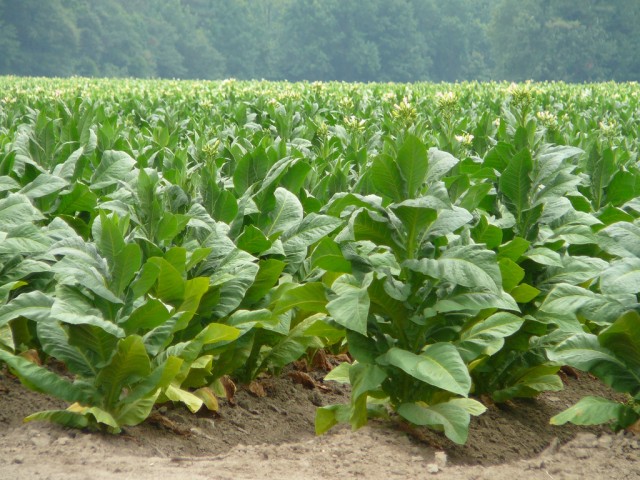

A new analysis by the World Health Organisation (WHO) has revealed that tobacco-leaf production in Africa increased by almost nine per cent between 2012 and 2024, despite a nearly 19 per cent decline in global production.
The increase, according to the findings, is raising concerns about the health risks faced by tobacco farmers and workers, as well as the wider environmental and social consequences of tobacco cultivation.
Africa produced more than 639,000 tonnes of tobacco leaf in 2024, representing about 11 per cent of global tobacco-leaf production, the analysis noted.
The findings showed that tobacco production is highly concentrated in five countries: Zimbabwe, Malawi, Tanzania, Mozambique and Uganda.
East Africa alone accounts for nearly 90 per cent of tobacco-leaf production on the continent.
Health risks
Vinayak Prasad, head of the Tobacco Free Initiative at WHO, said tobacco farming exposes workers and their families to serious health risks, while also damaging the environment and potentially trapping farmers in cycles of debt.
Mr Prasad said the issue extends beyond tobacco control and should also be viewed through the lens of health, trade, development and environmental sustainability.
“This is not just a tobacco-control issue. It is a health, trade, development and environmental issue,” he said.
The analysis identified green tobacco sickness as one of the direct health risks faced by tobacco farmers.
The condition occurs when nicotine from wet tobacco leaves is absorbed through the skin during handling.
Farmers and other workers may also be exposed to pesticides and tobacco dust during cultivation and processing, the report noted.
Beyond direct exposure, tobacco farming also consumes large amounts of land, water and other natural resources that could otherwise support food production and sustainable livelihoods.
The practice is also associated with soil degradation, deforestation and greenhouse gas emissions from the curing of tobacco leaves.
Children at risk
WHO also raised concerns about children from poor households being involved in tobacco farming.
According to the organisation, children in some low and middle-income countries miss school to work on tobacco farms and supplement their family income.
The report said this could further expose children to the health and social risks associated with tobacco cultivation while affecting their education.
Tobacco’s economic burden
The health concerns come alongside an increase in Africa’s cigarette imports.
According to the analysis, the continent’s cigarette import bill more than doubled between 2012 and 2024, rising from $833 million to $1.77 billion.
The findings also challenged the argument that tobacco is economically indispensable to most countries.
Tobacco-leaf exports account for more than one per cent of gross domestic product in only a small number of economies, including Malawi and Zimbabwe.
For most countries, the economic contribution of tobacco production and trade is limited, while the health, social and environmental costs remain substantial, WHO said.
Mr Prasad said countries needed support to move away from economic dependence on tobacco and provide alternative livelihoods for farmers and workers.
“Countries need support to move away from economic dependence on a product that harms health, farmers and the environment,” he said.
He said the findings showed why trade and development policies needed to be aligned with public health and sustainable development goals.
READ ALSO: FG begins nationwide distribution of ambulances to strengthen emergency care
Alternative livelihoods
Under Articles 17 and 18 of the WHO Framework Convention on Tobacco Control, countries are encouraged to promote economically viable alternatives for tobacco workers and growers.
The provisions also call on countries to protect the environment and human health from the effects of tobacco cultivation.
WHO called for stronger support for countries seeking to diversify away from tobacco production, protect farming communities and strengthen tobacco-control policies.
The organisation also urged countries to reduce the economic burden associated with tobacco use and trade.
Discover more from Premium Times Nigeria
Subscribe to get the latest posts sent to your email.

An outbreak of diphtheria in parts of Jos North Local Government Area of Plateau State has killed 15 people among 117 suspected cases reported, health authorities have said.
The Disease Surveillance and Notification Officer (DSNO) for Jos North, Baks Bulus, disclosed this on Tuesday during an interaction with journalists in Jos.
Mr Bulus said the deaths were recorded within three days of the outbreak, warning that the number of cases could increase if urgent measures were not taken to contain the disease.
“So far, according to the data we have gathered from the communities, 117 people are suspected to have contracted the disease. Out of this number, we have already recorded 15 deaths,” he said.
Among those who died were two siblings aged between 12 and 17 years, according to the official.
Diphtheria is a bacterial infection that can spread from person to person, particularly through close contact with an infected person, Mr Bulus explained.
He said sharing personal items such as utensils and towels could increase the risk of transmission.
According to him, vaccination remains one of the most effective ways of preventing severe complications and deaths from the disease.
“For children who have been vaccinated, the effects may be milder and may not lead to death. But for a child who has not been fully vaccinated or has not completed the required doses, it can be deadly,” he said.
Mr Bulus urged residents of the affected communities to maintain good hygiene, avoid overcrowded places, and seek medical attention promptly if they develop symptoms suspected of being associated with diphtheria.
He also cautioned residents against self-medication or relying solely on patent medicine vendors.
READ ALSO: FG deploys task force to respond to diphtheria outbreaks in Kano, Katsina
“Most times, people resort to chemists and self-medication, which we do not advise. The best approach is to visit primary healthcare centres where we have the necessary structures and personnel in place,” he said.
The DSNO said health workers had been deployed to affected communities to intensify disease surveillance, sensitise residents and support efforts to prevent further transmission.
He urged parents and guardians to ensure that children receive the recommended doses of diphtheria-containing vaccines.
Meanwhile, efforts to obtain further details from the Plateau State Ministry of Health were unsuccessful.
The State Epidemiologist, Maren Job, did not respond to calls placed to her phone.
Discover more from Premium Times Nigeria
Subscribe to get the latest posts sent to your email.
-

 Events2 days ago
Nigeria’s Christian Leaders to Unite in Abuja for First Lausanne Congress in Over 10 Years (Register Now)
-
News3 days ago
Sony Music, Warner sue Anthropic, alleging a “brazen campaign” of intellectual property theft
-
Business3 days ago
OpenAI to end Cursor deal with SpaceX over contract, safety concerns
-
Health3 days ago
FG deploys task force to respond to diphtheria outbreaks in Kano, Katsina