News
Aspirant rejects APC Reps’ primary election result in Plateau

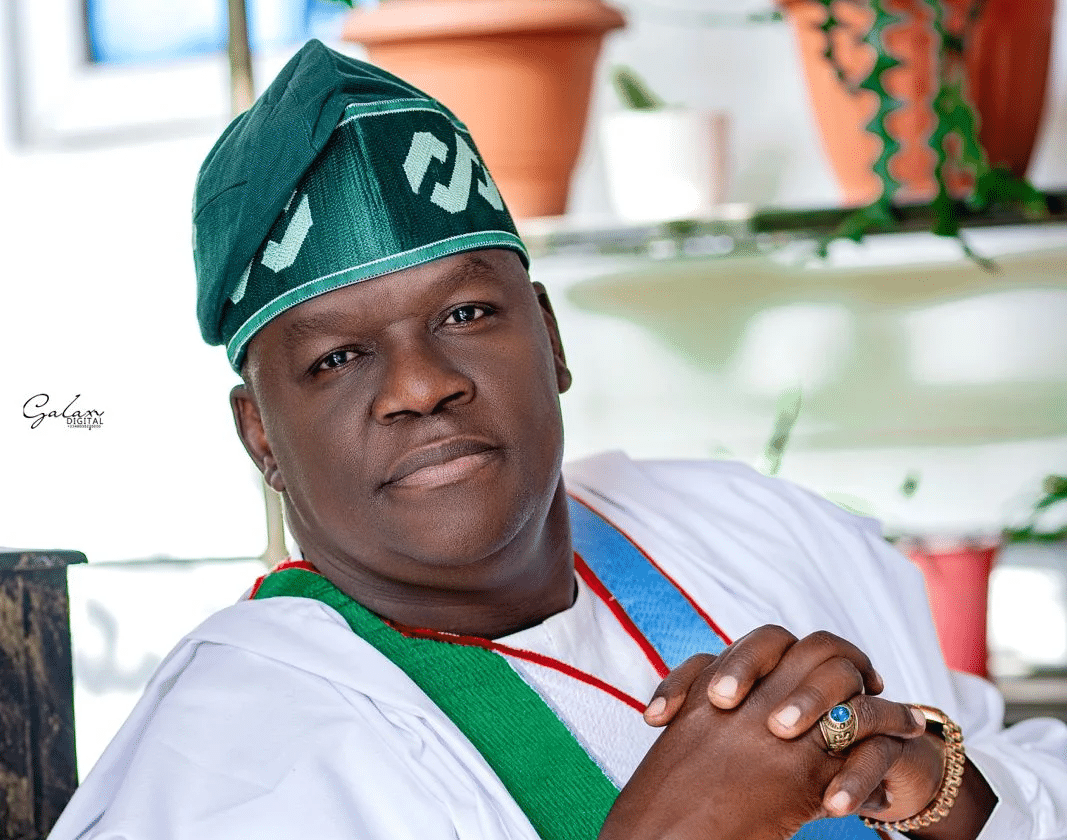
Paul Masiyer, an aspirant for the Mangu/Bokkos federal constituency on the platform of the All Progressives Congress, has rejected the results of the constituency’s primaries.
Danjuma Namang rejected the result in a statement on Monday on behalf of Masiyer’s Campaign Organisation.
Sheldas Samuel, the returning officer for the primaries in the constituency, had declared the incumbent lawmaker, Ishaya Lalu, as the winner.
Mr Samuel disclosed that Mr Lalu scored 33,290 votes, defeating Mr Masiyer, his closest opponent, who polled 2,115 votes.
But Mr Namang said primaries were not conducted in wards across the constituency, as stipulated by the 2026 Electoral Act, the APC Constitution and Guidelines for the Nomination of Candidates.
“After a careful review of the exercise, we wish to categorically reject the purported declaration of Ishaya Lalu as the winner of the APC primary election for Mangu/Bokkos federal constituency. Our position is based on the undeniable fact that direct primaries were not conducted in wards across the constituency as required by the Electoral Act 2026, the APC Constitution and Guidelines for the Nomination of Candidates.
“Across all the wards in Mangu and Bokkos Local Government Areas, party members, our supporters and agents assembled peacefully and waited for electoral officials and voting materials that never arrived. These loyal party members remained at the designated centres until late into the night before eventually dispersing in disappointment after no election was conducted.
“It is therefore shocking, unacceptable, and contrary to every principle of democracy and internal party justice for results to emerge from wards where no voting exercise took place,” he said.
Mr Namang said the purported outcome does not reflect the wishes, aspirations and democratic choices of APC members in the constituency.
“What happened was a complete subversion of the democratic process and a grave assault on the integrity of our great party. We wish to assure all our supporters that appropriate steps have already been taken through the party’s internal appeal mechanisms to challenge this injustice and defend the sanctity of the votes and rights of party members,” he said.
Mr Namang, who said that Mr Masiyer’s supporters would remain peaceful, insisted that democracy cannot thrive where imposition and manipulation take the centre stage over transparent and credible processes.
(NAN)


The Minister of the Federal Capital Territory, FCT, Nyesom Wike, has said he will lead President Bola Tinubu’s re-election campaign in the FCT and Rivers State ahead of the 2027 general elections.
Wike disclosed this on Monday at a stakeholders’ meeting of the Rainbow Coalition in Abuja, where he announced plans for a joint mobilisation involving members of the All Progressives Congress (APC) and the Peoples Democratic Party (PDP).
He said political differences would not stop stakeholders from joining forces to deliver Tinubu’s re-election, adding that the coalition had also agreed to back APC candidates for National Assembly seats in the FCT.
The meeting was attended by APC and PDP stakeholders, including party chairmen, serving and former senators, National Assembly candidates and leaders from the FCT’s six area councils.
PDP candidates contesting National Assembly seats also declared support for their APC counterparts, in what appears to be a cross-party alliance ahead of the polls.
Wike charged participants to place the coalition’s common goal above party loyalty.
“For the presidency, all of us have agreed that it is Bola Ahmed Tinubu. I am going to coordinate the FCT and Rivers State. So you can imagine how important it is.
“I am in charge of the FCT election. I am the commander of field operations as far as the FCT election is concerned.
“I want to let all of you know that we are going to work together. Nobody should say, ‘I am PDP’ or ‘I am APC.’ For the purpose of this election, we are together,” he said.
2027 presidency: Wike declares self Tinubu’s FCT campaign ‘commander’

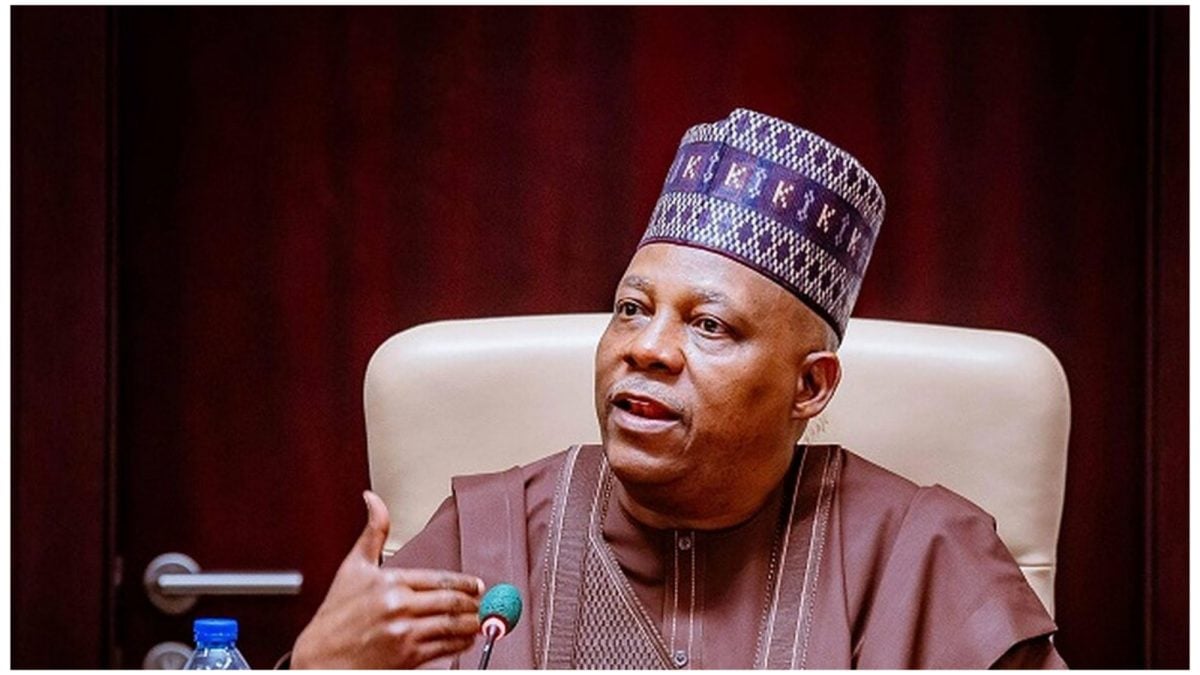
Former Kogi State Governor Yahaya Bello, former Plateau State Governor Simon Lalong and other political figures have held a closed-door meeting with Vice President Kashim Shettima at the Presidential Villa in Abuja.
The delegation, identified as the leadership of the National Directorate of Arewa for Asiwaju Movement, arrived at the Aso Rock Presidential Villa at about 4 pm on Monday and proceeded to the Vice President’s wing of the State House.
Other members of the delegation included former Jigawa State Governor Abubakar Badaru, Director-General of the National Drug Law Enforcement Agency (NDLEA), Brigadier General Buba Marwa (retd.), and Special Adviser to the President on Policy Coordination, Hadiza Bala-Usman.
The purpose of the meeting was not immediately disclosed. However, reports indicated that the visit was a courtesy call on the Vice President.
At the time the delegation arrived, Shettima was attending another meeting at the President’s wing of the State House. That meeting, which began at about 2 pm, was attended by the Minister of Livestock Development, Idi Maiha, and the Special Adviser to the President and Coordinator of the Presidential Livestock Reform, Professor Attahiru Jega, among others.
Jega, a former chairman of the Independent National Electoral Commission (INEC), has been involved in the Federal Government’s livestock reform initiative.
The meeting between Shettima and the delegation comes as the All Progressives Congress (APC) intensifies preparations for the 2027 general elections, with President Bola Tinubu seeking re-election.
The APC is scheduled to inaugurate its Presidential Campaign Council on Wednesday, October 14, at the State House Conference Centre in Abuja.
The development was disclosed by the Director-General of the campaign council, Senator Abdulaziz Yari, on Friday after briefing Tinubu at the Presidential Villa.
Yari also announced that the party’s presidential campaign would officially begin in Kaduna State on October 24, before moving to Port Harcourt and Maiduguri.
He said the full campaign timetable would be made public after the inauguration of the council.
-

 Business3 days ago
Communications Ministry made ₦345.5 million duplicate payment for Abuja ICT Park project
-
News3 days ago
LumenUs helps automate tedious paperwork in times of grief
-
Business4 days ago
Fuel subsidy would cost Nigeria over N20trn yearly — Minister
-
News3 days ago
Inside INEC’s AI and cybersecurity plans to secure Nigeria’s 2027 Elections – Technology Times