News
Nigeria to connect Police stations to fibre network under $2bn Project BRIDGE

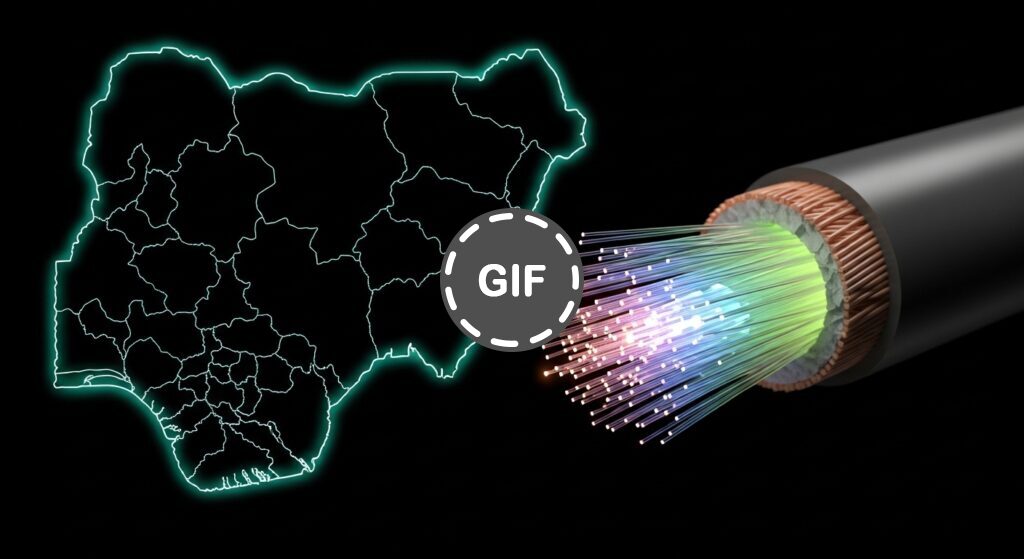
The Federal Government says it is accelerating plans to connect police stations nationwide to Nigeria’s fibre backbone under Project BRIDGE, positioning digital infrastructure as a core enabler of modern policing.
The initiative, also expected to support real-time intelligence sharing and AI-driven security operations is driven by the Federal Ministry of Communications, Innovation and Digital Economy in partnership with the Nigeria Police Trust Fund, marks a strategic convergence of national security and broadband infrastructure policy, as authorities seek to embed connectivity into frontline law enforcement operations.
Dr Bosun Tijani, Minister of Communications, Innovation and Digital Economy, says the integration of police formations into the national fibre network will enable secure data exchange, improve coordination across commands and unlock the use of artificial intelligence tools for incident response, case management and predictive policing.


Through Project BRIDGE,” Tijani says, “we are linking Nigeria’s police stations to the national fibre backbone, equipping them with data-sharing capabilities, and positioning them to benefit from AI-enabled tools for incident response, case management, and predictive analytics. The digital transformation agenda has to reach every institution that serves Nigerians, and that includes the men and women responsible for keeping them safe.”
Through Project BRIDGE,” Tijani says, “we are linking Nigeria’s police stations to the national fibre backbone, equipping them with data-sharing capabilities, and positioning them to benefit from AI-enabled tools for incident response, case management, and predictive analytics. The digital transformation agenda has to reach every institution that serves Nigerians, and that includes the men and women responsible for keeping them safe.”
The move reflects a broader policy shift towards digitising governance through cloud systems, digital identity frameworks and automated public sector workflows, with security agencies now emerging as critical beneficiaries of the expanding digital backbone.
What is Project BRIDGE?
Project BRIDGE: short for Building Resilient Digital Infrastructure for Growth—is Nigeria’s most ambitious broadband infrastructure programme to date, both in scale and financing structure.
The project is estimated at $2 billion in total investment, making it one of the largest digital infrastructure rollouts in any developing economy.
Funding is being mobilised through a blended public-private partnership model, combining:
* $500 million from the World Bank
* $200 million from the African Development Bank (AfDB)
* $100 million from the European Bank for Reconstruction and Development (EBRD)
* €22 million grant support from the European Union
* Over $1.2 billion in private sector investment
This financing framework reflects strong multilateral backing and positions the project as a cornerstone of Nigeria’s digital economy strategy.
At the heart of Project BRIDGE is the deployment of 90,000 kilometres of new fibre optic cable, which will expand Nigeria’s existing fibre footprint from about 35,000 km to approximately 125,000 km nationwide.
The infrastructure is designed as an open-access national backbone, enabling multiple service providers to utilise the network and driving competition, lower broadband costs and improved service quality.
In terms of coverage, the project is structured to deliver nationwide connectivity across all 774 Local Government Areas (LGAs), linking:
* Police stations and other security formations
* Schools and universities
* Healthcare facilities
* Government institutions
* Rural and underserved communities
* Commercial and industrial hubs
The architecture, according to the promoters of the project, includes seven regional fibre rings interconnecting Nigeria’s six geopolitical zones and Lagos, creating a resilient network designed to minimise latency and ensure redundancy across the system.
Project BRIDGE is expected to deliver far-reaching economic and social outcomes. Government projections indicate that the initiative will:
* Increase broadband penetration from about 45% to 70% by 2030
* Extend high-speed connectivity to underserved populations, targeting up to 80% coverage in rural areas
* Support the creation of millions of jobs across the digital value chain
* Contribute measurable growth to Nigeria’s GDP through expanded digital participation
Beyond macroeconomic gains, the integration of police stations into this infrastructure introduces a new operational paradigm for law enforcement. With reliable broadband connectivity, policing systems can transition towards real-time surveillance integration, digital records management and coordinated emergency response frameworks.
Digital infrastructure meets national security
The extension of fibre connectivity to police formations highlights a critical policy intersection: the use of digital infrastructure as a tool for strengthening internal security.
Historically, connectivity gaps have constrained communication, intelligence gathering and operational coordination within Nigeria’s security architecture. By embedding police stations into a high-capacity fibre network, Project BRIDGE is expected to eliminate these bottlenecks, enabling seamless information exchange across jurisdictions.
This shift also lays the groundwork for advanced capabilities, including AI-powered analytics, predictive policing models and integrated national security databases—tools that depend fundamentally on reliable, high-speed connectivity.
As implementation progresses, Project BRIDGE is emerging not only as a broadband expansion programme, but as a foundational infrastructure layer underpinning Nigeria’s digital economy, governance systems and security architecture.





News
“I Apologise to the Fans” — Chelle Accepts Responsibility After Super Eagles’ 3-0 Humbling in Bissau
Super Eagles head coach Eric Chelle has apologised to Nigerians following the team’s stunning 3-0 defeat to Guinea-Bissau, admitting the Wild Dogs deserved their victory while refusing to hide completely behind the difficult playing surface in Bissau.
Nigeria went into Tuesday’s 2027 Africa Cup of Nations qualifier hoping to build on their opening 2-1 victory over Madagascar, but instead endured a chastening evening at the 24 de Setembro Stadium.
“I apologise to the fans. Guinea-Bissau were the better side,” Chelle said in his post-match reaction. “The pitch is also bad, but we accept responsibility.”
The result represented Chelle’s first defeat as Super Eagles head coach and left Nigeria on three points from their opening two Group L matches, while Guinea-Bissau moved to six points after consecutive victories.
Nigeria were punished as early as the 15th minute when Franculino Djú gave the hosts the lead. Mama Baldé doubled Guinea-Bissau’s advantage in the 66th minute before Álvaro Djaló completed the 3-0 scoreline in stoppage time.
The condition of the pitch had dominated discussion before kick-off. Chelle had acknowledged concerns after inspecting the surface but insisted beforehand that Nigeria would have to adapt rather than use it as an excuse.
“I don’t want to say the pitch is good or the pitch is bad,” he said before the match. “We just need to stay focused on our game project.”
Guinea-Bissau coach Emiliano Té had similarly admitted that the surface was far from ideal, noting that his own players also had to deal with the difficult conditions.
That makes Chelle’s post-match acceptance of responsibility particularly significant.
Rather than attribute the defeat solely to the terrain, the Franco-Malian conceded that Nigeria had been second best on a night when Guinea-Bissau were more clinical and effective.
The defeat has immediately increased the pressure on the Super Eagles in a qualifying group where Tanzania’s automatic qualification as co-hosts leaves Nigeria, Guinea-Bissau and Madagascar battling for the remaining ticket.
For Chelle, there was therefore little attempt to disguise the scale of the setback.
The pitch was bad, but Guinea-Bissau were better — and the Super Eagles coach has accepted that Nigeria must take responsibility for a painful night in Bissau.
-

 News4 days ago
Alex Otti should be campaigning for Peter Obi not backing Tinubu – NDC
-
News4 days ago
I created an interactive digital avatar of myself — and you can talk to it
-
News4 days ago
At Meta Connect, the company’s smart glasses were everywhere
-
Business4 days ago
Nigeria Digital Connectivity Investment Forum Set for Abuja, September 29–30