News
INEC, AYGF urge active youth involvement in democracy

The Independent National Electoral Commission (INEC) and the African Youth Growth Foundation (AYGF) have urged Nigerian youths to take ownership of the democratic space and actively participate in governance.
They made the call on Tuesday in Abuja at the National Youth Mentorship Conference on Sustainable Democratic Governance, themed: “Building Sustainable Pathways for Civic Leadership, Electoral Participation and Democratic Governance.”
Arome Salifu, executive director of AYGF, said youths, who constituted more than 70 per cent of Nigeria’s population, had both the responsibility and opportunity to shape the country’s political future.
Mr Salifu, however, lamented that youths had been systematically excluded, directly or indirectly, from meaningful participation in the democratic process and governance.
“This is what this conference is about to address. We have a youthful population, no doubt. The energy, the brilliance, the intellect, the intentions, and the charismatic nature of young people are well endowed. There is no doubt about it.
“When you ask every other African about Nigerians, they will tell you Nigerians are very industrious, creative, talented, and the best on the continent.
“However, when it comes to governance and democratic participation, they are totally missing in action. That is the fallacy of composition. And that is what we must not accept as a people and as a country,” he said.
Mr Salifu said the enactment of the Not Too Young to Run law was an important step but had not removed all barriers preventing youths from actively participating in politics.
“Across all political parties, how many young people are currently on the list of candidates? Of course, it is deliberate. But it is in your place to reclaim the ownership of the democratic space,” he said.
He urged youths to seek political power through lawful and democratic means rather than violence, electoral malpractice or intimidation.
Mr Salifu said political participation should involve organising, building networks, developing credible agendas, engaging in democratic processes and pursuing economic empowerment.
He called on stakeholders to create opportunities for youth economic empowerment while providing mentorship, civic education and leadership development to prepare young people for governance.
Sam Egwu, INEC resident electoral commissioner in Plateau, also urged youths to use elections as a peaceful means of expressing dissatisfaction with government and choosing competent leaders.
Speaking on “Voter Apathy in Nigeria’s Electoral Process: Implications for Democratic Legitimacy”, Mr Egwu said young people had a critical role in reversing the country’s declining voter turnout.
He said voter apathy posed a major threat to democratic legitimacy because governments elected by a small proportion of citizens could face questions about the breadth of their mandate.
Mr Egwu said that average voter turnout in Nigeria’s last three electoral cycles had remained between 30 per cent and 35 per cent.
He urged young Nigerians to demonstrate dissatisfaction with poor governance by voting rather than staying away from polling units.
“We need to show our public anger, not by resorting to violence, but by going to the polls to select the people that are popular,” he said.
Abubakar Sulaiman, director-general, National Institute for Legislative and Democratic Studies (NILDS), said youth inclusion was a fundamental requirement for legitimate and sustainable democracy.
Mr Sulaiman, represented by Christopher Ngara, director, Department of Democracy and Governance, identified unemployment, poverty, unequal access to education, weak institutions and limited political financing as major barriers.
He said youths were often treated as voters, campaign mobilisers and political foot soldiers rather than policymakers, legislators and leaders within the democratic system.
“In extreme cases, young people have also been vulnerable to political manipulation and mobilisation for political violence,” he said.
Mr Sulaiman said the situation must change, emphasising that meaningful youth participation was essential to ensuring the responsiveness, legitimacy and sustainability of Nigeria’s democracy.
Suleiman Mande, founder of The Mande Global Impact Consulting Limited, said the quality of Nigeria’s democracy depended largely on the character, knowledge and responsibility of its citizens.
Mr Mande urged young Nigerians to prepare for leadership by becoming informed, responsible and active citizens capable of contributing positively to democratic governance.
He encouraged youths to participate before, during and after elections, ask questions, demand transparency, respect the rule of law and remain engaged in governance.
“Before we demand accountability from institutions, we must first ask ourselves, are we accountable ourselves? Are we responsible citizens?” he asked.
(NAN)






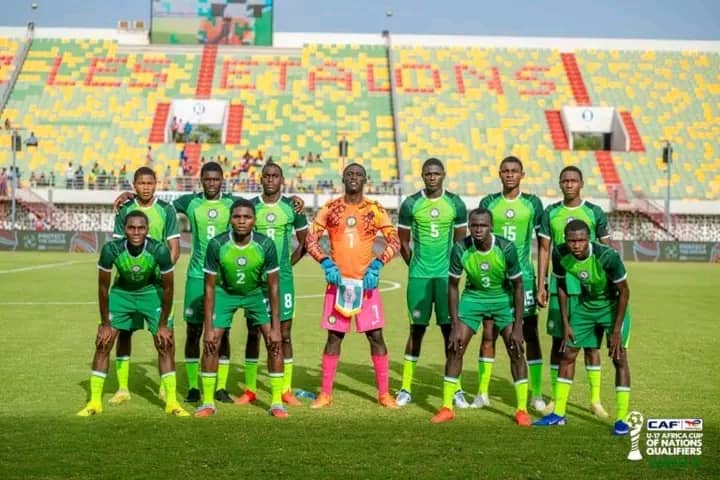
Nigeria’s Flying Eagles could be handed a lifeline in their quest to qualify for the 2027 FIFA U-20 World Cup following reports that the Confederation of African Football (CAF) is considering including the team in the 2027 Africa U-20 Cup of Nations.
The development follows Ghana’s reported removal as hosts of the continental competition, potentially creating an opening for Nigeria to secure a place in the tournament.
Sports247 reports that CAF has informed the Nigeria Football Federation (NFF) to keep the Flying Eagles on standby for a possible invitation to the 2027 U-20 AFCON.
Nigeria initially missed out on automatic qualification after suffering a disappointing 4-1 defeat to Burkina Faso in the final of the 2026 WAFU Zone B U-20 Championship.
Burkina Faso secured the region’s automatic qualification ticket, while Ghana were expected to occupy the second available place as hosts of the continental tournament.
However, Ghana’s reported failure to meet CAF’s hosting requirements has thrown the arrangement into uncertainty, with the continental governing body expected to appoint a new host.
The situation could work in Nigeria’s favour, with the Flying Eagles potentially considered for the place initially reserved for Ghana as tournament hosts, having finished runners-up in the WAFU Zone B competition.
Although CAF is yet to make an official announcement confirming Nigeria’s inclusion, the reported development has raised hopes of a second opportunity for the seven-time African champions.
The 2027 U-20 AFCON will carry additional significance as it will also serve as Africa’s qualifying competition for the FIFA U-20 World Cup.
According to CAF’s qualification format, the four semi-finalists will represent the continent at the global tournament.
Nigeria’s possible inclusion would therefore provide the Flying Eagles with another opportunity to compete for continental honours and keep their World Cup ambitions alive.
The West African giants have a proud history at the FIFA U-20 World Cup, having finished runners-up on two occasions, in 1989 and 2005.
For now, Nigeria will await CAF’s final decision, with the reported development offering renewed hope after their disappointment in the WAFU Zone B final.

Tony Elumelu played a supreme role in getting investment bank Afrinvest back on track in 2011 after the global financial meltdown pushed the investment bank to the brink, its chief executive recalled in a letter to the tycoon seen by PREMIUM TIMES.
The multisectoral magnate, who is the top shareholder of United Bank for Africa, the Transcorp Group, and Seplat Energy, granted a soft loan of $1 million to Ike Chioke, the CEO of the financial institution, as a mark of urgent support when the firm direly needed the cash to recapitalise, the latter said.
“Fifteen years ago, Afrinvest was navigating one of the most challenging periods in its history, as we struggled to rebuild and recapitalise the business in the aftermath of the global financial crisis,” Mr Chioke said.
“At that critical juncture, when the future was far from certain, you made the remarkable decision to lend me US$1 million of your personal funds. You placed your confidence not simply in the prospects of a business but in me as an individual, my integrity, my determination and my conviction that Afrinvest could emerge stronger from adversity.”
This June, Mr Chioke eventually completed the repayment of the credit, according to the letter, describing the gesture as an extraordinary act of friendship, generosity and trust.
READ ALSO: Afrinvest repays undocumented $1 million from Elumelu with interest
Mr Elumelu, whose economic vision is anchored on what he calls “Africapitalism” – an investment philosophy that prioritises the private sector’s role in democratising the wealth Africa needs to power large-scale growth, has been involved in active philanthropic initiatives on the continent.


In March, his foremost charity project, the Tony Elumelu Foundation, turned sixteen, and he said the initiative had disbursed over $100 million in seed capital to 24,000 entrepreneurs in Africa and created more than 1.5 million jobs over the period.
The foundation expects to fund an additional 3,200 entrepreneurs this year, it said in September.
Mr Chioke applauded the profound impact Mr Elumelu’s financial assistance has had on Afrinvest, notably transforming it into a diversified regional financial services group with an expanding universe of clients and operations in asset management, investment banking, research & consulting, and securities trading.
Discover more from Premium Times Nigeria
Subscribe to get the latest posts sent to your email.
-

 News4 days ago
Plateau APC 2027 Campaign Council inaugurated today in Jos
-
News4 days ago
Nigerians’ data appetite drives MTN Nigeria revenue to ₦2.68tn – Technology Times
-
News2 days ago
Plateau Ndigbo Crown Chief Johnson Nwosu as New Igwe
-
News2 days ago
CrowdStrike to shell out nearly $500M for 2 AI security startups as the market for securing agents takes off