
Business
Max Air confirms engine-related anomaly after Abuja–Katsina flight returns mid-air

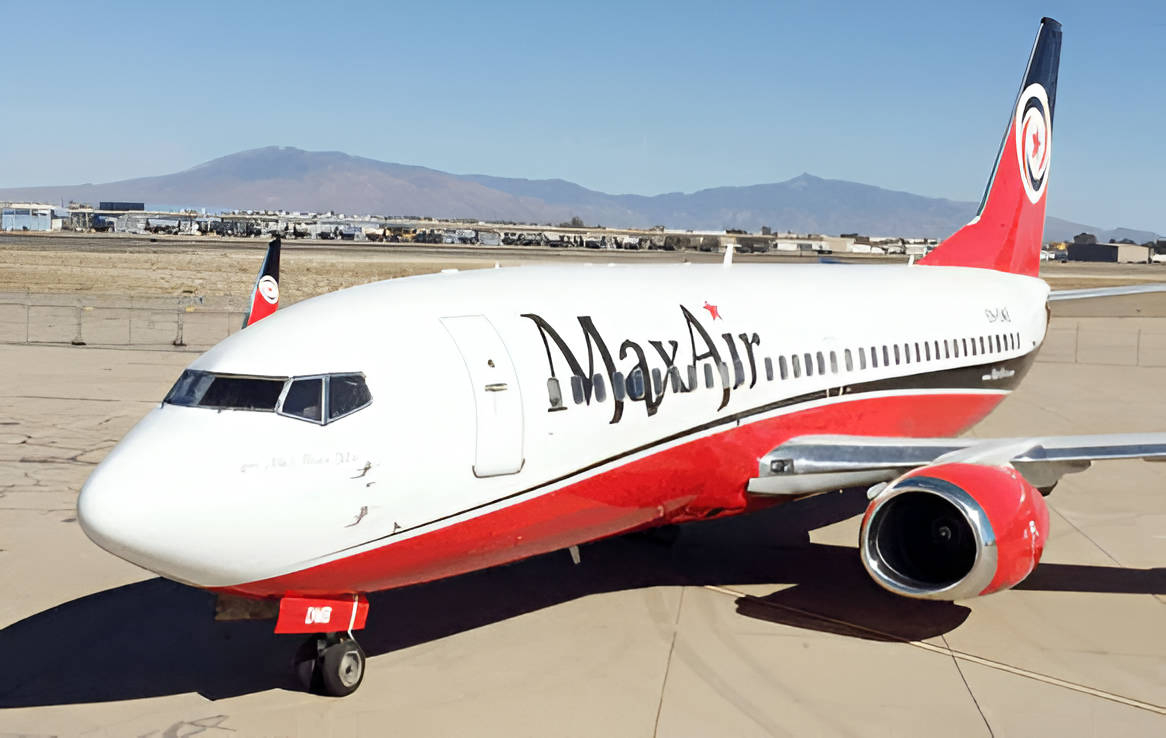
Max Air has confirmed that one of its Abuja–Katsina flights made an air return to Abuja on Monday after the crew detected what the airline described as an engine-related anomaly shortly after takeoff.
The development followed multiple passenger accounts shared on social media describing moments of panic onboard the aircraft after loud banging sounds were reportedly heard during the flight.
In a statement issued after the incident, the airline said Flight VM1620, operated with aircraft registration 5N-DAB, departed the Nnamdi Azikiwe International Airport, Abuja, on Monday before the crew observed an indication suggesting an engine malfunction about 15 minutes into the journey.
According to the airline, the pilots immediately initiated a return to Abuja in line with standard aviation safety procedures.
“The aircraft landed safely and all passengers and crew disembarked without injury or incident,” Max Air said.

PREMIUM TIMES earlier reported passenger accounts of the incident, with several travellers describing how the aircraft allegedly shook violently shortly after takeoff, causing fear among passengers.
However, Max Air maintained that the situation was handled in accordance with established safety procedures and stressed that passenger safety remained its highest priority.
Replacement aircraft deployed
The airline said it subsequently deployed a replacement aircraft, identified as 5N-DMK, from Kano to Abuja to continue the Abuja–Katsina service and other scheduled operations.
It also disclosed that its engineering and technical teams had commenced a comprehensive assessment of the affected aircraft in line with regulatory and safety protocols.
Max Air noted that it remains in communication with the Nigerian Civil Aviation Authority (NCAA) and would cooperate with any review arising from the incident.
As of the time of filing this report, the Nigerian Safety Investigation Bureau (NSIB) had yet to issue an official statement on the development.
The Director of Public Affairs and Family Assistance at the NSIB had earlier told PREMIUM TIMES that the agency was initially unaware of the incident but would make findings and provide updates if necessary.
The incident adds to growing public attention on airline operations and technical reliability in Nigeria’s aviation sector amid recurring concerns over delays, disruptions and safety-related incidents.





The Federal High Court in Abuja has ordered the Nigerian Midstream and Downstream Petroleum Regulatory Authority (NMDPRA) to continue issuing and renewing petroleum products import licences to three major oil marketers, ruling that the regulator’s refusal to do so violates the Petroleum Industry Act (PIA).
Justice Inyang Ekwo delivered the judgement on Monday. The judge reportedly ruled that the authority’s refusal to grant or renew import licences for Matrix Energy, AA Rano and AYM Shafa was in “direct non-compliance” with the PIA, Nairametrics reported.
It said the judge specifically directed the regulator to continue granting, issuing, extending, renewing or reissuing licences, permits and authorisations for midstream and downstream petroleum operations, particularly the importation of petroleum products, once the companies meet all statutory and regulatory requirements.
The judgement followed a suit filed in June by the three oil marketers challenging the NMDPRA’s refusal to regularly issue or renew their petroleum products import licences.
The companies, through their lawyers, Raji Ahmed, a Senior Advocate of Nigeria, and Chris Ekemezie, argued that the PIA does not prohibit the importation of petroleum products into Nigeria or prevent the regulator from issuing licences to eligible importers.
The Court rulings
Delivering judgement on Monday, Mr Ekwo held that the NMDPRA’s refusal to issue and renew the licences was inconsistent with the provisions of the PIA and that the authority had acted beyond the limits of the law.

He ruled that any exercise of regulatory powers relating to import licences in violation of the PIA and other relevant laws was “null and void”.
The judge also held that the plaintiffs had successfully established their claims against the regulator.
In a key part of the judgment, the court declared that Sections 31, 32 and other relevant provisions of the PIA, read alongside Section 72 of the Federal Competition and Consumer Protection Act, mandate the NMDPRA to promote competition in the midstream and downstream petroleum sectors.
The provisions also require the regulator to prevent the abuse of dominant market positions and restrictive business practices.
The court further declared that the three oil marketers were entitled to the issuance, extension or renewal of their import licences upon fulfilling the conditions stipulated by the NMDPRA.
The judge, however, clarified that the authority retains exclusive regulatory powers to grant, modify, extend, renew, suspend, cancel or terminate licences and permits for midstream and downstream petroleum operations.
Why the oil marketers went to court
In an affidavit filed on 26 June in support of the suit, Sabiu Saidu Mahuta, executive director of AA Rano Nigeria Limited, said the NMDPRA had, since July 2025, issued, extended or renewed import licences for the three companies only sporadically rather than regularly.
He argued that the regulator’s actions and inactions were entrenching market dominance and monopolisation of the downstream petroleum sector by local refineries.
Mr Mahuta also said the three companies had collectively invested more than $20 billion in infrastructure, logistics and retail networks to support their petroleum businesses.
“Collectively, the plaintiffs have invested more than $20,000,000,000 [Twenty Billion United States of America Dollars] in infrastructure, logistics and retail networks for the smooth operations of their licensed petroleum products businesses,” he stated.
The companies argued that allowing petroleum imports alongside local refining would promote competition, prevent monopolistic practices and price-fixing, and improve the overall performance of Nigeria’s midstream and downstream petroleum sectors.
Their lawyer, Mr Raji, urged the court to affirm the legality of petroleum products imports and the regulator’s obligation to issue licences to eligible operators.
Dangote Refinery’s legal suits
The judgement comes amid an ongoing legal dispute over the issuance of petrol import licences in Nigeria, particularly following the expansion of domestic refining capacity by the Dangote Refinery.
Dangote Refinery has argued in a separate suit that the continued issuance of petroleum products import licences contravenes Nigerian law, which it maintains permits imports only when local refineries cannot meet domestic demand.
The refinery recently filed a fresh N100 billion suit against the Attorney-General of the Federation at the Federal High Court in Lagos over the continued issuance of import licences.
Matrix Energy, AA Rano and AYM Shafa have also applied to join that suit.
The case remains pending before the court.
The latest ruling in Abuja, however, addresses the three oil marketers’ rights to obtain import licences from the NMDPRA, provided they meet the applicable statutory and regulatory conditions.
Nigeria’s changing petrol supply dynamics
The legal dispute comes as Nigeria’s petroleum supply landscape continues to change following increased output from domestic refineries.
PREMIUM TIMES reported that NMDPRA data published last week showed that petrol imports declined sharply in the first quarter of 2026, while supplies from local refineries rose to about 3.18 billion litres.
The statistical presentation of the report showed that crude oil receipts by domestic refineries increased to 683,000 barrels per day (bpd) in August from 585,000 bpd in July, representing a 17 per cent increase.
The increase became profound as domestic petrol receipts rose significantly while reliance on imported petrol declined.
According to the data, average daily Premium Motor Spirit (PMS) receipts increased by 11 per cent, from 45.5 million litres per day in July to 50.5 million litres per day in August.
The report indicated that domestic PMS receipts accounted for most of the increase, rising by 39 per cent, from 25.8 million litres per day to 35.9 million litres per day.
In contrast, PMS imports fell by 26 per cent, from 19.7 million litres per day in July to 14.6 million litres per day in August.
The growth in domestic refining has intensified discussions about the role of fuel imports, market competition, and the regulatory conditions governing the supply of petroleum products.
READ ALSO: Dangote refinery drove Nigeria’s petrol supply in August as NNPC refineries remain shut — Report
Meanwhile, PREMIUM TIMES reported last week that NMDPRS approved petrol import permits covering about 830,000 metric tonnes for multiple companies ahead of the fourth quarter of 2026.
George Ene-Ita, spokesperson for the authority, confirmed the development to PREMIUM TIMES last Tuesday.
“Yes, petrol import permits were approved for Q4 2026 to ensure no supply gaps are heading into the critical end-of-year period,” Mr Ene-Ita said.
Companies reportedly granted the permits include Matrix Energy, A.A. Rano, AYM Shafa, NIPCO, Pinnacle Oil and Bono Energy.
The approvals were reportedly issued on 18 September, although details of the individual allocations to the marketers are still sketchy. A request for details from PREMIUM TIMES, sent via email to the authority last week, was acknowledged, but has yet to be received.
Discover more from Premium Times Nigeria
Subscribe to get the latest posts sent to your email.

A social media claim that OPay has stopped using customers’ phone numbers as account numbers and is now issuing standard bank account numbers has sparked confusion among users of the fintech platform.
The claim, which circulated among social media users, urged OPay customers still using their phone numbers as account numbers to visit OPay agents to have their accounts updated.
“OPay is no longer using phone numbers as account numbers. They’re now issuing standard account numbers, so if you’re still using your phone number as your OPay account number, hurry to an OPay agent to get yours updated,” an X user, Israel Gharee, posted.
However, an OPay official, who spoke on condition of anonymity, told PREMIUM TIMES that the claim is inaccurate, adding that the company would communicate any major changes to its customers through its official communication channels.
“I have seen the tweet. But even from the comments you will see people are already correcting him. If we have any update or news, we will always share through our communication channels,” the official said on Sunday.
Clarification
The official said the claim may have been prompted by OPay’s My BizPayment feature, which provides users with a separate account number for business transactions.
The feature is available to existing OPay users who want to use their accounts for business purposes. It allows users to provide information about their businesses and, after completing the process, receive a merchant account number.
The existence of the merchant account number does not mean OPay has replaced the phone-number-based account details used by its regular customers.
The business account number is associated with the user’s existing OPay account and is intended for business-related transactions.
BizPayment account
My BizPayment is a business feature within the OPay app, and it’s not a recent update.
Users can access it through the “Me” section of the app and provide information about their businesses, including the nature of the business and how it operates.
The process includes different business categories and operating models. Once the required information is provided, eligible users can proceed to generate a merchant account number.
ALSO READ: Eight years on, OPay keeps Nigerian businesses moving
The account number generated through this process may therefore look different from the phone-number format associated with a regular OPay account.
That distinction appears to be at the centre of the social media claim.
No instruction to change existing accounts
There is no indication from OPay that ordinary customers have been instructed to visit agents to replace their existing phone-number-based account details.
The company said any change to its account system would be communicated through its official channels.
The OPay official said the availability of a separate merchant account number through My BizPayment should not be interpreted as an announcement that OPay has discontinued the use of phone numbers for regular customer accounts.
Discover more from Premium Times Nigeria
Subscribe to get the latest posts sent to your email.
-

 News3 days ago
Crusoe abandons $1.25B plan to use Boom turbines at AI data centers
-
News3 days ago
Alex Otti should be campaigning for Peter Obi not backing Tinubu – NDC
-
Business2 days ago
Nigeria Digital Connectivity Investment Forum Set for Abuja, September 29–30
-
News3 days ago
At Meta Connect, the company’s smart glasses were everywhere


