News
For the first time, Airtel Africa’s data revenue surpasses voice calls – Technology Times


For the first time in its reporting history, Airtel Africa has generated higher revenue from mobile data services than from voice calls, according to the company’s financial results for the year ended March 31, 2026.
The telecoms group reported $2.53 billion in data revenue, compared to $2.32 billion from voice services, in its financial results released on May 8, 2026.
Group revenue rose by 29.5% to $6.4 billion during the financial year, while profit after tax increased from $328 million to $813 million. Earnings per share also rose from 6.0 cents to 18.6 cents.


Average monthly data usage per customer increased from 7 gigabytes to 8.9 gigabytes during the year. Data services accounted for nearly half of Airtel Africa’s mobile service revenue during the reporting period, up from 43% in the previous financial year.
Airtel Africa’s customer base now 183.5m users, data customers now 84.2m
The company also recorded growth in earnings before interest, taxes, depreciation and amortisation (EBITDA), alongside increases in customer numbers, service revenue and cash generation across its operations.
Mobile internet services recorded stronger growth than voice revenue during the period, reflecting increased smartphone adoption and higher data consumption across Airtel Africa’s 14 markets.
The company’s total customer base increased to 183.5 million users, while data customers rose to 84.2 million. Smartphone penetration across the network also expanded, with smartphone users accounting for nearly half of the customer base.
Average monthly data usage per customer increased from 7 gigabytes to 8.9 gigabytes during the year.
Data services accounted for nearly half of Airtel Africa’s mobile service revenue during the reporting period, up from 43% in the previous financial year.
Nigeria remained Airtel Africa’s largest growth market during the year.
Revenue from Nigeria rose to $1.6 billion, driven by increased data consumption and higher customer spending on internet services.
Average monthly data usage per customer in Nigeria increased to 11 gigabytes during the reporting period.
The Nigerian Communications Commission (NCC) tariff adjustments approved in early 2025 also contributed to revenue growth across the telecoms sector by allowing operators to revise pricing structures and expand network investment.
Airtel Nigeria recorded stronger profitability during the year, while the company also reported revenue growth across East Africa and Francophone Africa.
Airtel Money, the group’s mobile financial services platform, continued to expand during the year.
The platform’s customer base rose to 54.1 million users, while annualised transaction value exceeded $215 billion by the final quarter of the financial year.
Revenue from Airtel Money increased to $1.36 billion, contributing more than 20% of total group revenue.
During the year, Airtel Africa expanded its network infrastructure by adding more than 3,250 new network sites and extending its fibre network to nearly 82,000 kilometres.
The company’s 5G network is now operational in six African countries.
Airtel Africa says it plans to increase capital expenditure to about $1.1 billion in the coming financial year to support network expansion, broadband growth, data centre investments and service quality improvements.
The telecoms group also announced a partnership with SpaceX to deploy Starlink Direct-to-Cell satellite connectivity across its African markets to extend coverage to underserved and remote locations.
Despite the strong financial performance, Airtel Africa says rising fuel and energy costs remain a key operational challenge.
Sunil Taldar, the company’s Chief Executive Officer, says ongoing geopolitical developments could increase cost inflation and place pressure on EBITDA margins in the near term.
According to Taldar, Airtel Africa recorded EBITDA margins of 49.3% during the financial year, reaching 50.3% in the fourth quarter of 2026.
The telecoms group says it will continue implementing cost-efficiency measures to manage the impact of higher energy expenses.
Airtel Africa also says plans to list Airtel Money remain under consideration, subject to market conditions.
According to Taldar, the company remains committed to pursuing the initial public offering in the second half of 2026 if market conditions remain favourable.
The telecoms group also announced a leadership transition during the reporting period.
Founder and Chairman Sunil Bharti Mittal plans to retire after the company’s annual general meeting in July 2026.
The company says Gopal Vittal will succeed him as non-executive chairman.
The financial results reflect continued growth in mobile internet services, digital financial platforms and broadband infrastructure across Airtel Africa’s operations.
Stay ahead with real-time reports, breaking news, and exclusive insights delivered directly to your phone. Don’t settle for outdated information. Join TECHNOLOGYTIMES NEWS on WhatsApp for 24/7 updates.
Join Our Whatsapp Channel


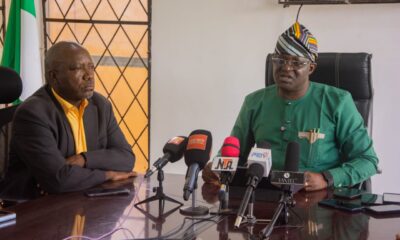
Governor Seyi Makinde of Oyo State has declared that the All Progressives Congress, APC, or any of the political parties willing to use any of the public facilities in the state is free to do so.
Makinde specifically explained that the APC is free to use the ancient Mapo Hall for its proposed campaign.
Makinde made these declarations in a statement signed by his Special Adviser on Media, Dr Sulaimon Olanrewaju.
The statement was made available to DAILY POST Tuesday night.
Makinde in the statement explained that no political party should be denied access to use the facilities as long as they fulfil the conditions.
Makinde made these declarations in response to concerns surrounding the proposed use of Mapo Hall by the APC presidential campaign.
He added that public facilities belong to the people of the state.
He said that its usage must be done in transparent and equitable way.
Makinde in the statement explained that, "Any political party or organisation that fulfils the stipulated conditions should not face discrimination or unjust restrictions in accessing such facilities".
2027: APC, other political parties free to use public facilities- Makinde

The Nigeria Police Force has confirmed the arrest of a 22-year-old man, Umar Ibrahim Gandi Maradun, over a viral video allegedly showing him calling for the use of AK-47 rifles to kill Christians in Enugu and Plateau states.
Politics Nigeria reports that the suspect, a native of Maradun Local Government Area of Zamfara State, was arrested for investigation after the video circulated on social media and sparked concerns over religiously motivated violence.
In a statement issued on Tuesday, October 27, 2026, the Force Public Relations Officer, Chief Superintendent of Police (CSP) Ani Iniedu, said the Zamfara State Police Command had activated its intelligence resources to identify those involved in the incident.
The police also confirmed that the command had engaged the leadership of Jama’atu Izalatil Bidi’a Wa’ikamatus Sunnah (JIBWIS) at the national and state levels following the emergence of the video.
According to the police, the organisation disassociated itself from the alleged conduct and handed the suspect over to the authorities for investigation.
The video reportedly showed the suspect wearing JIBWIS uniform and appearing alongside pupils from two Islamic schools in Maradun: Nurul Islam Islamiya and Akidatul Sahiha Islamiya.
Preliminary findings by the Zamfara State Police Command indicated that the video was recorded on Friday, October 23, 2026, while the suspect was reportedly on his way to Aliyu Ibn Abi Thalib Mosque, where he and others allegedly provided security during Friday prayers and preaching.
The suspect was born on September 15, 2004. He reportedly attended Mualledi Model Primary School and Government Day Secondary School, both in Maradun.
He also reportedly joined JIBWIS in 2025 and recently gained admission to study Mass Communication at Zamfara State University, Talata Mafara.
The police said a comprehensive investigation had commenced and that the suspect would be charged before a competent court if sufficient evidence established an offence under applicable law.
Earlier, the Zamfara State Commissioner of Police, Bello, said the investigation would consider allegations of incitement to violence, disturbance of public peace and criminal intimidation under Sections 77, 78 and 380(b) of the Penal Code Law applicable in the state, subject to the evidence gathered and applicable law.
The police also condemned statements capable of promoting religious hatred, threatening community safety or undermining peaceful coexistence.
“The Zamfara State Police Command remains resolute in its duty to uphold the law, protect lives and property, defend the rights of all citizens without discrimination, and work with relevant stakeholders to sustain peace and security throughout Zamfara State,” the commissioner said.
The development comes as JIBWIS has publicly distanced itself from the video and condemned calls for violence against non-Muslims.
The group’s National Publicity Secretary, Sheikh Ahmad Muhammad Ashiru, stated this in a statement issued at its headquarters in Jos on Tuesday.
Ashiru said the organisation had yet to establish the authenticity of the video but maintained that its position against violence was clear.
“We are yet to confirm whether the video is authentic, but our position against violence remains clear,” he said.
He added that JIBWIS, under the leadership of Ash-Sheikh Muhammad Sani Yahaya Jingir, would not support calls to attack or kill anyone because of their religious affiliation.
Ashiru said banditry, kidnapping, armed robbery and Boko Haram attacks were already affecting communities across the country, warning that statements promoting violence could heighten tensions and threaten peaceful coexistence.
“We would not support any call capable of disturbing the peace of Nigeria, as such comments are capable of inciting violence and creating unnecessary tension among Nigerians,” he said.

The JIBWIS spokesperson stressed that anyone making such statements in the organisation’s name did not represent its position.
He urged security agencies to investigate the video, establish its authenticity and identify those responsible, adding that anyone found culpable should face the law after a proper investigation.
Meanwhile, the Nigeria Police Force has urged members of the public to remain calm, avoid circulating unverified information and refrain from sharing the video in ways that could escalate religious tensions.
The Force reiterated its commitment to protecting Nigerians irrespective of religious affiliation and taking lawful action against conduct capable of inciting hatred or threatening public peace.
-

 News3 days ago
Troops rescued 70 abductees, recovered N10 million ransom: DHQ
-
Business3 days ago
CBN grants JP Morgan approval-in-principle to set up merchant bank
-
News3 days ago
Plateau Activates Ebola Preparedness Measures, Urges Residents to Observe Safety Guidelines
-
Business3 days ago
REA Ends 16 Years of Darkness in Two Kano Communities