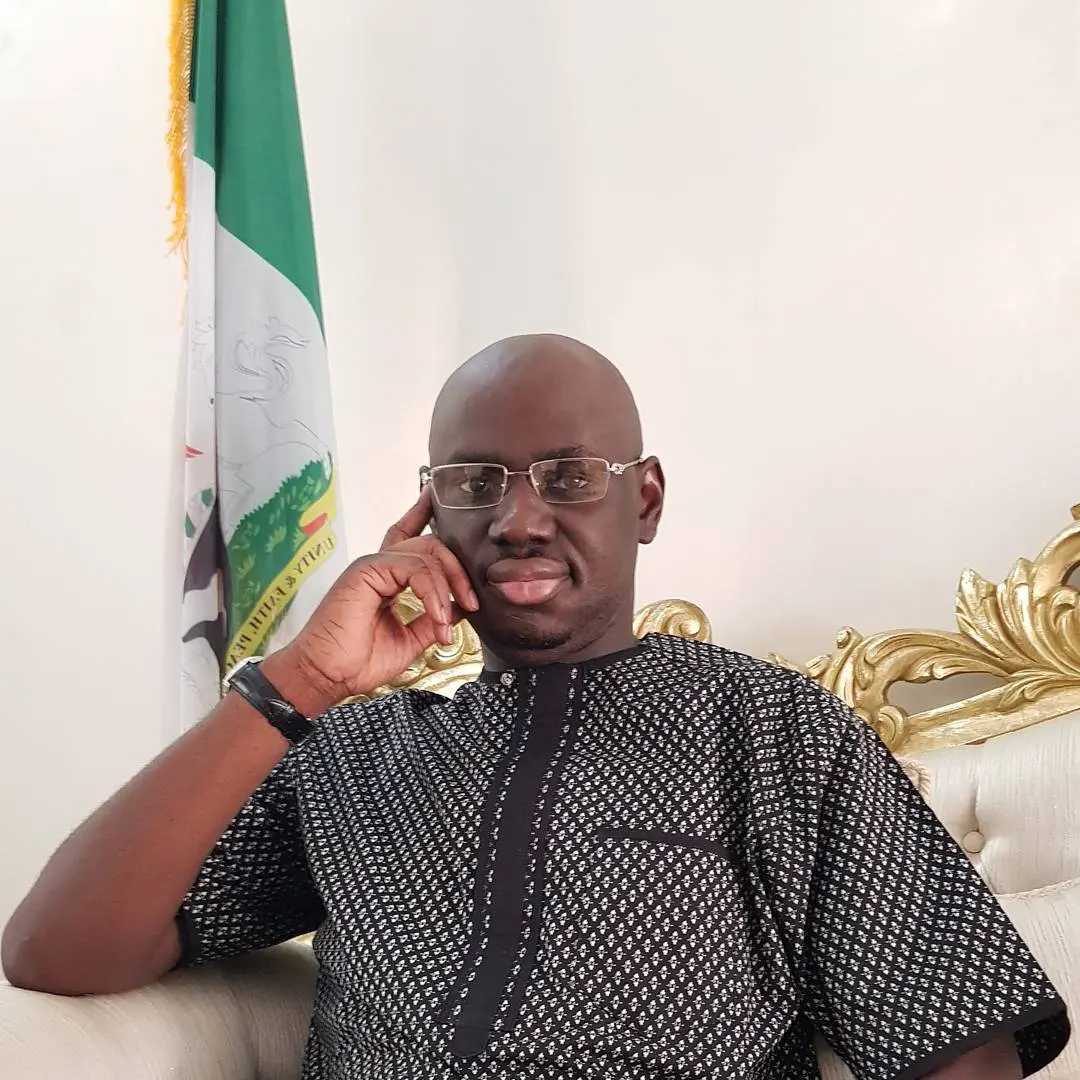
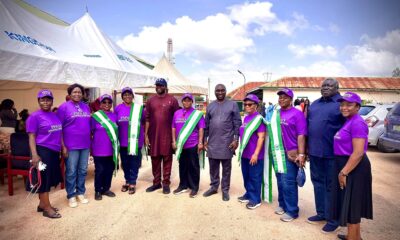
Timi Frank, former deputy national publicity secretary of the All Progressives Congress, APC, said the recent Abuja High Court judgment deregistering the African Democratic Congress and political parties is a recipe for an incoming national crisis nationwide.
Recall that Justice Peter Odo Lifu of the Federal High Abuja, in a ruling on Monday, had ordered the Independent National Electoral Commission to deregister the Democratic Congress, ADC, Accord Party, and others from participating in the 2027 general election.
The judgment had stirred concerns among Nigerians.
ADC, however, announced a plan to appeal the judgment.
Reacting to the judgment, Timi Frank, in a statement on Monday, said it was an attempt to eliminate major opposition platforms, noting that it could trigger a national crisis and undermine Nigeria’s democratic foundations.
He called on President Donald Trump of the United States and members of the international community to urgently intervene to preserve Nigeria’s multiparty democracy alive.
“The judgment came suddenly without prior notice to the parties involved. From the information available to us, it appeared that the judgment had been prepared elsewhere and simply delivered by the court,” he alleged.
“Nobody knew about it. There was no information and no briefing, even to the lawyers representing the parties. The judgment was given suddenly. It was something they plotted and cooked up to make it look legitimate without even notifying the parties involved,” Frank alleged.
He described the ruling as a “mystery judgment.” Frank alleged that it was orchestrated to achieve a predetermined political outcome.
“From the information we received, the judgment was written elsewhere and handed to the judge. The Office of the Attorney General wrote the script, and the judge merely played out that script,” he alleged.
Frank further alleged that the reported move to deregister opposition parties was part of a broader campaign to weaken political opposition and consolidate power.
“It must be noted that any attempt by President Bola Ahmed Tinubu and those working with him to deregister political parties, particularly major opposition parties such as the ADC, will give rise to a crisis that may be difficult to contain,” he said.
“The time has come for all lovers of democracy to rise in defense of the democratic gains Nigerians have fought hard to achieve. Silence in the face of these developments could have far-reaching consequences for the future of our country,” he said.
Policy experts, academics, and researchers have stated that strong public policy implementation and debt management can drive good governance in Africa.
Speaking to PREMIUM TIMES, Evans Osabuohein, a professor of economics, said that the discussions at the event focused on public policy and debt management, which are affecting human capital development in Africa.
“It [is] about how public debt can be managed more efficiently in Africa, so that we can tap into the resources for human capital and energy efficiency in this age of innovation. We need human resources that are well-skilled, equipped, and knowledgeable to harness such potential that technology like artificial intelligence present today,” he said.
“Debt is not bad in itself; the issue is when debt is borrowed but is not used for capital investment, the servicing of debt becomes a burden. We have seen this in most African countries where some of the borrowings are not geared towards human capital development.”
Mr Osabuohein, a board member of AFEA, explained that it would be a win-win option for both governments and citizens if public debt is used judiciously, saying that the execution of projects translates into employing the populace to do the labour.
More details
The three-day international conference, hosted by Nile University Abuja’s faculty of arts and social sciences, brought together scholars, policymakers, and industry experts in the field of economics.
A collage of AFEA and Nile University Abuja logos
Themed ‘Africa’s Geoeconomic Development Agenda in a Global Realignment Era’, it sought to contribute expert input on shifting geopolitics, climate risk, and development finance across the continent, and drew attendees from Canada, Ghana, Nigeria, and other countries.
Emotimo Agama, director-general of the Securities and Exchanges Commission (SEC); Tope Fasua, an economic adviser to President Bola Tinubu; Tony Okpanachi, managing director of the Development Bank of Nigeria, among others, made up the line-up of dignitaries for the event.
Premium Times monitored breakout sessions at the programme, where participants presented papers on topics including debt sustainability, global financial and health governance systems, digital service delivery, mobile money, financial inclusion, and continental digital markets.
Some sessions also focused on youth, gender, demographic change, and inclusive development; as well as migration, urbanisation, and spatial inequality, with a broad focus on Africa-West relations.
The sessions featured interactive discussions for each paper presenter, including how their research work could be further enhanced.
Participants speak
Abogede Marietu, a PhD candidate of economics at Nile University, described the conference as impactful, adding that it has given her opportunities to learn from scholars in her field.
Participants exchanging ideas at one of the sessions at the conference. (PHOTO CREDIT: Mohammed Taoheed/Premium Times)
“Today is actually my first time presenting my work at an international conference, and I think that gives visibility to my work. I have also got to learn from other presenters.”
“It is my earnest desire that the government in Africa would look into the policies that myself and other presenters have come up with, so as to improve the economy, and also aid the livelihood of the citizens of the continent,” she said.
Another paper presenter, Ropheka Bot, stated that she found the discussions in the conference “very timely and engaging as experts gathered to discuss current global issues”
Mrs Bot, a lecturer at Bingham University, Karu, said she hopes that governments in Africa would implement some of their research findings to improve development on the continent.
About AFEA
The African Finance and Economics Association (AFEA) is a professional forum for academics and practitioners (government and industry) of finance, economics, and related disciplines interested in the development of Africa.
It seeks to empower the continent through financial growth and sustainable development, with a mission to promote the exchange of information and ideas among professionals and stakeholders in the field while fostering research that advances knowledge on contemporary African development issues.
With Majune Socrates as its president, Gbadebo Odularu sits as the chairman of the board for the organisation.
MTN Nigeria is positioning fintech and fibre broadband as two of its most important growth pillars.
At MTN Capital Markets Day 2026, CEO Karl Toriola outlined how the telecoms company plans to deepen financial inclusion through digital financial services while accelerating fibre-to-the-home (FTTH) deployment to meet rising demand for high-speed broadband.
The strategy reflects the changing dynamics of Nigeria’s telecommunications market, where operators are increasingly competing on digital ecosystems, home connectivity, enterprise services and fintech innovation.
“Over the past several years, we have consistently maintained between 50% and 52% market share, and we have defended that position robustly,” he explains. “We also continue to hold the majority of Nigeria’s 4G market, maintaining between 56% and 58% market share.”
In this presentation from MTN Capital Markets Day 2026, he discusses:
Q: What are MTN Nigeria’s key growth priorities? A: MTN Nigeria is prioritising fintech, fibre-to-the-home broadband, digital services and financial inclusion to drive long-term growth.
Q: Why is MTN Nigeria investing in fibre-to-the-home? A: The company is expanding FTTH to meet growing demand for reliable high-speed internet from homes, remote workers, SMEs and digital businesses.
Q: How does fintech fit into MTN Nigeria’s strategy? A: MTN Nigeria sees fintech as a major growth engine, expanding mobile money, digital payments and financial services to deepen customer engagement and diversify revenue.
Q: What challenges did MTN Nigeria identify? A: Karl Toriola highlighted intense competition, evolving customer expectations and the need for continued investment in digital infrastructure, broadband and fintech capabilities.
Q: What was announced at MTN Capital Markets Day 2026? A: MTN Nigeria outlined its strategy to accelerate fintech growth, expand fibre broadband, strengthen digital services and reinforce its leadership in Nigeria’s telecommunications market.
Stay ahead with real-time reports, breaking news, and exclusive insights delivered directly to your phone. Don’t settle for outdated information. Join TECHNOLOGYTIMES NEWS on WhatsApp for 24/7 updates.