News
Jos North Certificate Dispute: Dogo Nanzing Warns Against Rewriting Plateau’s History


A social commentator, Dogo Nanzing, has weighed in on the ongoing debate over indigeneity in Jos North Local Government Area, cautioning against what he described as attempts to alter Plateau State’s historical narrative following a recent High Court judgment on the issuance of indigene certificates.
Nanzing made his position known in a video posted on his social media platform and monitored by Jos Events, where he expressed concern over the controversies generated by the court ruling involving Fatima Baba Akawu and the Jos North Local Government Council.
The debate stems from a judgment delivered by Justice C. Donglong of the Plateau State High Court, which held that Fatima Baba Akawu, a Hausa woman born and raised in Jos North to a father recognized as an indigene of the area, is entitled to be issued a Certificate of Indigene by the local government.
Reacting to the ruling, Nanzing described the situation as an “existential battle” for Plateau people, alleging that some individuals were attempting to rewrite the historical realities of Jos North.
“Plateau in recent times has been going through what I call an existential battle. Certain people are desperately trying to rewrite our history and create narratives that are not true, especially as it relates to Jos North,” he said.

While emphasizing that his comments were not intended to promote ethnic division, Nanzing maintained that discussions surrounding land ownership, identity, and indigeneity must be grounded in truth and historical accuracy.
“This is not meant to cause division. I have many Hausa friends whom I respect, but when it comes to the issue of the land, I will always stand for the land,” he stated.
The commentator commended former Plateau State Governor, Senator Jonah Jang, for what he described as his consistent advocacy on matters affecting the identity and interests of Plateau communities.
He also praised the Plateau Indigenous Development Association Network (PIDAN) for swiftly responding to the judgment and pursuing legal steps to challenge the ruling through the appellate process.
According to Nanzing, historical records and reports from previous commissions of inquiry should serve as the basis for public understanding of indigeneity issues rather than emotional arguments or politically motivated narratives.
He argued that claims suggesting Jos North originally belonged to Hausa/Fulani communities are inconsistent with available historical accounts, insisting that the indigenous ethnic groups of the area remain the Berom, Afizere, and Anaguta peoples.
“If anyone says Jos North originally belonged to Hausa/Fulani, then they should explain at what point in history the Berom, Afizere and Anaguta people took the land from them. History must be based on facts,” he said.
Nanzing further dismissed speculation linking the judgment to any political arrangement, insisting that there was no evidence connecting Governor Caleb Mutfwang to such allegations.
He called for renewed efforts to document, preserve, and teach Plateau history in schools, warning that future generations risk losing touch with their heritage if historical facts are not properly safeguarded.
Meanwhile, PIDAN has formally appealed the High Court judgment, arguing that the case raises broader constitutional and legal questions concerning indigeneity, ancestry, citizenship, and the rights of indigenous communities in Plateau State.
The association maintained that while every Nigerian has the constitutional right to reside and engage in lawful activities anywhere in the country, the determination of indigene status should continue to be guided by established historical, constitutional, and legal principles.
As the controversy continues to generate debate across Plateau State, stakeholders are closely monitoring the appellate proceedings, which are expected to further shape discussions on identity, citizenship, and belonging in Jos North and beyond.








The Independent National Electoral Commission, INEC, has unveiled the final list of Lagos State governorship candidate.
The list is contained in a document released by INEC on Saturday in preparation for the 2027 general elections.
According to the document, the Lagos State deputy governor, Femi Hamzat is listed at the candidate of the All Progressives Congress, APC.
Also on the list is Gbadebo Rhodes-Vivour as the African Democratic Congress, ADC, candidate.
Find attach below document containing the full list.


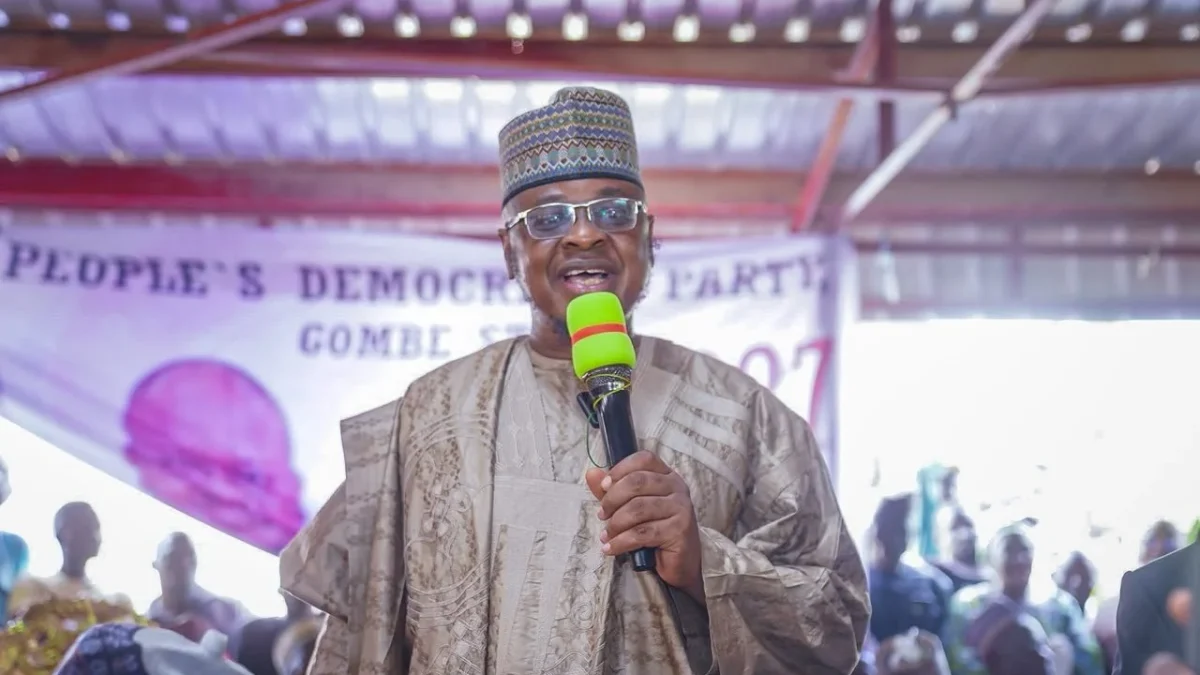
The Independent National Electoral Commission (INEC) has omitted former Minister of Communications and Digital Economy, Isa Pantami, from its final list of governorship candidates for Gombe State ahead of the February 6, 2027 election.
Politics Nigeria reports that the commission released a list of 16 cleared candidates for the election, but Pantami’s name was missing despite his earlier inclusion in the provisional list published on August 29.
Among the candidates on the final list are Bala Bello Tinka of the African Democratic Congress (ADC), Jamilu Isyaku Gwamna of the All Progressives Congress (APC) and Babayo Ardo Kumo of the Nigerian Democratic Congress (NDC).
Others include Zubairu Mu’azu Halilu of the Labour Party (LP), Lamela L. Silas of the Allied Peoples Movement (APM), Ibrahim Jalo Abubakar of the Peoples Redemption Party (PRP) and Adamu Mohammed Ma’aji of the Social Democratic Party (SDP).
Pantami’s exclusion comes amid a series of legal disputes over his emergence as the Peoples Democratic Party (PDP) governorship candidate in the state.
The former minister had initially sought the APC governorship ticket but left the party after it settled for Gwamna as its consensus candidate. He subsequently joined the PDP and emerged as the party’s flag bearer through voice affirmation at its governorship primary.
However, a Federal High Court sitting in Gombe nullified his initial emergence on May 26, following a challenge to the primary process.
The court ordered a fresh primary election, which Pantami won on September 29 with 2,054 votes, defeating Khamisu Ahmed Mailantarki and Usman Aliyu Garry.
Garry had challenged Pantami’s emergence, arguing that the required primary election was not properly conducted before the former minister was declared the party’s candidate.
Despite winning the court-ordered rerun, Pantami’s eligibility remained in doubt following the Supreme Court’s September 24, 2026 judgment on provisions of the Electoral Act 2026 governing political party membership registers and candidate eligibility.
The Supreme Court affirmed the constitutionality of Sections 77(5), 77(6) and 77(7) of the Electoral Act 2026 and upheld INEC’s revised timetable and schedule of activities for the 2027 elections.
The provisions bar political parties from fielding candidates whose names were not included in the membership registers submitted to INEC within the stipulated period.
INEC has maintained that parties found to have violated the requirements will not be permitted to participate in the elections through candidates whose nominations breach the law.
Mohammed Haruna, an INEC national commissioner in charge of information and voter education, said the commission would not allow parties to replace candidates affected by the provisions.
Haruna made the clarification during an appearance on Trust TV’s programme on Wednesday evening, explaining that allowing substitutions would enable political parties to benefit from their own violations.

He cited previous disputes involving Zamfara and Plateau states to illustrate the consequences of parties failing to comply with electoral requirements.
“It’s like you committed an offence. And then, you come and benefit from it,” Haruna said.
He added that allowing parties to substitute candidates in such circumstances would amount to permitting them to benefit from an offence they had committed.
Haruna also indicated that the commission expected to make a definite pronouncement on the implications of the Supreme Court judgment by the following Tuesday.
-
News4 days ago
FCCPC reviews rules for Nigeria’s online sales promotions, giveaways – Technology Times
-

 News3 days ago
Robot data startup Mecka AI nabs $60M from Sequoia
-
Business4 days ago
Nigeria has reduced reliance on oil revenue
-
Business1 day ago
Communications Ministry made ₦345.5 million duplicate payment for Abuja ICT Park project